
Why Exactly is Sofitel Closing Down?

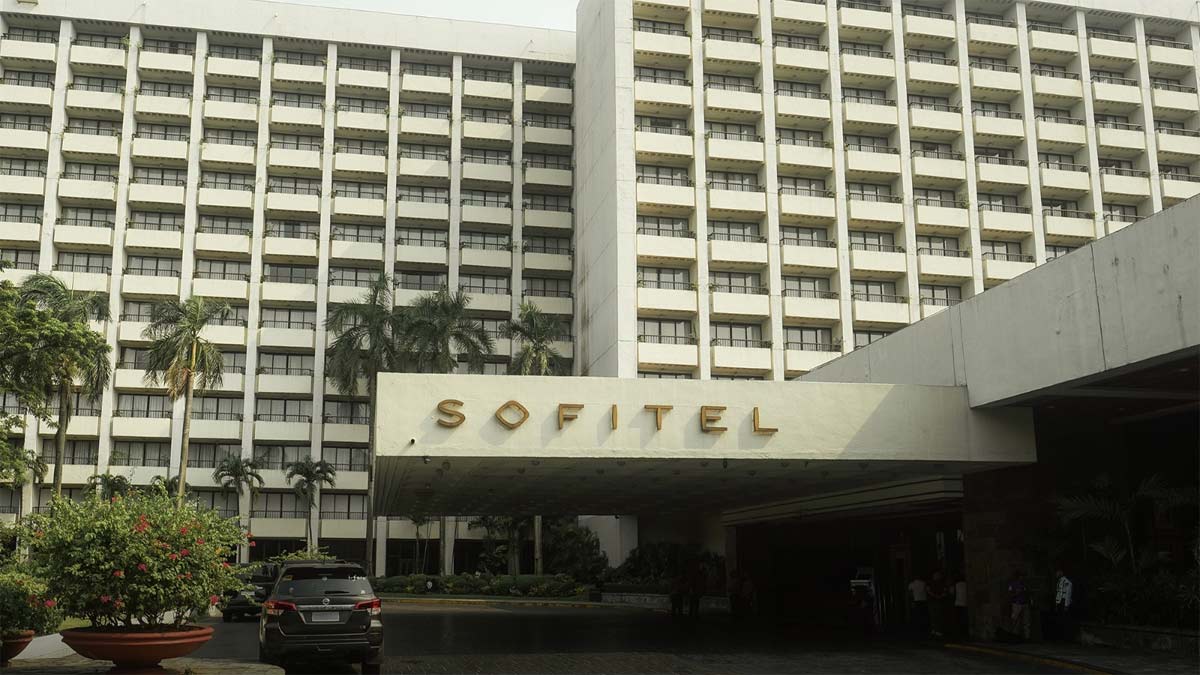
Now that the dust has settled, it’s time to ask the question: why exactly is the Sofitel Philippine Plaza Hotel—one of the oldest and most iconic hotels in Manila—closing down?
On Friday (May 11), the hotel, which was completed in 1976 in time for Manila’s hosting of the International Monetary Fund-World Bank meetings, confirmed earlier reports that it would close at the end of business hours on June 30, 2024.
ALSO READ
Sofitel Confirms Closure and Cease of Operations
The Best Luxury Hotels and Resorts in the Philippines, According to Travel + Leisure
Esteban Peña Sy, the president of Philippine Plaza Holdings Inc. (PPHI), the entity that owns Sofitel, said the hotel needed to close for safety reasons. Over the last few months and years, the property has experienced several mishaps and incidents, including burst pipes, stalled elevators and escalators, leaking air conditioners, and even a gas leak at its restaurant. Serious and mandatory renovation work became all the more pressing.
“In the past two years, so many incidents have happened already,” Peña Sy said in an interview. “In fact, last September, we had to evacuate more than 1,000 guests and transferred to other hotels because the water pipeline burst. So, we want to close for safety reasons.”
Peña Sy couldn’t help but say “sayang” about the closure, especially since the Sofitel has been enjoying brisk business as of late, consistently hitting at least 80 percent in the occupancy rate of its 600 rooms. However, safety auditors contracted by PPHI confirmed that the “buildings are too old, defects are existing.” The state-owned Occupational Safety and Health Center, he added, also said that “preventive and precautionary measures need to be adopted, as we cannot afford accidents.”
As to the possibility of the hotel possibly reopening in the future, Peña Sy could not give a definitive answer.
“To be frank, the future of the hotel is very uncertain, because we don’t own the land,” he said. “So we are still in the process of negotiating with GSIS, because if we want to renovate the hotel into a good condition, it will take a lot of investments. The owners of the hotel are calculating whether they can get their invested money back in a few years or what.”
According to PPHI, the proposed renovation will cost roughly $150 million or about P8.6 billion, “so the owners are requesting if the lease on the land can be extended.”
PPHI is currently leasing the land on which Sofitel stands from the GSIS. This lease contract is set to expire in 17 years, or in 2041. Earlier reports said the PPHI is asking asking for an extension on the contract with GSIS for another 25 years after 2041.
PPHI is fully owned by Allied Kajima of Hong Kong, which is a 50-50 joint venture between Allied Group of Hong Kong and the Kajima Group of Japan. Last year, GSIS President Jose Arnulfo “Wick” Veloso proposed swapping the fund’s future lease income with shares in the offshore development arm of Kajima and Allied.
“This was only mentioned by President Veloso but there was no serious discussion yet,Peña Sy said. “Maybe that will come later. I’m not very sure about this one.”
Meanwhile, PPHI said it is planning to disburse between P230 million to P287 million as separation benefits for the 500 or so employees of Sofitel that will be affected by the closure. Peña Sy this is a generous offer.
“We are giving the employees more than what was provided in their union’s CBA (collective bargaining agreement),” Peña Sy said. “It’s about $4 million to $5 million.”
In addition to the monetary benefits, PPHI will also offer skills training for the separated employees over the remaining time period that the hotel is open. This is to better equip the employees for the future.
“We’ve also talked to DOLE (Department of Labor and Employment) to help in their placement, as well as the PHOA (Philippine Hotel Owners Association),” the PPHI president said.
With the current workers’ shortage in the hospitality industry, Peña Sy said the company is hopeful that the separated workers “will find jobs easily.”
The PPHI said it is also asking Accor to possibly hire some of its employees for its other properties overseas. Accor is an international hospitality chain that has been managing the hotel since 2006, with its management contract renewed every five years.
Completed in 1976 in time for Manila’s hosting of the International Monetary Fund-World Bank meetings, the Sofitel Philippine Plaza Manila was originally built as the Philippine Plaza and was designed by Leandro Locsin. The hotel was initially managed by Westin Hotel Company, which facilitated renovations of the hotel in 1994 and 1995. The management contract was turned over to AccorHotels in 2006, and extensive renovation works followed, as well as the hotel's rebranding as Sofitel Philippine Plaza Manila.
The hotel has been the home of multiple dignitaries and celebrities during their visit to Manila, including US President Barack Obama, former US Secretary of State Madeleine Albright, and singer Erykah Baduh.
