• Man at His Best 2025
  • Long Reads
  • Style
  • Money
  • Wheels
  • Culture
  • Opinion
  • CORNER OFFICE
Search
Menu
Close
Close
  • Man at His Best 2025
  • Long Reads
  • Style
  • Money
  • Wheels
  • Culture
  • Opinion
  • Style
    • Fashion
    • Grooming
    • Watches
  • The Good Life
    • Pursuits
    • What She Wants
    • Mavericks
    • The Directory
    • The Noble Man
  • Culture
    • Food & Drink
    • Arts & Entertainment
    • Lifestyle
    • Tech
    • Movies & TV
    • Music
    • Books & Art
    • Design
  • Wheels
    • Cars
    • Motorcycles
    • Drive
  • Money
    • Industry
    • Wealth
    • Capital
    • Movers
  • Long Reads
    • Notes & Essays
    • ESQ&A
    • What I've Learned
    • Fiction
    • Features
  • Life
    • Sports
    • Health & Fitness
    • Women
    • Sex & Relationships
    • Travel
  • Politics
    • Opinion
    • News
  • COUPONS
  • About Us
  • Terms of Use
  • Privacy Policy

NPC Seal of Registration

Esquire has been granted the NPC Seal of Registration in recognition of the successful registration of its DPO and DPS

© 2026 EsquireMag.ph, All Rights Reserved
Long Reads

A Fishing Trip in the Sulu Sea With The Sardines Millionaire

By Paul John Caña
Jul 23, 2019

Onboard an industrial sardine carrier vessel, the travel time from Zamboanga City to the fishing site somewhere in the middle of the Sulu and Celebes Seas takes approximately seven and a half hours. We get there at dusk and transfer to a smaller Sonar vessel called Chase where we would be spending the night. My first question to one of the nine-person crew onboard is where exactly on the map we are. 

“That’s the island of Jolo right there,” he says in Tagalog, pointing to a shadowy land mass fast disappearing in the fading afternoon light.

So we’re near Sulu. The next question is obvious and immediate.

“May mga Abu Sayyaf ba diyan?” I ask with a nervous laugh.

“Ah, marami,” he says, matter-of-factly. But he is quick to add that throughout his many years as a fisherman, he’s never experienced any trouble with armed terrorists or so much as glimpsed any member of the group, known to inhabit the islands of one of the most southernmost points in the country.

ADVERTISEMENT - CONTINUE READING BELOW

“We just leave them alone, and they leave us alone,” he says.

It’s a Friday evening and we're floating on a sea vessel in the middle of the ocean upon the invitation of Mega Global Corp, which manufactures the Mega brand of canned food products. Most people pick up a can of sardines from the supermarket or neighborhood sari-sari store without giving much thought to how exactly it got there. I was about to find out.

And it’s not just me. Besides a few other Mega employees, joining us on this trip is the founder, president and CEO of the company, William Tiu Lim, as well as his son, Marvin, who is the company’s vice president for sales and marketing.

“We make it a point to go to Zamboanga for our business review once a year,” Tiu Lim tells me. He is sitting on the captain’s chair of the sea vessel Pinky, after asking permission from the ship’s actual captain. “At the same time, we come here (in the middle of the sea) so the people know that we appreciate them; for them to see that they are being supported, by the fishing group and by the management (team) from Manila.

CONTINUE READING BELOW
watch now

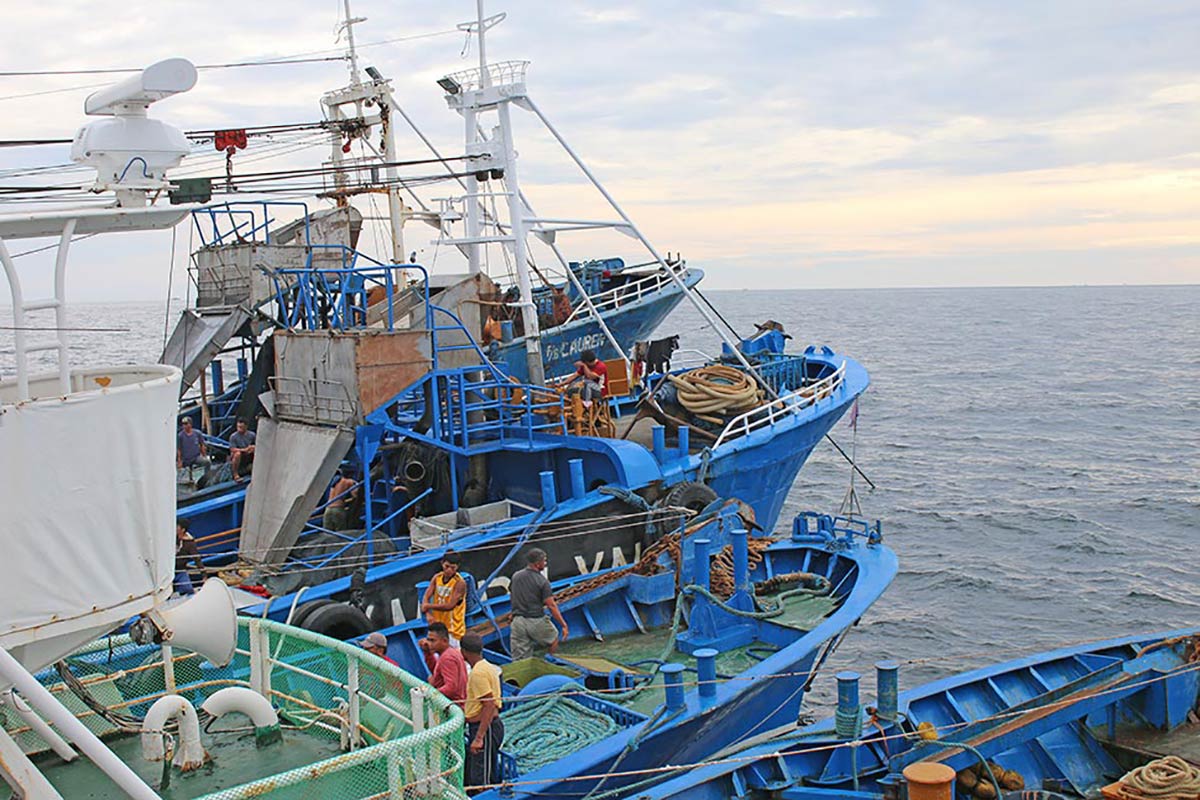
Mega Global's fishing vessels line up at sea. The company now counts over 80 ships used for fishing
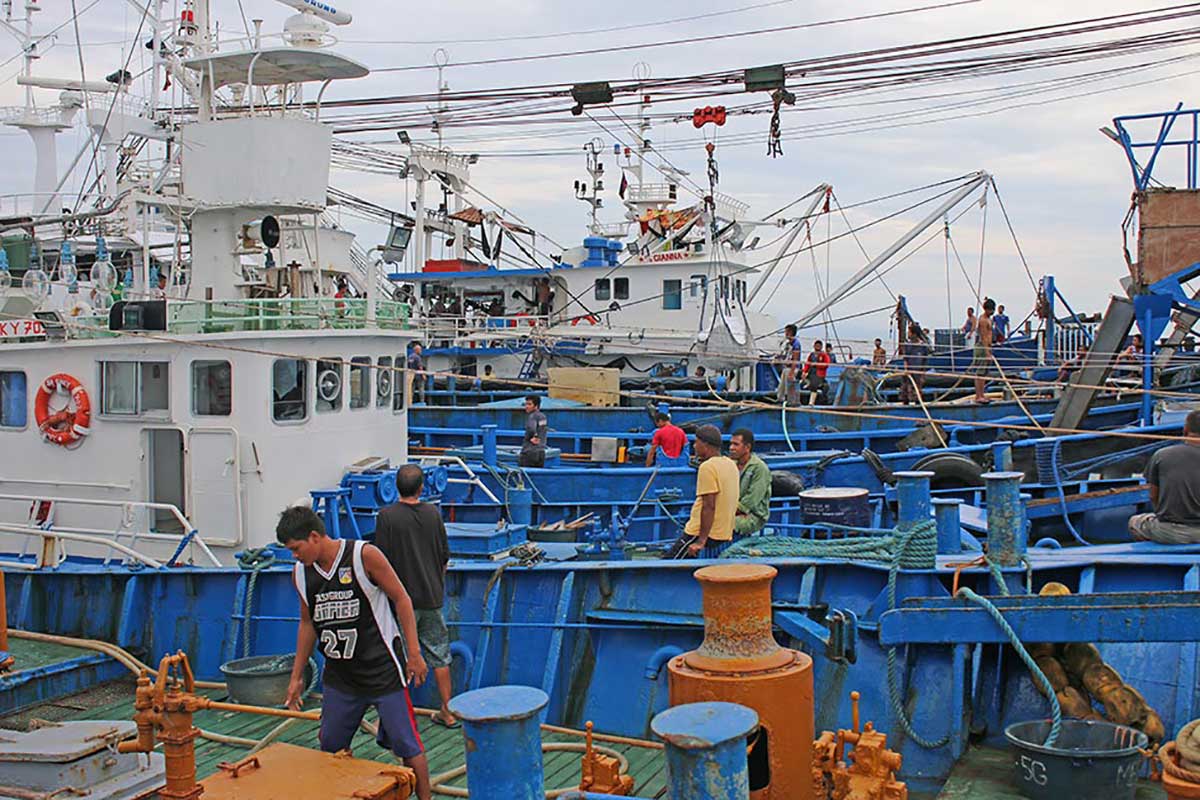

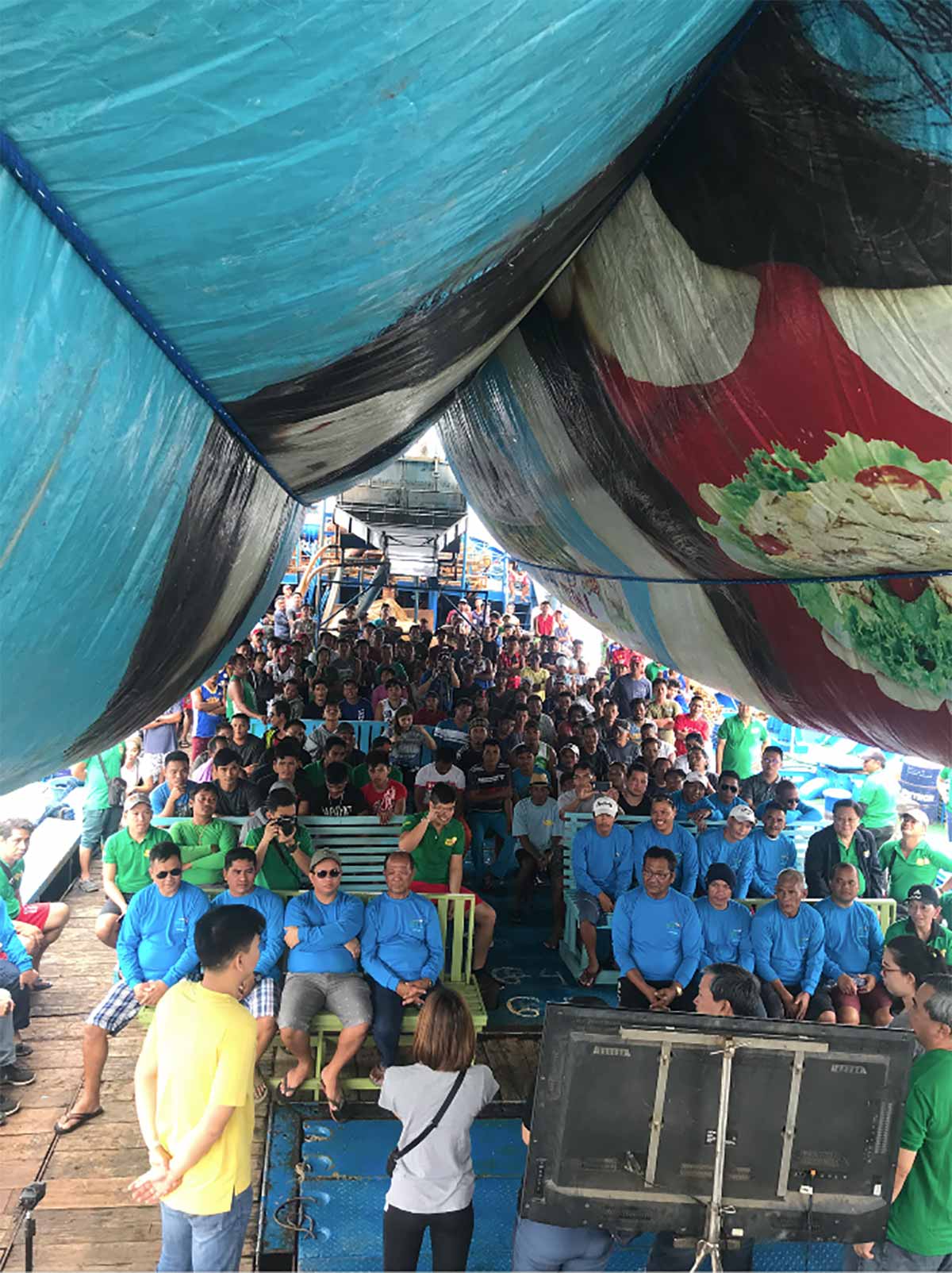
Once every couple of months, Mega Global's fishing crew gathers for its town hall, where targets and actual performance are presented and discussed

ADVERTISEMENT - CONTINUE READING BELOW

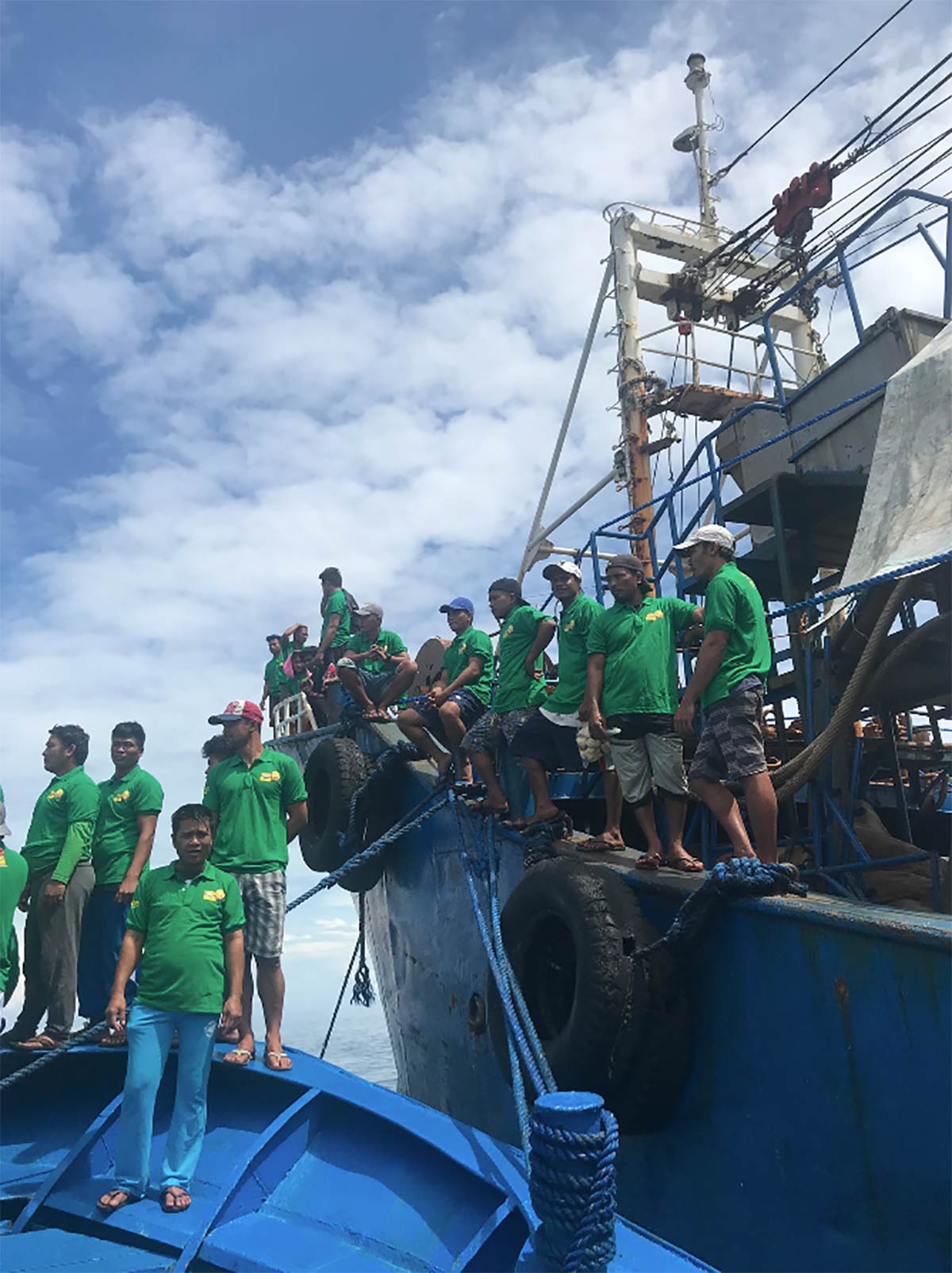
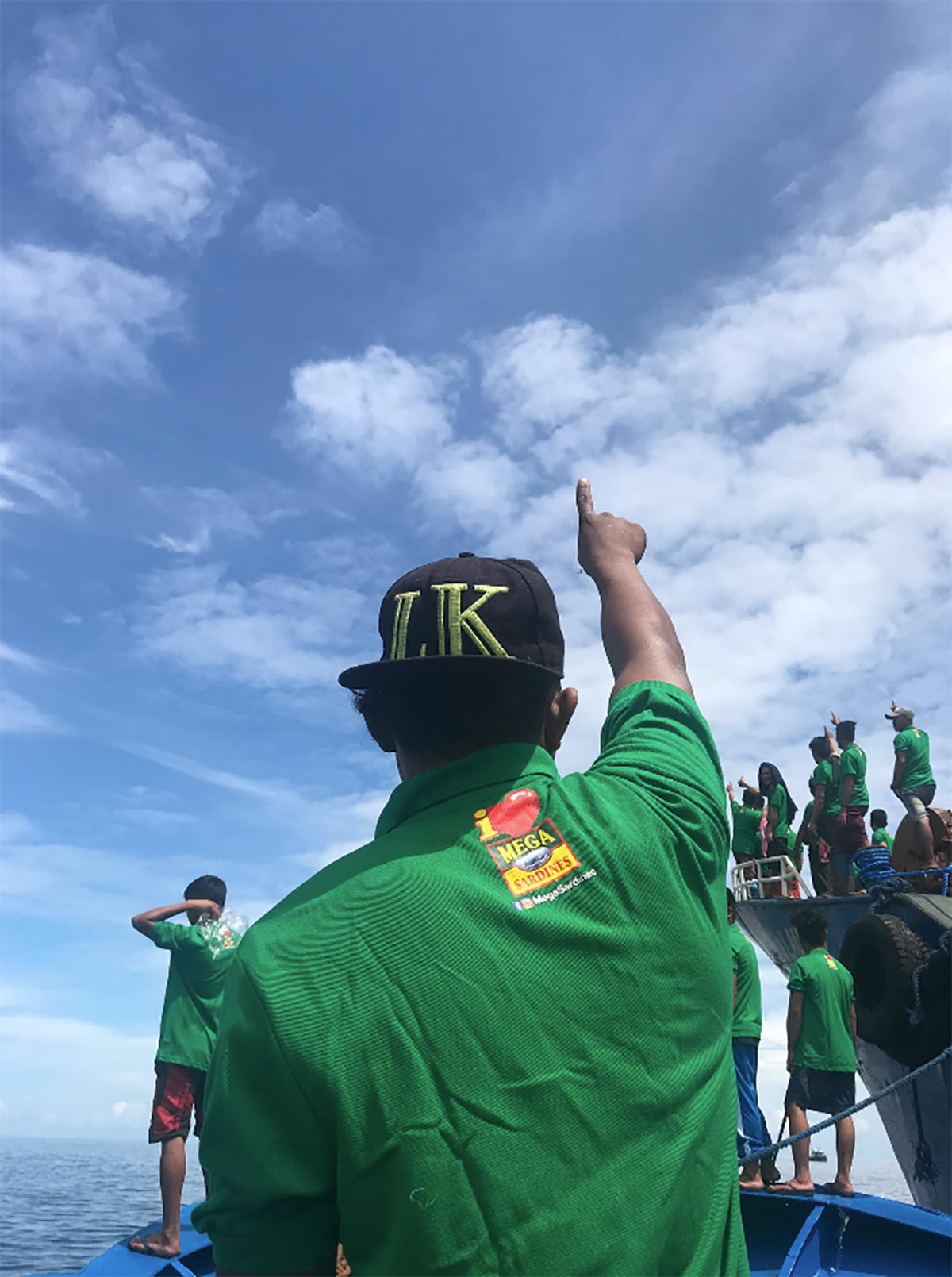
Every couple of months, Mega’s fishermen and crewmembers gather together for their version of a “town hall,” although this one is held at sea. The vessels line up and are tethered to one another while all the captains, engineers, cooks and fishermen transfer to the biggest boat, where they sit and listen to management present the period’s numbers. Every vessel and team has its own targets and KPI (key performance indicators), and the best-performing ones are given incentives.

It’s all good news this period. Target fish catch is 129 percent over target and 161 percent above the same period last year. Average catch is also up 135 percent compared to 2018. I ask one of the Mega sales officers and she mentions a total number of about 185,000 tubs of fish caught per month.

Management is happy, but Tiu Lim, who longtime staff affectionately call "eight-eight," his old radio call sign, says they can do better.

“Pagbutihin ninyo ang huli, para mas marami tayong benta,” he says during his speech speaks in front of the fishermen on the boat. (Do a good job catching fish so we have more to sell).

The best-performing crews are called one by one in front and given citations as well as T-shirts. One fishing vessel captain expresses his gratitude to the company for providing for him and his family. Because of his earnings, he is able to buy a house and lot and is now able to send one of his children to an exclusive school in Manila. Tiu Lim thanks them one by one and encourages them to keep up the good work.

“It’s because of you that our company is doing so well,” he says.
 

article big image
PHOTO: Courtesy of Mega Global

===


Tiu Lim worked in his father’s department store—Edison’s, along Rizal Avenue in Manila—when he was younger. Before that, he says he was already selling stuff like stamps and tropical fish to his classmates in grade school.

ADVERTISEMENT - CONTINUE READING BELOW

“Ganun na talaga ako, ma-negosyo,” he says.

A visit to his then-girlfriend (now wife’s) family’s commercial fishing business in Bicol inspired him to get into the same enterprise. They only had one boat and it was dilapidated, and yet, the business stayed afloat, so to speak. Tiu Lim thought, how much more profitable would it be if they had a better vessel? With his background in retail in his father’s business, he also had an idea about bottom lines and realized that there was money to be had in commercial fishing.

He founded Wilmar (after William and Marilou, his wife) in Navotas in 1972. They started with two boats and Tiu Lim himself took on the roles of driver, engineer, salesman as well as president. The company had to contend with challenges such as weather disturbances, seasons when the catch was  lean, and limited fishing resources. But the founder’s dogged persistence to make the business work eventually led to success. Renaming the business to Mega Global in 1995, the company also relocated to Zamboanga City that same year to be nearer fertile fishing grounds. While it used to sell its fish supply to other canneries, the company now processes and cans its own brand of sardines and has overtaken more established companies to become the country’s biggest-selling canned sardines brand, according to data and measurement firm Nielsen. Mega Global now owns about 82 fishing vessels and has a total employee count of over 3,000. 

Mega Global's founder and CEO William Tiu Lim says he still makes it a point to visit his fishing crew at sea at least once a year


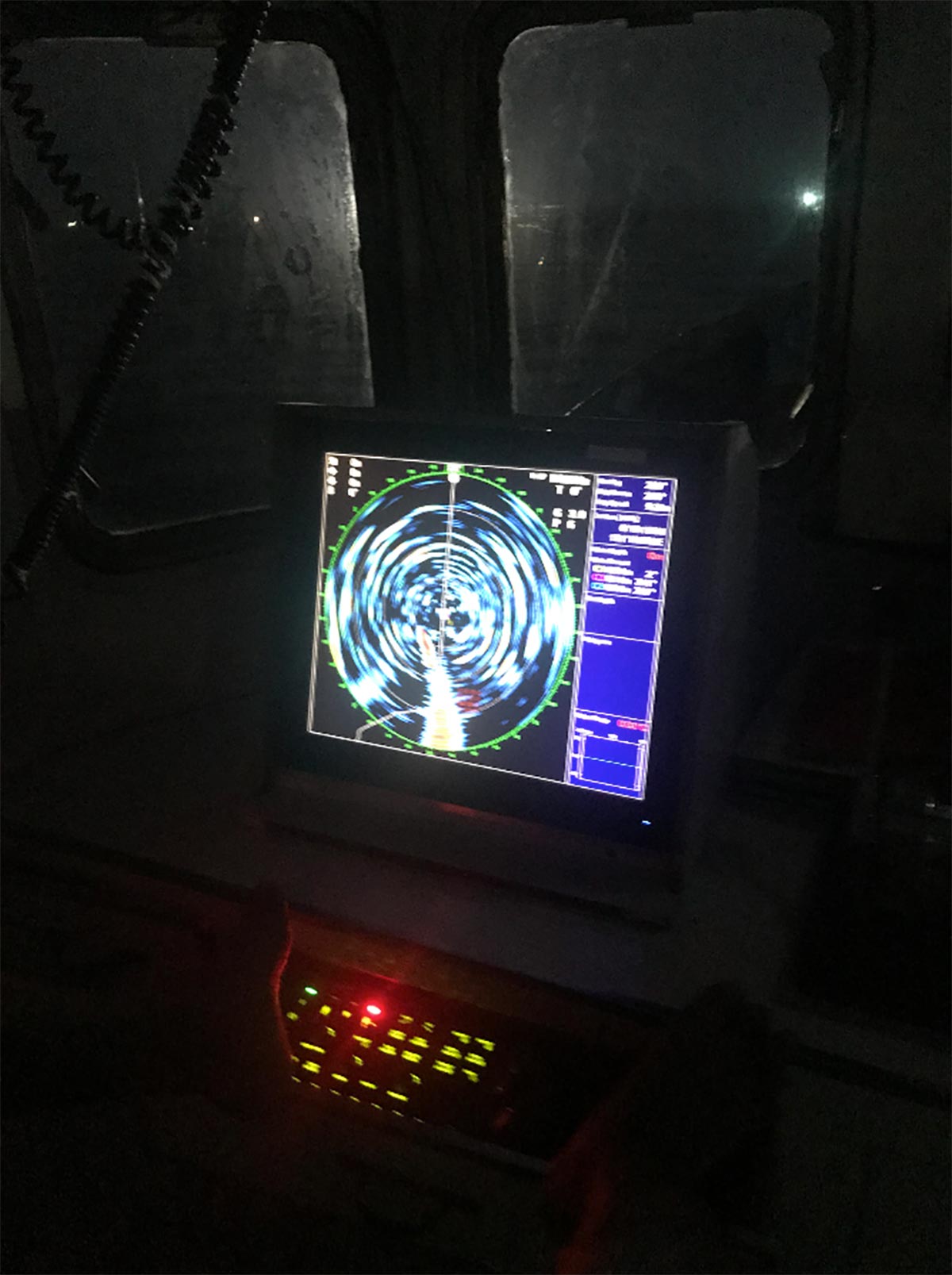
The fishing vessels use advanced sonar technology to locate schools of fish


If you ask Tiu Lim today what Mega Global does differently from other companies, he would say it’s his relentless pursuit for improvement in how things are done. In order to keep the fish fresher, for instance, the company invested in building its own ice plant as well as on fish pumps to transfer the catch faster from the sea to waiting fish bins on the boats. During a time when the fishing fleet was forced to ease up on its fish catch because there weren’t enough cans, the company built its own can-making plant so they could address supply issues. And it was Mega’s gamechanging decision to make all of its sardine cans Easy Open (no need for a can opener), despite the significant extra costs, which ultimately put the brand ahead of the competition.

“When we started fishing here in Zamboanga, in 1995, we already had a lot of competitors,” Tiu Lim says. “We were all doing the same things—catching and then selling the catch. So the challenge was, how can we improve the quality of fish we are bringing to the canners? Why should we spend more on ice, or on preservation? Bakit dadagdagan yung gastos? But the simple answer is, with our brand, we want the end product to be of very good quality. All the divisions have to be aligned. So in the end, everybody’s working towards one consistent product, so pagdating sa consumer, it’s all the same taste, it’s all the same quality. Walang complaints.”


article big image
PHOTO: Courtesy of Mega Global

===


After dinner that evening, the fishermen settle in to do the actual work of catching fish. Sonar vessels—of which Chase, the boat we are in, is one—take the lead by using advanced equipment to locate the fish. While waiting, I chat with one of the crew members. Alejandro Velasco is 58 years old and has been working with the company for 37 years, even before Mega itself was founded. Originally from Iloilo, Velasco says he’s seen it all during his time at sea.

“There were times, years ago, when we barely had anything to eat here at sea,” he says in Tagalog. “We would reach places like Palawan and Masbate just to find fish to catch.”

Velasco, who now works as one of the ship’s engineers, says he appreciates his boss’s leadership. Back during the early days of the company, he says Tiu Lim would drive from Manila to visit him and the rest of the crew and fishing vessels all the way in Bicol.

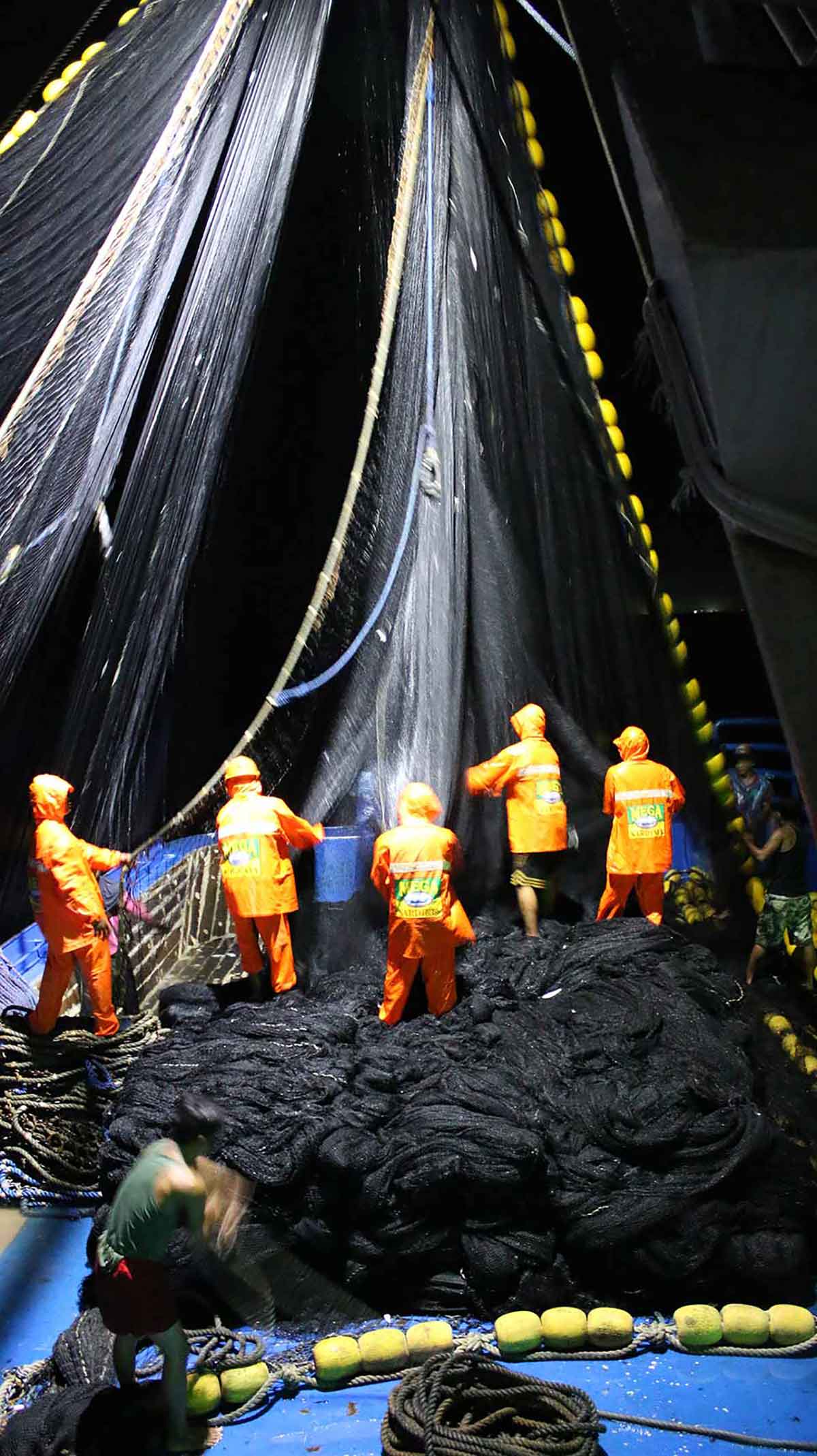
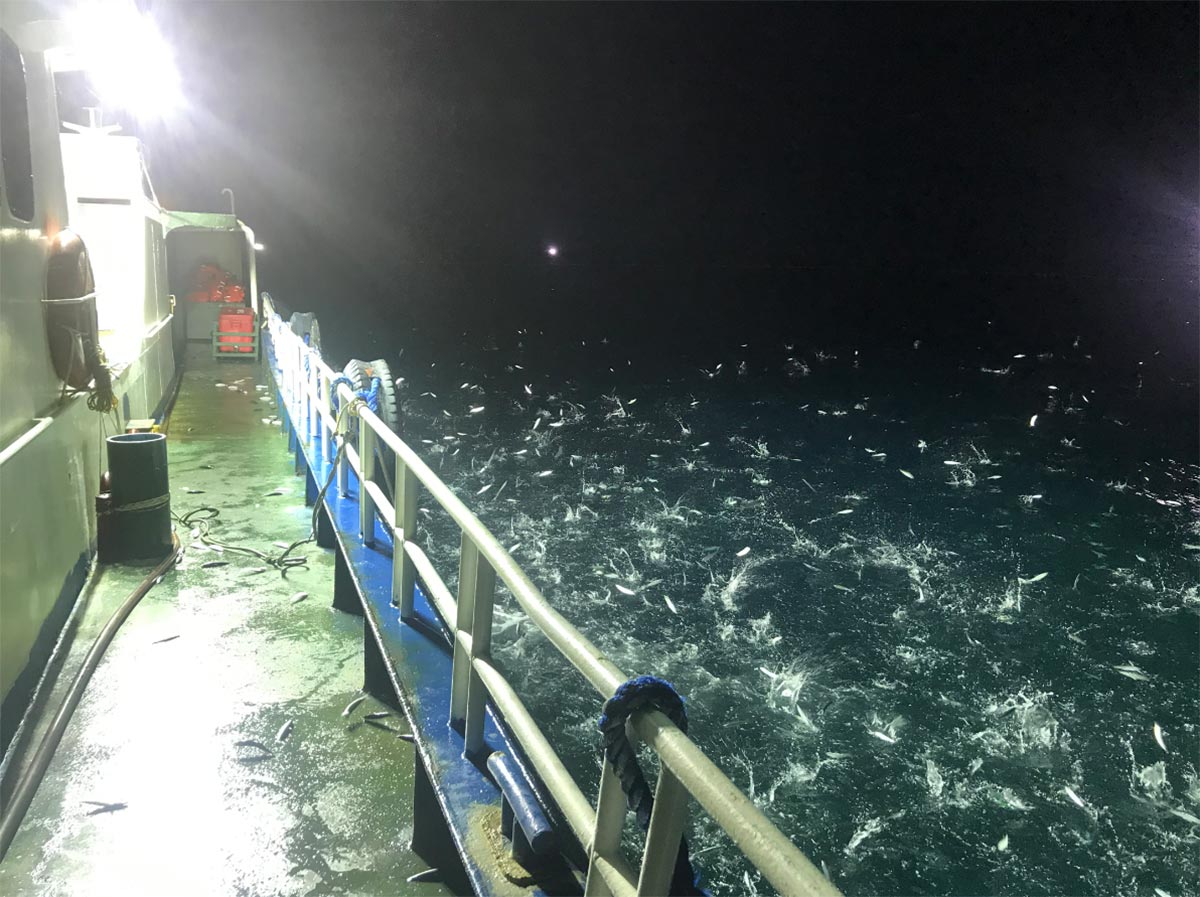
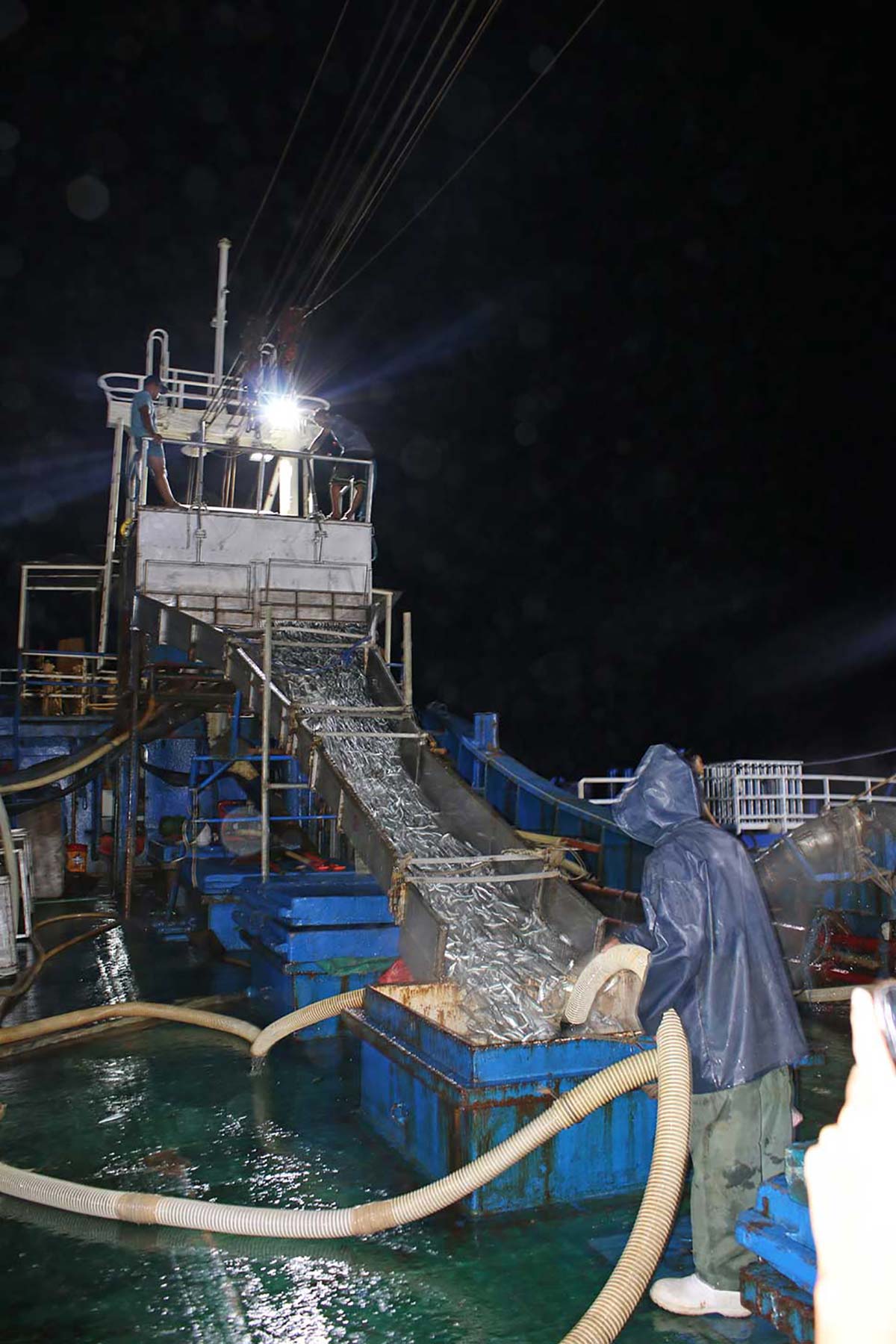
At around 10:30 p.m., the captain says he finds a school of fish. He radioes one of the catcher vessels and they proceed to the location. On site, green light is used to attract the fish, after which the catcher vessel lays down the net around the school and slowly reels it in. Once gathered, the fish are sucked through the fish pump into container units on the boat, drastically cutting the process from what used to be an hour and a half to just 15 minutes or even less. Time is crucial at this stage; the fish are placed in salted ice water in order to preserve the freshness of the catch for as long as possible. There are thousands of bright, squirming tamban in one boat, and the fishy smell is initially intense and overpowering. But you eventually get used to it.

Thousands of tamban fish jump around before fishnets reel them in


Once caught, the fish are preserved in salted iced water to maintain freshness


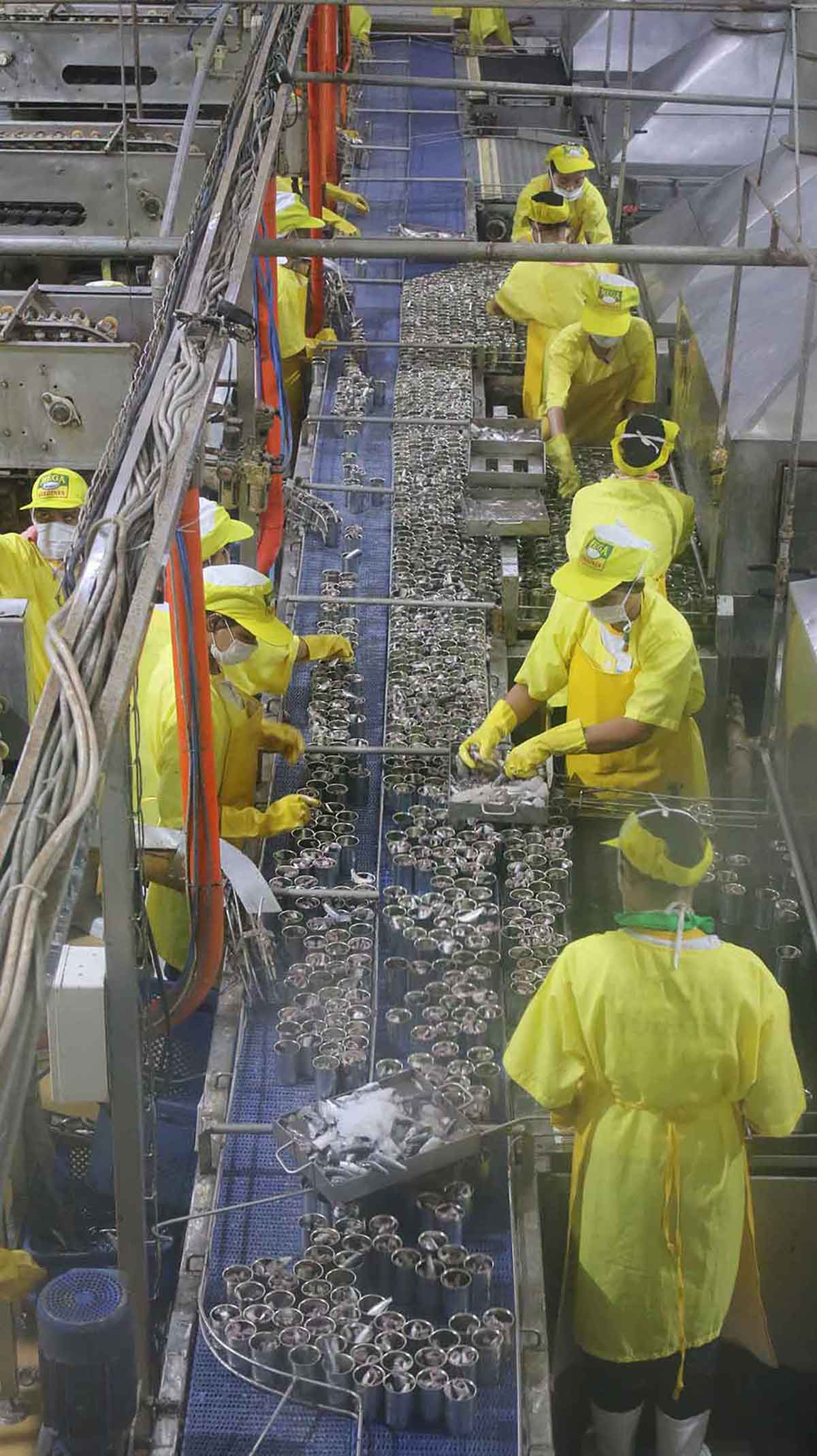
Because fishing is traditionally a nocturnal activity, crewmembers of sonar and catcher vessels work throughout the night, catching and loading their boats with as much fish as they can handle. Often they work until dawn, upon which the fish are transferred to the much larger carrier vessels, which will then transport it back to the canning plant in Zamboanga City. There, it’s up to the land-based plant staff to sort, de-scale, cook and ultimately can the sardines. The entire process, from catching to canning, takes no more than 12 hours. The next day, they do it all over again. 

Mega’s canning plants in Talisayan and Ayala produce an average of two million cans of sardines daily. From here, they are brought to different distribution centers around the country. 

The company has since expanded its product lineup outside of its main product of sardines to include canned tuna, canned fruits and vegetables, bottled fish, and pre-cooked canned meals.

“The point of scaling up, at least if we have a project in mind, is it’s easy,” Tiu Lim says. “We have the manpower. And we have (divisions like) electrical, electronics, carpentry, hydraulics, plumbing. It’s complete. We’re a big company, malaki yung expenses, but the potential for additional revenue is also fast.”

article big image
PHOTO: Courtesy of Mega Global

===

Tiu Lim, who is in his late 60s, is showing no signs of slowing down. It’s most evident in the fact that he is still willing to make the trip out to the middle of the ocean to meet and show support for his workers. But it also manifests in his involvement with other pursuits outside of his core business. He is one of the investor-judges in the reality TV show The Final Pitch, which is dedicated to helping startups scale their businesses. A few years ago, Tiu Lim also went back to school, to Harvard University’s three-year Owners, Presidents and Management (OPM) course. Today he is the president of the program’s Philippine alumni group.

Most of Mega Global's fisherfolk are at sea nine months out of the year


“Having attended the program at the age of 65, it really changed our strategy,” he says. “It was a big deal. There were a lot of case studies which open you up, and make you realize, ‘O, pwede palang ganun. Pwede pala ito.’”

It was also at Harvard where Tiu Lim says he learned about succession planning. Of his five children, three are involved in the company—Michelle, who is vice president for finance, export and support group; Malcolm, who is VP for Zamboanga operations; and youngest son Marvin. More than his children stepping up, the patriarch says he is challenging them by putting them in positions where they can perform.

“A company cannot last forever without proper planning,” he says.

article big image
PHOTO: Courtesy of Mega Global

===


After the town hall, we sit down for an early lunch consisting mostly of fresh, just-caught seafood in one of the boats. Then, it is time to say farewell. While us visitors make the long, seven-and-half hour boat trip back to Zamboanga, Mega’s fishermen go back to their jobs. Velasco says that most of the workers stay out at sea for about nine months at a time, only heading back to dry land on certain occasions or during emergencies. They also take a three-month break during the off-season, from December to February. Otherwise, the fishermen’s life is tied to the constant hum of the ship's engine; the smell of diesel fumes and fresh, salty ocean air; the sight of shimmering, metallic gray water that goes on as far as the eye can see; and the silvery, slippery bounty from the sea.

It takes an incredible amount of patience, persevrance and hard work to be a sardines fisherman


Company officials give us cans of Mega sardines as a small token of their appreciation before the flight back to Manila. I hold one in my hand and regard it, thinking about Mr. Velasco and the rest of the crew aboard the sonar vessel Chase, the other fishermen in the catcher and carrier vessels, the workers in the canning plant and everybody else involved in taking fish from the ocean and bringing it to my mouth. It's hard to believe the enormous effort it takes to produce a tin that sells for about P17. I will never look at a can of sardines the same way again.

Read Next
The Bloody History of Bahay na Pula in Bulacan
Read more stories about
  • profiles
Most Shared
by author
Esquire Money
Most Popular
Latest Feed
The New Dean of New York University's Faculty of Arts and Science Is a Filipino
Armscor CEO Martin O. Tuason Passes Away at 51
A Fond Farewell to Chocolate Lover Inc.
The 8-Ball of Greatness in Philippine Pool
Tom Cruise Wore an Extremely Rare £70,000 'President' Rolex Watch to Accept His First Oscar
What Can Poetry Teach Us about Natural Disasters?
#InTheLoop
  • Politics
  • Culture
  • MONEY
  • Style
  • Long Reads
© EsquireMag.ph, All Rights Reserved.
  • About Us
  • Contact Us
  • Terms of Use
  • Privacy Policy
  • Sitemap
Close

We use cookies to ensure you get the best experience on Esquiremag.ph. By continued use, you agree to our privacy policy and accept our use of such cookies. Find out more here.

Present
Read Cover Story
Read Cover Story
Catfish Image