
Today I Learned: The Reason Why We Should Let Other Drivers Merge Into Our Lane

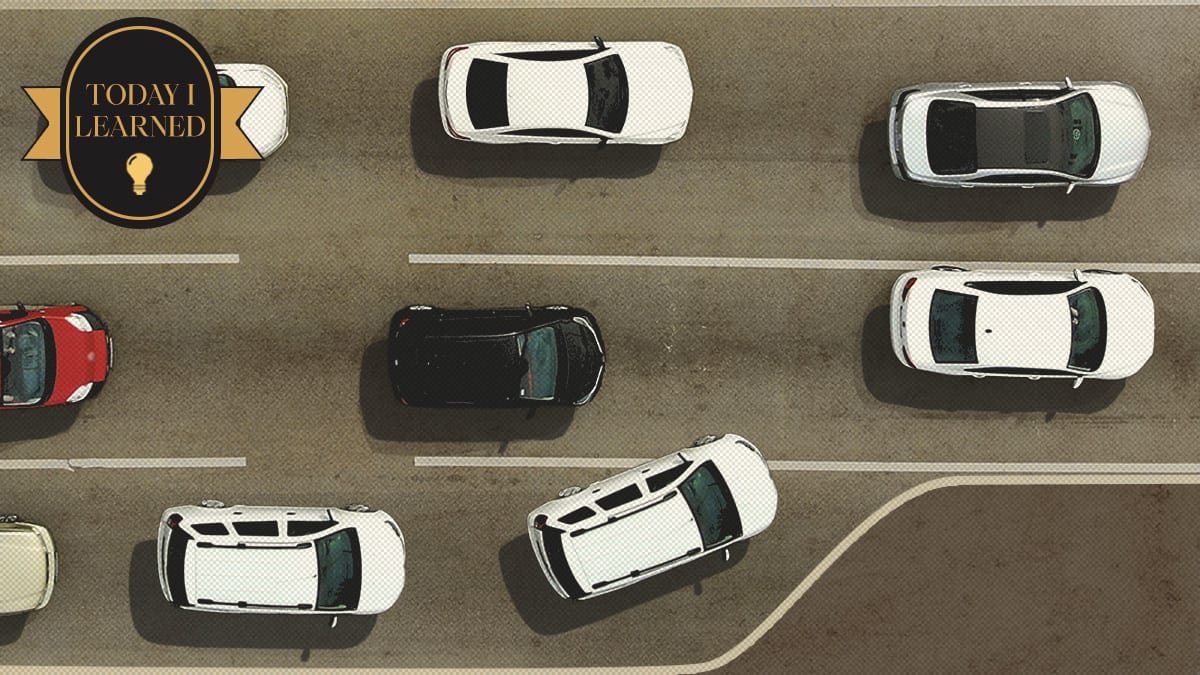
With so many roads under repair (or getting widened) and new on- and off-ramps being constructed, drivers in the Philippines encounter plenty of bottleneck traffic that funnels vehicles to a merge point. Right now, each of these merge points in Metro Manila is a chaotic war zone. It's every driver for themselves, and nobody is giving an inch; "Baka masingitan." That mentality causes stress, road rage, accidents, and even more traffic.
It's already 2025, and a looming EDSA closure remains on the horizon. Surely, there must be a faster and less stressful way to merge into traffic? The “you shall not get in my lane" mentality no longer has a place in the 21st century, not with approximately 1.690 million vehicles on the road. That doesn't even include PUVs (public utility vehicles). And besides, haven't you heard? Sharing is caring.
The desire to merge
Merging is necessary for many reasons, including blockages caused by a broken-down car, roadworks, road diets to accommodate bike lanes, or simply a case of lane reduction. There usually is no problem when only a few vehicles are in the area.
The trouble begins when vehicular volume increases. Drivers begin reducing gaps to just a few millimeters between cars to prevent others from merging.
As a driver myself, I can say that this move comes from a weird sense of fairness and equality. You want others to line up, single file, just like you did. Incoming cars queue up behind the last one: first-come, first-served. That style is called the Early Merge, which was okay in the 80s when there were only around 446,142 registered vehicles, including PUVs, motorcycles, and commercial units in Metro Manila.
Today, with more than three times the number of vehicles on the road, that simply won't suffice.
There is a solution, though. It is a more modern approach, but one that takes into account vehicle volume, road space, and, more importantly, a new driver mindset.
The Zipper Merge
For over 30 years, other countries have been following an innovative and revolutionary new system called the Zipper Merge. It isn't exactly rocket science, but it was born out of a computer simulation in '82 and studied thoroughly for more than a decade. First seen in the Netherlands in 1989, it is nothing like the Early Merge. Motorists in a Zipper Merge must use all available lanes until the point of closure. That means zooming to the end of the blocked area and then politely merging with the vehicles on the unobstructed lane - like how teeth in a zipper fall into place as it closes. However, do not forget to signal first, and avoid cutting in or suddenly entering a small opening.
I know what you are thinking: it's unfair to motorists in the right of way, and how rude the merging drivers are. That is the mindset that needs to change. To be effective, the Zipper Merge must use all available road space. In doing so, it cuts congestion by 40 percent and reduces the chances of an accident by keeping all vehicles moving at a constant speed (granted that all motorists leave a big enough gap for merging and take turns giving way).
Being trapped in the Early Merge system, with the volume of vehicles we have, it’s no wonder traffic stretches from here to kingdom come. The Zipper Merge will shorten that queue and make traffic flow smoother. It is a delicate dance between vehicles, and it only works if no one is a dick and everyone waits for their turn to merge. All it takes to mess this up is a driver blocking a merge or one self-righteous motorist straddling both lanes to stop a new line from forming. If that's the case, we might as well Flintstone our way through traffic.
How good is the Zipper Merge? Experts have deemed the Zipper Merge so efficient that it is now a law in countries like Germany and Belgium, and it is promoted by states in the USA, such as Minnesota, Virginia, Kansas, Washington, Missouri, and California. Illinois law even states that each driver shall reduce speed and position to allow others to merge, and that impeding it will result in a fine.
Do the Merge
Now that you have a grasp of the Zipper Merge concept, here are some quick driving tips to help you achieve it smoothly.
- Always match the speed of the traffic you are merging into
- Turn on your signal lights several seconds before merging
- Do not tailgate
- Check your blind spot
- Execute the Zipper Merge
- If you encounter someone who will not give way, just yield. An accident will piss everyone off and make traffic worse
In case words fail to depict a clear demo in your head of the Zipper Merge, countless videos on YouTube will show you how to do it. It does not require Formula 1-level reflexes; only a sprinkle of common sense, an equal measure of good manners, and an open mind. Not letting people merge is selfish, so quit that attitude, and before you know it, more and more motorists will get the hang of it.
Remember, next time you see a choke point on the road, stop thinking about yourself and just zip it.
