Conrado de Quiros Is Gone, and There's the Rub

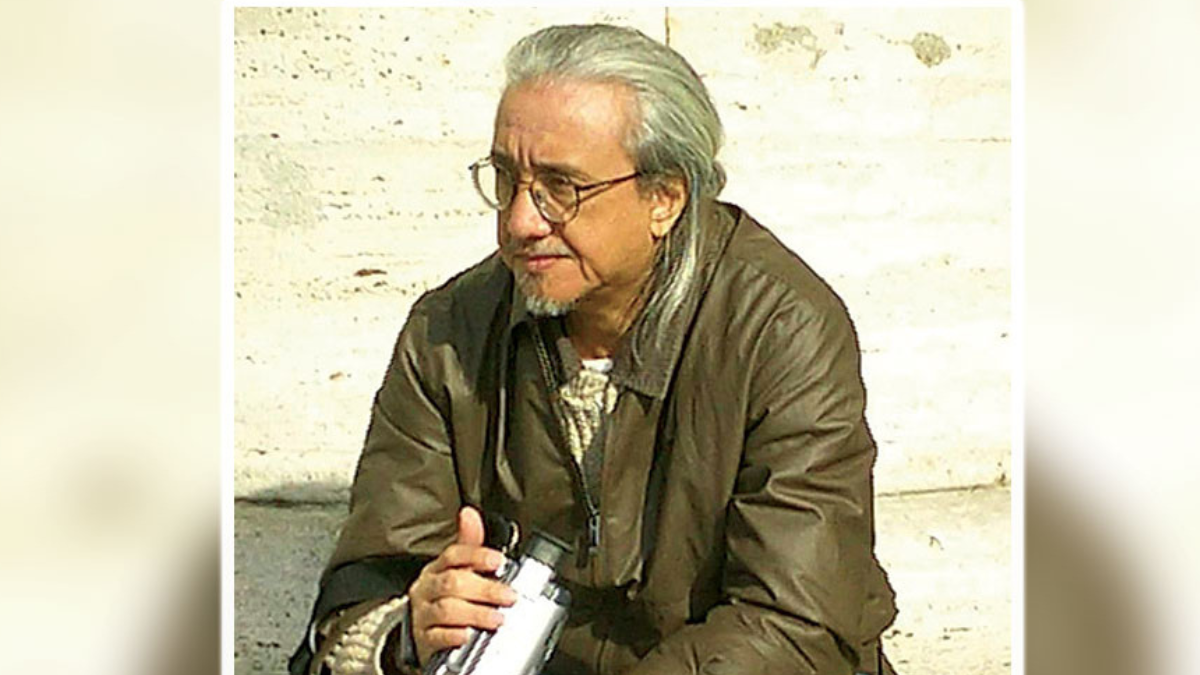
Conrado de Quiros is a name that, I like to assume, is known to us.
He was highly visible, after all, from 1991 to 2014—or a good 23 years, four times a week, without fail— as he racked up his column, "There's the Rub," in the Philippine Daily Inquirer, at a time newspapers enjoyed the biggest respect among media platforms.
No wonder his fans, as it goes, were legion.
The Inquirer's own young reporters were fans.
Being unashamedly "kikay" —as veteran columnist Ceres Doyo says playfully— one of them, Juliet Javellana, now the paper's associate editor, recalls that when Conrad was going to be at the Inquirer building for a meeting or a talk (as columnist, he was free to send his pieces from wherever he was), the girls would go to the parlor first and have a "beauty fix."
Publisher Karina Bolasco, after noting that Conrad's young readers were cutting out his columns, and thereafter clipping, pasting, and sticking them onto notebooks, cartolinas, and clear books, because they wanted to write like him, sought him out as author.
And so came the first, Flowers from the Rubble, and the second, Dance of the Dunces, anthologies of his commentaries that even changing times and tastes have not diminished.
A believer, I was the self-assigned project manager for both books.
Such was the craze for his hard-hitting, often political, writing.
Suddenly, ponderous subjects weren't boring when he subverted them with wit and humor and served them up in prose that gave gruff thoughts a surprising civility.
Likewise, it was a welcome treat to start the morning with his cunning turns of phrases, superior English, and thickets of new political gossip— all of it coming off as quite literary.
The fellow was just, as tiring as it is to keep saying so, brilliant.
Another book, Tongues on Fire, is a slim collection of his speeches. After being invited so regularly as guest speaker in graduations, inaugurations, and anniversaries in Metro Manila and the provinces, he had enough to fill a book, the more timeless of which he selected for publication.
Of course, being famous, he can also be found in many an author's book for which he could not refuse pleas to write prologues and epilogues.
One such book is 2012's Not On Our Watch. Martial law really happened. We were there.
I am editor of that one, and as is often the case when I take on the editor's job, I run out of writing time. Miserably close to printing date, I still had no book introduction.
I turned to Conrad. I knew he was swamped with his four-times-a-week column writing, interminable speaking engagements, high-profile meetings with political sources, and habitual visits to music dives, but, well, there was no one else I knew who could write very fast, very well, and for free.
Yes, we never talked money.
Between us, we knew, from a friendship that began in 1971, that if I could produce money, he would be paid for sure, but that if I could not, it was what it was.
What he talked about was theme and intent.
Within days, he handed me the intro.
A loose extract from what he wrote for Not On Our Watch: "I was invited to the late great NU on a Septemer 21 to talk a bit about martial law. The calls streamed back and forth. The youth were particularly fascinated by the lifestyle of their counterparts during martial law. Particularly by the midnight curfew...
"What disturbed me, however, was quite a number of callers wondering what was so wrong with martial law. They had heard from their parents and/or other 'oldies' that people were disciplined during that time, rice was cheap, gasoline was cheap, movies were cheap, the poor were less poor, life was generally easier.
"I said that was true in part. But underneath that lay one of the greatest deceptions of martial law. If art, as Picasso said, was the lie that revealed the truth, then martial law was the truth that revealed the lie. True enough, food was more plentiful then, things were much cheaper then, inflation wasn't rife then. But all that was paid for by the sacrifice of future generations.
"Specifically, all that was paid for with the billions of dollars in loans Ferdinand E. Marcos got from foreign banks, much of which he, his family, and his cronies stole. Which debt doomed future generations to servitude: Which debt we are paying for now. Which debt our children and their children will be paying for tomorrow.
"Martial law robbed this country of its wealth: It was during that time that this country's forests disappeared.
"Martial law robbed this country of many of its best and brightest: It was during that time that the youth who had taken to the hills were killed.
"Martial law robbed this country of its future: It was during that time that the country embarked on the path to becoming the sick man of Asia, subsequently to be left behind while the rest of the continent advanced."
The rest of the intro is as riveting, let me assure you.
And then there is his magnum opus: Dead Aim. How Marcos Ambushed Philippine Democracy.
A grand book, with publisher Eugenia Apostol its grand dame, Dead Aim is 444 pages replete with facts and figures, interpretation and analyis, past history and current events, highlights, sidelights, insights— all of which read in the end, as always, like fine literature.
In his acknowledgment page, he listed the people who made the book possible, writing me up first, and saying: "Jo-Ann Maglipon, whose faith moved mountains, gods, and Eugenia Apostol, in that ascending order of difficulty".
A believer, I was the self-assigned prime mover.
No, we never talked money.
Between us, we knew that if he could produce money, I would be paid for sure, but that if he could not, it was what it was.
It was 1997, it is 2023, but I remember it all.
I headed a small team that barrelled past the stumbling blocks— the research, the fact-checks, the interviews, the encoding, the copyediting, the proofreading; past the cheerless nights when the hours were not enough and daytime would come again and, with it, daily job demands; past the physical fatigue that led to lost humor, frayed patience, and snarky tongue.
But it was the same team that lapped up the many good things— the sporadic chatter and political chismis; the jokes about our friend Rustie Otico's idiosyncracies, he whose editing skills the book welcomed; and the meals that Conrad's family prepared for us, by way of a thank you, through the many overnights, over the many months pressing up to deadline.
The book is worth the work.
Dead Aim is a classic of political and historical literature.
To those, of course, who've never heard of Conrad or know of him only through his works, let it be said that this was a man who was more than the sum of his writings.
He was studious breadwinner, fierce father, supportive husband, concerned citizen, disciplined writer, and loyal friend, even if his loyal friends who loved singing, just like him, have to be honest and say that his was not the best voice in a jam with his brothers Paul and Emil, who came into the world with damn good voices.
Conrad did second voice admirably, says Paul in his manoy's defense, and adds that Conrad had a good ear.
Which is, as I am witness, true.
In 1986, soon after the Edsa revolt, we were working for the revived Manila Times, and picketing it— Noel Cabrera, Fort Yerro, Malou Mangahas, Sheila Coronel, Lily Lim, Thelma Sioson.
It was boring, of course, having nothing but our placards while we walked in circles under the sun on the sidewalk in the Scout area.
Sympathizers from the Business Day union came—Mon Isberto, Daisy Mandap. Our friends Nona Ocampo, daughter of the activist Satur, and Margie Logarta also came. I recall Gringo Honasan, fresh from Edsa Revolt fame, coming to visit, although he kinda played to the gallery of security guards and ended up making light of our picket.
Conrad, not in media then but who knew I was at the picket line, dropped by. At the end of one afternoon, he handed us a song.
On our sidewalk, under a big old tree, Conrad had sat down to write the music and lyrics of a vigorous, totally not sonorous, protest song. Naturally, we sang it with gusto!
In my recall, he accompanied us on the guitar.
The fellow played good guitar, by the way. Classical guitar, no less.
Once he accompanied his dear friend Celina as she sang at the book launching of her father, Adrian Cristobal.
And so it was that, at the Manila Polo Club in Forbes Park, in a barong to which he was unaccustomed, before a crowd he would never call his, Conrad played the guitar to "Kundiman ni Abdon."
A picture of this landed in the lifestyle pages of newspapers, providing his "impoverished" musikero friends an excuse to rib him.
Of all of Conrad's many attractive features, one stood out for me: He could make himself a normal, regular, ordinary guy.
His was a highly evolved intellect, no one's ever contested that.
That he'd spent years devouring books, from Russian ideologies to Greek philosophies to English classics; and having taken electives, while still a sophomore and a junior, with upper classmen to listen and learn, without thought of the diploma he never got— all this had made him a really formidable mind.
He could mow down enemies, make mincemeat of naysayers, send villains to the moon.
But the best of it was, he never let his huge intellect get in the way of being nice company.
I saw how he made his favorite friends forget how smart he was.
He liked being one of the boys.
All that banshee, pointless exchange, misscoms, mixed-up messages, and ever-repeating anecdotes that were the stuff of drinking sessions was just the stuff he reveled in.
Which is, I am guessing, why he taught himself to write so fast. The drinking could begin as early as 6 p.m.
That— and his self-effacing talk, his ridiculous asides, his quick laughter, not to mention that he was a great listener— made him the favorite, the star figure to be honest, in a barkada that through the years changed members only slightly and remained small.
Publicly, he made himself available, even picking up on an offer of a European cruise from the posse of Maria Montelibano and whooping it up in Germany's Oktoberfest with his partner-in-crime Pancho Lara.
But these excursions came few and far between.
Privately, he did not stray far from a tight circle made up largely of musikeros.
Then, quite suddenly, in 2014, Conrad stopped writing.
He disappeared from the Inquirer. Except for a notice in the Op-Ed page of him on medical leave, not much was known.
Fact is, he had suffered a massive stroke from which he did not only not recover, it was something from which he turned progressively worse.
Conrado de Quiros died on November 6, 2023, at the age of 72.
At his wake, as his friend, I read my letter to him.
From: PEP.ph