
What Most People Get Wrong About Populism

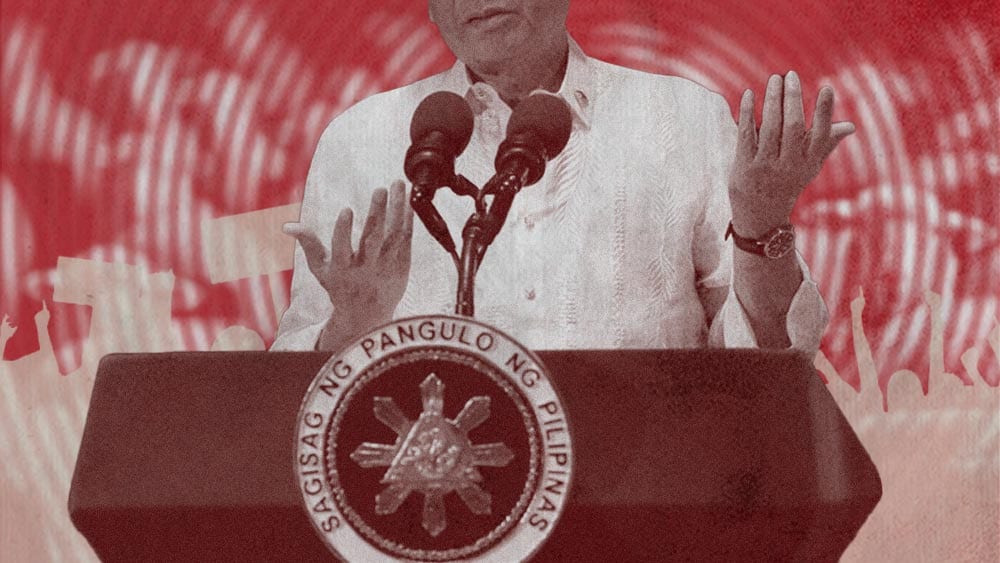
Populism is a word that’s been thrown around across the board. Oftentimes as a pejorative, populism has been associated with bigotry, racism, the lack of critical thinking, and an aversion to tolerance.
While this is true in certain cases, it does not paint the full picture of what populism is, be it as a phenomenon or as a mode of governance.
This brings us to the introduction of populism, and its implications in the Philippines and the rest of the modern world. A clarification is in order. Let's look at what populism is, from a point of view of what populism is not. With it comes responses to the assumptions made especially by the broader sphere of media and academics.
ALSO READ:
Historical Letters: Andres Bonifacio's Executioner Says the Katipunan Founder Pleaded For His Life
Parents, Children, and Siblings: Family Reunions at the Senate
Populism as Demagoguery
This is the most obvious and perhaps the most understandable critique against populism. It follows the logic that since Populism appeals to emotion and through rhetoric, it’s reduced to nothing but demagoguery. This is usually played in contrast to the emphasis of anti-populist parties on norms and procedures, over programs. The norms, for the anti-populists, are of utmost importance because without them, society becomes a free for all.
While this criticism is warranted, the critique of populism as demagoguery misses the larger context of why populist sentiments and movements emerge. Populism tends to arise when the establishment faces a crisis of confidence. This comes in the form of corruption scandals in their own ranks, an economic crisis, or a combination of stresses that renders the establishment subject to more scrutiny. Populism galvanizes itself around disillusionment with established parties, and the impotence of its institutions, however concrete or abstract it may be.
At its worst, this critique of populism usually serves as a coping mechanism for the defenders of the establishment, to absolve themselves of the blame. It is therefore unsurprising that the anti-populist critique emphasizes the notion that they are the only bastions to chaos. Behind this claim, is a grim admittance that there is no alternative to the present situation.
Populism as Fascism
This is a critique often mounted by the Liberal Left to populists. Populism, from this notion, contains the seeds of fascism, or even a form of fascism itself. There’s this existing hostility towards the institutions, and its priority being that of collective rights, over individual rights. Not only is this critique hollow, but it also likewise reflects the loss of direction in many liberal and leftist spaces.
As alluded earlier, populism emerged as a wave of anti-establishment sentiment. It’s a reaction to the impotence of the ruling establishment. For the good and the bad, it presents itself as a repudiation of their legitimacy. In fact, one can argue that classical democracy bore resemblance to populism more than contemporary democracy itself. The former tends to be collectivist in nature, and uses the state and the nation as its pillars.
The notion of populism being closer to fascism has its origins over the assumption that politics in the modern age, is a matter of policy building and consensus. It elides the fact that the achievements of the past, such as the 40-hour workday, or insurance, are not brought by those sitting, but by populist sentiments. Populism simply brings about a fact that tends to be obscured—this is the fact that politics will always be a ruthless struggle for power. It grows out of the barrel of the gun, literally and metaphorically.
Populism as Democratic Backsliding
Democratic backsliding means a steady erosion of adherence to the rule of law and due process. It is indeed correct to point out there is a steady decline in this regard. Populism, in this case, is also thought of as the cause.
Sure, populism is a symptom of democratic backsliding. The emergence of anti-establishment sentiments will inevitably coalesce into efforts resembling such. This eventually led to it becoming a populist movement by itself. Why so?
It often gets lost that populism arises not just from institutional failure as the past two clarifications have outlined, but also from its effects.
This includes dilemmas such as pollution, income disparities, economic stagnation, and political gridlock. Income disparities, known more as wealth inequality, are not just a problem because of some abstract concerns of justice. It is a dilemma that brings a major factor for the rise of more dysfunctional families, increasing crime rates, and other manifestations of widespread social pathologies.
Loneliness, hostility amongst groups, and a growing sense of alienation are byproducts of such a dynamic, as well. From a conservative standpoint, income inequality corrodes society’s sense of duties and obligations to one another. On the other hand, from a progressive perspective, income inequality reduces society’s capacity for tolerance and the diversity of viewpoints.
In both instances, populist movements tend to arise in these interconnected scenarios. The scale, tendency, and intensity vary from place to place. They are nevertheless united by a common frustration and a yearning for a new era of politics. Populism thus functions as a battering ram against what they see as complacency and the inability of their ruling classes to heed to their grievances.
As the world grapples with more dilemmas than ever before, it is more likely that populism emerges as a great part of our political thought. Therefore, it will be of necessity to have a holistic outlook of what it is, rather than take it for granted.
The next piece of this five-part series will seek to provide a historical context to populism, including a commentary on its manifestation in the Philippines.
