
The Philippines, Palestine, and the World in a Castle

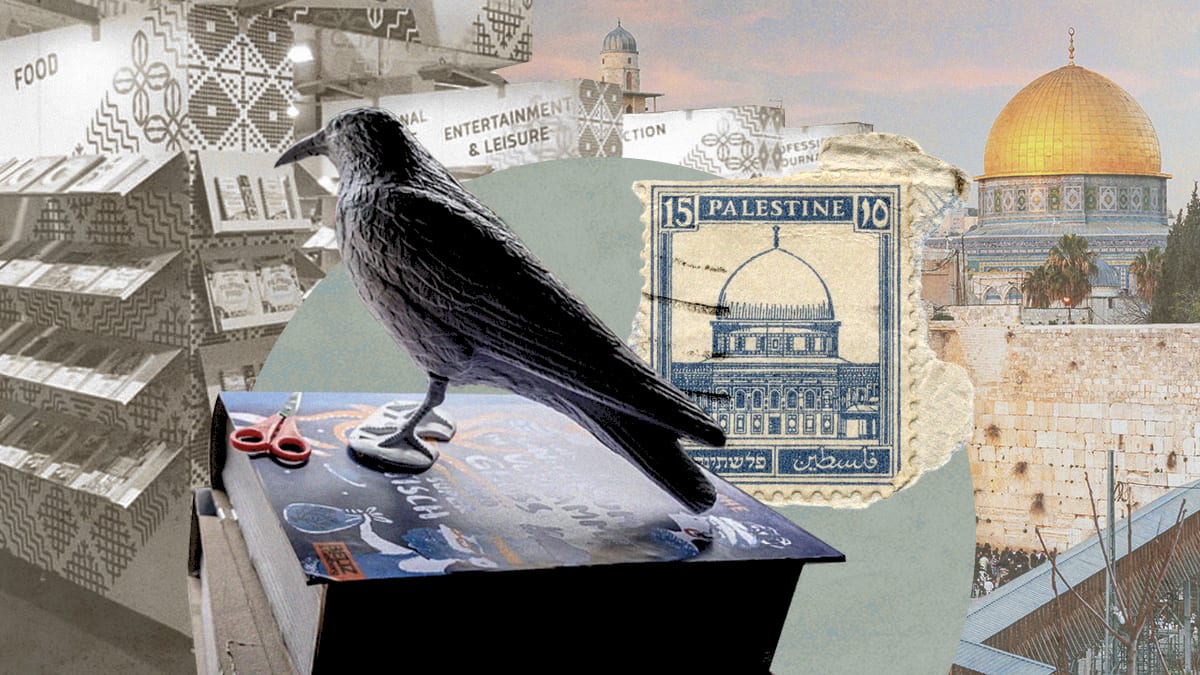
“The important thing is to overcome separation. Philosophically, I think separation is an instrument of power designed to keep the inferior inferior. And so I want to overcome that through music, through literature, through thought.” – Edward Said
What Would Jose Rizal Do?
The Philippines is the guest of honor at this year’s Frankfurt Bookmesse (FBM)—the world’s largest trade fair for books. FBM had about 230,000 visitors and over 4,300 exhibitors in 2024. As guest of honor, the Philippines will have a special exhibition hall and has announced over 77 literary events, 100 authors and creatives, as well as various artist performances. The theme—The imagination peoples the air—is inspired by Jose Rizal’s Noli Me Tangere.
ALSO READ:
Filipino Writers and Publishers React to the Call to Boycott the Frankfurt Book Fair 2025
Amid Boycott Calls, Frankfurt Book Fair 2025 Plans Move Forward
Jose Rizal loved Germany—his "scientific mother country," where he studied ophthalmology and basked in the intellectual milieu. His first novel, Noli Me Tangere, was published in Berlin, 1887. One would think that if Rizal were alive today, he would probably be ecstatic about the Philippines attending as guest of honor at FBM. He did, after all, dedicate Noli “a mi patria”—to my country. While it would seem like a neat way to come full circle, perhaps Rizal, a complex man, would look further into the nuances of this monumental event.
For those who are unfamiliar, Noli Me Tangere is Latin for “touch me not,” an old-time medical reference to cancer, i.e., don’t touch it because it hurts too badly and/or it will spread. It is also a metaphor for corruption, hence one translated title for Noli is The Social Cancer. The book captures the despair of Filipinos under the oppression of the Spanish government and the Catholic Church. Through today’s examination of power, many of our nation’s writers and publishers have considered FBM’s institutional ties with Israel, and have heeded the call to boycott this event in solidarity with Publishers for Palestine. Expressing dissent, or any conviction born of intense reflection, demonstrates great courage.
What would Jose Rizal do?
I don’t know, and the thought exercise is moot for me, having already advocated for my country’s guest of honor appearance at FBM. In the same breath, I oppose FBM’s connections to the Israeli occupation and the genocide of the Palestinian people.
My name is Irene, and I wrote a young adult magic realist novel titled Stray Cats (Ateneo University Press, 2023). It deals with child trafficking through concepts in Philippine folklore. As culturally niche as my work might sound, in July, I became the first Filipino author at the White Ravens Festival in Munich and across Bavaria. White Ravens, a separate festival, is part of FBM’s calendar of events, which is why my readings in Bavaria coincided with the Philippines’ preparations for Frankfurt.
So, as of this writing in late August 2025, I have already taken part in FBM, and I applaud the Filipino delegates who will showcase the best of our country for the world in October.
What Would Jella Lepman Do?
The White Ravens Festival and its annual list of books are part of the International Youth Library’s (IYL) initiatives to develop international understanding through children’s literature. The IYL was founded in 1949 by journalist Jella Lepman, who also established the International Board on Books for Young People (IBBY). Because of her Jewish background, Lepman moved to England during World War II. When the war ended, she returned to Germany to assist with cultural reformation. Back then, German children had only been exposed to Nazi propaganda literature. Lepman’s vision was to bring in children’s picture books from around the world because, "If one is to believe in peaceful coexistence, the first messengers of that peace will be children’s books."
The 2025 White Ravens Festival was from July 13 to 17. Schools either registered to attend readings at Schloss Blutenburg, a.k.a. The Book Castle, where the IYL is based, or they applied to have their choice of author read at their campuses. We were 11 authors from eight countries, and each of us had a moderator, who was also our guide and translator (in cases where the author didn’t speak German). I felt fortunate to have had Beate Schäfer as my moderator-translator; she went above and beyond with her guidance.
Blutenburg Castle, home of the International Youth Library
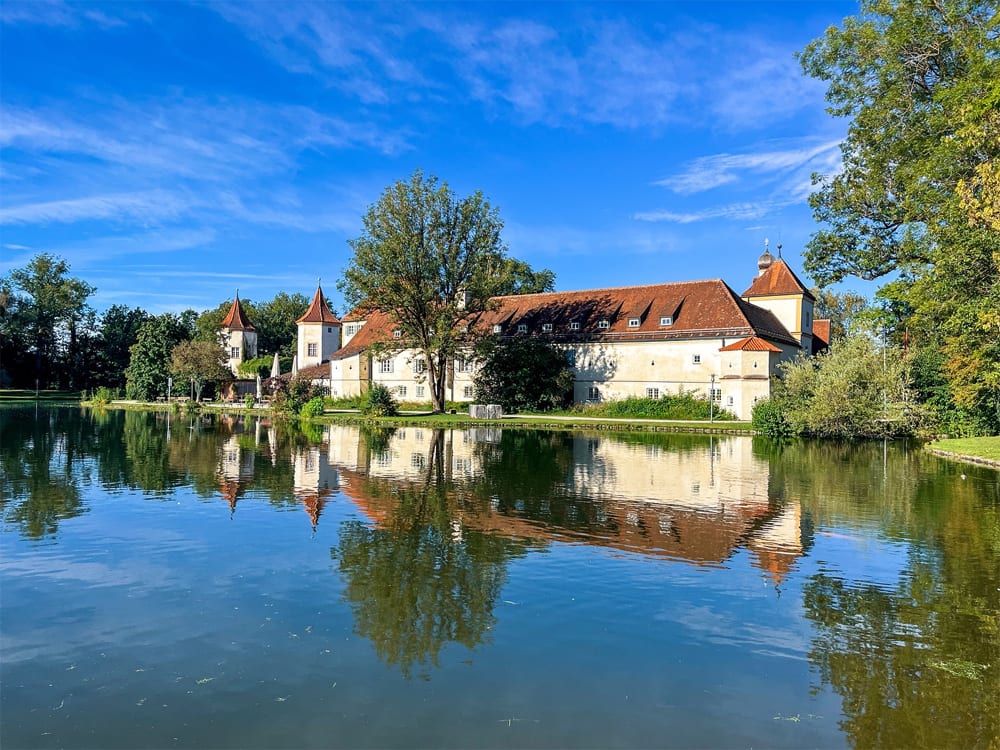
On Saturday, July 12, the authors and moderators met IYL Director Cristiane Raabe and the library staff. Claudia Söffner, the specialist for English literature, gave us a tour around The Book Castle, which is as magical as it sounds. We started at the lending library with its cozy reading nooks and thousands of books. The afternoon sun filled the room, illuminating the shelves that were labeled according to language and region. There were works from Iran, Japan, Eastern Europe, all around the globe. One section that immediately caught my eye was Palestine. I thought briefly about why it stood out to me, why wouldn’t they have space dedicated to Palestine?
As I noted the presence of some nations, my attention was drawn to the absence of another.
“Do you have a section on the Philippines?” I asked Claudia.
We looked but couldn’t find any children’s books in any of the Philippine languages. Claudia explained that most of the books in IYL’s collection were donated, and for any book to be in the lending library, they had to have more than one copy. It made sense that getting a hold of books written in Filipino would be challenging. Even my book, Stray Cats, is in English. I put a pin in that moment, and then I got swept up in all the action of the festival.
I had a total of eight school readings in four cities and towns—Straubing, Nuremberg, Geisenfeld, Munich; a radio interview; hours of train rides. Each reading had anywhere from 50 to 150 pupils, ranging from 6th grade to 8th grade. In almost all events, they were unaware of the Philippines. Some of the teachers had prepared their students with activities, like finding the Philippines on the map. With a couple of exceptions, I was the first Filipino they had ever met, so for each presentation I gave background information on myself, my birth country, Metro Manila, gated communities (apparently not a thing in Germany), our folklore, and magic and social realism. To add some umph to the presentations, I included animations from illustrator Rev Cruz with my readings.
I was impressed by how engaged the German children were despite how far-removed life in the Philippines is from their reality. They asked many questions, and so did the teachers. They wanted to learn more. They wanted to hear my book in my voice. They wanted to share their thoughts and feelings about the Philippines, Stray Cats, our folklore, our social issues. They wanted to be there, listening to me. I was happy to be there as well, but I also felt a little dejected by how invisible my country had been to these students before they had met me.
In one class, a boy asked me whether Filipinos knew about Germany.
“Yes, everyone knows about Germany,” I answered.
After the long days of reading presentations and traveling, I would lay in bed and scroll through my newsfeed, through rage-inducing pieces about famine in Palestine. It occurred to me that I was probably in college when I first heard about Palestine, so why would I expect German students to know about the Philippines? I still don’t know much about the Palestinian people beyond catastrophic news, lengthy analyses, and thought pieces from various English-speaking pundits and popular talking heads. I don’t know any Palestinians. If I wanted to learn about the lives of Palestinian people, why not learn about the culture using the same tools that the culture’s children use? Picture books.
What Would I Do?
It is ironic in the sad-to-those-who-feel and funny-to-those-who-think kind of way that our national hero, Jose Rizal, was a novelist. Based on global learning assessments from recent years, the Philippines has ranked close to the bottom in reading comprehension. One proposed solution to this embarrassment was having "Catch-up Fridays," which sounds punitive—not exactly something that would foster a national love of reading.
In Germany, I met adults who knew about the Philippines. Unsurprisingly, most of their knowledge was about our work sector, given that the Philippine labor diaspora is one of the largest and most far-reaching. This was nothing new to me.
Aside from being a writer, I am a health professional, though not in the same field as our fellow Dr. Rizal. I am a pediatric occupational therapist and have an MS degree in Applied Cognition and Neuroscience from the University of Texas at Dallas. Now based in Colorado, I am a citizen of both the Philippines and the US. I migrated to Texas in 2011 as an Overseas Filipino Worker. Like many OFWs, the message I received was that I had to go abroad for a “better” life, and that the best way to do this was through work—specifically work that is in demand by The West.
Being a former OFW, I know first-hand what it is like to be valued primarily for my labor. This is a narrative I’d like to change for future generations of Filipinos.
We are more than our utility to the Global North.
When I accepted the invitation to Munich from the International Youth Library, I took the opportunity to really share and celebrate my Philippine culture—the good, the bizarre (now those German kids know what a tikbalang is), the painful, the indignant, the joyful, the nakakagigil. The White Ravens Festival literally put the Philippines on the map for those hundreds of pupils who came to my readings.
“This experience will stay with them,” Beate had told me after a particularly lively and interactive presentation.
My participation in White Ravens put me in touch with people who truly care about books and ideas from the margins, people who challenge the mainstream. That moment at The Book Castle, when I saw the shelf of Palestinian books (mind you, the first time I had seen picture books in Arabic), I thought, why wouldn’t they have space dedicated to Palestine? The answer is that the German government does not recognize Palestine as a state, meaning the IYL’s holding space for Palestine on its shelves reflects the library’s own stance. As the adage goes, existence is resistance.
I also found out that the IYL has faced opposition from Chinese officials regarding the inclusion of Taiwan in the lending library. These representations, along with my experiences at the festival, reminded me of the political power of children’s books, their ability to direct the most impressionable minds—that’s why people are always freaking out over them.
I have asked myself, as an author for young people, what it means to advocate for Palestinian life in the face of ongoing genocide. Is there anything I can say about the subject that hasn’t already been said? Should I? Would my thoughts be helpful, or simply add to the outrage that is at once lacking and overwhelming?
Because the IYL reached out to me, because hundreds of German children were so receptive to my Philippine story, I was moved to reach out to the president of the International Board of Books for Young People—Palestine, Ms. Jehan Helou. I wrote to her that I planned to go back to the Philippines for storytelling activities in early 2026, and that I wanted to include children’s books about Palestine. Surely, there are Filipino children—and grown-ups, who want to know more Palestinian stories.
Ms. Helou responded:
"Books are the best means of knowledge, creativity, and cultural exchange. In these very horrific days when our people face genocide and ethnic cleansing, reading books on Palestine becomes a necessity." I’ll be announcing the dates of these storytelling activities on my website. In the meantime, the IBBY’s list of children’s books about Palestine can be found on IBBY's website.
I opened this essay with a quote from Palestinian-American intellectual Edward Said. In his 1978 book Orientalism, Said points out how Western authors justified their colonial ambitions in the Middle East and Northern Africa by depicting these regions as dark, exotic, and fundamentally backward. Orientalism can also serve as a harsh lesson for us Filipinos, with our own colonial past, because if we don’t write our own story, it will be written for us. And for our collective voice to be heard, we must engage with the global community. Sound does not travel in a vacuum. The important thing is to overcome separation.
As Filipinos, it is our duty to tell our own story. And as citizens of the world, it is everyone’s moral responsibility to reaffirm the humanity of the Palestinian people, through music, through literature, through thought.
