• Man at His Best 2025
  • Long Reads
  • Style
  • Money
  • Wheels
  • Culture
  • Opinion
  • CORNER OFFICE
Search
Menu
Close
Close
  • Man at His Best 2025
  • Long Reads
  • Style
  • Money
  • Wheels
  • Culture
  • Opinion
  • Style
    • Fashion
    • Grooming
    • Watches
  • The Good Life
    • Pursuits
    • What She Wants
    • Mavericks
    • The Directory
    • The Noble Man
  • Culture
    • Food & Drink
    • Arts & Entertainment
    • Lifestyle
    • Tech
    • Movies & TV
    • Music
    • Books & Art
    • Design
  • Wheels
    • Cars
    • Motorcycles
    • Drive
  • Money
    • Industry
    • Wealth
    • Capital
    • Movers
  • Long Reads
    • Notes & Essays
    • ESQ&A
    • What I've Learned
    • Fiction
    • Features
  • Life
    • Sports
    • Health & Fitness
    • Women
    • Sex & Relationships
    • Travel
  • Politics
    • Opinion
    • News
  • COUPONS
  • About Us
  • Terms of Use
  • Privacy Policy

NPC Seal of Registration

Esquire has been granted the NPC Seal of Registration in recognition of the successful registration of its DPO and DPS

BIR Seal of Registration
© 2026 EsquireMag.ph, All Rights Reserved
Long Reads

Film Writer Ricky Lee Is a Giant in Philippine Cinema

By Paolo Villaluna
Oct 2, 2019
Post a Comment


It begins with a memory of a mother and an aswang. 

The orphan recounts how his mother was so sickly and was in constant pain. It was assumed by the neighbors, in the small town of Bicol where they lived, that a tik-tik (a mythological aswang) took a liking to her so the family decided to move her far away, to a relative’s house. They traveled carrying the mother in a hammock. But the aswang followed her. An arbularyo was called and the little boy remembers seeing his mother being laid on a Manila paper as chants and incense filled the room. Unearthly thorns were removed from the Manila paper. But she got worse. 

The boy’s mother died. 

The father, feeling incapable of taking care of the kid on his own, gave the little boy away to relatives. 

That boy is now an older man, directly in front of me for an interview. I place the recorder between us, as he meekly takes his seat, a little shy, a little restless: hardly qualities you expect from such a renowned personality. 

ADVERTISEMENT - CONTINUE READING BELOW

I ask the man in front of me if he ever found out what had really caused his mother’s death. “Most likely, stomach cancer. I think stomach cancer. And so kaya ako mahilig sa mga aswang novel, eventually naging Amapola.”

“Although dati, aswang na malungkot, exiled sa lupa or walang social skills, aswang na alienated—the misunderstood, the disconnected, the outsider,” he continues.

Confused and alone, the boy got lost in literature, in the form of Liwayway magazines and newspapers and the bizarre stories woven by drunken men that peppered the little sari-sari store where he stayed.

“That time I kept running away. I felt alone, disconnected,” he says in between sips of tea that he ordered. 

Then when the boy was in Grade 5, his father died. 

So at 10 years old, the little lost boy, whose mother was taken away by aswangs, who felt displaced and unloved, was now truly an orphan.

CONTINUE READING BELOW
watch now

The orphan’s name is Ricky Lee.


article big image
PHOTO: E.S.L. Chen
Post a Comment

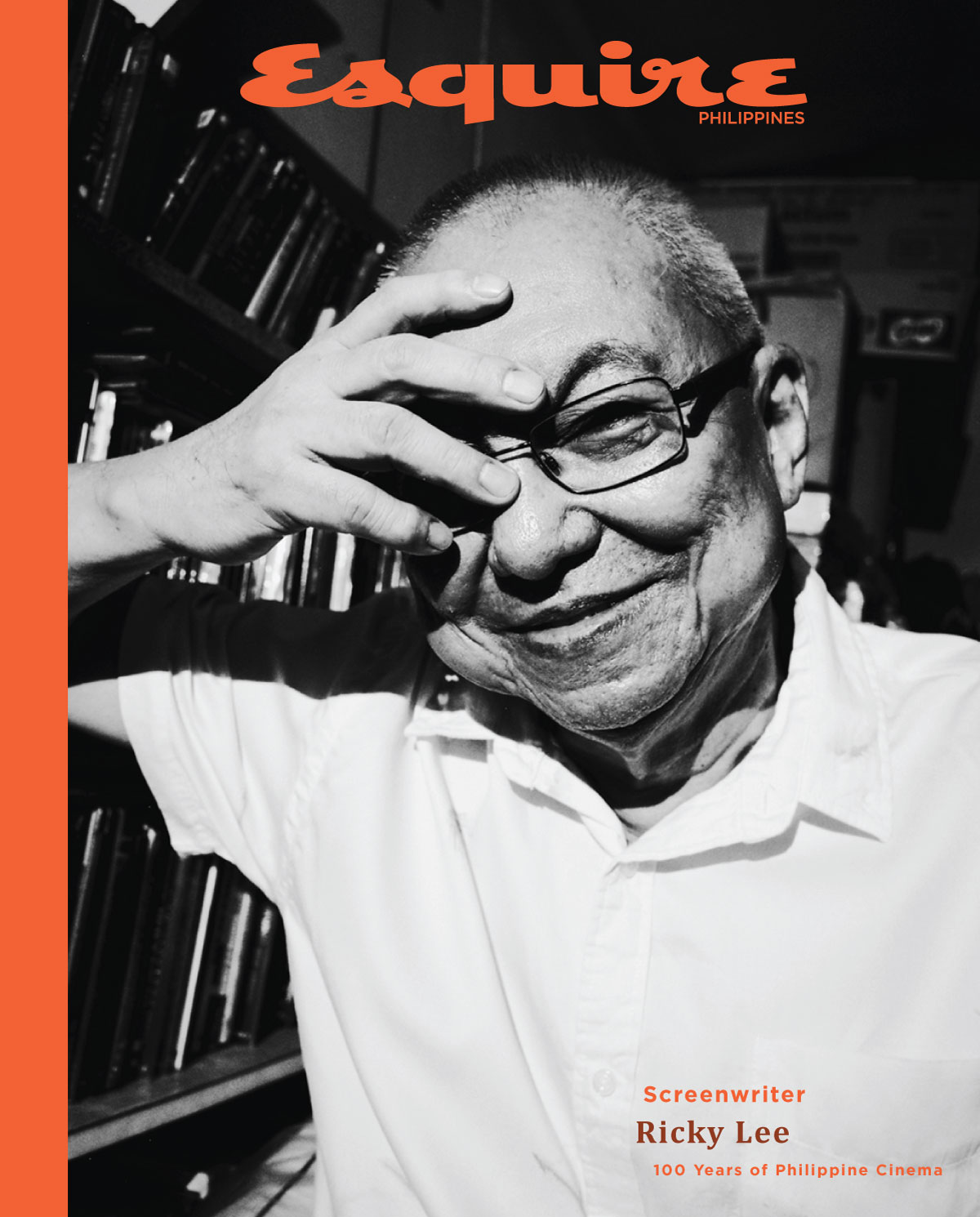
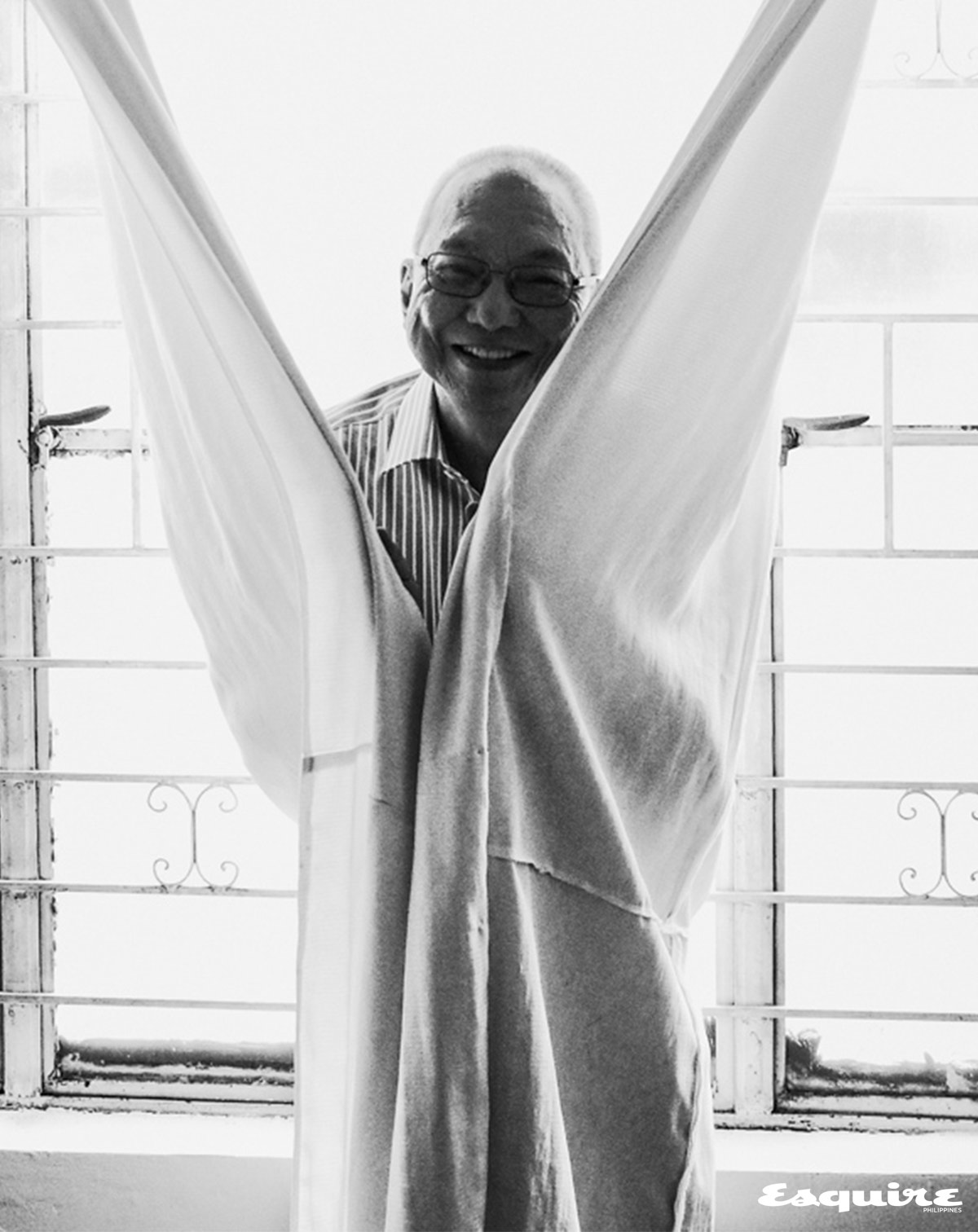
Lee is a shy, unassuming, small man. He has a round, smiley face, that is both comforting and comical at the same time. He is uncomfortable in large crowds and prefers to be in the background. He loves his privacy and makes funny little naïve mistakes. At public events, he prefers to be surrounded by a small group of students or by really close friends and avoids unnecessary celebrity brushings. He gets lost in the limelight and consciously avoids any spotlight. 

There is irony in the reclusiveness: because Lee is a towering figure in the film industry, a writer whose films constitute more than a quarter of the Philippine Cinema’s Second Golden Age in the ’80s: Jaguar (Lino Brocka ’79), Playgirl (Mel Chionglo ’80), Brutal (Marilou Diaz Abaya ’81), Salome (Laurice Gullien ’81), Cain at Abel (Brocka ’82), Relasyon (Ishmael Bernal ’82), Himala (Bernal ’82), Moral (Abaya ’82), Karnal (Abaya ’83), Sinner or Saint (Chionglo ’84), Private Show (Chito Rono ’85), Macho Dancer (Brocka ’88), just to name a few. You must understand that Lee is as responsible for the Second Golden age of Cinema as much as Lino Brocka or Ishmael Bernal. 

ADVERTISEMENT - CONTINUE READING BELOW

The most celebrated works of the ’90s also belong to him: Gumapang Ka Man Sa Lusak (Brocka ‘90), The Flor Contemplacion Story (Joel Lamangan ’95), Madrasta (Olivia Lamasan ’96), Miguel/ Michelle (Gil Portes ’98), Jose Rizal (Abaya ’98), Burlesk King (Chionglo ’99), Muro-Ami (Abaya ’99), and Anak (Rory Quintos ’00). 

And he continues to write films—he currently has projects with Lav Diaz and Mac Alejandre. His books are national treasures—Trip to Quiapo, the country’s most definitive textbook on scriptwriting is required reading in college communication courses, and his novel Para Kay B, which anticipated the hugot generation is a bestseller and a millennial favorite.

Lee is a giant in Philippine Cinema. He cannot avoid the spotlight because he is the spotlight. Yet as he fidgets on his phone, figuring out how to pause it, apologizing for the interference during this interview—with a voice that is both homey and wispy, one cannot but feel humbled: The giant is also a man.


article big image
PHOTO: E.S.L. Chen
Post a Comment

Ricky Lee in Van Laack

In high school, to escape the isolation, Lee spent days in the library, devouring books by the dozen, discovering Dostoevsky and Tolstoy; and to feel more connected to the world, he began writing stories. He submitted his first story to a national publication, Philippines Free Press. It was published and he earned his first-ever paycheck—50 pesos. 

But being able to share his story to a world larger than the confines of a town where no one reads was what made him happy. He was less forlorn. Less of an alien. Less of an aswang. 

It also emboldened him to imagine bigger. Maybe even leave this town. He has been reading about Quiapo in Liwayway and it became his personal Shangri-La. He was lonely, but he had a dream.

“But surely you were loved, at least by your friends?” I ask him. 

ADVERTISEMENT - CONTINUE READING BELOW

“Alagain ako eh. Alagain ako ng mga kaklase, ng mga kaibigan. They would bring me home, they were worried when I would get sick, kasi I was thin and sickly and frail and vulnerable, so alagain ako ng everybody from teachers and friends.” he replies. The words come out like a confession; like a mantra he tells himself because he refuses to believe he can be loved for just being himself.

I ask again “So, you were loved by your friends?”

“Ah, yes,” he exclaims. It’s almost a realization, an invisible embrace. “By teachers, schoolmates, friends, yes.” Then a pause. “Pero I think the problem was me. Ang feeling ko lagi, social outcast ako. Wala akong social skills.”

article big image
PHOTO: E.S.L. Chen
Post a Comment

Ricky Lee in Van Laack

He is so socially awkward that when his father was still alive, he recalls being touched only twice by him: The first was when he wanted to buy a dictionary; his father swatted his hand away from the book.

The second was when he was awarded First Honors in Grade 4. His father embraced him and combed his hair: “That’s all I remember. He was very shy. Baka namana ko yung shyness ko from him.”

Ironically, he didn’t shy away from strangers. “I think sa buhay ko I’m better off with strangers. Karamihan sa buhay ko mga strangers tumulong. Sa likod ng Philippine Free Press, may directory ng mga prominent na tao. Kinuha ko yung mga pangalan and wrote them one by one nung high school ako—from Bienvenido Santos, Nick Joaquin, Wilfredo Guerrero, Carlos P. Romulo to Flash Elorde, asking for advice, how to write. And some of them responded. Carlos P. Romulo sent a book with a letter paano ako pwede maging better speaker. May isa, si Wilfredo Guerrero, the National Artist, he gave advice, sent me a book of his plays tapos offered me to stay with him kapag nag-UP ako.”

All the more he wanted to run away and study in Manila, so on the very same day of his high school graduation, after his valedictory speech, the lost boy packed his books and made a fateful decision. 

Together with four of his friends, carrying tuyo from teachers and 50 pesos in his pocket, and armed with stories bigger than his sickly frame can handle, Lee rode a bus away from Bicol and began a pilgrimage that will be his first trip to Quiapo.


article big image
PHOTO: E.S.L. Chen
Post a Comment

Ricky Lee in Van Laack

Manila of course, as all clichés go, is hardly the land of dreams. 

Lee and his friends ended up as urban dwellers and scraped to survive. His friends found work at an umbrella factory while he looked for other jobs, first as a waiter, then as an accounting clerk while he was studying in Lyceum. He found himself impoverished, exhausted by 16-hour shifts of work and studying: One night, on his way home walking through Avenida, he simply collapsed out of weariness and hunger. He woke up on the street and continued to walk the maze of the city, alone. 

Maybe he discovered that Quiapo is just a labyrinth of dirty sidewalks circling around him, its buildings the same prison that cooped his soul in Bicol, that no matter how far he runs away, he will still find himself frail, clumsy, shy, disconnected, unheard, lost, alien. 

I don’t know if he realized that within seconds of his feet touching the pavements of Manila, he took the first trip that decades later would result into rearranging the landscape of Philippine Cinema and altering the universes of hundreds of artists that have attended his workshops and have taken their own pilgrimages into Quiapo.

Still he was set on his goal and eventually studied as a scholar and working student at the University of the Philippines. He wrote fiction and journalism for publications like the Asia Philippines Leader and Filipino Free Press. He won two consecutive Palanca awards for his short stories and was beginning to make a name for himself. At the University of the Philippines, his love for the country was further awakened and he associated with Pen for People’s Progress, an artist’s group advocating human rights with Dr. Bienvenido Lumbera and Pete Lacaba. During this time, he wrote his first-ever screenplay when he was asked to write Dragnet (Garces, ’73) starring Joseph Estrada. 

He was studying. 

He was earning as a writer. 

He had friends. 

He was in Manila. 

For the first time in his adult life, Lee did not feel like an orphan. 

But the '70s was a socially turbulent era in the Philippines. Aswangs of the malevolent kind thrived and lorded over society. Martial law was declared. Activists were vilified and disappeared. Artists who spoke out were incarcerated and tortured. The orphan, once again, ran away. Faster. Hid underground. Moved places. Faster. Faster. Faster. 

In 1974, Lee was captured by the police and jailed.


article big image
PHOTO: E.S.L. Chen
Post a Comment

Ricky Lee in Van Laack

Lee was brought into a detention camp along with other artists. It was a source of pride, standing up for what you know to be right. After being beaten, the incarceration started to take its toll. He’d lie down for days complaining about chest pains. One day, he coughed up blood. The spot of blood on his palm was suddenly a scarlet mirror and the more he looked at it the more he despised the reflection: a little sickly boy—frail, worthless, and once again, in a prison.

Illness and depression took the best of the boy. He became contemplative of his own journey and writings. And because he was bed-ridden and ill, fellow artists in jail began taking care of him. 

“Alagain na naman ako. I felt so small. So useless. I’d rant tungkol sa lipunan but instead of listening they’d give me biscuits and fruits kasi kailangan ko gumaling,” he says. An uncommon tenderness wraps around his voice as he continues, “And it’s doubly frustrating because it’s not their fault. In fact, I felt so loved and cared for, giving me what I need. Pero dahil depressed ako, I felt like all my life I’ve always been taken cared of, so parang di ko ma-validate yung worth ko.

“Tapos lahat ng writings ko very mawkish and too sentimental. So ang papangit. And I kept writing nun [sa loob], ang papangit. Marami ako nasulat nun na puro pangit. So ang feeling ko, ano ang future ko? Saan ako pupunta? Ano mangyayari sa gusto ko? Sakitin ako, burden sa kanila at the same time yung worth ko sa pagsusulat parang ang papangit.

“I had to take control. I felt like I had no control over my life. Nakakulong ako, di ko alam mangyayari. Inaalagaan nila ako, may sakit ako. I was coughing blood. And I couldn’t write. I had no control eh. So I wanted to take control.”

So the sickly thin boy from Bicol decided to take control of his life: He found himself a blade and slit his wrists.

He survived and woke up in the hospital.

“After doing it, ‘Ay, mabuti vertical ang hiwa, kasi kung horizontal, delikado.’ Humarap ako sa dingding and I started crying, sabi ko, pati ba naman dito I'm so clumsy I can’t even do it right,” he concludes in a tone that is distinctly whimsical. 

The suicide attempt woke him up soulfully. 

After a year, as part of a Christmas package, the Marcos government decided to free 50 political prisoners including Ricky Lee and Bienvenido Lumbera. They were just thrown out on the streets.

He wanted to put his life on track again. Through his best friend Gil Quito, he boarded with fellow writer Doy Del Mundo. The barkada would go to Alliance-Francais, Goethe Institut and obscure theaters in Binondo to watch foreign films and he discovered Fellini, Antonioni, Bergman and Kurosawa. He’d devour film books. Inside the church of cinema, he fell in love with films and found a new devotion. He is a writer. In the form of the huge screen where stories can be told, he found his new Quiapo.

He co-wrote Itim (De Leon ’77) with Quito and Del Mundo. He met Gil Portes and wrote Pagonggahan (Portes ’79). He co-wrote Jaguar (Brocka ’79) with Lacaba. Marilou Diaz-Abaya wanted to get him after watching Jaguar and he wrote Brutal (Abaya ’80). He was the script consultant for Manila By Night (Bernal ’80). And one day, Quito went home to find pieces of script littered all over the floor and Lee intently doing revisions. The title of the script was Himala (Bernal ’82).

In a span of five small years, Lee gave Philippine Cinema a much-needed injection in the arm.


article big image
PHOTO: E.S.L. Chen
Post a Comment

For 37 years, Lee has been holding scriptwriting workshops. Here is a man, the most towering giant in his chosen field, who can deservingly rest on his laurels—instead, each Sunday he opens the library of his home to virtual strangers who are willing to learn from him. For free. 

“Baka dahil wala akong roots. Maybe it’s my way of connecting. Maybe because I’m an orphan and I need a family. Honestly, 'di ko alam. But I need to do this,” he muses. 

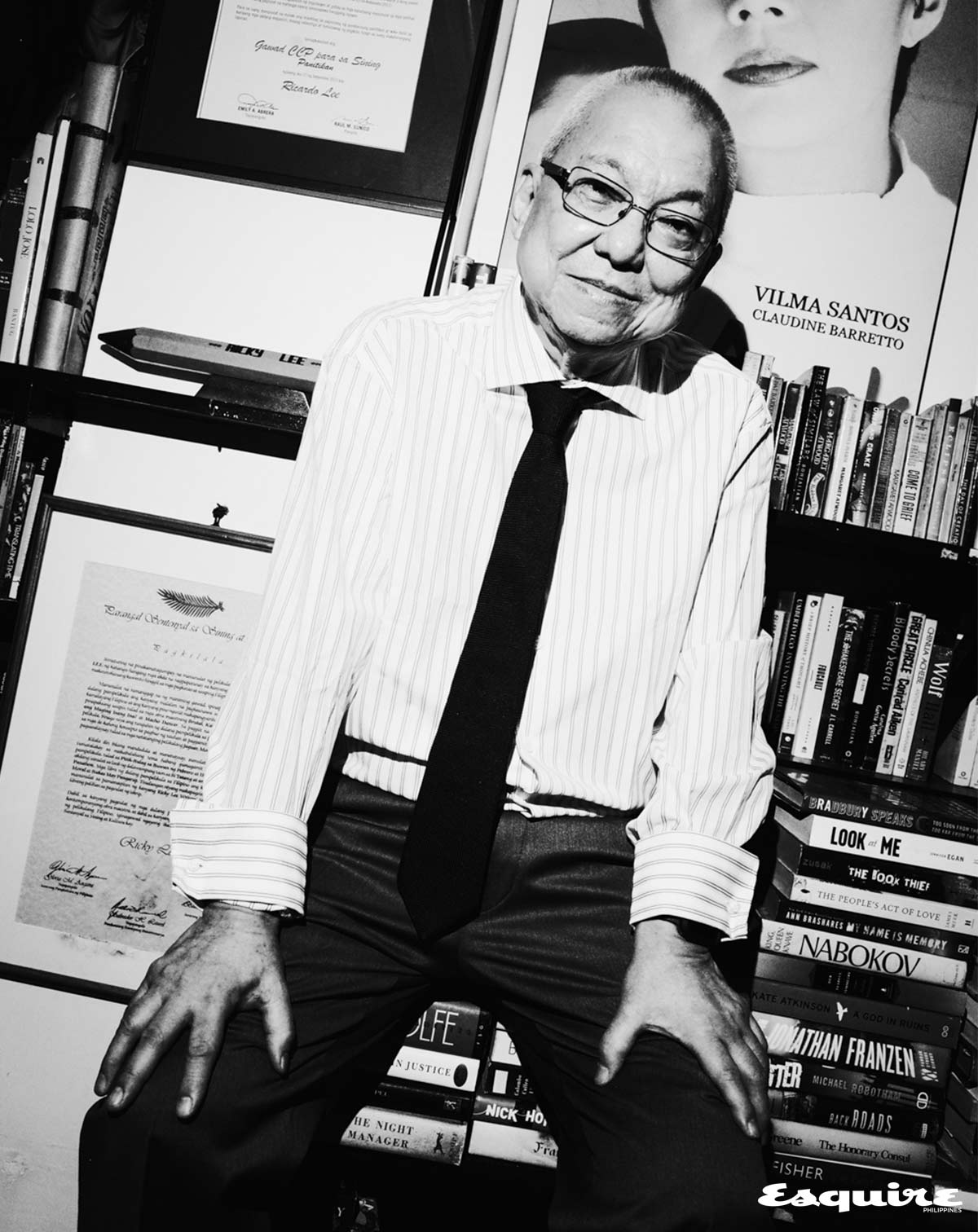
The first time you enter his library and workshop area, you’ll be confronted with a giant cushioned mat whose corners are filled with dozens of plush pillows. Each student can find their place, lie down, squat, or sit. The walls of the room have shelves for Lee's book collection that ranges from film to philosophy. A large whiteboard and a flat TV screen occupy one wall. There are no trophies, no certificates, no personal altars to display his accomplishments. You walk inside the library knowing that you are not in a classroom but a sacred personal space. 

That personal space has been home to several generations of film practitioners that began in 1982. The graduates of Lee’s workshops are a veritable who’s who of Philippine Cinema. Only Nick Deocampo of the Mowelfund Film Institute can one trace the personal influence of a teacher over a generation of talents that has and will shape culture. 

And then the giant enters. He takes his space in the middle of the cushion mat. He smiles, his small eyes disappearing behind his glasses, and greets everyone. He begins to teach. 

As he teaches, you realize that the giant is a man: Ricky Lee is funny. Ricky Lee is clumsy. Ricky Lee is hurting. But Ricky Lee is also brilliant. And gentle. And loveable. He creates an atmosphere where honesty, creativity, social awareness, and facing your demons are necessary tools for the artist.

He doesn’t prescribe to the student his way and style of writing—he teaches you to find your own unique voice. He will share with you all the tools that he has and is still learning but you have to figure out how your voice can utilize those tools. In the vernacular of the workshop, he will tell you where Quiapo is, but how you get there, whether you find it or not, is entirely up to you. 

As the students laugh and learn, I see Ricky Lee genuinely happy. I can only assume that this orphan from Bicol has finally found a family.

In this story: Produced by Clifford Olanday • Photographs by E.S.L. Chen • Interview by Paolo Villaluna • Styling by Paolo Chua • Grooming by Joan Teotico assisted by Mary Jane Agaton • Production assistant Roland Mae Tanglao

Read Next
Nardong Putik, the Outlaw King of Cavite
Read more stories about
  • c-suite
Most Shared
by author
Esquire Money
Most Popular
Latest Feed
The New Dean of New York University's Faculty of Arts and Science Is a Filipino
Armscor CEO Martin O. Tuason Passes Away at 51
A Fond Farewell to Chocolate Lover Inc.
The 8-Ball of Greatness in Philippine Pool
Tom Cruise Wore an Extremely Rare £70,000 'President' Rolex Watch to Accept His First Oscar
What Can Poetry Teach Us about Natural Disasters?
#InTheLoop
  • Politics
  • Culture
  • MONEY
  • Style
  • Long Reads
© EsquireMag.ph, All Rights Reserved.
  • About Us
  • Contact Us
  • Terms of Use
  • Privacy Policy
  • Sitemap
BIR Seal of Registration
Close

We use cookies to ensure you get the best experience on Esquiremag.ph. By continued use, you agree to our privacy policy and accept our use of such cookies. Find out more here.

Present
Read Cover Story
Read Cover Story
Catfish Image