
Financial Adviser: 5 Things to Know About Upson International Corp's IPO and How to Profit from It

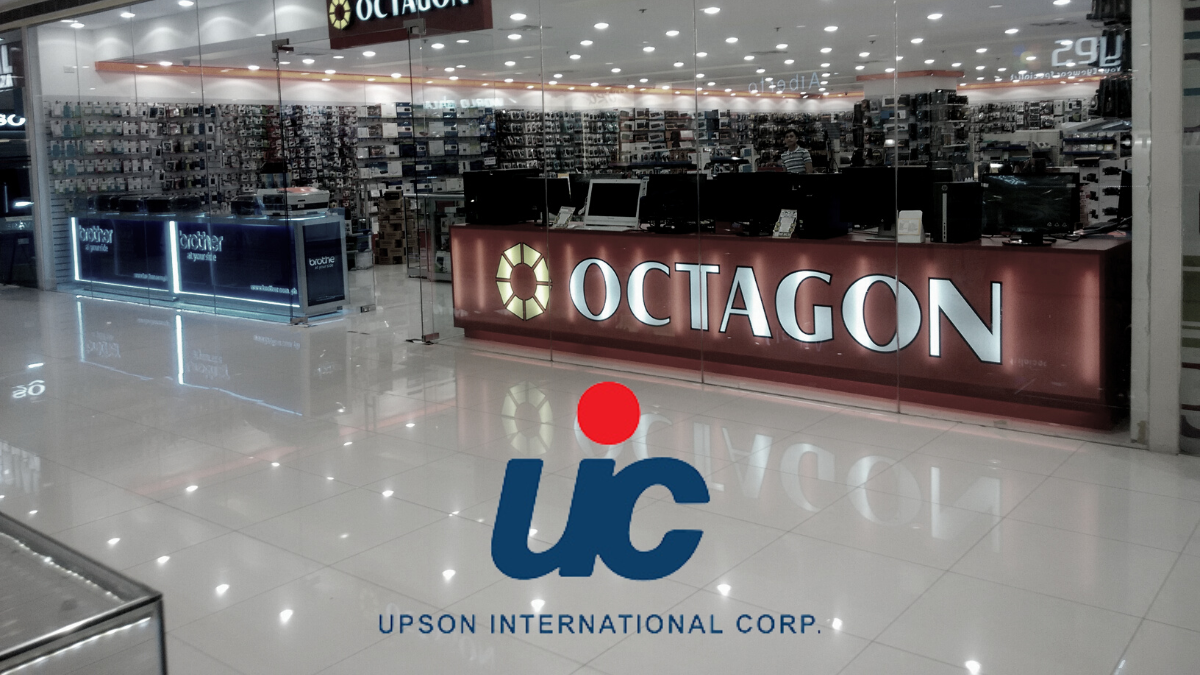
IT retailer Upson International Corp (PSE: UPSON) will be the second company that will go public this year after it recently obtained approvals from regulators to raise up to P2.37 billion in an initial public offering (IPO).
UPSON will sell up to 986 million shares, comprising of 789 million primary shares and 197 million secondary shares, at an offering price of P2.40 per share. The offering period of shares will run from March 21 to 27, with a target listing date on April 3, 2023.
UPSON will have a projected total market capitalization of P7.8 billion after the offering, making it the largest retailer of IT products in the country.
Investing in an IPO is like investing in a business. It is always good to spend some time understanding the business of UPSON and evaluate its growth opportunities. Once you are aware of the fundamentals of the company, you will have a better handle on the risk and return that you can expect from investing in the stock.
Here are the top five things every investor needs to know about Upson International Corp’s IPO:
ALSO READ
Financial Adviser: 5 Myths About Investing in IPOs and Strategies on How to Make Money from Them
1| Know the background of the company
Upson International Corp (PSE: UPSON) is the largest IT retailer in the country with over 200 outlets that offers a wide variety of hardware and software products under multiple brand names, including Octagon Computer Superstore, Micro Valley, Gadget King, and Octagon Mobile.
UPSON’s flagship brand, Octagon, constitutes approximately 76 percent of the total outlets, while the remaining 24 percent of the outlets are shared almost equally among Micro Valley, Gadget King, and Octagon Mobile.
UPSON started as a distributor of prominent IT brands such as Logitech and Canon in the 1990s, but when the Asian financial crisis struck in 1997, the company restructured its operations and shifted its focus to a more resilient business model, which was retailing.
In 2003, UPSON merged with its former affiliate, Columbia Computer International Corporation, to expand its presence in Metro Manila and key cities in Davao and Cebu.
During the 2020 pandemic, UPSON expanded its omnichannel strategy by making its products accessible through third-party e-commerce channels such as Lazada, Shopee, and Pick-a-roo.
Furthermore, in 2021, UPSON introduced a new store format called Concept Store, which is exclusively dedicated to a single brand such as Acer, HP, Brother, and Silvertec to provide customers with an exclusive shopping experience.
UPSON is owned by three partners led by Lawrence Lee, who owns the largest stake at 39 percent followed by Ricardo Lee with 30 percent and William Lim at 27 percent.
Lawrence Lee, who is the chairman of UPSON, is selling about 197 million shares to the public as part of the IPO.
Following the IPO, Lee's ownership stake in UPSON will decrease to 24 percent, which will correspond to the post-IPO shareholdings of his two other partners—Ricardo Lee at 23 percent and William Lim at 20 percent.
2| Know the earnings prospects of the company
UPSON's total revenue has increased at an annual rate of about 6.4 percent from P7.5 billion in 2019 to P8.6 billion in 2021. Personal computer sales account for around 50 percent of its revenue, while printing contributes 14 percent, communication 13 percent, components and networking 12 percent, accessories 10 percent, and peripherals three percent.
The steady increase in total interest revenues coupled by improving gross profits, which increased from 20.9 percent in 2019 to 22 percent in 2021, resulted to significant growth in its net income from P85.3 million in 2019 to P403.6 million in 2021.
In 2022, UPSON's nine-month total revenues continued to increase by 10.2 percent, rising to an impressive P7.03 billion compared to P6.4 billion in the same period last year. The strong revenue growth with sustained high gross margins caused its net income to increase by 69 percent to P400.2 million from P237.4 million in 2021.
If we annualize UPSON's total revenues for 2022, we project that the company is poised to attain a substantial milestone of P9.4 billion in total revenues.
Based on a 5.7 percent actual net margin, UPSON should be able to achieve a noteworthy net income of P537 million, representing an impressive 33 percent increase in earnings from 2021.
3| Know the risks and opportunities
It is important to note that out of the total P2.37 billion proceeds expected to be raised from the IPO, only P1.9 billion will be used for expansion as the remaining amount will be used to cover the sale of secondary shares to the selling shareholder.
UPSON is allocating about 86 percent of the total proceeds or P1.6 billion for store network expansion. The company plans to open 50 new stores in key cities in Luzon, Visayas, Mindanao, and the National Capital Region in 2023.
In the next four years, from 2023 to 2027, UPSON is targeting to open 250 new stores, resulting in an additional retail space of 25,000 square meters. The company is also developing nine new warehouses and distribution facilities to complement its expansion strategy.
For the remaining balance of 14 percent of the proceeds, which amounts to P266 million, UPSON intends to allocate it as additional working capital for store inventory to support its ongoing store network expansion.
Assuming each store will generate annual revenues of P47 million, we can estimate that the additional 50 stores that UPSON plans to open this year should be able to generate total revenues of P2.35 billion per year. This should provide UPSON’s additional full year earnings of P133.9 million.
UPSON’s five-year expansion plan will practically double its current total revenues to over P20 billion, which should enable the company to achieve at least P1.0 billion net earnings by 2028.
4| Know the financial strength of the company
The debt-to-equity ratio is one of the financial metrics that we can use to measure the financial strength of a company. This ratio compares a company's total debt to its total equity and measures the extent to which a company is financed by debt compared to equity. A high debt-to-equity ratio indicates that the company has more debt than equity, which can be a risk factor for investors as it may indicate a high level of financial leverage.
On the other hand, a low debt-to-equity ratio indicates that a company relies more on equity financing and may be considered financially stronger and less risky.
During the peak of the economy in 2019, UPSON had a debt-to-equity ratio of 9.9 times, making it a highly leveraged company. But during the 2020 pandemic, the company started to limit its risks by lowering its debt-to-equity to 4.35.
This ratio continued to decrease, reaching 1.4 in 2021 and further declining to 0.97 in 2022. The decline in UPSON’s debt-to-equity ratio was reflected in the significant decrease of its interest expenses from P245 million in 2019 to P51 million.
UPSON’s financial position will be further strengthened after the IPO because its equity will be expanded from P1.3 billion to P3.2 billion, lowering its debt-to-equity ratio to only 0.46.
5| Know the pricing multiples of the stock
If we assume that UPSON will achieve an annualized net income of P537 million in 2022, we can compare this against its projected market capitalization of P7.8 billion to derive a Price-to-Earnings (PE) ratio of 14.6 times.
This ratio appears to be relatively high compared to other retailing stocks in the market such as Puregold (PSE: PGOLD), which is trading only at PE ratio of 9.85 times or SSI Group (PSE: SSI), which has a PE ratio of only 3.67 times.
Moreover, even if we take into account the future earnings of UPSON with its expansion up to 2027, the pricing of the IPO seems to have already captured its growth opportunities. Let’s say UPSON’s net income in 2022 was P537 million and its expansion in the next five years will give the company a full year net income of P1.0 billion; the expected annual compounded earnings growth rate would only be 10.9 percent.
If we compare UPSON’s PE ratio of 14.6 times with its expected growth rate of 10.9 percent, the stock’s PE-to-Growth or PEG ratio will be slightly more than 1.0 at 1.3 times. As a rule, a PEG ratio of more than 1 indicates that the stock may be overvalued based on its growth potential. This is because the PE ratio is higher than the expected earnings growth rate, suggesting that investors are willing to pay more for the stock than its projected earnings growth justifies.
The other way to look at this is by looking at the stock’s Price-to-Book (PB) ratio. UPSON’s post-IPO book value is estimated at P1.64 times. If we compare this to its IPO price of P5.50 per share, we will get PB ratio of 1.46 times.
Again, by comparing this to listed retailers in the market such as PGOLD, which has a PB ratio of only 1.07 or SSI, which has a PB ratio of 0.48, UPSON’s 1.46 times appears to be overpriced.
But we can argue that UPSON may be more profitable than PGOLD or SSI by looking at its return on equity, which may justify its high PB ratio.
UPSON has historically high return on equity prior to IPO. Its return on equity in 2019 was 23 percent. This increased in 2020 to 36.5 percent and further rose to 45 percent by 2021.
But after its IPO, UPSON’s equity will expand, which could bring down its return on equity. For 2022, assuming the company will achieve a net income of P537 million, the projected return on equity will decline to 16.8 percent.
At 16.8 percent, UPSON’s return on equity more than doubled that of PGOLD’s 6.5 percent or SSI’s 7.3 percent. If we double PGOLD or SSI’s PB ratio, UPSON’s PB ratio should range about 1.5 to 2.0 times, making its current IPO price fairly valued.
Henry Ong, RFP, is an entrepreneur, financial planning advocate and business advisor. Email Henry for business advice hong@financialadviser.ph or follow him on Twitter @henryong888
