
Financial Adviser: 5 Business Lessons Everyone Can Learn from Vicky Mojica, Co-Founder and CEO of Angel’s Burger

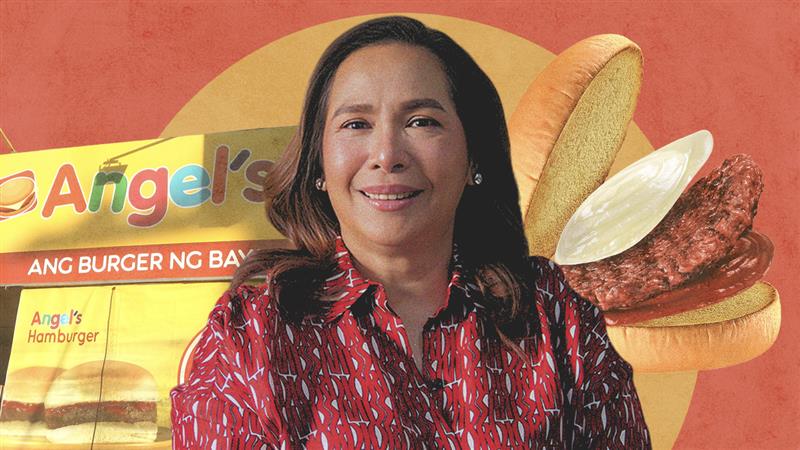
ILLUSTRATION: Igi Talao
In a country where food is more than just something to eat, where it’s a big part of the culture and the way people connect, Vicky Mojica has quietly built one of the Philippines’ most recognizable burger brands: Angel’s Burger. Yet few know the remarkable story behind the woman who made it all happen. A business administration student who once dreamed of becoming a doctor, Mojica is now at the helm of one of the country’s most disciplined and vertically integrated food enterprises.
Mojica once set her sights on medicine. As a student at the University of Santo Tomas (UST), she took admission exams for both Business Administration and Medical Technology. The results for Business Administration came out first, which led her to enroll in the course. That decision marked the beginning of a journey that would later take her in a completely different direction.
To help cover her expenses while studying, Mojica took a part-time job as a cashier at Wendy’s. There she learned the fundamentals of customer service. After graduating with a degree in Business Administration, she was promoted to a management trainee role, but the modest salary encouraged her to seek better opportunities.
She soon joined Jollibee, where she became a kitchen manager at its SM branch. There, she gained practical experience in food preparation, kitchen workflow and operational efficiency. These skills proved important in her later work.
It was during her time at Jollibee that she met her future husband. After two years with the company, at age 22, she married into a family that co-owned a well-known chain of burger stalls. What began as a family affair soon pulled her deeper into the food business.
She and her husband, Joseph began managing one of the family’s burger outlets as franchisees. Although the setup was relatively simple, they soon realized that the income was not enough to support their growing family. After some time, they asked the family for permission to start a burger business of their own. With that blessing, they opened a small stall in 1997 and named it Angel’s Burger.
Angel’s Burger steadily gained traction over the years, but it was a bold pricing strategy that propelled the brand into the national spotlight: “Buy 1 Take 1” burgers for just P18.50. Today, Angel’s Burger stands as the largest burger kiosk chain in the Philippines, with over 1,200 outlets operating nationwide. From its humble beginnings as a single food stall, the brand has grown into a trusted name known for affordability and consistency. Its iconic red and yellow carts are now seen in cities, towns, and remote barangays, serving millions of Filipinos across the country.
From a Jollibee kitchen manager to one of the most quietly influential figures in Philippine food franchising, Mojica’s journey is a masterclass in grit and grounded leadership.
How did Mojica build a brand that appealed to the common masses and turn Angel’s Burger into the largest burger kiosk chain in the Philippines? What lessons from Mojica’s leadership can help entrepreneurs build brands that endure beyond trends and competition?
Here are the five business lessons everyone can learn from Vicky Mojica, co-founder and CEO of Angel’s Burger:
ALSO READ
1| Know how to build a business that survives challenges and grow stronger
Every entrepreneur faces obstacles, whether financial strain, operational setbacks, or changes in the market, and the ability to endure these challenges is what separates short-lived ventures from lasting ones.
A resilient business creates stability not just for the owner, but also for employees and customers who depend on its continued presence. Over time, enduring tough periods helps business owners establish their own identity and prove their capability to lead as brand builders, not merely as franchise operators.
Resilience also sharpens strategy, reveals new opportunities, and nurtures leadership maturity. Beyond profit, a business that withstands trials lays the groundwork for legacy, something that can grow, scale, and eventually be passed on.
Mojica’s journey as an entrepreneur is a powerful example of resilience in action. From managing a fast-food branch in 1989 to establishing Angel’s Burger in 1997, her story shows how being hardworking, adaptable, and hands-on helped her build a business that didn’t just survive tough times but grew even stronger because of them.
Mojica’s resilience was first tested when she left her job to focus on the first hamburger store she and her husband received as a gift from her father-in-law. Their business model was bold; they were among the first to offer a “Buy 1 Take 1” burger promo, which immediately boosted sales. However, despite the popularity of their stores, cash flow remained tight.
This hardship didn’t discourage her; instead, she explored side ventures like Cholo’s Goto and Joma’s Bulalo to generate additional income. Even while pregnant, she cooked, managed operations, and pushed forward.
Mojica’s approach to moving from franchise operator to brand founder reflects her thoughtful leadership and respect for relationships. Rather than breaking away from the family business with tension, she and her husband respectfully sought permission to start their own brand, which speaks about her values of humility and the importance of maintaining good relationships.
When Angel’s Burger was born, it was not built with large capital or a corporate team. It began with her and her brother manually making patties, while nighttime helpers who doubled as bakers made their bread. Mojica did not wait for perfect conditions before launching her own business. She made do with what was available and made it work.
Mojica faced financial strain, operational limitations, and family obligations, but rather than giving up, she recalibrated her efforts, learned from setbacks, and built something stronger.
“I was a manager for fast food company in 1989,” she says. “Doon ko nakilala yong husband ko. Travelling teller kasi siya. Kinukuha nya yong sales ng fast food na pinagtratrabahuan ko. Nung kinasal kami ng husband ko, yong father in-law ko, ka-partner kasi siya ng isang sikat na hamburger store, niregaluhan kami ng isang tindahan parang franchise ng hamburger store nila. That was our first hamburger store in 1991 sa Galas, Quezon City.
“Nag-resign ako sa trabaho para makapag-focus kami sa store namin noon. Ako yung nagdu-duty noon, tapos may reliever lang. Kami yung first na Buy 1 Take 1, kaya malakas talaga yung benta noon. Over the years bago mag 1997, naging 13 na tindahan namin.
“Pero parang kulang lagi yung kita namin kasi magbabayad ka ng stock pero wala ka pang pera. Sabi ko bakit kaya, malakas naman yung tindahan. So nagtayo kmi ng ibang negosyo alongside yung hamburger business namin. Yung pinangalan ko sa una kong anak na si Cholo, Cholo’s Goto. Ako nagluluto nun.
“Tinabi namin sya sa tindahan ng mother-in-law ko sa Kamias, kaso nagbubuntis ako dito sa pangalawang anak ko, kay Jose Manuel, so pinatigil din ako ng husband ko so nung finally napanganak ko sya, nagtayo naman ako ng Joma’s Bulalo. It was named after him. Malakas yon, nasa tabi sya ng tollgate sa Valenzuela. Kaso syempre, restaurant yun, maraming nawawala dun sa negosyo, so tinigil namin. Sabi ng husband ko, ‘mag-concentrate na lang tayo talaga sa hamburger.’
“Nagpaalam kami sa father-in-law ko na baka pwedeng magtayo kami ng hamburger namin sarili. Pinuntahan namin talaga yong may-ari. Kasi di ba napakaganda yung pakiramdam na walang sama ng loob. Noong pumayag sya, nabuo namin yung Angel’s Burger, November 19, 1997. Pinangalan namin sa pangatlong anak ko na si Angel na I gave birth nung January ng taon na yun.
“Yung first branch namin ay nasa Quezon City. Malapit sa bahay namin. Kami lang ng kapatid ko yung gumagawa ng patty. Tapos meron kaming mga driver na pahinante na naging baker sa gabi. Sila yung gagawa ng tinapay, kami yung magre-repack. Ganon yung buhay namin. Tapos naka-ilang tindahan din kami nung 1997. Umabot kami ng mga 11 na stores.”
2| Know how to choose your family without losing your business
Making hard decisions for your family, like stepping away from a business or leaving the country for work, can be one of the most difficult choices an entrepreneur faces. But it often reflects responsibility and foresight. Choosing what’s best for your loved ones, even when it means pausing your business dreams, builds maturity.
This kind of decision builds emotional strength and clarity. When business owners return after stepping away, they often bring with them a deeper sense of purpose and sharper priorities. Time away allows them to evaluate their business with clearer eyes and make smarter, more focused improvements. Rather than setting them back, these difficult choices often lead to breakthroughs. They gain maturity and a stronger drive to create a business that’s not only profitable but also meaningful for themselves and their families.
Faced with the effects of the 1997 Asian financial crisis, Mojica and her husband found themselves running 11 burger stalls but still struggling to cover rent, stock, and salaries. Despite the business appearing successful on the surface, the financial pressure was overwhelming—especially with three children to raise and educate. It was a moment that called not for surrender, but for a bold, temporary step back.
Rather than give up entirely, Mojica and her husband made the difficult decision to leave the country and work as overseas workers in the United States. This wasn’t a sign of giving up. It was a deliberate move to regroup financially and emotionally, even if it meant enduring hardship abroad.
Mojica believed in the long-term value of their business. She didn’t sell the business even when offered P1 million. Instead of chasing short-term relief, she and her husband chose a hard path with the hope of returning stronger.
“In 1998, may Asian crisis, mahina yung economy, parang hindi namin alam bakit,” Mojica says. “Parang nagtratrabaho na lang kami to pay the rentals, sa pagbayad ng stock at makabayad kami ng sweldo ng tao. Kaya sabi ko parang kulang na kulang pa rin kahit may 11 stores, eh tatlo yung anak namin. Mag-aaral po yang mga yan. Pero ayokong mag give up.
“And then sabi ng husband ko, ‘Try na lang natin mag OFW? Yung as in ita-try namin tapos ang sabi naman ng pinsan nya, sa Las Vegas kami mag-trabaho kaya doon kami napunta. Nag-apply kami as cashier saka merchandiser kaming mag-asawa sa isang Filipino supermarket sa Charleston, Nevada.
“Iniwanan namin yung Angel’s Burger sa kapatid ko kasi sabi nong kapatid ko, ‘Ako na magma-manage, aalagaan ko rin mga anak mo. Puntahan nyo muna ang America.’ Actually, meron bumibili sa amin dati, sabi nya P1 million babayaran ko para sa 11 stores pero hindi namin binenta.
“Nagpunta kami ng America May 1998. Nung andun na kami, talagang ang hirap pala na maging OFW. Kaya pag iisipin ng iba na OFW ng mga kamag-anak na nagtratrabaho sa ibang bansa, wag nyong hingan ng hingan ng pera, ang hirap-hirap ng buhay.
“Kahera ako don sa Filipino store. Yung mister ko, merchandiser naman, sya yung maglalagay sa mga shelves tapos pag wala ng stock pupunta sya ng Los Angeles, dala-dala nya yong F250, pupunuin nya ng paninda yon tapos babalik sya ng Las Vegas.
“Yun na yung daily grind namin araw-araw, pasok-uwi, pasok-uwi. Tapos isang weekend na wala kaming trabaho, sinama kami ng pinsan ng mister ko. Sabi nya, ‘Punta tayo sa strip, Ate’ Pero $20 lang ang meron ako nun. Sabi ko ang sweldo namin sa isang linggo pa. Sabi nya, ‘Hindi, akong bahala sa inyo.’
“Pumunta kami at naglaro kami ng slot machine. Sabi ko nga, $20, eh ano yun, apat na $5 na phone card. Eh, pinantatawag ko sa mga anak ko yon. So sabi ko biro mo iri-risk ko yong apat na phone cards. Eh, pag natalo ako hindi ko na matatawagan mga anak ko.
“Yung naglaro ako ng slot machine, una, pangalawa, pangatlo tapos sabi ko, ‘Ano ba ‘to? wala pa rin, pero yung pang-apat, ang sabi ng machine ‘You won it!’ Pagkita ko, nag 777. Tatlong 7, jackpot. $10,000. Sabi ko nga, hindi ako makapaniwala, sinabi na lang sakin ‘You won it, Ate, nanalo ka.’
“Tapos, nung nakuha namin, dalawang $5000 yun. Sinabi sa akin, ipasok nyo muna sa bangko dito sa Amerika, so naiwan yong $5000. Yung balance na $5000 lang yong nauwi namin. Sabi ng husband ko, ‘Bumili ka na ng ticket, uuwi na tayo.’ Kasi nung nandon kami, may isang time pag-uwi namin pagkatapos magtrabaho, nakita ko husband ko umiiyak, sabi ko, ‘Bakit ka umiiyak?’ Sabi nya, ‘Sa Pilipinas boss tayo eh. Dito busabos tayo.’ Kaya buti na lang at nanalo kami. Gusto na nya kasi umuwi, yong mga anak nya hindi nya nakikita. Naririnig nya habang nagsasalita pero hindi mo nakikita. Di katulad ngayon may Face Time na.
“So pag-uwi po namin, pinambili namin yung $5,000 ng truck at binago namin lahat yong sa Angel’s Burger. Kasi nga may pera na kami eh. Sabi ko nga probably it's divine providence. Tapos yun, lahat inayos na namin yong tungkol sa Angel’s Burger para mapaganda lalo yong mga tindahan.”
3| Know how to scale a business by motivating your sales force and maintaining consistent quality
Incentives help align the goals of employees with those of the company. When staff know that their extra effort can lead to higher earnings or recognition, they are more likely to stay motivated, take initiative, and deliver better customer service.
This creates a culture of accountability and ownership, especially in a retail or food kiosk setting where frontliners directly influence sales and brand experience.
Consistent quality, on the other hand, builds customer trust. No matter which branch a customer visits, whether in a busy city or a remote town, they expect the same taste, service, and product standards. By keeping product quality uniform across all locations, a brand reinforces reliability and strengthens its identity. Together, incentives and consistency help scale operations without losing control. You grow not just in number, but in reputation.
Guided by her father, a former Director of Labor, Mojica shifted from paying employees a fixed daily wage to offering a commission-based scheme tied to each store’s gross sales. This simple yet powerful change gave her team a clear motivation: the more they sold, the more they earned. It transformed kiosk crews from passive wage earners into active drivers of revenue.
At the same time, Mojica never compromised on product quality. She and her sister spent three months perfecting the patty recipe, which combined family cooking knowledge with advice from a kind neighbor.
Over the years, production scaled from home kitchens to a fully automated facility, with patties flash-frozen and transported in freezer-equipped trucks to ensure consistency across all branches. These logistics improvements ensured that every Angel’s Burger—from Quezon City to Bacolod—tasted exactly as intended.
With her systems in place, Mojica opened the business for franchising in 2001. By then, her processes for staff motivation and product control were well established, making it easier to replicate the model across the country.
“Lahat inayos namin, pati kulay,” she says. “Dati kasi yung kulay nyan green na polka dots so ginawa na namin red and yellow. And then yung pasahod namin imbes na per day, ginawa naming incentive scheme, para the more na marami kang benta, mas malaki ang kita mo. Kasi yong tatay ko, he was Director of Labor dati sa Angeles. Sabi nya ang tao kasi dapat i-entice mo. Hindi lahat ng tao may malasakit. Bigyan mo sya ng something na he’ll look forward to, magta-trabaho yan.
“Sabi niya samin na baguhin nyo yong pampasweldo ng tao. Kasi ang tao pag alam na mas lalaki ang kita niya dito, magtratrabaho sya lalo. Kaya kami nagkaron ng commission basis na nakabase sa gross sales. Kaya malaki ang sweldo ng tao namin.
“Sabi ng tatay ko ‘I-commission basis nyo kasi masarap na yong patty nyo, masarap na yong tinapay nyo. Dati kasi ang pasweldo namin minimum wage. Pero kapag antok na yung tao papatayin na lang niya yong ilaw at hindi na siya magbebenta, kasi secured naman yung salary nya eh. Kaya kami talaga as much as possible, pag more sales mas marami din ang magiging pera ng tauhan. Kailangan kasi talaga ng driving force ng tao.
“About yung patty namin, meron kaming kapitbahay dati sa Sikatuna, napakabait ng matanda na yun. Tinulungan kami kasi nanay ko napaka galing magluto so meron akong recipe na hindi ko maintindihan bakit nangingitim? So hindi ko talaga ma-gets, tapos finally, yung kapitbahay namin just across us. Sabi nya, ‘Tutulungan kita.’ Tinuro nya sakin yong, recipe nya, binigay nya sakin. Kinombine ko yung dalawa, tatlong buwan naming ginawa. And then finally ito na yong timpla na kung ano yong ginagamit namin ngayon.
“For three months, tikim, tapos liliit ba ‘to? Lalaki ba ‘to? O anong lasa nito? Mabibiyak ba yan? Lahat, R&D namin, pati tinapay, kung tama ba yong asin nito? O Tama yong asukal?
“Ang patty ginawa namin noon ng ate ko. Tapos patitikim ko sa husband ko. Pag pumasa na, yan na yong timpla natin. Yung timpla na yon nasa isang cardboard, hanggang ngayon nandito nasa vault nakatago since 1997. Kung papano ko sya sinulat andon pa rin yun. Malalaman nila kung gaano kasarap.
“Later on, nag fully automatic na kami. Andito yong gawaan ng patty. Kaya makikita mo yan paglabas nyan patty na tapos hard frozen na rin po sya. Ang iba pang ginawa namin was to maintain quality. Lahat ng truck namin ngayon may freezer na sya. So pag dumating ito sa tindahan, frozen pa rin.
“Simula nun, nag-steady growth na yung Angels’s Burger. Inopen namin yung franchise namin noong 2001 na kasi kailangan namin ma-perfect yong system. Nung nag-open na kami, nag-dire-diretso na. Dumami na sya ng dumami. Mula 2001 hanggang 2007 nasa naka-600 na kami. Actually sumobrang lakas pa nung 2009–2010, bukas na lang kami nang bukas. Pagkatapos nung Cebu, we opened the commissary in Tarlac. And then Baylen, and then 2010 Iloilo, Bacolod. Tapos, hindi ko alam ang dami na pala ng mga tindahan namin. By 2017 almost 1,000 na.”
4| Know how to charge less, grow fast and lead the market
Serving the underserved with affordable pricing is a powerful strategy for dominating the market because it taps into the largest yet often overlooked customer segment, the everyday consumer who values value for money and accessibility. By offering quality products at prices within reach of the working class, a business earns both loyalty and volume. It builds trust with customers who feel seen and respected, not just sold to.
This approach also creates a strong foundation for word-of-mouth growth, as satisfied customers become advocates. Over time, consistent demand from this broad base leads to economies of scale: lower costs, better supplier terms, and improved margins despite low markups. In a price-sensitive economy, capturing this majority segment can allow a brand to grow quietly but massively, often outpacing competitors who focus only on higher-margin niches. Ultimately, it’s not just about lowering prices, it’s about understanding what matters to people and delivering real value at scale.
Mojica’s approach to dominating the mass market niche was grounded in practicality and strategic pricing. She deliberately built Angel’s Burger around the needs of the everyday Filipino—those who may not be living in poverty, but still have limited disposable income and are constantly seeking value for money.
Instead of competing head-on with established fastfood giants like Jollibee, Mojica focused on serving the 90 percent—a large, underserved market segment often excluded from mainstream dining experiences due to cost. Her pricing philosophy was clear: small margins, high volume. Even when her accountant warned that profit margins on some items were razor-thin or even negative, she stood firm. Her strategy was to make up for the low margins on burgers through higher-margin items like soft drinks and premium products such as footlongs and Hungarian sausages.
Mojica and her husband were driven not only by commercial goals but also by a personal mission which is to ensure no Filipino had to settle for bland or unappetizing meals simply because of their income bracket. Their own humble backgrounds fueled this mission, making their offering more than just affordable but aspirational and inclusive. In the long term, this focus on volume-based growth and customer empathy allowed Angel’s Burger to scale rapidly without alienating its core audience.
“Ako kasi talagang tinitignan ko yong mga tao na nasa 90 percent below, hindi naman poverty line pero sila yong mas marami dahil hindi ganon pinalad eh. Ito yung tipong pag nakita nila Jollibee, hindi sila papasok kasi unang-una mahal, pangalawa hindi sila sanay na bumili ng isa lang. Kasi anak ko lang pwede kong bilhan, ito lang sweldo ko eh. Hindi katulad sa Angel’s Burger pagtingin mo. ‘Uy, P40 dalawa na? Eh samahan mo na anak ng soft drinks para makainom na rin kaming soft drinks.’
“Yung nagko-costing kami, yung costing namin hindi kami pwedeng mag markup ng 100 percent, whether you believe me or not, sobrang liit lang ng mark-up namin, kasi sabi nga rin ng biyenan ko, ‘Di baleng barya, basta araw-araw.’ Surprisingly alam nyo yong sinabi ng husband ko? Bigay mo sa Filipino yong pinakamasarap at sa presyong abot kaya ng bulsa nya.
“Maski tanungin nyo yong accountant ko. Hindi na bali na basta ang importante maraming makinabang sa P40 pesos namin. Maliit ang kita namin sa hamburger pero na ko-compensate ng soft drinks. Nako-compensate ng ibang produkto like yung footlong at Hungarian. Kaya nga pag yong accountant namin nagsasabi, ‘Ma’am magne-negative na tayo dito.’ Sabi ko, ‘Hayaan mo na, hahabulin na lang natin sa ibang item yan.’
“Sa awa ng Diyos, habang dumadami kami, dumadami din yung umo-order sa amin. Habang dumadami yong umo-order sa amin, tumataas na kahit papano yong kinikita. Dahil volume na sya, mas nakakamura pa yong supply kasi you can haggle the price na from the suppliers eh para ma-maintain namin mababa yung price.
“Hindi kami pwede makapag mark-up na malaki kasi magmamahal ang Angel’s Burger at hindi na sya magiging burger ng bayan. We want to make it easy for the common tao to buy from us. Talagang mababa ang presyo namin. Yung husband ko, talagang he will sacrifice everything for the love of the Filipino people. Sabi ko hindi ka naman pulitiko? Hindi ka naman Mayor? Lalong hindi ka kagawad? Anong makukuha natin?
“Ito naman ang sinasabi nya: ‘Kasi nong bata kasi kami wala kasi kaming pera. Tapos puro isda kinakain namin to the point na isda at gulay. Kaya sabi nya, ‘pag ako nagkaron ng Negosyo, lahat dapat ng Filipino makakakain ng masarap na pagkain.’ Kung pwede ka naman palang bumili ng baka, bakit kailangan puro gulay at isda kakainin?”
5| Know how to lead a family business with purpose and integrity
Values like integrity, humility, and responsibility create a strong moral foundation that guides decisions and earns long-term trust from employees and customers. They serve as the compass during uncertain times, which ensures that even as strategies evolve, the business never loses sight of what truly matters.
Equally important is raising grounded leaders who live out these values in action. When the next generation is trained not just in operations but in character, they become stewards of the vision, not just successors. This creates continuity. It ensures that the business doesn’t just survive a leadership handover but grows stronger because of it.
Mojica future-proofed her business not just with systems or expansion but with character-driven leadership that prioritized humility, discipline, and service. From the beginning, she instilled in her children that being a good person was just as essential as being an educated one. Her core beliefs such as kindness, contentment, and stewardship became the moral compass of Angel’s Burger. By modeling frugality and respect for even the smallest resources, she emphasized that nothing in the business should be taken for granted.
More than that, Mojica and her husband ensured their children would become grounded leaders by encouraging them to work outside the family business first. They wanted them to experience hardship, be accountable to other bosses, and understand the realities of frontline work. That way, when they eventually took over, they wouldn’t lead from entitlement but from grit and perspective.
Mojica’s approach shows that true succession is not just about handing down a company. It’s about passing on values, and vision. That’s how she built a company prepared not just for the next quarter, but for the next generation.
“Ang advise ko po palagi sa mga anak ko, napaka basic lang,” she says. “Una, magtapos kayo ng pag-aaral. Pangalawa maging mabuting tao kasi kapag naging mabuting tao ka everything will fall into place. Pag mabuti ka, lahat ng pabor para sa tao at sa kumpanya gagawin mo. Pero pag greedy ka, iba.
“So you might as well be content. Be happy, be good yun lang. Tapos yong sabi ko nga ako kasi matipid. Sabi ko pati mga paper clip, rubber band iisa-isahin ko pa yun, dadamputin ko pag nasa lapag. Kaya sabi ko binili ng pera ‘to, eh, so bakit natin kailangang itapon dahil marami tayong ganyan. Hindi dapat ganon. Basta, in this company, people always come first kasi yon ang gusto ng tatay nila.
“Sabi ng husband ko, mas maganda nagtrabaho yung mga anak ko sa iba para marealize nila papano masigawan. Pano ma-suspend, mga ganyan. Dito kasi manager sila agad, pero sabi ko nga para malaman nyo kung papano (mag start from the bottom). Kasi the best seat in this company is always downstairs.
“Yung tatay nila talagang sadyang gusto silang ma-expose sa negosyo namin. Nung nag pandemic 2020, nagstart sila ma-involve. Mga anak ko rin nagsasabi, kung hindi nila aalagaan ‘tong negosyong ‘to, sino pang mag-aalaga? Yun ang wake up call nila, so from then on until now sila na talaga. Handa na.
“Sinasabi lagi ng tatay nila sa kanila na wag kayong magpapa-kampante. Palagi kayong on your toes kasi hindi mo masasabi yong mga kompetensya anong gagawin nila next. Kaya dapat palagi ninyong alam mga nangyayari sa market. Sino yong mga customers nyo? Ano yong mga pangangailangan nila?”
