
Financial Adviser: 5 Business Lessons Everyone Can Learn from Culinary Trailblazer Annabelle Chua, Co-Founder of Lugang Café and Tuan Tuan Chinese Brasserie

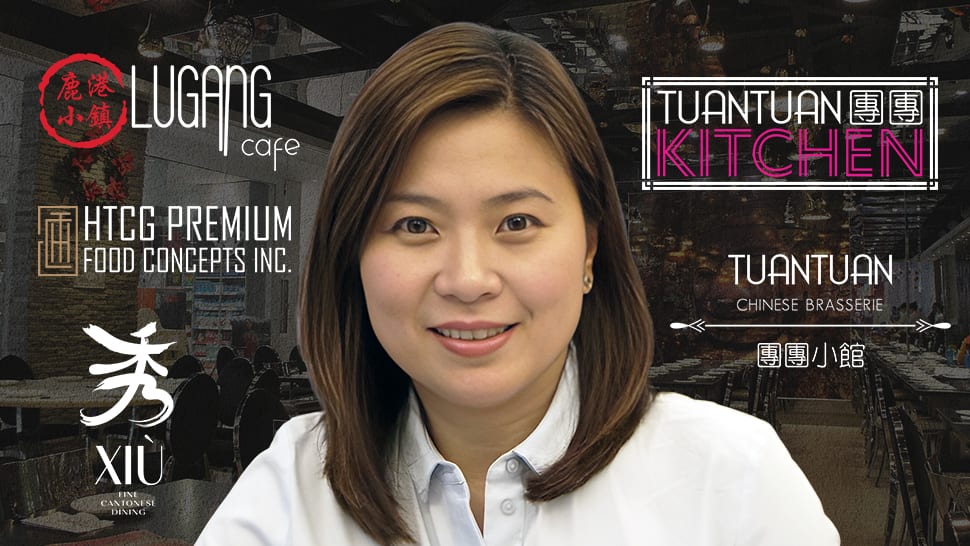
Annabelle “Annie” Chua's entrepreneurial journey is a tale of evolution, discovery, and triumph. For many years, she navigated the complexities of the trading business, distributing jasmine rice to supermarkets and retail outlets. However, it was in the restaurant business that she discovered her true passion, setting the stage for a remarkable success story.
In one of her trips to Shanghai, Chua’s foray into the restaurant business took an unexpected turn when she stumbled upon a Taiwanese gem named Bellagio Café. Impressed by the delicious offerings of Bellagio, Chua saw an opportunity to introduce the food concept to the Philippines.
Eager to bring Bellagio Café to the Philippines, Chua proposed to franchise the brand; however, a hurdle emerged: the name Bellagio was already registered locally. Undeterred, Chua and the owner of Bellagio decided to use the Chinese name of Bellagio Café—Lugang—to make their mark.
After a year of careful preparation, Chua successfully launched Lugang Café in Connecticut, Greenhills in 2010. What initially started as a sideline business quickly transformed into a massive success within three months of its opening, prompting Chua to shift gears and strategically plan for Lugang's expansion.
In the subsequent year, Chua opened another branch in SM Mall of Asia, marking the beginning of Lugang's prolific growth. Additional outlets followed in strategic locations like SM North Edsa, SM Megamall, and elsewhere. Today, Lugang Café boasts nine outlets and continues to expand, showcasing its resilience and popularity in the competitive restaurant landscape.
Amidst Lugang's expansion, Chua's entrepreneurial spirit thrived. In 13 years, she not only steered Lugang's success but also birthed her own culinary brands: Tuan Tuan, a Hong Kong food concept restaurant, has flourished with seven outlets to date, while Xiu, a fine dining Chinese restaurant, has contributed a total of 17 stores. Chua has thus carved a niche for herself in the competitive culinary landscape.
Chua's success is not merely a story of franchising and expansion. It's a testament to her keen business acumen, dedication to quality, and a deep understanding of her target audience. Lugang Café's story isn't just about Taiwanese cuisine—it's about strategic planning, adaptability, and a passion for culinary innovation.
Chua's ability to identify and capitalize on opportunities has set her apart. The success of Lugang, Tuan Tuan, and Xiu is not a stroke of luck; it's the result of Chua's visionary approach to culinary entrepreneurship.
How did Chua transition successfully from the trading business to become a service-oriented restaurant entrepreneur? How did she grow her business and showcase resilience in the competitive restaurant landscape?
Here are the five business lessons every entrepreneur can learn from Annabelle ‘Annie’ Chua, co-founder of Lugang Café and Tuan Tuan Chinese Brasserie:
ALSO READ
1| Know how to identify opportunities and transform passion into business
Recognizing gaps in the target market creates an opportunity to introduce products or services that are currently unavailable or underserved. When a business recognizes these gaps, it opens up a valuable opportunity to introduce new and innovative offerings that address unfulfilled needs.
Chua's journey illustrates how identifying gaps in the local market, combined with a passion for food and a unique discovery during travel, led to the recognition of an opportunity.
Chua's entry into the restaurant industry was driven purely by passion, and the opportunity to introduce a unique food concept—Bellagio Café—presented itself during a trip to Shanghai.
Chua noticed a gap in the local market, recognizing the scarcity of fully serviced Taiwanese restaurants in the Philippines. Unlike the common hole-in-the-wall format prevalent even in Taiwan, Bellagio Café stood out with its authentic interiors, full menu, and separate menu exclusively for desserts.
This uniqueness, coupled with the absence of quality Taiwanese food options in the Philippines, inspired Chua to turn her dream into reality. The decision to introduce this new food concept was further reinforced by Chua's observation that when people in Manila think of Chinese cuisine, they typically associate it with Hong Kong and Cantonese food.
“When I was single, I was already working in the food industry, primarily focused on importation,” Chua says. “Straight out of college, I used to import food items like snacks and chocolates from Hong Kong and Japan. Later on, I shifted my focus to importing jasmine rice from Thailand.
“It has always been my dream to enter the restaurant industry because I enjoy entertaining people. Sharing good food brings me joy, and I believe that food is essential. In the Philippines, people know how to enjoy especially after a hard day’s work. This was my dream so when I got married, my husband supported me in seeking out for these brands.
“Actually, clueless kami when we entered the restaurant industry. It was really driven by passion and we found this brand during a trip to Shanghai when we went to watch a tennis competition. I asked my cousin, who lives there where to eat after watching tennis because it was going to be late in the evening already.
“So sabi nya, their favorite place was Bellagio Café. When we dined there, we were very impressed because they served not only Taiwanese food but also a wide variety of desserts from Taiwan. That restaurant was in China and apparently the owner was Taiwanese.
“I rarely see Taiwanese restaurants in that format na fully serviced, because even if you go to Taiwan, the good ones are normally hole-in-the wall places, mostly run by family businesses. Mga maliliit lang na tindahan. They sell their dumplings or their pork chop.
“So, this one, I saw that the interior is very nice, and they have a full menu, which feels very authentic. They also offer Taiwanese desserts, so in Bellagio, they have actually two main menus, one for food and one entirely for desserts. We feel like it was very unique.
“And before, we used to frequent Taiwan just to enjoy the food there, and we realized there's really no good Taiwanese food here in Philippines. Normally, it's just hole-in-the wall.
“So we decided, ‘Oh, let's bring this in’. Because in Manila, when you say Chinese, everybody thinks It's Hong Kong. They only know Cantonese food as Chinese Food.”
2| Know how to overcome challenges and make it happen
Business success is a journey that requires a long-term vision. Knowing how to persevere ensures that entrepreneurs remain committed to their goals even when faced with short-term difficulties. This commitment is vital for sustained effort and progress.
Chua's story exemplifies the significance of perseverance in the face of uncertainty. Through her tenacity, Chua not only secured a franchise but actively contributed to the brand's growth, laying the groundwork for a successful and enduring partnership.
From the early stages of courting the owner to secure a meeting in China, Chua demonstrated an unwavering determination. Despite the challenges and uncertainties, she pursued the opportunity with sincerity and passion, leaving a lasting impression on the brand's owners.
This initial trust laid the foundation for a unique partnership that would make Chua the first franchisee. The lack of an established system of the brand meant that Chua and her team had to actively contribute to the documentation process. Despite the brand's lack of preparedness for franchising and potential obstacles, Chua's gratitude and collaborative spirit shine through.
“It was very, very hard for us to get this brand because it was a family-owned brand,” she says. “So we really need to make ligaw the owner, and through our persistence in pursuing them, we were able to visit and have a meeting in China. I guess it was destiny. I supposed they liked us.
“Without any discussion on the details of the contract, they said, ‘OK, if you're really sincere and I can see your commitment, your passion’, they said they'll give it to us. I think they were very happy to find people who share the same passion with them.
“We became their first franchisee, and they weren't actually ready for franchising. So we had to do all the documentation regarding the menu and the recipes. Everything. We had to help each other. They provided assistance but there was no system in place yet.
“So we basically just supported each other and if they had documents, they were all in Mandarin so we had to translate everything ourselves. It was really hard work, and at that time, we were clueless how to operate a restaurant
“They were very, very nice to us. Actually, well, we are very grateful too because they gave it to us, considering they weren't really prepared. But at the same time, they're also happy because despite not being prepared, we never complained. We helped them come up with the system, the recipes, even the manuals. At the time, they had only around 16 outlets, and at their peak, there were 75 before Covid.
“The reason why it's called Lugang Café here is because Bellagio was already registered by a casino company, so we couldn't register it. Since the Chinese name of Bellagio in China is called ‘Lugang Xiao Zhen,’ which means a small village in Taiwan, they came up with a new brand name, Lugang Café, for anything outside China.”
3| Know how to master the art of risk taking for business success
Embracing risks helps entrepreneurs overcome the fear of failure. Understanding that failure is a natural part of the entrepreneurial journey allows individuals to move beyond setbacks and focus on future opportunities.
Acknowledging that financial aspects were the most challenging, Chua and husband went in blindly without a detailed financial plan. This risk-taking approach suggests a focus on the broader vision and a determination to make the venture work, even in the face of uncertainties.
Despite doubts from others, including her parents, Chua remained determined and confident in the potential success of the restaurant. This unwavering belief in the venture's viability helped overcome skepticism and external pressures.
Chua prioritized meeting customer needs, even if it meant taking on additional challenges. Her decision to invest in property, such as purchasing a vacant lot to address parking constraints, showcased her commitment to the long-term sustainability of the business.
“We spent almost a year in preparation,” Chua says. “When we put up our first store in Greenhills, there was no building; we had to build the whole structure. We rented an old house and then we had to demolish. We were not looking at the financials.
“If you talk about financials, it was the most challenging part. We went in blindly. We had no contingency plan because we were very, very determined that this has to work. So, no matter what, we need to make it work.
“That’s why when we started, many people doubted us. Even my own parents were saying, ‘My gosh, you spend so much money, and you're just selling xiao long pao, and you're just selling this. How can you recover?’
“When we built the structure, can you imagine? We had to dig down to make a basement for the kitchen. Obviously, because you want your main ground floor to be all seating for dining to maximize. So, we have the whole basement for the kitchen, ground floor, second floor, third floor.
“In the beginning, we were not very confident. We only opened the ground floor. We didn't even have a grand opening; we only had a soft opening because we weren't really 100 percent confident. Then, after one week, people were forcing us to open the second floor. We didn't even have enough tables.
“At that time, the tables and the sofas were still being manufactured. We were taking it slow, but people were just saying, 'Just put any chair, you know, they want to go up.' I remember we opened in October. By December, we had to open the third floor. People were just forcing us, and we were very overwhelmed. We didn't even have the parking lot. We were generating so much traffic on Connecticut St. People were complaining and some even wanted us to close down nga eh.
“Good thing there was a vacant lot, so we were forced to buy it. Can you imagine? My parents were saying, 'Why did you buy a property to sustain a restaurant? And then why did you build the whole structure to just sell, like, xiao long pao and it's not like we're selling very expensive stuff.
“If you ask for my advice now, you know, so long as you're passionate and believe in yourself, things can work out. But obviously, swerte na rin. Obviously, the passion for creating it and making it work was greater than being practical at the time.
“It was really more heart over matter, heart over mind. But I am very proud to say that because of the passion, hard work, and perseverance, I think everything paid off.”
4| Know how to elevate a brand through unwavering quality
Quality serves as a fundamental marker of a brand's credibility. When customers experience consistent high-quality products or services, it fosters trust and reliability, leading to a positive perception of the brand.
Providing superior quality creates a positive customer experience, fostering loyalty. Satisfied customers are more likely to become repeat customers and brand advocates, recommending the brand to others.
Chua elevated the Lugang Café brand through her steadfast commitment to uncompromising quality. From the outset, she emphasized the importation of ingredients to preserve the original taste, a pivotal factor in establishing the brand's identity.
The introduction of xiao long pao, available exclusively in Lugang in the Philippines, exemplified Chua's dedication to preserving authenticity. While Bellagio in China focused solely on Taiwanese cuisine and didn't offer xiao long pao, Chua sought out a Taiwanese chef to ensure the dish's original and high-quality preparation. This move positioned the brand as a pioneer in introducing this particular culinary delight to the market.
Chua's commitment to quality extended to the training of her chefs. She implemented weekly food tastings aimed to maintain a consistent taste profile. Her strategic pricing and the positioning of Lugang Café as a casual dining option emphasized that quality need not come with an exorbitant price tag. This approach countered the misconception that the restaurant might be expensive, ultimately contributing to the brand's success.
“To be honest, one thing that is very important is we never compromise on quality in the beginning, even if it will make our food cost very high. We imported containers of ingredients in the beginning, even to the point of rice, wine vinegar, soy sauce.
“We didn't want to compromise because if we buy locally, even the same brand of soy sauce that is manufactured in the Philippines, as opposed to those manufactured in Singapore or Japan, has a very different taste.
“So even those Chinese brands, even if they have it in Hong Kong, they have it in China, and they have it here, it's a different taste. Because they localize it, so we didn't want to compromise. Everything we imported is based on the original taste.
“Do you know that xiao long pao is only available in Lugang in the Philippines? Bellagio in China doesn’t have it because they were focused only in Taiwanese cuisine. Luckily, we were able to find someone from Taiwan who makes really good xiao long pao.
“And we thought at the time we wanted to put it together with our Taiwanese food, which became our iconic dish from the start and up to this day we never compromised on quality. We continue to import the flour, which has a secret recipe. At that time, I think we were the first one to introduce this kind of xiao long pao, and our xiao long pao Chef is from Taiwan talaga.
“Our cooks are trained abroad in China, and when they come home, they undergo additional training. We initially started with all imported chefs in Greenhills—15 chefs from China and Taiwan.
“Over time, we've dispersed them to our various locations, where they become leaders. However, as we expand, it's crucial to train more local chefs. Sustaining the taste becomes a challenge, especially since local chefs have a tendency to always go back to their taste na matamis o maalat.
“To address this, we conduct weekly food tastings to ensure the consistent taste. Even though we have recipes with measurements documented, it's challenging for them to measure everything precisely while cooking, right?
“Every day, I make sure to tell my team never to be complacent and never to compromise on quality. That, for me, is the only reason why we will stand out.
“We always strive to source ingredients of the best quality at the most reasonable prices, and then we price our dishes fairly. We position ourselves as casual dining, and that, I believe, is our advantage. We offer good food at affordable prices while providing a pleasant ambiance.
“Many people get intimidated when they come to our restaurant, thinking our restaurant might be very expensive, but they soon realize that it's not the case. We price our dishes fairly. We don't overprice, and bonus na yung service and ambiance.
5| Know how to cultivate discipline and nurture growth through vision
Establishing a foundation of discipline involves making strategic decisions aligned with the overall vision. This ensures that every choice contributes to the company's growth rather than being driven by short-term gains.
With a disciplined foundation and a clear vision, businesses can effectively identify and capitalize on growth opportunities. Whether expanding into new markets, introducing innovative products, or enhancing services, the vision guides decisions that contribute to sustained growth.
Chua built the foundation of discipline in her company through a hands-on approach and a commitment to learning from experience. Admitting that they entered the business clueless, Chua faced numerous challenges in every aspect of opening their stores.
Despite the mistakes made along the way, Chua sees these challenges as valuable learning experiences, believing that the best way to learn is through hands-on experience.
Recognizing that passion alone is not enough to sustain a business, Chua emphasized the need for discipline as a driving force behind their endeavors. She envisioned making a positive impact by uplifting their lives through training.
Her vision extends beyond employees merely working for the company; she aspires for them to grow personally and professionally, fostering a sense of shared growth.
“I must say we came in clueless,” she says. “Every step of opening the store, whether big or small, posed a challenge. From construction to staffing, to sourcing ingredients, training, logistics, operations, marketing—lahat yan bago sa amin. Everything was a challenge.
“You just have to learn it as you go, and I believe the best way to learn is through experience. We've made a lot of mistakes along the way, but I think making mistakes and learning from them is the best way to truly learn.
“Our passion is still there. The only difference is that we understand the importance of cultivating discipline within ourselves—specifically, the virtues of integrity, perseverance, and resilience. For me, these three qualities are important for building a strong foundation for long-term success.
“You can have instant success if you're passionate about something; you see people who click right away. However, the same applies in life and business—walang forever. You will always encounter obstacles and challenges. So, I believe that to truly sustain, especially in our 13 years in this business, we've been through a lot. Passion alone will not sustain you; it's just a driving force.
“My vision for our company is to make a positive impact. The realization hit me during the pandemic when all our restaurants had to adapt to the crisis. I thought, 'My gosh, we have around 600 people under us.' That's like taking care of 600 families. It made me see that we've been supporting these families. So my vision now is to uplift their lives in terms of training. Parang ang gusto ko is to make sure that they don’t only work for us but they also grow with us as a person.
“During the pandemic I kept on encouraging everybody, from those in the dining area to the kitchen that instead of feeling depressed, I wanted them to see the opportunity to learn how to multi-task.
“For example, if someone was previously focused on cutting in the kitchen, now they had the opportunity to learn how to cook or make xiao long pao. That was their chance to shine and grow.
“Looking into the next decade, my vision is to ensure that all our brands are well-established, with multiple locations not only in Metro Manila but also outside, reaching regions like Visayas and Mindanao.
“This is a very competitive market, but I take that as a good challenge so we don't become complacent. Every day, we strive to be our best.”
Henry Ong, RFP, is an entrepreneur, financial planning advocate and business advisor. Email Henry for business advice [email protected] or follow him on Twitter @henryong888
