
Here’s Why Ayala and Thailand’s CP AXTRA are Bringing Back Makro Stores

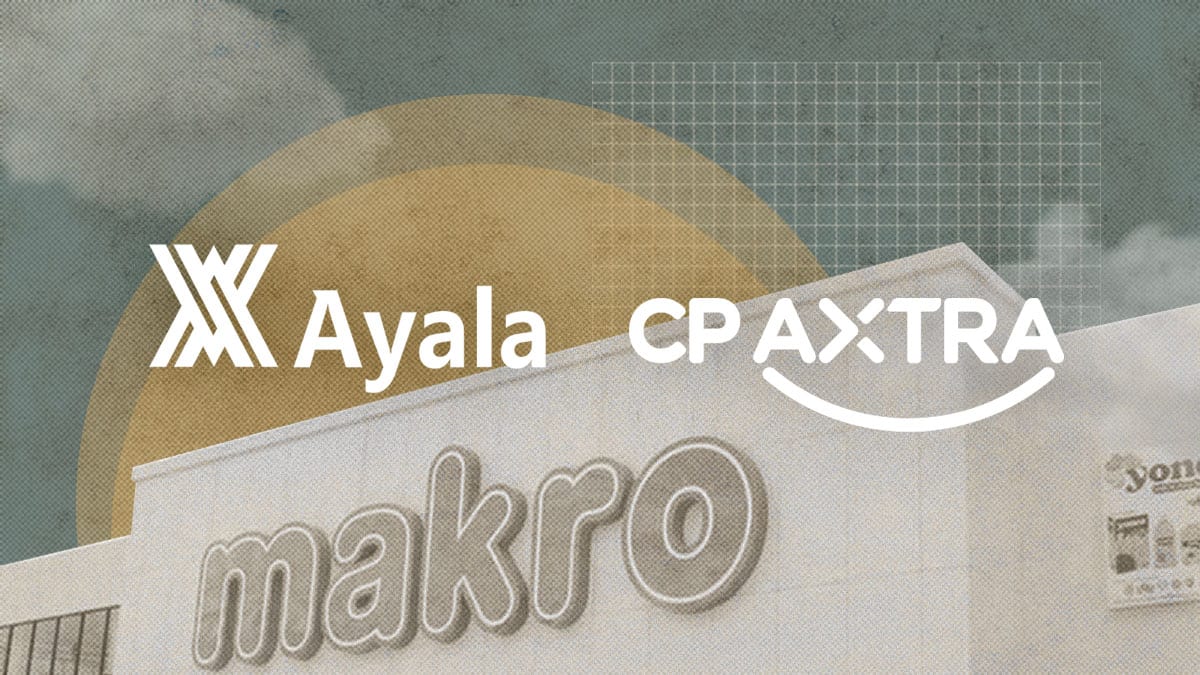
It’s official. Ayala Corp. and Thailand’s CP AXTRA are bringing back the Makro supermarket store, one of the first big box, warehouse-type retailers in the country known for its giant pink letters. The move is a complete 180 for the Ayala conglomerate after it sold its shares in Pilipinas Makro, the then-local operator of the supermarket chain, to its venture partners in 2004, saying it wasn’t one of the conglomerate’s “core competencies” or markets.
Makro supermarkets is coming back and will be operated through a new entity called M&Co Corp., which is a partnership between Ayala Corp. unit ACX Holdings Corp. and Makro ROH Company Ltd., which is a unit of the Thai company.
So why is Ayala Corp. having a change of heart after divesting its shares in Makro many moons ago?
ALSO READ:
Uniwide Once Rivaled SM as the Country's Biggest Retail Empire. What Happened?
What Ever Happened to Makro, One of the First 'Big Box' Stores in the Philippines?
Ayala Corp. Head of Corporate Strategy and Business Development Mark Uy says bringing back Makro stores with its Thai partner is aimed at rolling out a modern shopping experience involving a wide range of food and non-food products at affordable prices for both customers and those operating small businesses.
He said the link up with CP AXTRA builds on Ayala’s plan to work with world-class companies to “expand consumer choices, raise retail standards, and help Filipinos thrive.”
“We are excited to partner with CP AXTRA to bring Makro back to the Philippines. Together, we seek to build on CP AXTRA’s proven success in delivering quality products at more affordable prices through the Makro format,” the Ayala executive said in a statement.
On the other hand, CP AXTRA Public Company Ltd. Group Chief Wholesafe Business Officer Tanit Chearavanot spoke on the partnership as a means for the Thai firm to expand its regional footprint and to foster sustainable long-term growth and “value creation.”
“The Philippines represents one of the most dynamic and fast-growing markets in Southeast Asia,” he said. “Through this partnership, CP AXTRA’s expertise in wholesale and retail management is combined with Ayala Corporation, a trusted local partner with strong market presence, established customer base, and extensive land and mall development expertise.”
In the second quarter of the year, Ayala Corp. posted a 17 percent increase in attributable net income to P10.76 billion from P9.21 billion a year earlier.
The conglomerate has a diverse range of investments in real estate, banking, telecommunications, healthcare, manufacturing, and energy. The move to bring back Makro and expand its foray into the wholesale and retail industry also comes at the heels of Ayala bringing in Australian home and lifestyle brand Anko to the country.
The Philippine Retailers Association (PRA) is expecting local retailers to post as much as 15 percent in revenue growth this year to around P5.4 million as it sees healthy remittances and a growing local population. Last year, the retail industry generated about P4.7 trillion in revenue.
PRA President Alice Liu said last month that reciprocal tariffs imposed by the US government are expecting to indirectly affect the retail industry as more countries are likely to flood Manila with their products.
The organization’s chairman Roberto Caludio says retailers are still expected to see a 10 percent growth despite these global factors.
The Philippines has a relatively lower tariff rate of 19 percent under US President Donald Trump’s compared to its Southeast Asian neighbors.
“For countries where tariffs are high, they will look for other countries to flood with their products. So that in this way is an indirect effect on us,” according to the PRA president.
Revisiting Makro’s Rise and Fall
With Landers and S&R still dominating being prominent players in the warehouse-type/membership-only supermarket space, the return of Makro stores could make for an intriguing move for the once recognizable volume-driven, low-cost operation.
Makro was a members-only service run globally by Dutch private firm SHV (Steenkolen Handels-Vereeniging) Holdings, which was primarily inspired by the American big- warehouse-type self-service format.
With a sizable number of branches in the US and even China by the late 1990s, Makro opened a branch in Cainta, Rizal in 1996 that measured 12,200 square meters.
That same year of Makro’s entry into the country, Pilipinas Makro, Inc. President Luis Maranon said the core of the format is the volume-driven, low-cost, low-price, self-service cash-and-carry trading operation.
As the years went on, the Makro format seemed to be lucrative with 15 more branches opening in the 10 years of setting up shop in the Philippines consisting of those in Cainta, Rizal; Imus, Cavite; Novaliches and Cubao in Quezon City; Sucat, Muntinlupa; Las Piñas; North Harbor in Manila; Makati; Mandaluyong; Cebu; Davao; Pampanga; Batangas; Cagayan de Oro; and Iloilo.
Opening a Makro store would have cost about P150 million to P200 million in the mid-2000s, according to news reports at the time.
The supermarket player’s fall was evident in 2005 when SM Investments, which owned 36 percent of Makro’s local operator, reported Pilipinas Makro’s net loss of more than P208 million against net sales of P13.6 billion.
Two years later, SM Investments Corp. upped its ownership of the supermarket chain’s local operating entity to 60 percent, and eventually full ownership in 2009 after its unit Prime Central acquired the remaining 40 percent.
In 2008, SM said Makro saw a brief second wind of profitability with former SM VP for food retail operations Robert Kwee expressing plans to expand Makro’s revenues to loyal SM patrons.
When SM got full ownership of Makro, it decided to convert Makro stores into the now dime-a-dozen hypermarkets, which fuse the offerings of supermarkets and department stores, due to the conglomerate seeing “the concept of wholesale buying no longer appealing to consumers.”
It spent a whopping P600 million to P900 million to convert three Makro stores into SM Hypermarkets, eventually all of the branches folding into the SM Supermarkets network by 2012.
We now have to wait and see on Ayala Corp.'s plan on reviving and refreshing Makro's image for the modern consumer.
