

How a Filipino-Owned Vietnamese Food Concept Grew to 100 Branches

It’s not every day that a food business becomes so big it reaches 100 branches. The milestone is reserved not only for the most popular food concepts, but for the most creative and resilient.
Add Banh Mi Kitchen to the list of local food enterprises that have achieved the rare distinction of reaching the century mark in terms of physical outlets. The business’ main food item is its own version of the popular Vietnamese sandwich—short baguette bread with a savory filling—that it has tweaked slightly to appeal to Filipino tastes.
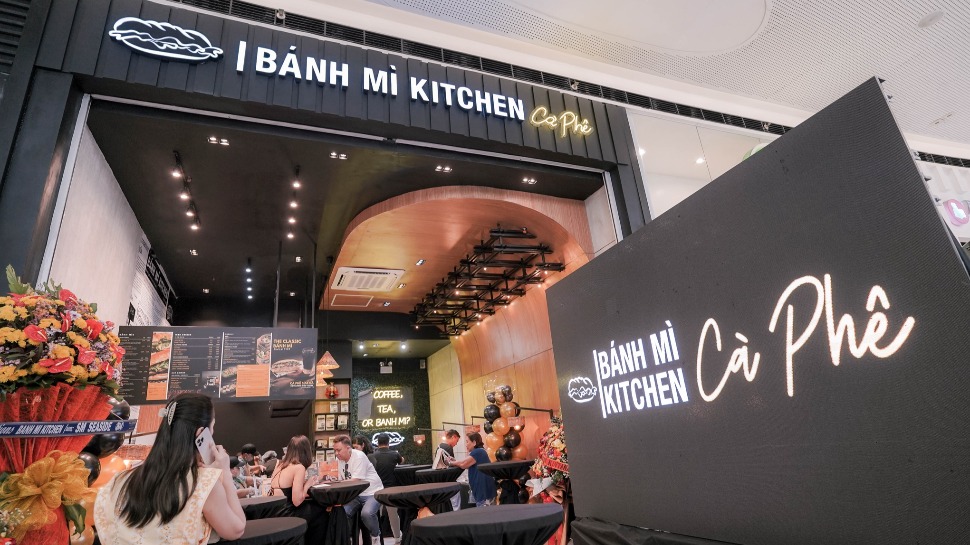
Banh Mi Kitchen opened its 100th branch at SM Seaside City in Cebu City last October. It was also the 10th branch in the city, and partners, friends, and colleagues came together to celebrate.
ALSO READ
40 Years and 600 Stores: What's Mister Donuts' Secret?
Looking to Start a Business? Here Are 5 Tips to Find the Right Franchise
“Our 100th store is a big achievement for us,” Banh Mi Kicthen founder and president Ramoncito Miguel Asis Santos tells Esquire Philippines. “What I did was easy—I just thought and started a food concept. However, what WE, together with all our hardworking employees and dedicated franchisees, accomplished is an outstanding feat.
Patrons and friends came out to celebrate the opening of Banh Mi Kitchen's 100th branch in Cebu City

“The job is not yet finished though,” he adds. “We still want to grow and improve on our current offerings and processes.”
How’d Banh Mi Kitchen do it?
The story of Banh Mi Kitchen
It all started when Santos chanced upon a hole-in-the-wall banh mi place somewhere in the city in 2015. He liked the product enough to make him think that it could maybe work in a more commercial setting (i.e. a shopping mall).
“I was at the crossroads of my career not knowing what business to pursue,” he says. “I didn’t want to go back to the corporate world. I then decided to test my luck in the F&B industry. Not knowing anything about the industry, I consulted and hired a chef to do the recipes for me.”
The opening of Banh Mi Kitchen's first branch in SM Megamall in 2016

Santos went at the business alone as a solo proprietorship in the beginning, but later on brought on partners, including his friend Ramon De Claro, and eventually, Gabriel Sobrepeña. He also eventually, decided to give part of his shares to the lawyers who helped him form the corporation, including his uncle, Atty. Raul Gerodias.
“I had a business totally different from Banh Mi Kitchen,” Santo says about his first foray into entrepreneurship. “As the sales dwindled, I had to find new ways to earn an income. During that time, I just got married and my wife was pregnant with our first child. I decided to pursue this business because I want to do something that would give me more time for my family while at the same time earn from something that’s of my interest—food.”
Banh Mi Kitchen first opened in SM Megamall in June 2016 and immediately it clicked with customers. Santos says he was pleasantly surprised that people actually liked their products enough to keep the business sustainable. It helped that the business struck a balance between offering authentic Vietnamese-style banh mi as well as sightly altered versions for Filipino palates.
Bestseller: the banh mi

“To cater to Filipino customers, we knew we had to be creative,” Santo says. “While offering traditional banh mi flavors like The Classic and Lemongrass Pork, we also introduced Asian flavors—Wagyu Tapa (Filipino), Kani Bonito (Japanaese) and Beef Rendang (Malaysian). Aside from banh mis, we also introduced Vietnamese Coffee to our Filipino customers. To give that authentic Vietnamese taste, we import our coffee beans straight from Vietnam.”
Even then, Santos says Banh Mi Kitchen’s bestsellers are still The Classic, Lemongrass Pork and Chicken, and Wagyu Tapa. “And, of course, our damn strong coffees,” he says. “We named it ‘damn strong’ as a precaution that it is not your ordinary coffee.”
It didn’t take long before the enterprise opened its second branch in Bonifacio Global City.
“When that store clicked, I knew that there was something special about the brand,” Santos says.
Growth strategy
One year and three stores later, Santos’ former colleagues from his corporate job reached out to him inquiring about franchising the business.
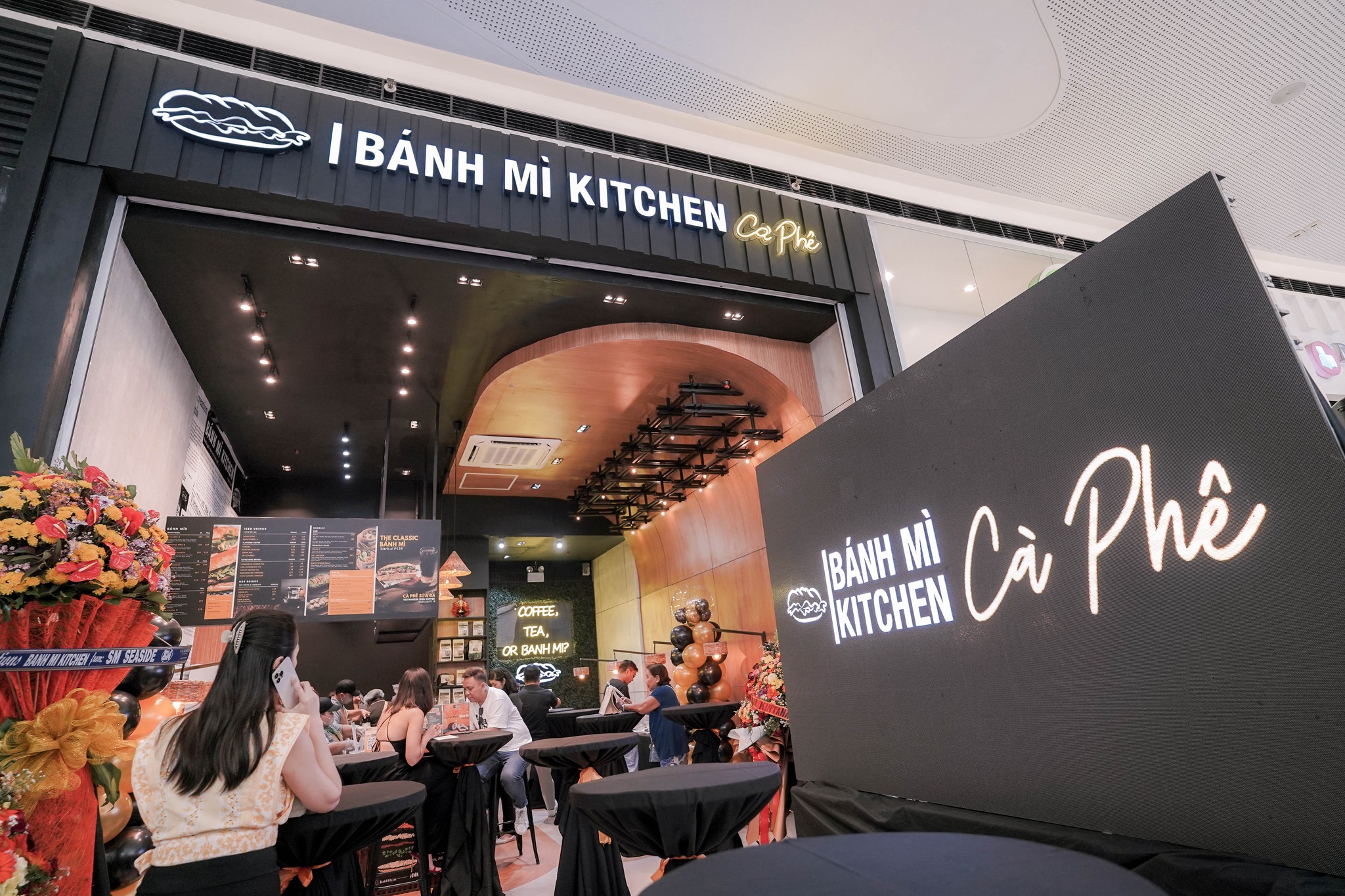
Banh Mi Kitchen Ca Phe (Café) concept
“I was hesitant at first because we didn’t have any experience yet but I said, ‘If you are also willing to take the risk, we promise to take care of you, guide you every step of the way, and be part of our growth journey. Not everything will be perfect, but we will learn along the way.’”
The owners of Banh Mi Kitchen’s first franchised store eventually opened three more stores in the years that followed. Santos then developed a formal franchising plan and eventually opened their doors to other interested franchisees.
Santos shares that a typical Banh Mi Kitchen store sells approximately 100 Banh Mis and 100 cups of coffee each day. The customer base varies based on location; malls draw in the usual mallgoers, business districts attract corporate professionals, and standalone stores appeal to those on-the-go.
Although the stores don’t yet offer rice options, something many Filipinos always have a hankering for, the owners say they have slowly increased their menu items that would complement our initial offerings, including baked spring rolls, vermicelli bowls, and refreshing drinks for non-coffee drinkers.
Challenges and opportunities
Like many businesses, Banh Mi Kitchen was severely affected by the pandemic. Foot traffic in their store locations plummeted and revenues from delivery services ostensibly were not nearly at the levels the business was taking in pre-pandemic. But Santos says he had to make a decision regarding his service crew.
“During the start of the pandemic, we made a big decision that we will not lay off anyone despite the times being uncertain and could probably bring us losses,” he says. “Fortunately, we were able to sustain all our employees and even hired more people as the business started to gain traction when the lockdown eased off in 2021.”
The business looks to open 100 more stores in the future

Despite reaching the 100-store milestone, Banh Mi Kitchen isn’t done growing yet. Santos says they are keen on expanding into more cities in the country, particularly outside of Luzon.
“Currently, our stronger branches come from the Visayas and Mindanao area,” he says. “We just recently opened our commissary in Davao, and we are now officially available nationwide. I think we can grow to as many as 100 more branches across the Philippines.”
Banh Mi Kitchen also recently launched its Banh Mi Kitchen Ca Phe (Café) concept last October as a way to cater to a bigger market and expand their menu.
“The Ca Phe concept will not only be bigger in size but will offer more food offerings as well, like, for pastries, we have Ca phe Banhs (Coffee Buns), Coffee Egg Cream, Coffee Egg Cream with Matcha, Coconut Coffee Slush, Vermicelli Noodle Bowls, Pho Noodle Bowls and many more.
“We also have plans on creating a new brand but there’s still more growth and potential in Banh Mi Kitchen that we want to maximize,” he adds.
Santos reveals there have been feelers from a few companies interested to acquire Banh Mi Kitchen, but says he and his partners are still enjoying operating the business themselves.
“Of course, when the right time comes, we will always be open to an acquisition especially if they can take the brand that we love to newer heights,” he says.
Banh Mi Kitchen seems to have captured the fickle taste of the Filipino

As for lessons he’s learned so far in his entrepreneurial journey, the 37-year-old founder points to integrity as a virtue that gets people a long way in business.
“When I first started, the brand was not known, the food was not popular and I was a man with no name (I still am), but I was and will always be a man of integrity,” he says. “I think the retailers like SM, Ayala, and Megaworld saw that, as well as franchisees I just met and/or referred to by other friends and franchisees. The best business decision might not be always logically right, but it will always be morally right. I always try to be fair with the interests of the company, customers, and franchisees in mind.”
