
The Biggest Bank Mergers and Acquisitions in Recent Philippine History

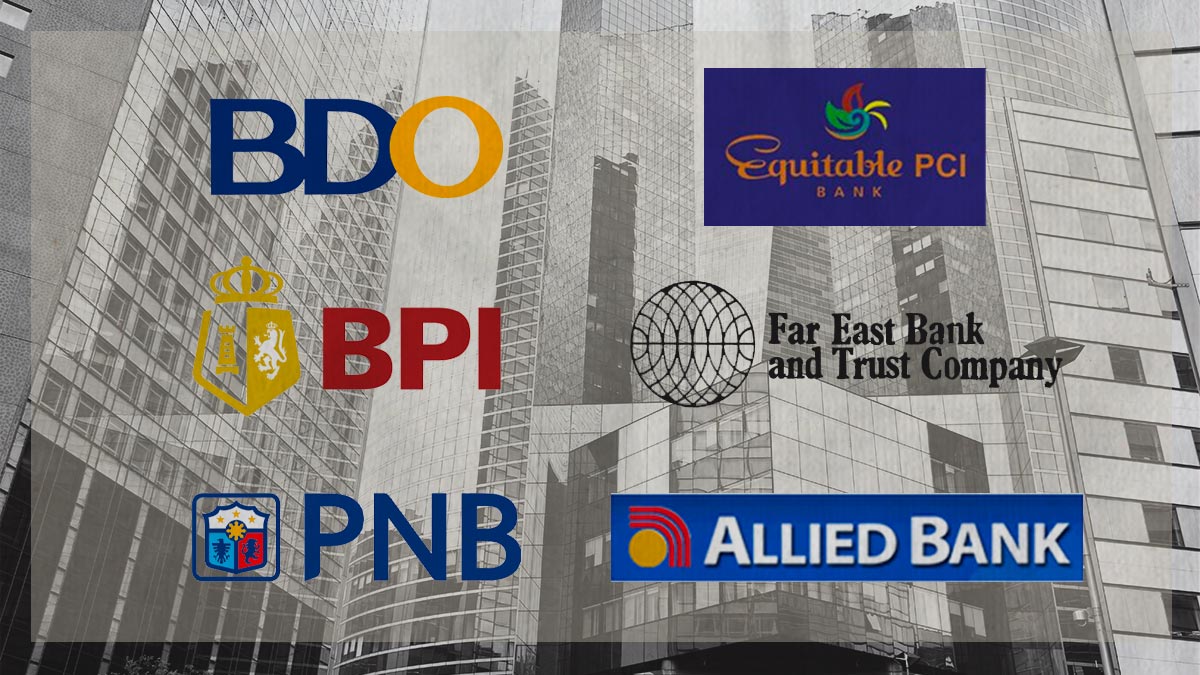
On January 1, 2024, the merger of Robinsons Bank and Bank of the Philippine Islands (BPI) finally became effective, with BPI as the surviving entity. That means that Robinsons Bank of the Gokongwei Group will eventually cease to exist and will be subsumed into the much larger BPI network of the Ayalas.
The merger was first announced in the middle of 2022 and took over a year to finalize and to take effect after getting the green light from several regulatory bodies, including the Philippine Competition Commission, the Bangko Sentral ng Pilipinas, and the Securities and Exchange Commission.
The Robinsons Bank-BPI merger is hardly the first merger between two major financial institutions in the Philippines. In the 1990s, former BSP governor Gabriel Singson encouraged the creation of more banks to spur more competition in the industry. However, after the crippling effects of the 1997 Asian financial crisis, the BSP did a 180-degree turn on its policy; instead of more banks, it urged the creation of stronger, more stable banks that would be better equipped to weather financial hardships. It was during this time that banks started consolidating and mergers and acquisitions became more common within the industry.
Here are three of the biggest and most important mergers and acquisitions in the local banking industry in recent years:
ALSO READ
BPI and Robinsons Bank Merger Gets Go-Signal From BSP
Ayala-Owned BPI Is Merging With Gokongwei Group's Robinsons Bank
1| BPI and Far East Bank and Trust Co.
BPI, of course, is not only the country’s oldest bank but also one of the oldest private commercial banks in Southeast Asia. It has steadily grown through the years thanks to its aggressive mergers and acquisitions strategy particularly in the latter half of the 20th century. It acquired People’s Bank and Trust in June 1974 and then Commercial Bank and Trust Co. in 1981, followed by Family Bank & Trust, then the country’s largest savings bank, in 1984, and CityTrust Banking Corp. in 1996.
However, one of the most significant events in the bank’s history came in 1999, when it merged with Far East Bank and Trust Co. (FEBTC), which was then the fifth biggest bank in the country. It was the largest banking merger in the country’s history up until that point and resulted in BPI becoming the country’s biggest bank, with over $3.5 billion in capital. News reports at the time said that, after the merger, the Ayala-owned financial institution owned assets of about P372.4 billion, which accounted for over 14 percent of the entire banking industry by the time the merger was finalized a year later in 2000. The merged bank also boasted the country’s largest branch network at the time with 680.
It was a monumental undertaking, particularly for BPI, as it had to contend with practical aspects of merging the two giant banks. The banks identified three priorities: post-merger organizational structure the integration of technology and operating systems into a single servicing platform, and a customer retention program. By the time the merger was legally consummated in April 2000 (and just in time for it to be included in BPI’s annual report that year), the bank reported downsizing (or ”right-sizing”) the headcount from 13,000 to around 11,000 and customer retention was at 90 percent, which was in line with its own targets.
2| Banco De Oro and Equitable PCI Bank
Unlike BPI, the Sy family’s BDO was established much later. It began as a two-branch thrift bank called Acme Savings Bank established in 1968. It was later acquired by the founder of the SM Group, Henry Sy Sr., who was the one who renamed it Banco De Oro Savings and Mortgage Bank. In the 1990s, the bank expanded not just its branch network but its financial offerings into other services like insurance.
Sy had dreams of turning BDO into the country’s largest bank and made strategic moves in the late 1990s and early 2000s to this end. It began by announcing its merger with Dao Heng Bank Inc. in 2000, and then the acquisition of 1st e-Bank in 2002, which led to BDO first entering the country’s top 10 largest banks by assets that year.
A year later, BDO acquired Banco Santander, the local subsidiary of foreign banker Banco Santander Central Hispano SA, which gave the Sy-owned bank access to the latter’s vast client base of high net-worth individuals. It also acquired 66 of 67 branches of United Overseas Bank (UOB) in 2005, and Amex Savings Bank in 2007.
However, BDO’s most significant expansion move was its merger with Equitable PCI Bank in the mid-2000s. Equitable PCI was, itself, the product of a merger between Equitable Banking Corporation and Philippine Commercial International Bank (PCI Bank) in 1999. BDO’s merger with Equitable PCI made headlines not just in the Philippines but internationally for a couple of reasons. First, the merged entity would form what was then the Philippines’ second-largest bank (after Metrobank) with P615 billion in combined assets, which was around 16 percent of the country’s commercial bank assets.
Secondly, analysts at the time doubted whether a relatively smaller and newer bank like BDO could acquire a much larger and older one like Equitable PCI. But it should be noted that the Sy family already owned extensive shares in Equitable PCI as early as 2005, when it purchased a 24.76 percent stake in the bank from the Go family. The Sys, through BDO, eventually upped this stake to 34 percent, making BDO the largest shareholder in Equitable PCI.
BDO made its move in the first week of 2006, offering to buy the entirety of Equitable PCI through a share swap option, with BDO as the surviving entity. There was opposition from various parties at the time, and the deal even attracted the attention of then-President Gloria Macapagal-Arroyo. There were multiple behind-the-scenes negotiations that happened for most of 2006, until finally, four days before the end of the year, shareholders of both banks approved the merger. After approvals from various regulators came through, the merger became official in May 2007.
Of course, after the merger with Equitable PCI, BDO went on to acquire other banks on its way to becoming the country’s largest financial institution, including GE Money Bank in 2009, Rural Bank of San Juan (banking business) in 2012, Citibank Savings in 2014, One Network Bank in 2014, and RB Pandi’s banking business in 2019, among other financial deals.
3| Philippine National Bank and Allied Bank
Philippine National Bank (PNB)’s history can be traced as far back as 1916, when it was established as a government-owned institution. At one time, before and during World War 2, it acted as the country’s de facto central bank, even issuing notes up until the country’s Central Bank was established in 1949.
The bank survived major issues and upheavals in the country’s history, including Martial Law and the assassination of Senator Benigno Ninoy Aquino until it was privatized in 1989. Throughout the 1990s, PNB expanded by listing in the stock market.
By the early 2000s, the Lucio Tan Group became PNB’s largest shareholder. Tan—whose business interests today include tobacco, airlines (Philippine Airlines), liquor, and real estate, among others—was already involved in banking as he had acquired the insolvent General Bank and Trust and renamed it Allied Bank in 1977. By 2007, the bank was in the top 10 largest banks in the country. It was so big it operated branches, subsidiaries, and affiliates outside of the Philippines.
Tan faced numerous legal issues throughout the 1990s and 2000s, particularly for tax evasion, for which the government had ordered many of his assets sequestered. However, in 2007, the Supreme Court dismissed the case and found that the cases against him were prosecuted in an “improper manner,” which effectively upheld his ownership of companies that the government had sequestered. That decision paved the way for a planned merger between PNB, which was the country’s sixth biggest bank at the time, and Allied Bank.
The planned merger wouldn’t materialize for several years, however, as Allied Bank had to find buyers for its offshore subsidiaries, among other issues. The merger was only finalized in 2013, with PNB as the surviving entity and becoming the country’s fourth largest bank in terms of assets at the time.
