
Financial Adviser: 5 Business Lessons Everyone Can Learn from Erik Lim, Co-Founder and CEO of Top Line Group

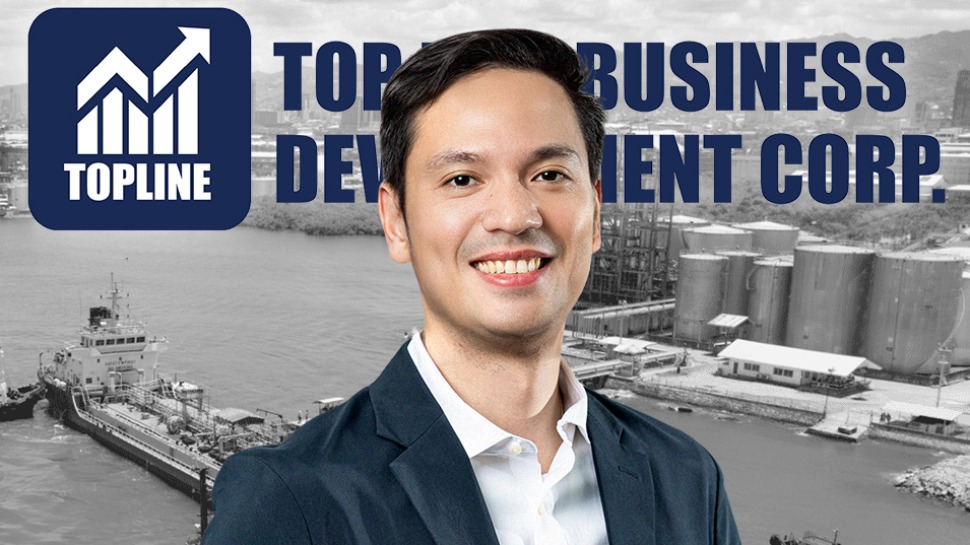
Erik Lim stands at the forefront of a new generation of Filipino entrepreneurs reshaping the nation’s fuel and infrastructure sectors.
As co-founder and CEO of Topline Group of Companies, Lim has transformed a modest startup into a diversified conglomerate engaged in fuel trading, port operations, logistics, technology, and energy retail. From Cebu to the rest of Central Visayas, Top Line’s presence is growing rapidly—and its leadership is drawing attention across industries.
Graduating with a degree in Business Management from the University of San Carlos, Lim showed a strong interest in entrepreneurship from a young age. While his family-owned established businesses in Cebu, Lim charted his own course by venturing into the fuel trade. His early exposure to family operations sparked his interest in commercial strategy and logistics.
In 2017, Lim founded Top Line Business Development Corp, a fuel trading company that started lean—with no delivery fleet, no storage depot, and a skeleton team composed of just three people. Lim built the enterprise from scratch—borrowing capital, hiring talent, and personally leading client acquisition efforts.
Lim’s first major sale—a 28,000-liter delivery to a Cebu-based transport firm—validated his company’s business model and set the wheels in motion.
As the business scaled, Lim adopted a vertical integration strategy. Top Line gradually acquired fuel tankers, built fuel depots, and took ownership of port terminals in Cebu and Mactan. This strategic control over the supply chain drastically improved turnaround times, pricing flexibility, and client service.
Today, Top Line dominates Central Visayas’ B2B fuel segment, serving over 200 clients and capturing 10 percent of the region’s white station market. It is also leading the shift toward sustainable fuel solutions through its subsidiary, Light Fuels Corporation, with EV-ready stations and solar-powered canopies that align with its long-term ESG goals.
This week, Top Line Business Development Corp is going public with the goal of raising up to P732 million through its listing on the Philippine Stock Exchange. At an IPO price of P0.31 per share, Top Line’s market capitalization is expected to reach P3.3 billion, which would make Lim and his siblings involved in the business some of the youngest billionaires in the market.
How did Lim transform a small startup into one of the fastest-growing fuel and logistics companies in Central Visayas? What vision drove him to create Top Line despite coming from an already successful business family?
Here are the five business lessons everyone can learn from Erik Lim, co-founder and CEO of Top Line Group:
ALSO READ
How the Lim Siblings of Cebu are Working to Get a Bigger Slice of the Retail Fuel Pie
SEC Greenlights P2.75-Billion IPO of Cebu-Based Energy Company
1| Know how to spot opportunities and turn them into a competitive edge
Opportunities—whether in the form of emerging trends, untapped markets, or inefficiencies in existing systems—are often the starting point for innovation. But identifying them is only half the battle.
Turning these opportunities into a competitive advantage requires strategic thinking and effective execution. It involves leveraging existing assets—people, knowledge, resources, or market positioning—and applying them in ways that create value and set the business apart. This ability is what distinguishes successful companies from the rest.
Lim’s ability to spot an overlooked opportunity and take calculated risks demonstrates a textbook case of entrepreneurial thinking. Lim’s opportunity spotting began with a simple observation: his family’s mall in Cebu had a port at the back.
While others may have seen that as just part of the property layout, Lim noticed that fuel tankers were regularly docking and supplying vessels. This observation, combined with the family’s control over the port, led him to consider whether they could participate in that value chain.
What gave Lim an edge was not just identifying this potential business—but leveraging what he already had: Access to the port (an existing asset), supportive family members, and a real estate-based infrastructure that already attracted vessel traffic.
Instead of building something from scratch, he repurposed existing resources and minimized risk by starting with a customer base that was already within reach—vessels fueling at their own port.
Rather than staying within the confines of real estate, Lim proactively proposed creating a new company that could serve as a flexible platform for future opportunities.
Though Lim admitted that he didn’t know whether the fuel business would be successful, he weighed the low barrier to entry and made a move based on strategic fit. Lim’s risk tolerance showed his willingness to test ideas with manageable downside.
Lim’s decision to involve the family and gain consensus before entering the fuel business shows his collaborative leadership style. Rather than acting alone, he ensured alignment from family members.
“When I graduated from college, sa University of San Carlos—I went straight to the family business,” he says. “I went to the real estate side so parang from the ground, I was learning everything. We’re actually part of the third generation in our family business.
“The first two generations focused on mall development and real estate. So in 2013, I suggested, how about we incorporate our own company, and then whatever opportunities come along the way, we can probably put everything there. My dad and my mom were very supportive, ang sabi nila nga, ‘If you want to pursue this, why not?
“So gumawa kami ng another company for our branch of the family and we created Top Line. We started with basically yung asset ng family with all of us as the founders. We were doing real estate business—basically for lease income. I was in-charge of the mall development.
“And then after that, by 2017, we saw this opportunity to go into the liquid fuel na business. Kasi yung mall namin sa Cebu, may port sa likod eh. When I saw the opportunity na, ‘Uy, may mga fuel tankers pumupunta sa port and nagpapa-fuel sa mga barko’ and everything, I said, ‘How about we try that business?’”
“I didn’t really know if it was a good business, to be honest. I just said na, how about we try this business? And then when we said sige, let's just try it, and then ‘yon. Since the company was still quite new, especially for Top Line, I think it was also nice to try different things. So sabi ko, if the barriers of entry are not very high, how about we try it? Kasi we were talking about distribution, and since we're also operating the port sa likod ng mall namin, so sabi namin, lahat ng mag-fuel sa port, so we have our own customers kaagad? So parang in a way may captured customers na tayo.
“When I spoke with everyone in the family, they agreed, so when we tried that business, we were supplying to the vessels in the port and we realized okay pala, so we incorporated the fuel business under Top Line.”
2| Know how to leverage industry experience to minimize risk
Experience acts as a shortcut to pattern recognition by helping businesses anticipate risks and respond to challenges with confidence. When team members bring knowledge from previous roles or industries, it shortens the trial-and-error phase.
This creates a stronger foundation for execution, especially in unfamiliar or high-risk ventures. Instead of relying solely on theories or assumptions, businesses gain the advantage of real-world validation, which improves operational precision and strategic focus.
Ultimately, experience builds resilience. It ensures that the business isn’t starting from zero but is already several steps ahead—guided by what has worked, what hasn’t, and why. In fast-moving markets, that edge can make the difference between momentum and missteps.
Despite coming from a business background with academic training in business administration, Lim recognized early on that theoretical knowledge (e.g., feasibility studies) was not enough. He clearly understood that the real-world dynamics of running a business often differ from the neat projections on paper. This insight already points to Lim’s humility. He was aware that he didn’t have all the answers and needed to bring in experience from others.
To minimize execution risks, Lim tapped into industry experience. He recruited his former classmate with oil industry experience, to guide the distribution arm. He also built a team by hiring people who knew the trade. Lim’s strategic foresight allowed him to compensate for his own learning curve by surrounding himself with experts.
Lim’s decision to begin with a straightforward, low-risk business model (buy low, sell high) also shows his practical thinking and calculated risk-taking. By testing the waters with a model that didn’t require major capital outlay or long-term exposure, he limited downside while learning the ins and outs of the market.
“What we did initially, when we started, was a straightforward business model,” Lim says. “It was just buy and sell, we buy low and we sell high. Simple lang. I came from a business administration background from college, so I created mga feasibility studies din, just to make sure that everything was on the table in terms of implementation, but the difference between feasibility studies and implementation—they’re worlds apart. Everybody knows that, so we had a game plan, but along the way, we had to make sure we’re adapting to the business itself.
“To make sure na may guidance tayo, we got some people from the industry kasi we couldn’t learn everything eh. We could only do so much. But the question there was—of course, there would still be different kinds of strategies that should be in place—but at the end of the day, there has to be talent from the industry to guide us.
“So what we did is—we knew that what's essential is a good team. So we had to get someone from the industry to help us. I got si Alvin, who is actually my college classmate din. He used to work with one of the oil majors. So I got him to join sa distribution. And then we brought more talent in.
“When we started, we got this sales guy, his name is Boy, he was our first hire sa sales team. Boy went to this client—I think it was a bus company—and we got our first sale. I think it was about 28,000 liters, mga P1 million something. We were so happy kasi first sale, nakuha namin. I didn’t actually, to be honest, expect to get the first sale, kasi when we started marketing, less than two weeks pa lang nagka-first sale na eh. So it was quite interesting eh, kasi that was our real first sale. Kasi sa’kin naman, as much as possible, we have to make sure na limited din yung risk. Eventually, sabi namin, “So Boy, kaya mo pa?” “Kaya,” sabi niya.
“And then after that, may mga barko din sa port na doon din kumuha sa amin. Eventually, nag-compound yung volume, yung revenues—up to this day. Now we have about more than 200 something siguro na clients.”
3| Know how to scale and diversify the business strategically
When a company scales up, it increases its capacity to serve more customers or enter new markets without a proportional increase in costs. This creates economies of scale, improves profitability, and strengthens the company's market position.
Diversification, on the other hand, spreads risk by expanding into new product lines, industries, or customer segments. It reduces dependence on a single revenue stream and makes the business more resilient against external shocks—such as economic downturns, market saturation, or disruptions in one particular sector.
Together, scaling and diversification allow a business to grow strategically and seize new opportunities while protecting against volatility. This combination ensures that growth is not only rapid but also sustainable over the long term.
Lim’s scaling and diversification strategy was not accidental—it was driven by data, experience, and a clear understanding of his company’s role in the market.
By allocating capital wisely, diversifying revenue streams, and responding strategically to crises, he was able to transform Top Line from a simple buy-and-sell operation into a multi-sector enterprise.
When Top Line’s fuel volume was still in the single-digit millions of liters, Lim recognized the early signs of market growth. As customer demand quickly outpaced supply, he analyzed the financials and made a decisive move to infuse more capital. Lim had the entrepreneurial foresight—he didn’t wait for the system to break down before acting.
Lim understood early on that relying solely on one market segment—such as shipping—was a vulnerability. His decision to serve white stations (independent fuel retailers) and build a commercial port in the north of Cebu shows his strategic approach to diversification.
By tapping into various segments—shipping, construction, transport, and white stations—Top Line was able to build a more resilient and stable revenue base. This mindset aligns with his ability to recognize adjacent markets and build value from them.
“When we started, we had to make sure na we allocated certain amounts for the business. So an example would be—let’s say by 2017, I think our volume was in single digits pa eh, in terms of millions of liter, so maliit pa siya, pero yung dumadami na yung customers, after two years, we could not supply anymore. Pinakita kong financials and everything, so we infused capital, kasi we saw the opportunity na. By 2018 we wanted to target one million liters per month, and to be honest, we have surpassed our projection.
“Along the way, our expansion gave us more opportunities—not only for the business line, not just for the fuel line. Since maganda yung sa fuel, we saw the opportunity to go to the north of Cebu and also build a port there so that we could accommodate their larger vessels, hopefully.
“In terms of our customer base now, if you look at the pie, we have shipping as the largest kasi that’s Cebu, Central Visayas, it’s a shipping belt—nandyan lahat. We also have white stations, yung mga independent operators. That’s about 20 plus percent. If you look at the data in the Central Visayas, which is our market—there are about 500 plus stations that are white or independent stations, and then from that 500 plus stations, around 50 plus are our customers.
“We got this market kasi mas maganda and mas competitive naman yung price namin. I am also making sure na there’s still growth momentum, so we continue to explore other markets. Kasi if it’s only limited to one, wala siyang expansion, wala siyang growth. Kasi noong COVID, naka-standstill lahat. So basically, transportation—walang market. So we wanted to make sure yong pie, kailangan hindi sya lahat concentrated in one segment. Kasi what if something happens to this segment? Problema tayo. So what we do is to look for opportunities outside of our main anchor market and look for other product lines.
“So we need to be a little bit more strategic at some point, like, ‘Uy, oopps, tumataas na si shipping—nasa 30 percent na.’ So we make sure na it’s healthy enough to accommodate certain industries at that point.”
4| Know how to evolve a brand to stay relevant with emerging trends
Embracing ESG (environmental, social, and governance) trends allows a business to build trust and brand loyalty, as customers are more likely to support companies that demonstrate environmental responsibility and social impact. It also attracts long-term investors who prioritize ESG-compliant companies for their lower risk and future-ready models.
Additionally, ESG practices can improve operational efficiency by reducing costs through energy-saving technologies or waste reduction strategies. Beyond internal benefits, aligning with ESG helps mitigate regulatory and reputational risks by staying ahead of government mandates and public expectations.
Lim’s decision to shift from a simple buy-and-sell model to establishing a retail arm underlines his commitment to incremental innovation—one of the key entrepreneurial values that fueled Top Line’s growth.
When Lim observed that customer needs were shifting, he didn’t wait for the market to force a change. Instead, he initiated it by proactively creating Light Petroleum Corporation, which later evolved into Light Fuels Corporation. The rebranding was not just cosmetic; it was strategic.
Recognizing the global shift toward electric vehicles (EVs) and alternative energy, Lim led the transformation to a future-ready, diversified energy brand. His move to rebrand reflected his ability to anticipate where the industry is headed and align business models accordingly.
Equally important was his willingness to embrace sustainability and ESG principles, which he embedded into the infrastructure of Light Fuels. From EV-ready stations to solar-powered canopies, Lim exhibited a strong commitment to long-term thinking. Rather than resisting the renewable energy shift, he integrated it into the core of his business operations.
Lim also balanced innovation with realistic operational strategy. He understood that while retail customers were transitioning to EVs, the industrial and shipping sectors still relied heavily on oil. Instead of abandoning existing markets, he expanded the fuel business to cover both the traditional and emerging energy demands. This dual approach helped sustain profitability while opening avenues for future relevance.
Lim’s constant focus on creating value for customers, investors, and shareholders shows a strong sense of customer-centricity and business stewardship. He avoided the trap of competing in a price war and chose instead to offer high-level services that differentiate Top Line from industry giants.
“Sa amin lang, we took baby steps,” he says. “When we started, it was just buy and sell, and then after which, iba na yung gusto ng customer, so we had to change. We created a retail arm for our fuel, so si Light Fuel became a subsidiary of Topline Business. Parang anak niya. And the beauty of Light Fuels—when we started kasi, we called it Light Petroleum Corporation kasi petroleum eh.
“And then when we saw the emergence of mga EVs—diba may mga EV na ngayon—and then we said, ‘Oh, I think we need to adapt to the business model din.’ Kasi eventually may EV, may other different sources na. So we said, ‘How about we rebrand the name from Light Petroleum to Light Fuels?’ So that in the future, it's not only limited to petroleum. So ngayon it's now called Light Fuels Corporation to make sure that we're adaptable to different kinds of fuels in the future. Sa ngayon, our infrastructure in place for Light Fuels and expansion—it's already EV-ready.
“It's still considered fuel of the car, but electricity. So when we expand, we need to install the charging stations. That’s part of the strategy. We want to make sure that we're aligned with the industry. In fact, part of the ESG din natin, we're even installing mga solar panels sa mga canopy, sa mga Light Fuel stations.
“You know what—either may benta or wala—you still earn from the charging. So it's still basically the same. May renewable din eh. And then later may sariling ecosystem. But there will always be demand for fuel. If you really think about it in terms of industrial trade, like if you're talking about shipping, I don't think they can convert it into EV shipping.
“So basically, in shipping, it's going to be probably oil for the next couple of years or decades—and other industrial machineries. So basically, industrial is there. Sa retail lang kaya we just want to make sure that we're aligned with the times. It's still basically the same profitability, but we just want to make sure that we add more customers in the mix.
“So that’s why for us, there's always progression—in the supply chain, in the vertical integration. And part of that is also the fuel stations, the service stations. So if you look at the brand for Topline, having stations in the mix allows us to supply them ourselves. Since the stations are new and fresh, it gives more value proposition to our brand.
“So, we’re always mindful of the industry giants because we’re still small. We want to make sure there’s a value proposition for our customers, future investors, and shareholders. Because again, fuel is fuel. What we saw was potential in checking the market for what kind of new services we could provide. If it’s a price war, nobody wins. So the real question is, what kind of service can we give the customer? It’s going to be a high level of service.” Lim adds
5| Know how to stay grounded while building from the ground up
Discipline keeps a business focused on its goals and ensures decisions are grounded in data, strategy, and sound financial management. It helps entrepreneurs stay committed during tough times, avoid impulsive moves, and build trust with stakeholders.
On the other hand, humility allows business leaders to stay open to learning and seek guidance when adjustments are needed. Humble leaders don’t assume they know everything—they listen to mentors, advisors, employees, and customers. This mindset makes it easier to build strong teams, attract support, and adapt quickly to changing environments.
Lim’s story reveals a leader who made deliberate choices grounded in respect for commitment, continuous learning, and a strong work ethic. From an early age, he demonstrated self-awareness and accountability.
Despite coming from a family with established businesses, he never relied on privilege or entitlement. He made a conscious decision to enter the family business not out of obligation, but out of a sense of responsibility. By choosing to bypass external job offers and go straight into operations, he stayed true to his promise while embracing the opportunity to learn the ropes firsthand.
What sets Lim apart is his humble approach to leadership. He openly acknowledged the role of his parents and uncle in mentoring him and recognized that real learning came from absorbing guidance rather than assuming he knew better. This humility allowed him to lead with openness and surround himself with people who could sharpen his vision.
Lim’s view that success must be earned—not given—grounded the company in a culture of meritocracy, where growth was a product of hard work, not entitlement. He understands that to lead effectively, one must also grow personally—emotionally, intellectually, and spiritually.
Even when facing business challenges, Lim followed the principle of “fail forward.” He scaled Top Line not just with bold decisions, but with quiet strength. His leadership is a reminder that building something meaningful is less about being loud and more about staying grounded in what truly matters.
“When I was younger—back in high school—I already had a strong interest in business. My parents didn’t force anything on me, but I personally chose to pursue either Business or IT. I told my dad back then that if I passed the entrance exam for San Carlos, I would take up Business. I also told my family that once I graduated, I’d immediately help in the family business. Even during college, I took a summer IT course in programming and realized it wasn’t for me. That’s when I confirmed business was really my path.
“After graduation, I received many job offers, but I had made a promise to my family—to go straight into the family business. I didn’t really consider working elsewhere first because I felt it was more important to fulfill that commitment. At the start, my goal was just to learn from the family business.
“I had a lot of guidance, especially from my parents and my uncle. They guided me on the retail and mall operations side. The real question was whether I could absorb their advice, and thankfully, I was able to take in those lessons.
“As for motivation, it wasn’t about the money. My parents never gave things to us on a silver platter. Even during college, we were given minimal allowances. Everything was on a strict budget, so we learned to value money. We weren’t taught to expect things easily—we had to earn them. That mindset stuck with me. That’s why when we built Topline, we really built it from the ground up. We weren’t waiting around because “we already have money.” We believed in our vision and—by God’s grace—were given opportunities.
“As for the advice my parents always gave me during the early days of Topline, the first thing was about health. I tend to overwork and not sleep much, so they’d remind me to rest and not try to handle everything alone. As parents, their concern is always about our well-being. Beyond that, they offered sound business advice. Whenever there were hiccups, they would say, ‘That’s part of the game. If you fail, fail forward. Pick yourself up and charge forward.’
“In terms of personal development, I continue to improve by reading, listening to audiobooks, and absorbing insights through various mediums. It's not just about business, but also about balancing professional and family life. At the end of the day, it’s really about understanding what matters and managing time wisely. I try to compartmentalize my day—allocating certain hours for learning, listening to audiobooks, reading the news, and talking to people smarter than me—like my parents, consultants, and advisors.”
Henry Ong, RFP, is an entrepreneur, financial planning advocate and business advisor. Email Henry for business advice hong@financialadviser.ph or follow him on Twitter @henryong888
