
How Ramon Ang's San Miguel Corp. Won the P170-Billion NAIA Rehabilitation Project

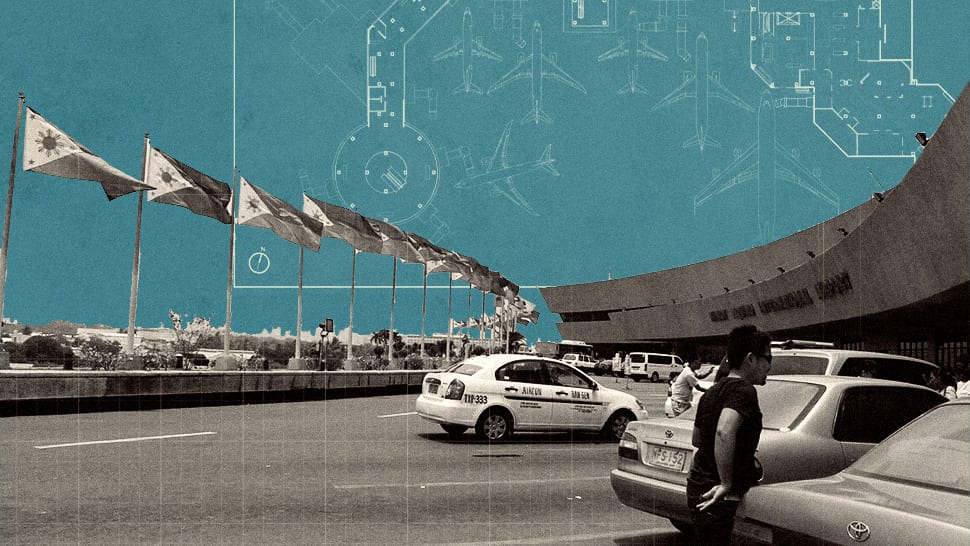
If you’ve been following the news about the rehabilitation of the aging Ninoy Aquino International Airport, you’d know that on Friday (February 16), the contract was finally awarded to San Miguel Corp. (SMC). The announcement was made during a press conference led by Department of Transportation Secretary Jamie Bautista.
This was hardly a surprise as, when the bids from the three finalists for the P170.6 billion rehab project were revealed the week prior, it turned out that SMC’s proposed revenue share with the government—a key bid factor—was more than double that of its two rivals. SMC’s proposed revenue share with the government was at 82.16 percent, while that of GMR Airport Consortium was at 33.3 percent and that of the Manila International Airport Consortium (MIAC) was at 25.91 percent.
To most pundits and analysts, that pretty much sealed the deal that the scales were tipped in SMC’s favor.
ALSO READ
Only Three Bids to Rehabilitate NAIA Pass the Department of Transportation's Compliance Test
Here's the Brief and Sordid Tale of the NAIA Rehabilitation Project
How did we get here
Friday’s announcement marked the end of a long and arduous ordeal to overhaul the 42-year-old main aviation gateway of the Philippines, but is only the beginning in terms of actual work to improve NAIA. As Secretary Bautista himself said, efforts to privatize the operations of NAIA started as early as 30 years ago. However, it wasn’t until 2018, when an unsolicited proposal to improve and transform NAIA was submitted by a so-called “superconsortium” of seven of the country’s biggest conglomerates, that the race to win the lucrative bid began in earnest.
The seven companies included Aboitiz InfraCapital Incorporated, Ayala-led AC Infrastructure Holdings Corporation, Andrew Tan-owned Alliance Global Group Incorporated, Lucio Tan’s Asia's Emerging Dragon Corporation, Filinvest Development Corporation of the Gotianun family, Gokongwei-led JG Summit Holdings, and Manny Pangilinan-chaired Metro Pacific Investments Corporation.
That superconsortium said it planned to partner with Singapore’s Changi Airport for the project.
One month after the superconsortium’s proposal was made public, Megawide and Bangalore, India-based partner GMR Infrastructure Inc., also submitted an unsolicited proposal to decongest and redevelop the airport. Responsible for the Mactan Cebu International Airport (MCIA), the companies’ plan involved $3 billion (about P156 billion), which was less than half of what the “superconsortium” proposed.
After a year of back and forth, the project stalled, and by March 2020, Manny Pangilinan’s MPIC decided to withdraw from the superconsortium, which had been granted original proponent status by the MIAA and the DOTr in August 2018. This OPS, however, was withdrawn by March 2020 after the group reportedly proposed changes to the terms of the proposal, which the government, which was then represented by former DOTr Secretary Art Tugade, rejected.
A few days later, Megawide was granted OPS, but this, too, was revoked by December 2020.
A new proposal
After a new government was installed in 2022, efforts to rehabilitate NAIA were rekindled. The superconsortium (minus the Pangilinan’s MPIC and now named MIAC) submitted a new proposal for the project, but this time, several other companies also submitted their own bids. This included GMR Airports International, San Miguel Holdings Corp., Spark 888 Management, Asian Airport Consortium, Cengiz Insaat Sanayi ve Ticaret A.S.
However, several other groups participated in the pre-bid conference for the project, including Hyundai Engineering, Itochu Group, Makati Development Corp., Marsh Philippines, Mitsubishi Group, Pulse Consulting, EY Consulting, Samsung C&T Group, Turner and Townsend, Aeon, Cavitex, Bouygues Group, China First Highway Engineering, First Balfour, and Macquarie Capital, among others.
Under the initial terms of reference for the deal, the winning concessionaire shall sign a Rehabilitate-Operate-Expand-Transfer (ROET) deal with the DOTr and the Manila International Airport Authority (MIAA) and will provide upfront payment of P30 billion to the government as premium and another P2 billion in annuity payments.
The winning bidder is also required to remit a certain percentage of the revenues to the government. This will be the main bid parameter for the auction—the higher the proposed share of the government in the Naia’s revenues are, the better.
Last week, the DOTr narrowed down the technical proposals for the project to three: Manila International Airport Consortium (MIAC), GMR Airports Consortium, and SMC SAP & Co. Consortium.
GMR Airports Consortium is a partnership among GMR Airports International BV, Cavitex Holdings Inc., and House of Investments Inc., while SMC-SAP and Co. Consortium consists of San Miguel Holdings Corp., RMM Asian Logistics Inc., RLW Aviation Development Inc., and Incheon International Airport Corp. (IIAC).
According to the DOTr, only the three groups passed the compliance test for the project.
And on Friday, out of the three bid finalists, it was SMC that emerged victorious.
What SMC has said about the project
Last week, after it was announced as one of the bid finalists, SMC President and CEO Ramon Ang said the company was ready to take on the challenge of finally modernizing NAIA, which has been left behind compared to the gleaming modern airports in the region like in Singapore and Malaysia. Ang said the consortium’s financial proposal prioritizes benefits to the government and the Filipino people.
“Our aim is to elevate NAIA to world-class standard, ensuring an exceptional experience for all travelers with first-rate services and facilities,” he said. “Our commitment is to ensure this project brings significant value and advantages to our nation, our government, and our kababayans (fellow Filipinos).”
Ang’s SMC, of course, is also behind the development of the New Manila International Airport project in Bulacan. The tycoon said there were potential synergies between that project and the NAIA bid, saying that concurrent development is expected to enhance operational efficiencies, reduce costs, and optimize flight schedules, contributing to a more connected and accessible Philippines poised for future growth.
“Our vision is to create an integrated airport network that not only improves the travel experience but also supports sustainable economic growth and elevates the Philippines as a prime hub for tourism, business, and investment in the region,” Ang said.
Ang also highlighted the company’s partnership with IIAC, which developed and operates the largest airport in South Korea. Incheon International Airport was ranked by air transport research firm Skytrax as the fourth best airport in the world in 2022 and the world’s first airport to be awarded the highest level of customer experience by the trade association of the world’s airports, Airports Council International.
The actual contract signing for the project is expected to happen next month.
