
Here We Go Again: 'Superconsortium' Submits New Proposal to Rehabilitate Aging NAIA

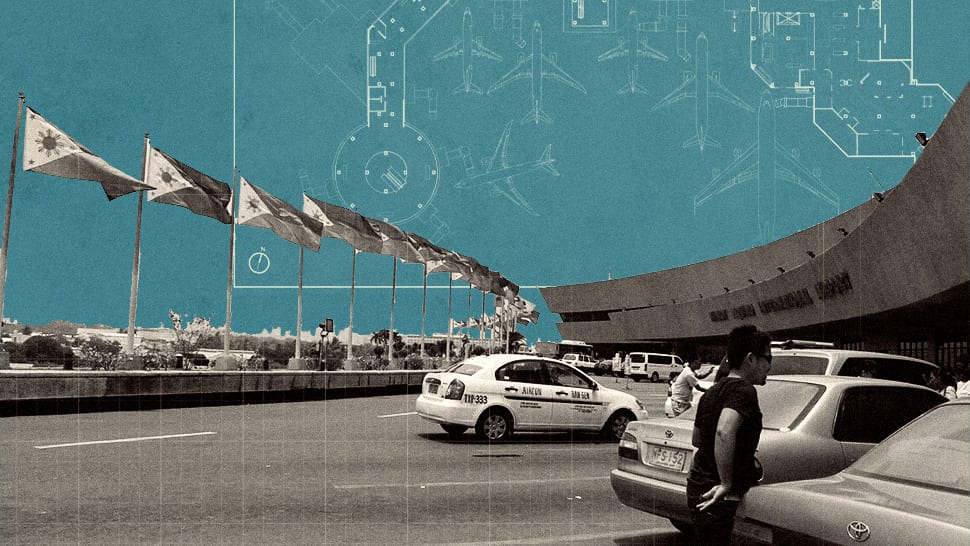
They once tried to convince government to let them fix the aging Ninoy Aquino International Airport. But the plan of the so-called ‘superconsortium’ fell apart before it ever began.
Now the companies are trying again.
Six of the country’s leading conglomerates have once again banded together to submit an unsolicited proposal worth an initial P100 billion to rehabilitate NAIA. The six companies are: Aboitiz InfraCapital Incorporated, Ayala-led AC Infrastructure Holdings Corporation, Andrew Tan-owned Alliance Global Group Incorporated, Lucio Tan’s Asia's Emerging Dragon Corporation, Filinvest Development Corporation of the Gotianun family, and Gokongwei-led JG Summit Holdings.
ALSO READ
Here's the Brief and Sordid Tale of the NAIA Rehabilitation Project
What Happened to Efforts to Rehabilitate NAIA?
Of the original seven companies who submitted a bid to upgrade NAIA, only the Manny Pangilinan-chaired Metro Pacific Investments Corporation is not part of this current proposal, now named the Manila International Airport Consortium (MIAC).
This time, the six companies partnered with Global Infrastructure Partners, a leading global infrastructure investor and airport operator, for the proposal, in partnership with the Philippine government.
In separate disclosures to the Philippine Stock Exchange, the companies said this new proposal includes “a significant upfront payment to Government and committed investments in new facilities and technology to transform NAIA into a world-class airport.”
“We are ready to put our combined resources forward in partnering with the Government on this massive undertaking,” said Kevin L. Tan, one of the directors of the MIAC. “Our consortium brings unrivalled expertise, proven solutions and extensive capital.
“As the only large-scale operating gateway airport to the Philippines, the modernization and long-term sustainability of NAIA is a critical development priority for both the country’s public and private sectors,” he added. “Recognizing the primacy of NAIA to the country’s economic growth, the consortium is bringing highly complementary expertise and making an unprecedented commitment to its sustainability and continued viability.”
“We submit this proposal united in the belief that our gateway to the world needs to represent the best of who we are as Filipinos,” said Josephine Gotianun Yap, director, Manila International Airport Consortium. “Passing through our international gateway should be a seamless experience. We want the first thing that locals and foreigners alike see, when they arrive in the Philippines, to be a source of pride for all Filipinos. The consortium is confident that with additional financial resources as well as operating process and technology improvements, NAIA can help achieve that vision.”
“Airports currently and previously owned or operated by members of the consortium include Mactan-Cebu, Clark, London Gatwick, Edinburgh, London City, and Sydney airports,” the statement read. “Together, the consortium has unparalleled scale, track record, resources, and expertise to deliver best-in-class solutions for the transformation of NAIA and aim to set the country’s airport infrastructure up for success in line with the government’s ‘Build, Better, More,’ program.”
Built in the 1950s, the old Manila International Airport was initially designed to handle 4.5 million passengers per year, which it hit all the way back in 1991. NAIA handled 7.3 million passengers in 2010. According to the MIAC, with its capital investment and the implementation of its proposed operational and technological improvements, NAIA will have the ability to serve up to 62.5 million passengers per annum (MPPA) efficiently by 2028, or more than double its currently constrained design capacity of only 31 MPPA.
“Pre-pandemic passenger traffic had already reached 48 MPPA in 2019, underscoring the need to upgrade the airport to meet growing demand,” the statement read.
History of plans to rehabilitate NAIA
The “superconsortium” first came together to submit its unsolicited proposal in February 2018. All six or the original companies, minus MPIC, are still represented in this new bid by MIAC.
Back then, the group planned to tap the expertise of Singapore’s Changi Airports International Pte. Ltd. and the proposal itself was initially estimated to cost P350 billion. The group was granted original proponent status by the Manila International Airport Authority and the Department of Transportation, with cost whittled down to just P102 billion.
The only other significant proposal submitted was one by Megawide and India-based partner GMR Infrastructure Inc., whose initial plan cost around $3 billion (about P156 billion), which was less than half of what the “superconsortium” proposed.
The proposal underwent revisions and was eventually approved by the National Economic Development Authority (NEDA) and underwent a Swiss Challenge, where other private groups were invited to submit competing offers.
Pangilinan’s MPIC pulled out of the superconsortium in March 2020. Although the company did not disclose the specific reason for the withdrawal, Pangilinan did mention issues related to real property taxes the consortium has to pay to local government units (LGUs).
MIAA eventually withdrew the OPS from the superconsortium in July 2020. The group reportedly proposed changes to the terms of the proposal, most of which the government rejected. Then-DOTr Secretary Athur Tugade reportedly returned the NAIA superconsortium proposal as the agency insisted it should follow the template used by the rehabilitation of Clark International Airport. But members of the NAIA superconsortium were reportedly not comfortable with the Clark template and called it “risky.”
The MIAA awarded OPS to Megawide’s proposal but that, too, ended up being revoked.
In August 2022, current DOTr Secretary Jamie Bautista said it would explore all funding modalities for the project upon the orders of President Ferdinand “Bongbong” Marcos Jr.
“We will invite the private sector to revisit the possibility of doing a PPP for NAIA,” Bautists said, referring to Public-Private Partnership (PPP), a program that Bautista said is “a crucial pillar of this administration.”
“We envision a truly world-class airport befitting the beauty of the Philippines: one where congestion, reliability issues, and unpleasant passenger experiences will become things of the past,” Tan said. “Domestic and international connectivity are keys to unlock economic growth to take the country to upper middle-income status. We look forward to a very near future where we in the private sector are working hand in glove with the government to operate an efficient and future-ready international gateway in and out of a more prosperous Philippines.”
Let’s hope this new proposal sticks. The Filipino people deserve a world-class aviation gateway.
