
Financial Adviser: 5 Business Lessons Everyone Can Learn from Peter Nepomuceno, Founder and CEO of Raslag Corporation

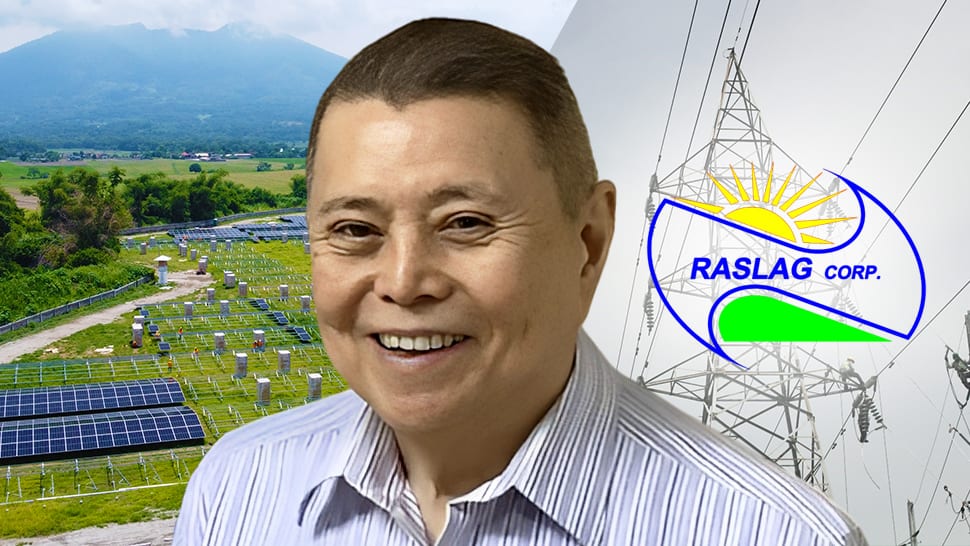
Pampanga is the setting of the remarkable journey of Peter Nepomuceno, a prominent figure in the province’s business community who exemplifies entrepreneurship and innovation.
Born into one of the province’s wealthiest families, Nepomuceno's upbringing was marked by a strong sense of responsibility and ambition. With a family heritage deeply rooted in business acumen, he learned the intricacies of managing a company from a young age by becoming the general manager of Angeles Electric Corporation, a family business founded by his parents in 1923.
When Nepomuceno took over the management of the Angeles Electric Corporation, the company was already a reputable electricity distributor in Angeles City, but had a lot of system losses.
Under his leadership, Nepomuceno turned around the company and made it thrive and expanded its reach, providing vital electricity services to the community for 43 years until he retired at 65 years old.
It was during his retirement when Nepomuceno saw the growing need for sustainable energy solutions to meet the power consumption demands of Angeles City.
Recognizing the potential of renewable energy, he made a decision to invest in solar power plants in Pampanga. These ventures laid the foundation for the establishment of Raslag Corporation, positioning Nepomuceno as a trailblazer in the renewable energy industry.
The launch of Raslag Corporation (PSE: ASLAG) marked a pivotal moment in Nepomuceno's entrepreneurial journey. His company rapidly became a leading player in the renewable energy sector, offering innovative solutions to address environmental challenges.
In 2022, Nepomuceno took Raslag public and raised P800 million from its Initial Public Offering (IPO), enabling the company to further expand its renewable energy projects. This move not only strengthened Raslag Corporation's financial position but also signaled a new era of progress in the renewable energy landscape.
Beyond the energy and power businesses, the Nepomuceno family also founded Holy Angel University, what was once a small Catholic school that has since grown into the largest university in Central Luzon. The family also owns Nepomart and Nepo Malls, which have become integral parts of the region's economy, creating job opportunities and contributing to community development.
At 87 years old, Nepomuceno remains an active and influential leader in the family business. His hands-on approach, forward-thinking mindset, and adaptability to evolving market trends have kept the Nepomuceno businesses at the forefront of the industry and his commitment to staying relevant in the ever-changing business landscape continues to inspire entrepreneurs and industry players alike.
How did Nepomuceno's vision for sustainable energy solutions propel him to become a driving force in the renewable energy industry? What values can we learn from Nepomuceno as a leader and entrepreneur?
Here are the five business lessons everyone can learn from Peter Nepomuceno, the founder and CEO of Raslag Corporation:
ALSO READ
SEC Greenlights VistaREIT and Raslag Corp. IPOs
1| Know how to start early in business and lead
By starting early in business, aspiring entrepreneurs can gain valuable experience, develop crucial skills, and establish a strong foundation for future success. Early exposure to business challenges and opportunities allows individuals to learn from mistakes, adapt to changing market dynamics, and build resilience in the face of adversity.
Nepomuceno's journey into the business world commenced unexpectedly during his last year in college when he was offered the position of general manager at the family-owned Angeles Electric. At just 22 years old, he found himself responsible for overseeing the family business.
This early entry into the realm of business provided Nepomuceno with invaluable hands-on experience and a unique opportunity to learn the intricacies of managing a company from a young age.
To navigate these hurdles, Nepomuceno resorted to resourcefulness and innovation. During a time of import control, he ingeniously acquired generating units from junkyards. He also made the bold decision to change their system to bring down their system losses, ultimately helping to turn the company around.
Despite these hardships, Nepomuceno's early foray into business and his strategic decision-making laid a solid foundation for his future achievements. His ability to navigate complex situations, leverage opportunities, and continuously adapt to changing circumstances contributed to the growth and success of Angeles Electric.
“‘On my last year in college, I was given the job of general manager of Angeles Electric,” Nepomuceno says. “I was then 22 years old. I finished a Bachelor of Science in Literature at Ateneo and then I took up engineering at Mapua, but my engineering was not electrical nor mechanical but civil engineering because I didn't know that I would be working for the electric company.
“Our eldest brother who was managing the electric company was hired by the Ayalas so he had to relinquish running the electric plant so he selected me to run the family business.
“At the start, my brother guided me, but later on, maybe after three or four years, I had to be on my own. You just have to work harder. I was inspired by one of my professors who said that not all of us were born with the same amount of brains. Some can read an article and absorb it, but for others, maybe like us, you have to read it twice or three times to fully absorb. It inspired me that you have to work harder to make up for the lack of brain power.
“I managed Angeles Electric for 43 years so I retired at 65 years old. I spent half of my life at least. Although my father was the president of the company, he gave me the liberty as general manager to make all the decisions and all the planning.
“When I took over, we had a lot of problems. The system loss was over 30 percent, so the company was hardly making money. We did not have enough power. We had to stop connecting new customers because if we did, the present engines that we had then would be overloaded and fail.
“This was during the time of import controls where the government would not give us dollars to buy new generating units nor spare parts, so I resorted to buying generating units from junkyards. I put them to work and they helped tide us over for some time.
“When you have a system loss of 30 percent, it is very difficult to make money and your rates would have to be high to make up for the system loss, so what I did was I changed the system from 2400 volts to 13,800. That gradually brought down the system loss.
“I changed all the meters to General Electric so that they'll be more accurate. I was able to make an arrangement with General Electric that they sell me the meters on installment because we didn't have enough money.
“In the ‘50s, I borrowed P110,000, my first borrowing and I could not sleep. How can I pay this P110,000? I was thinking about how to pay it and how to solve all of the problems.
“When a house is newly built in your area and you cannot serve it because if you serve it, your generating units will be overloaded and might crank down, it's a problem. There's political problem there. There is pressure for you to serve but you cannot.
“Up in 1960, when we got connected to the hydro, for a few years, that problem was eased up because we were able to draw from a new source of power, but then again, the load started growing and you have a problem again, you have a shortage again.
“In the business of electric distribution, you can not say I have enough. I don’t want to expand anymore. Every time somebody puts up a house, you are obligated to serve. That means you have to invest in putting up the lines and equipment to serve the particular customer.”
2| Know how to build a solid credit standing
Credit standing refers to an individual's or a business's reputation and track record of handling financial obligations and repaying debts in a timely manner. It is a critical measure of creditworthiness that lenders, banks, and financial institutions use to assess the risk associated with extending credit.
A good credit standing reflects financial responsibility and reliability. It instills confidence in lenders and creditors, as it demonstrates the ability and willingness to meet financial commitments promptly. This, in turn, enhances credibility and trust in the eyes of potential partners, suppliers, and investors.
Nepomuceno learned the importance of credit standing and responsible financing from his mother. She provided him with valuable advice on handling loans and emphasized the significance of maintaining a good credit record to avoid damaging one's credit standing. His mother's entrepreneurial spirit and financial acumen were evident as she managed various ventures, including an ice plant business and later, a soft drink factory. Despite having completed only fourth grade, her determination and wise financial decisions allowed her to succeed in business.
Nepomuceno's father, on the other hand, was a former seminarian who became a lawyer and later served as a mayor. His experience as a lawyer and involvement in public service likely reinforced the importance of financial responsibility and credibility.
The lessons and values imparted by his parents served as a guiding principle for Nepomuceno in managing Angeles Electric. He understood the significance of maintaining a solid credit standing to ensure the success and growth of the family business.
“It was my mother who gave me a lot of advice, particularly on financing,” Nepomuceno says. “My mother was telling me that if there is a loan that is due, and you do not have enough money, you borrow from other sources. Be able to pay that on time. Don't let your credit be destroyed.
“The Angeles electric was founded on borrowed money. It was started with P500 that my mother borrowed from her mother. It was a turnkey project at P50,000 way back in 1923. The downpayment was 10 percent so P5,000.
“My parents did not have the P5,000, so they negotiated. It went down to P500 pesos as down payment which was only one percent, but my parents did not have the money so my mother borrowed from her mother the P500 and that became the down payment. She was the moving spirit. My mother was the entrepreneur.
“You see, my father was a seminarian. He became a lawyer and became a mayor of the town. He was a delegate to the Malolos convention that was in 1933 where they had the Malolos constitution.
“My mother started with an ice plant business a year before the electric company. The same salesman who sold them the ice plant was the one who enticed them to put up the electric company, and they didn't know anything about it, except that they wanted to light the church, you know, to give light to the church, which was in front of their house. That was their motivation.
“So after they did some haggling, the down payment became P500 so they were able to put up the company on a turnkey basis. This company put up the distribution system and the generating system.
“Later on, she put up a soft drink factory that produced popular brands such as Reyna and Royal, but during the war, the bottles were all destroyed plus all the equipment, and the factory was not revived. Only the electric company continued.
“My mother was able to do this even though she finished only fourth grade, but maybe because my father was praying all the time and going to mass every day, maybe it really helped, and my father wanted to become a seminarian but because of his health, he had serious illness, he was sent out of the seminary.
“His father asked him to accompany his younger brother, who wanted to be a lawyer. My uncle did not make it, but my father became a lawyer and graduated summa cum laude.
“My father later on put up a school with a local parish priest because my eldest brother was sent to La Salle but I think he only lasted there for two weeks, so he had to go back to Angeles, and he entered a local school there, but he was not satisfied so he asked my father to put up a school.
“So my father together with a parish priest, they put up Holy Angel as the first Catholic school run by lay people. Originally, it was first year only but then there were so many students that applied for second year, third year, so they expanded. Now, Holy Angel is the biggest school north of Manila.”
3| Know how to nurture relationships in business
In the realm of business, building and nurturing connections with various stakeholders, including customers, employees, suppliers, and partners, plays a pivotal role in driving growth, enhancing reputation, and ensuring long-term prosperity.
One of the key benefits of cultivating strong relationships in business is the establishment of trust and mutual respect. When businesses prioritize open and honest communication, and consistently deliver on promises, they build a reputation of reliability and credibility.
Internally, strong relationships with employees are equally vital. A positive and supportive workplace culture encourages employee engagement and fosters a sense of belonging and commitment.
Nepomuceno cultivated strong relationships by following the valuable principles he learned from his mother. One of the core lessons he imbibed was to refrain from taking advantage of others, emphasizing fairness and equity in all dealings.
He also understood the significance of treating his employees with dignity and respect. Nepomuceno learned not to embarrass them, recognizing that such actions could negatively impact their motivation and enthusiasm for work.
Instead, he empowered his staff by encouraging their initiative and ownership of responsibilities, which, in turn, resulted in a dedicated and motivated workforce.
Nepomuceno's approach to cultivating strong relationships in business revolved around fairness, respect, and generosity. These values, instilled in him by his mother and influenced by his family's principles, were key in forging lasting bonds with employees, suppliers, customers, and the community at large. As a result, his business thrived and continued to be a respected and successful venture.
“One of things I learned from my mother, aside from paying on time, was when it comes to dealing with other people, do not take advantage. It's not so bad that they take advantage of you, but don't take advantage of them.
“It's a very important principle. Some business people, just to make more money, they take advantage of other people, so in my case I have adopted the square deal that you have to be fair with your employees and your suppliers, your community and of course, your family.
“The building that I put up as office of Angeles Electric is a square building. If you look at it from the top, it's really square to symbolize the square deal of the company.
“I also learned not to try to embarrass people, particularly your employees. Avoid embarrassing them because if they feel embarrassed, subconsciously, they lose their initiative and enthusiasm for work. Kung maliit na bagay na lang, huwag mo na lang pagalitan.
“And I think it is working well. My staff here sometimes work until 2:00 in the morning without me telling them, because they know there's work to be done, and they take the initiative to make me happy. It makes running the business easier because they can handle the work and take responsibility for it. Otherwise, how could we be listed with such a small company and a handful of people? It's all because of their initiative.
“The other thing is generosity. My parents had been very charitable and generous. They have helped a lot of people, and particularly the church. You know, we are not the richest in Angeles, but people look up to the family. That I think is because my parents had been generous to other people.
“Also, we did not have any monkey business that involved deals that are not acceptable to the community. The electric plant was put up for service.
4| Know how to balance risk and returns
In any business venture, risks are inevitable. Whether it's launching a new product, expanding into new markets, or investing in innovative technologies, entrepreneurs are constantly exposed to uncertainties that can impact their bottom line.
However, rather than shying away from risks, successful business leaders know how to assess, manage, and leverage them to their advantage.
Nepomuceno demonstrated a prudent approach to balancing risk and maximizing returns in his business ventures. He emphasized the importance of conducting thorough studies and due diligence before borrowing, enabling him to mitigate potential financial risks and avoid overleveraging.
Nepomuceno's insights into different industries, such as real estate, informed his approach to managing risks. He recognized that in real estate, taking on too many projects simultaneously could lead to high interest costs and strain on cash flow.
In the case of Raslag, Nepomuceno implemented a strategy focused on increasing earnings without diluting ownership by avoiding unnecessary share issuance. This approach allowed the company to generate higher returns for investors without compromising its financial stability.
Nepomuceno's ability to balance risk and return in his business decisions was a testament to his astute leadership and entrepreneurial acumen, allowing his businesses to thrive while fostering financial credibility and trust among stakeholders.
“Before we borrow, we know that we can pay. We have a study. For our first solar farm, we got a consultant from Germany and it cost us a lot of money. We also had to get a lawyer from Germany and it, too, cost us a lot of money also just to review the contract between us and the supplier, so we spend a lot on the first solar farm, so that's why it was expensive.
“But anything we produce will be absorbed by our buyer, it’s all guaranteed, so our risk is lower, but for other businesses, medyo long-term yun. That’s why in real estate, you cannot put up so many at the same time. You will just be eaten up by interest, because when you borrow and the Interest is so high, and if your equity is very little, and you borrow most of it, you will just be working for the bank.
“When one of my nephews was handling the real estate companies, he put up the malls then he wanted to borrow more to put up more malls, so sabi ko, ‘Stop na muna.’ Let's bring down your liabilities before we go into another mall, so I asked them to bring down the liabilities and after that they can borrow again.
For Raslag, we are working for ourselves. By the time we have Raslag 4 in operation, it will give a good return for the investors. This is why my strategy there is to increase the earnings, but not to increase the number of shares so that the earnings per share will be going up.”
5| Know how to ensure sustainable family business succession
Family businesses face unique challenges when it comes to succession planning, as they involve passing the reins of the company from one generation to the next while maintaining harmony, fairness, and sustainability.
Family businesses often have strong core values and a unique culture that they want to pass on to future generations. Succession planning allows the family to uphold these values and traditions, ensuring that the business remains true to its roots.
Nepomuceno ensures fairness by giving all shares equal value, and they provide regular dividends to keep all family members as stockholders, satisfied. He also suggested the establishment of a foundation to receive donations from the company's profits and continue funding initiatives even after he is no longer around.
Nepomuceno's focus on fairness, family values, and continuity suggests that he is keen on taking steps to identify and prepare capable successors within the family or considered options for non-family professionals to be involved in leadership positions.
His emphasis on preserving the family's legacy and values also indicates that he may have considered a smooth transition of ownership and leadership roles to future generations while ensuring the company's sustainability.
“Only five percent of family corporations survive after the third generation. To be able to sustain family succession, first we have to be fair. Nobody gets an advantage, so all shares are equal. We give regular dividends to keep everybody happy, as in all stockholders.
“And we give the dividends on a particular date, naka-program na ‘yan each year so the stockholders will know when they will receive it. Our dividend dates have special meaning to the family, either anniversary or birthday like birthday of my father or birthday of my mother, or birthday of anyone in the family.
“If you put in the grown-ups of the fourth and fifth generation who became stockholders, more than 100 na sila. I hope that there will be more professionals involved in the future, but sometimes in the family corporation, medyo averse sila in getting non-family members, even getting people in the board. Most family members are not open about it, but it can be done and it should be done. It should be done for continuity of business.
“I also suggested that we put up a foundation that the companies will donate a certain portion of their profit to the foundation. We have a scholarship foundation that is exclusively for priests, and we are fortunate that at least one every year is ordained. The foundation was the last wish of my father.
“Before he died, I asked him ano yung bilin, and he said, ‘Just continue with my seminarians,’ so I continued with it and put up a foundation so that even if I'm no longer around, there is sufficient funding for the foundation to go on.”
Henry Ong, RFP, is an entrepreneur, financial planning advocate and business advisor. Email Henry for business advice hong@financialadviser.ph or follow him on Twitter @henryong888
