
Why Scams Using the Names of Big Business Leaders are on the Rise

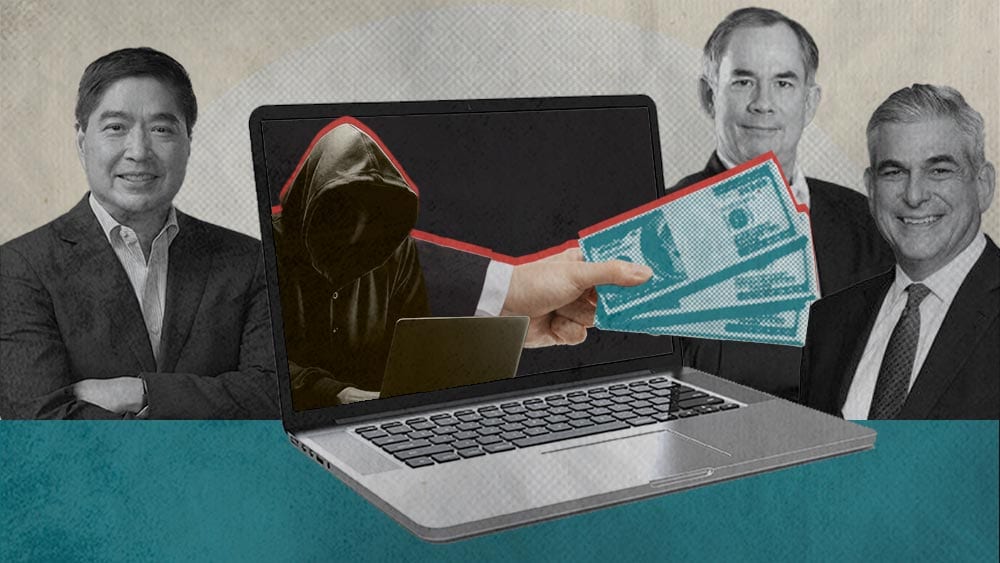
Bad actors are now impersonating some of the Philippines' most trusted conglomerates, including the Gokongwei Group, to swindle Filipinos out of their hard-earned money through fake cryptocurrency schemes.
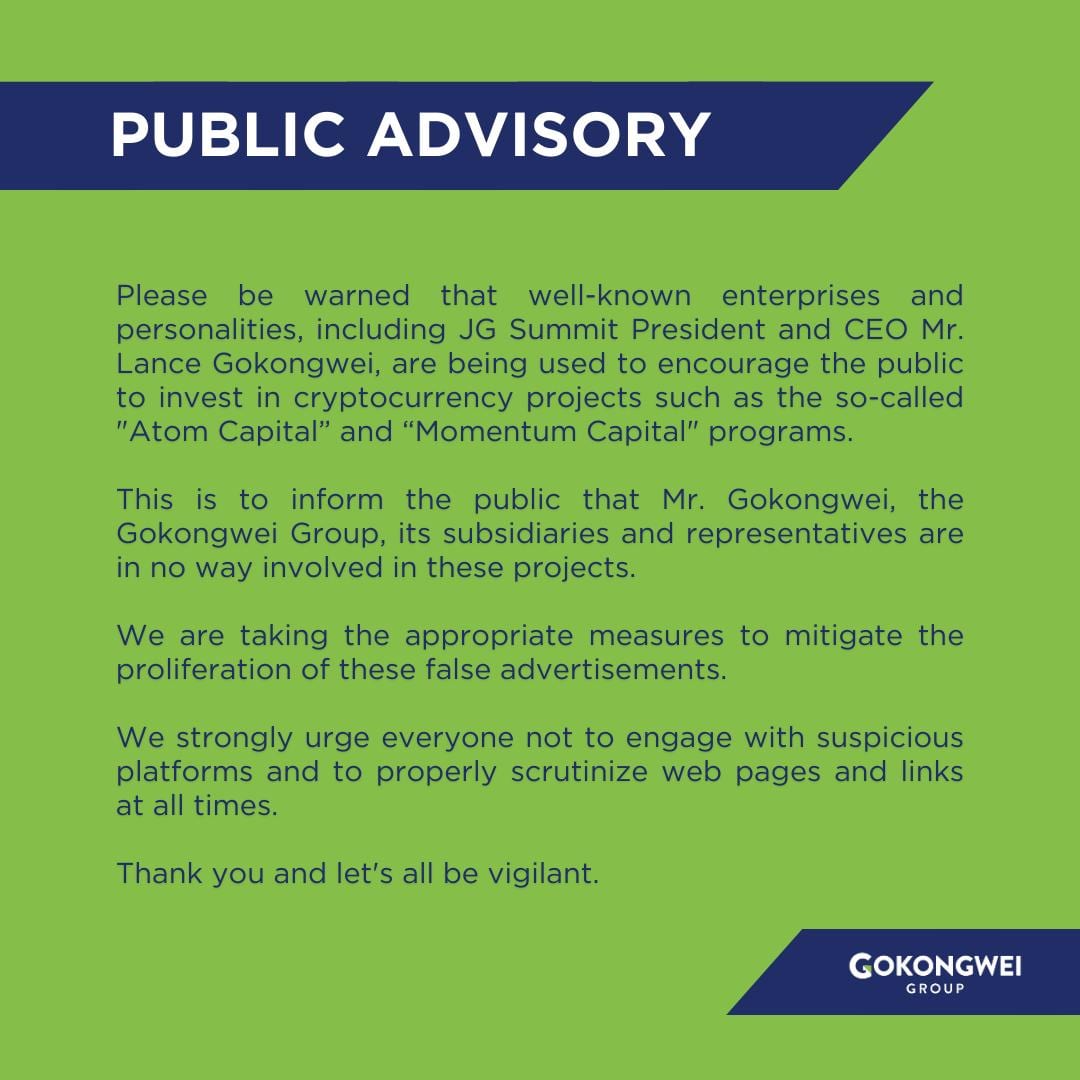
The Gokongwei Group has sounded the alarm after discovering that its president and CEO Lance Gokongwei is being falsely portrayed as endorsing fraudulent investment programs, including ones dubbed "Atom Capital" and "Momentum Capital.”
The company has categorically denied any involvement in the dubious cryptocurrency ventures and emphasized that it is not engaged in any crypto-related investments.
“This is to inform the public that Mr. Gokongwei, the Gokongwei Group, its subsidiaries and representatives are in no way involved in these projects,” the Gokongwei Group said. “We are taking the appropriate measures to mitigate the proliferation of these false advertisements.”
ALSO READ
'Pig Butchering' and Online Romance Scams: What You Need to Know
We Finally Know Who's Behind Those Spam Texts
Fake images of Lance Gokongwei are also making the rounds on social media, this time alleging he was caught saying something publicly that led to his supposed arrest. These images are clearly manipulated, with the tycoon’s head superimposed on someone else’s body, but they are being shared with the name of legitimate news organization attached, leading some people to believe they are real.
Cryptocurrency scams have become increasingly sophisticated, often using the names of reputable businesses and high-profile individuals to create an illusion of legitimacy.
Recently, the Ayala Group and Aboitiz Group were similarly used in scams, with their reputations exploited to give credibility to fake cryptocurrency and investment schemes.
In these cases, scammers capitalized on the established trust and recognition these brands and individuals have in the market to lure unsuspecting investors.
The proliferation of these scams underscores a larger problem in the digital space: the ease with which cybercriminals can hijack the reputations of established names to exploit the rising interest in cryptocurrencies.
The decentralized and often unregulated nature of the cryptocurrency market makes it particularly vulnerable to these kinds of fraudulent activities.
This latest scam tactic highlights the need for heightened public awareness and due diligence, especially in the volatile and often unregulated cryptocurrency market.
“We strongly urge everyone not to engage with suspicious platforms and to properly scrutinize web pages and links at all times,” the Gokongwei Group said.
The Department of Information and Communications Technology (DICT) earlier said that these scams are often related to Philippine Offshore Gaming Operators (POGOs).
In his latest State of the Nation Address, President Marcos Jr. declared that the Philippines will be rid of Pogo by the end of 2024, saying it was time to end the evils associated with them.
The Philippines ranked 61st among 194 nations in the 2020 Global Cybersecurity Index (GCI).
Moreover, IBM’s 2022 report highlighted that the Philippines experienced the highest number of banking Trojan attacks in the Asia-Pacific region and was the fourth most targeted nation by cybercriminals in 2021.
In recent years, the Philippine government has encountered numerous cyberattacks, with a focus on its digital infrastructure and online services. These attacks have varied in complexity and are often linked to geopolitical issues and criminal activities in cyberspace.
Notable incidents include breaches in the systems of the Philippine Health Insurance Corp., House of Representatives, Senate, Department of Education, the Philippine National Police, and even the DICT.
