

Financial Adviser: 5 Business Lessons Everyone Can Learn from Vicente 'Boss Vic' Del Rosario, Founder and CEO of Viva Entertainment

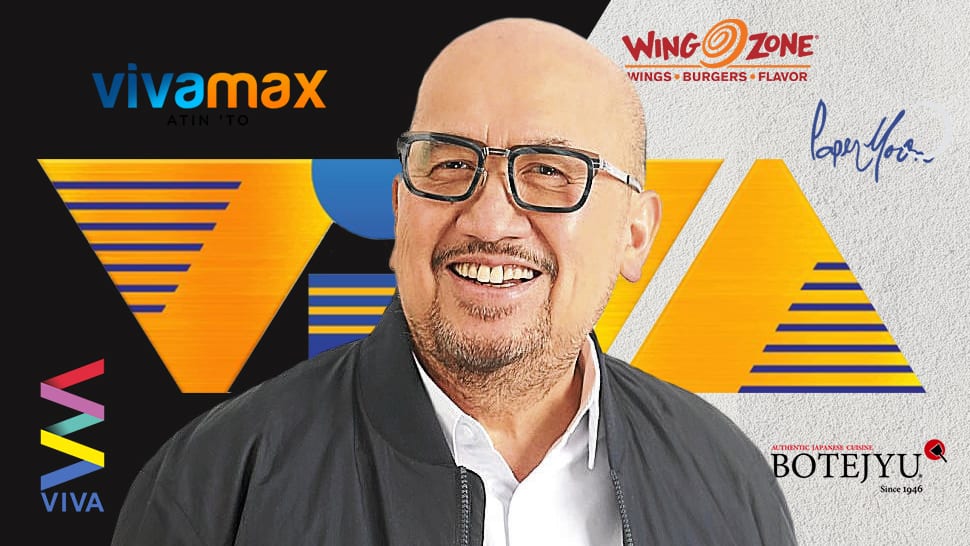
In the vast landscape of entrepreneurship, few individuals possess the vision, tenacity, and sheer talent to leave an indelible mark in multiple industries. One such luminary is Vicente "Boss Vic" Del Rosario, a name that resonates with success and innovation.
From his humble beginnings as a young dreamer, Del Rosario forged a path that led him to become a formidable force in the film and music industries, establishing a legacy that continues to thrive to this day.
Del Rosario's entrepreneurial spirit was ignited at a young age, driving him to pursue his ambitions despite lacking formal academic qualifications as a high school dropout.
In 1966, at just 20 years old, Del Rosario joined his cousin to enter the music recording business. This endeavor would later be known as Vicor Music, a pioneering record label that would revolutionize the industry.
The early years proved to be challenging for Vicor Music. Del Rosario observed their competitors closely and noted that the majority of the music industry back then was dominated by foreign entities, leaving only a small portion for local artists.
Del Rosario came up with a strategy to bolster the label's position in the industry by securing renowned talents. These artists, who were popular figures at the time, brought their talent and appeal to the label, contributing to the remarkable success of Vicor Music throughout the 1970s and 1980s.
However, it was in the 1980s when Del Rosario began to explore the world of film production. While managing the rising popularity of a young singing sensation named Sharon Cuneta, Del Rosario brought her together with Gabby Concepcion for their debut film titled P.S. I Love You. This pivotal moment not only marked the beginning of their successful collaboration but also saw the birth of Viva Films.
Del Rosario's first movie quickly became a financial success, catapulting Viva Films to new heights and setting the stage for a string of blockbuster movies that followed.
Over the years, Del Rosario expanded his repertoire and nurtured a host of superstar talents. In addition to Sharon Cuneta, he discovered and developed notable artists such as Regine Velasquez and Sarah Geronimo.
Del Rosario's visionary mindset fueled the transformation of Viva Films into a multifaceted multimedia company today. Recognizing the power of diversification, he extended Viva's operations from movie-making to talent management, concert events, content production, and licensing. This strategic move solidified Viva's position as a comprehensive entertainment powerhouse.
In addition to the entertainment business, Del Rosario also ventured into the food industry, which now boasts a total of 102 branches. Notable brands under his group include Boteyju, Papermoon, Wingzone, Greyhound, Pepi Cubano, Yugorino, and Viva Café.
How did Del Rosario transition from music to film and become the most dominant entertainment company in the country today? What lessons can we draw from Del Rosario's dedication to excellence that helped him build strong relationships in the industry?
Here are the five business lessons everyone can learn from Vicente “Boss Vic” Del Rosario, founder and CEO of Viva Entertainment:
ALSO READ
1| Know how to adapt to changing market environment
The ability of an organization to adapt is a significant competitive advantage. It enables a company to stay ahead by embracing new ideas, evolving with the times, and seizing emerging opportunities. By fostering a culture of adaptability, embracing change can pave the way for groundbreaking ideas.
As Albert Einstein once said, “The measure of intelligence is the ability to change.” Del Rosario had the foresight to anticipate changes and remain calm when things deviate from the plan. He demonstrated his adaptability to the changing market landscape by keenly observing his competitors and strategizing accordingly.
When the emergence of television brought about a shift in trends, with younger artists gaining prominence, Del Rosario adjusted his approach and capitalized on the evolving landscape by introducing younger artists.
When there was a surge in demand for Filipino-centric content during the martial law era in 1971, Del Rosario again astutely responded by launching the Manila Sound and coined the acronym OPM, aligning his offerings with the changing trends and preferences of the masses.
Del Rosario's adaptability enabled him to navigate the shifting market landscape, seize emerging opportunities, and cater to the evolving tastes of the audience.
By staying attuned to industry trends and consumer demands, he ensured the continued success and relevance of his company in the ever-changing entertainment industry.
“I studied in San Beda, same batch as MVP (Manny V. Pangilinan),” Del Rosario says. “We were classmate but I dropped out. I was a high school drop-out. Nag-lakwa-lakwatsa muna ako for three years and then after that I went to the music business accidentally without any plans. My cousin just asked me, sabi nya, ‘Papasok ako sa recording business, gusto mong bumakas?’ He was the one who asked me if I want to join.
Nagsimula ako wala akong alam sa business. Zero. My cousin had the knowledge of the business, being an artist, so alam nya. Pero yung marketing hindi. We started as a distributor, but after two years I said we have to form our own distribution because that that's the only way we can control our destiny. So we set up nationwide sales distribution.
“It was difficult the first two to three years. Mahirap. The first two years I was watching yung mga kalaban namin, and they had hits but, 80 percent of the music industry at that time was controlled by foreigners, so 20 percent lang ang local and we were competing for that 20 percent market share. And in that 20 percent, we were the smallest. Mga one percent lang ang aming market share. It was difficult, so sabi ko, ‘how do you control this business?’
“I was looking at my competitor, and sabi ko, the only way I can control this is to sign up all the big artists. We signed up Helen Gamboa, Eddie Mesa, Mercy Molina during that time, we signed up a lot of the big artists. Yun ang mga sikat noon. Of course, Jose Marie Chan started with us also.
“And then suddenly, nag-iba yung trend. The advent of television changed the landscape. Yung medyo may edad na artists na overtake ng mga bata. Then came the Nora Aunor era.
“Nora was with another company but we were able to get the others like Tirso Cruz, Edgar Mortiz, Vilma Santos. Dyan nauso yung mga screaming fans. Parang kung ano yung mga K-pop today, sila yung mga pop idol noon and they were also movie stars.
“At that time, television had become very strong in building up stars. Kami naman, I was able to discover a singer who was very good in revival. Victor Wood became one of our biggest singers doing a revival of old songs.
“Ganun ang aming market, masa kami eh. I mean the masa were the ones buying the local (records). And then during martial law, noong ‘71, suddenly nagkaroon ng trend for Filipino things. Pati pananamit nagbago, so we started launching the Manila Sound.
“Yung radio noon they were required to play OPM music. Radios were required to play four OPM songs per hour so doon na kami nag launch ng pop like Juan Dela Cruz Band, Sampaguita, VST & Co, Rico J. Puno, Cinderella, Hagibis. Then lumakas na yung OPM noong time na yun.
“Siguro sinakyan namin yung sentiment ng tao. Suddenly noong time ng Martial Law, everybody was disciplined. They were patronizing Filipino products, ganun yung feeling,. Nagkaroon ng movement on OPM.
“Then came the Metro Pop Festival I organized din. Sabi ko it’s easier to export songs because it can be interpreted by popular singers in each country, rather than exporting our own singer. So sabi ko, ‘Why don't we do a songwriting contest?’
“Namigay kami ng P1 million, and my vision was right because in the first Metropop, ang gaganda ng mga kanta, yung ‘Kay Ganda ng Ating Musika’ ni Ryan Cayabyab and then yung kay Apo, yung ‘Ewan’ ni Louie Ocampo. And there was a song na magandang maganda na hindi nanalo but it became the first Filipino global hit, which was ‘Anak.’
“Ako rin nagbenta nun globally. I brought that to Japan. That was the first song in Japan that had four versions. We released four version, two Japanese versions, female and male then two Tagalog versions, yung kay Asin and Freddie Aguilar. Four songs were in the top 20, sabay sabay.
“Yan ang buong buhay ko: music. That’s why di ko maiwanan. Up to now, ako pa rin ang nakikinig ng mga music na ire-release. “
2| Know how to test a business idea before launch
Testing the market allows businesses to gain valuable insights, mitigate risks, and increase the chances of success. By conducting market testing, business owners can assess the feasibility and viability of their ideas in a controlled environment before committing significant resources.
Before launching Viva Films, Del Rosario wanted to determine if he had the capability to market and promote a movie using the same practices he used in the music industry. He took charge of the promotional efforts for Cuneta's first movie, Dear Heart, specifically targeting the Cebu market, which surpassed his expectations.
Through these market testing endeavors, Del Rosario assessed the reception of Dear Heart in specific markets, identified the potential of Cuneta as a film star, and secured the necessary resources to establish Viva Films.
“Before 1981, I was already looking at the idea of going into the movie business,” he says. “Sabi ko dapat parang pumasok na ko sa pelikula. It’s a bigger industry compared to music, so when I was checking around, sabi ko Regal Films that time was big eh. They had young stars and a stable of artists, and then when I checked the other movie companies, the successful ones were run by the superstars like FPJ or RVQ, then even Ramon Revilla, so nag dalawang isip ako. I cannot go into the movies na wala akong artista.
“So I waited and since I was already handling at that time si Sharon, then came the opportunity na i-record ko siya ng song na more mature. Si George Canseco came to me and said ‘Pwede ba i-record ito ni Sharon?’ Yung kanta nya na more mature na ballad, na theme song ng movie na Langis at Tubig ni Vilma Santos.
“That was in 1980. So we recorded that and naging malakas. That movie was an entry to the Metro Manila Film Festival so noong pino-promote na and yung producer ng movie, tinawagan kami kung puede raw ba sumama si Sharon sumama sa parada, and I said ‘okay’ so nag-join sya sa Luneta noon, mina-mob sya ng fans.
“That was December 24, eh meron Sinulog Festival sa Cebu sa January, and then Sharon was invited by Student Canteen so I brought Sharon sa Cebu kasama yung Mommy nya. When we arrived in the hotel, I met Danny Zialcita, the director of Langis at Tubig. Sabi nya, ‘May festival dito, puede bang pasamahin si Sharon ulit sa parada.’ So pumunta sya.
“The following day I had breakfast sa hotel, nilapitan na naman ako ni Direk Zialcita sabi nya, ‘Grabe, parang mas malaki pa yung ingay kay Sharon kahapon kaysa kay Vilma.’ Sabi nya ‘What will it take to produce a movie for Sharon?’
“Ang bayaran ng artista noon P50,000 to P200,000 eh. Sabi ko dalawa lang ang requirement ko. Yung presyo nya P200,000, tapos I will handle the marketing. Hindi ko ibibigay kung hindi ko hawak. And then let me do the theme song. Right there and then nakipag-kamayan ako. Deal.
So they produced yung Dear Heart and I handled the promo and marketing. And nung lumabas na, syempre malakas. It was a medium hit but it was not in the level ng mga FPJ, and I was already hot na mag produce eh so ang ginawa ko, tinanong ko, ‘Magkano ang income ng Langis at Tubig sa Cebu?’
“Nagsabi sila ng x amount and sabi ko, ‘Can I buy the Cebu rights of Dear Heart?’ Kasi I wanted to test the market. Sabi ko ‘If I promote it, can I sell more?’ So sinabi nya ung presyo, and I matched it. ‘I’ll pay you that.’ I mean, Vilma Santos to a Sharon, syempre yung kay Sharon kalahati lang dapat.
“Dati kasi hindi naman simultaneous, so after two weeks, Cebu na, tinodo ko na ung promo. Lahat ng radio stations pino-promote na yun and you know what happened, I doubled the revenues.
“After nun, I asked them, ‘Ano susundan nyo ba yung movie?’ Sabi nila naka-commit na yung budget nila sa foreign movie so I went to (Pasay City) Mayor (Pablo) Cuneta. Sabi ko, ‘ Mayor, gusto ko gawan na ng pelikula si Sharon.’ Tapos sabi ni Mayor, ‘Dapat sundan na, ang lakas ng pelikula nya.’ Sabi ko, ‘eh Mayor, wala pa silang budget to produce a second movie.’
“Sabi ni Mayor, ‘E di i-alok mo muna sa ibang malalaking company, sa Regal or sa Lea Productions.’ Nilapitan ko si Mother, tumatawa lang ako kasi malaki yung asking ko, nakausap ko si Aling Miling ng Lea Production ganun din. So in other words, no takers.
“So bumalik na ko kay Mayor, sabi nya, ‘O ano, kaya mo ba mag produce?’ sabi ko ‘Mayor, kukulangan ako ng capital eh.’ Sabi nya, ‘Sige, pahiramin muna kita.’ So pinautang ako and tinayo ko na yung Viva Films. At pagkatapos nun, tuloy-tuloy na, non-stop na.
“Meron na akong main star, si Sharon, then I had Vilma Santos. We started signing up puro multiple deals. Binalik namin si Hilda Koronel. We did Bagets in ‘83, Working Girls in ’84. Wala na, nilampaso na namin lahat ng kalaban. Kung baga, hinog na hinog na ako pumasok sa pelikula.
3| Know how to embrace risk and seize opportunities
Some of the most significant achievements in business come from taking bold risks. By embracing calculated risks, entrepreneurs open themselves up to the possibility of extraordinary success. While not every risk will pay off, the ones that do can result in significant rewards and propel a business to new heights.
Del Rosario effectively managed risks by carefully evaluating the potential of each project. He made budget decisions based on the potential losses and gains. When the movie Bagets was offered to him, which was originally intended for his competitor but got rejected, Del Rosario seized the opportunity and took a calculated risk.
Del Rosario also employed the same approach when he took a gamble to produce Vice Ganda's first movie, despite initially being rejected by Star Cinema for a partnership. His strategic risk-taking and unwavering belief in the potential of unconventional ideas exemplify his entrepreneurial spirit and willingness to go against the norm.
“We decide the budget of a movie based on the potential. Kunyari yung budget ay malaki pero may potential, so you have to manage the downside. Dapat yung downside maliit pero yung upside mataas.
“That’s the only way eh. So kunyari pag nalugi eto P1 million or P2 million, pwede na. Pero pag kumita you can make P20 to P30 million, ganun dapat. I always look at the downside. What’s the downside? How much is the downside? Minsan mas malaki pa yung lugi pag tinamaan ka kung maliit yung basa mo pero meron naman kaming super jackpot naman. Once you have super jackpot, it takes care of several misses eh.
“Vice Ganda, ni-reject nga yan ng Star Cinema. Vice Ganda was doing well na sa mga live comedy act then nilapitan ako ni Direk Wen Deramas, sabi nya, ‘Boss, gusto mo i-launch si Vice Ganda?’ Sabi ko ano yung material, eh Petrang Kabayo, sabi ko, ‘Type ko yan, nakakatawa yan.’
“Nag-hit na yan dati so go, basta budget mura lang. Sinugalan ko. Tapos sinabi ko kay Malou Santos ng Star Cinema, ‘Gusto mo bumakas?’ Sabi nya, ‘Di ko type.’ Sabi ko, ‘Anyway, pag natapos, review-hin mo, baka mag iba isip mo.’ Yung matapos na yung movie, pinadala ko sa kanya: reject pa rin. Then nilabas ko na yung movie. (It made) P125 million. The next day may offer na sya.
“Yung Bagets na movie, that was also a reject of our competitor. Si Douglas Quijano was working for Regal, so yung materyales na yun was for Regal, pero hindi nila prinoduce, so binigay nila sa akin. Sabi ko, ‘I like it. Sige, sige.’ Inassemble namin yung cast. Si Aga Muhlach di naman kilala noon. Bagets became a blockbuster movie. Naging pop culture (phenomenon), proud ako dyan.”
4| Know how to stay relevant in a competitive environment
Core competence refers to the unique strengths, capabilities, and expertise that distinguish a business and give it a competitive advantage. However, relying solely on core competence without evolving can lead to stagnation and missed opportunities.
Through the years, Del Rosario has continuously explored new avenues and expanded his offerings to meet evolving market needs. This strategic evolution has enabled him to maintain a competitive edge, diversify his revenue streams, mitigate risks associated with relying solely on one area of expertise, and tap into new markets or customer segments.
Del Rosario's evolution from music to film, video distribution, retail, and TV production demonstrated his ability to leverage his core competence while capitalizing on new opportunities. His interconnected and synergistic approach allowed him to transform the entertainment landscape and establish a lasting legacy in the industry.
“Noong 1966, when I entered the music industry, parang kinabit-kabit ko. Within the first 10 years I formed our own in-house music publishing, so from recording I set up a publishing company, which basically manages songwriters. Yung tawag doon Bayanihan music publishing. We set that up and yung kasunod nun, we went into talent management and concert promotion.
“We set up in-house, so we were doing the tour of our artists and we were managing all our local artists, so dikit-dikit yun. Interconnected lahat, it’s a 360-degree operation. So noong wala ka na ma-expand sa music, the natural thing to do is do movies.
“Using the same method, when we started producing movies, we were using our expertise in music, doing theme songs in our movies to sell our movies and we started with Sharon Cuneta, who was also a singer.
“And then our first movie, George Canseco did the theme song and siya din ang nag score ng movie so it was a natural synergy. We also set up a video distribution company to release the movies, both old and new movies, into video.
“And then when we set up the video distribution, we set up the retail operation, which was called Video City. We also went in the rental business and then after that, we went into TV production.
“Yung mga kasabayan namin dati, hindi nag-evolve. I was a good friend of Henry Sy. He was my mentor. I followed the same way how he synergized his business. Everything is interconnected. I focused on my core competence and I recreated the entertainment industry in the Philippines.
“If you look at Disney or Viacom or Warner, basically it’s the same model. In the early days, they were also in the music business and they unloaded the music because music is not really a very big industry.
“Hindi totoo na humina ang industrya kasi sa iba lang nanonood yung audience. Hindi naman nawala yung sawa ng tao na manood. Nag-iba lang yung outlet. There are more eyeballs now in terms of watching content.
5| Know how to build residual income and secure financial stability
In today's rapidly evolving business landscape, traditional investment avenues such as stocks, bonds, and real estate are no longer the sole means of generating long-term wealth. Intangibles, which encompass intellectual property, brand value, and knowledge-based assets, offer unique opportunities for sustainable income generation.
Del Rosario introduced the royalty system in the music industry in the late 1960s, disrupting the traditional practice of paying artists and composers outright. He recognized the potential of the royalty system, which could continue to generate income for years to come.
Del Rosario invested in acquiring his competitors' catalogs, enabling him to consolidate and capitalize on a vast repertoire of music. He employed the same strategy when he ventured into movie production in the '80s, strategically acquiring rights to films from other producers.
As the industry transitioned to streaming platforms, Del Rosario's library of music and movie catalog continues to generate revenue through various channels, showcasing the longevity and value of intangible assets.
“Production was not really expensive at that time so you can record for a few hundred pesos and pay the studio. The singers don’t really get paid high. Everything was mababa, so we changed the system, basically, early on, dinis-rupt na namin yung business eh. We disrupted the business, we were young kids.
“We introduced the royalty system because we hear about artists complaining, not getting any payment. After the P50, wala na silang kita. So with the royalty system, even the old recording, they still earn a lot of money, even when they die. If they sell a lot, like yung mga old recording up to now, if it sells, they still get the royalty. It’s a long tail business. Mahaba yung (tail) ng copyright, so while it sells, you can still monetize it.
“So when I started, 45 RPM during that time it was vinyl, tawag natin dun plaka di ba? But then nagkaroon ng long playing album, so we have a single and then album, so you sell both. Then yung nawala na yung vinyl, napunta na tayo sa cassette and then eventually CD, and now streaming, I still monetize it.
“After more than 50 years, my catalog still sells and makes some money, but before our time, everybody was paying the singers and composers outright, so the Pilita Corrales before, they were getting P50 outright. Wala ng royalty. So when we came into the business we modernized it and adopted the royalty system.
“That’s why we really take care of the copyright. We really just have to fight piracy. Kalaban natin yung piracy because yung iba hindi na nagbabayad, even with technology up to know meron pang pirates.
“Ganun din sa pelikula. When we started movies in 81, in 83, we were already buying movies also from our competitors. After ipalabas sa sine ng mga producers, Vincent, my son, would go to Escolta and offer to buy the rights, kasi 90 percent of the producers thought that after cinema there is no more money.
“So I was buying after they show it on the theater, I would buy all rights in perpetuity, so I was able to buy more than 800 movies from different movie companies. Now we have 2,000 movies that we own. That's why we can run a 24-hour movie channel and now we use it for streaming.
“Buying music and movies is an asset play eh. Basically, when you do streaming, di ba, ilalatag mo yung library mo. You have the blockbusters and non-blockbusters altogether. We license it to all the networks. We licensed it before to ABS when they were still open, with GMA and TV 5 and now even the new Villar station we license our movies.
“Noong 83 kasi, coming from the music business, yung una kong monetization was the video distribution, yung Video City. We had 300 rental shops, and then we had video distribution globally. We distributed it in the US, kasi most of the stores were selling music and movies.
“We own the movies in perpetuity, walang hinto. Now we monetize also to YouTube. Our copyright is the crown jewel of our business. In 83, Mother Lily of Regal Films would always tell me every time I see her, ‘I bought this property. Naku, naka-jackpot ako sa lupang ito’ Eh I did not have enough money to buy property at that time. Sabi ko, buying movie rights and music rights is also like buying property.
“When we started buying, my son would go to Escolta, every Wednesday and Friday, there were new movies being shown, nago-offer lang sya, ‘Sige pagka showing nyan, bibilhin na namin. And they would sell it. Most of them would sell it. They did not see the value of a movie beyond theater. I came from the music business so naintindihan ko yung change in technology. I never sold my TV rights to anyone, so I kept owning all my titles that I produced. We still own it 100 percent all rights, and aside from that, we did a lot of buying too. “
Henry Ong, RFP, is an entrepreneur, financial planning advocate and business advisor. Email Henry for business advice [email protected] or follow him on Twitter @henryong888
[ArticleReco:{"articles":["10272"]}] [ArticleReco:{"articles":["27285"]}]
