
'All Eyes on Rafah': How an AI-Generated Image Went Viral
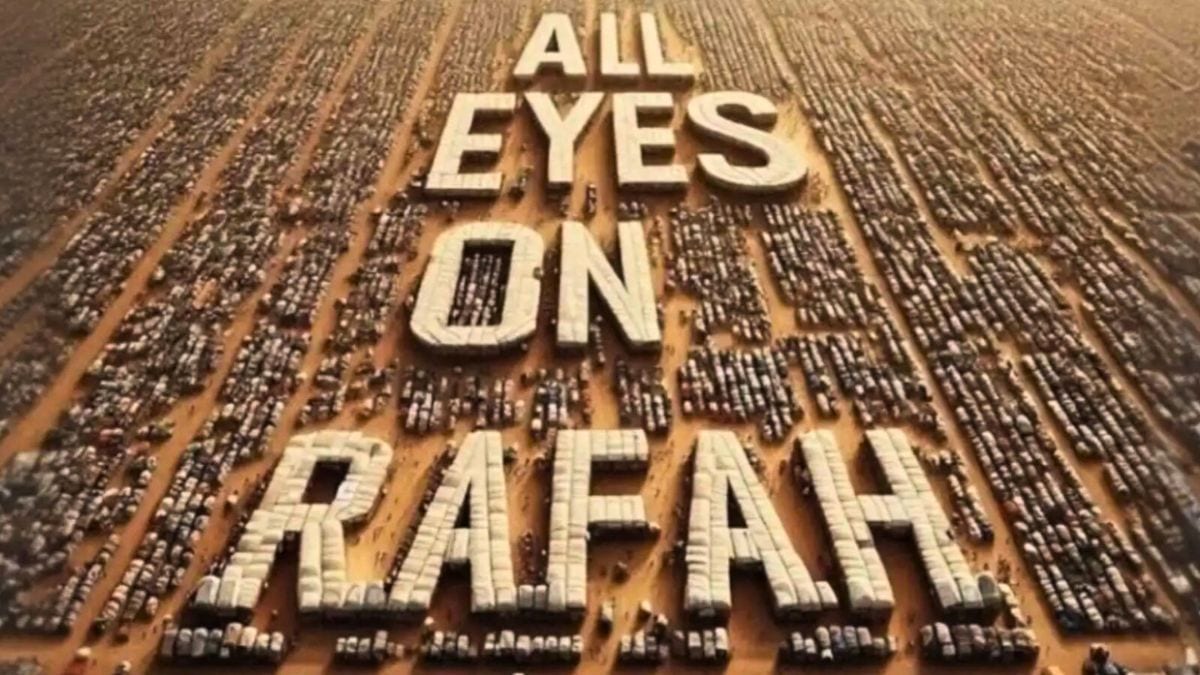
If you're always on Instagram, chances are you've seen that image with the text "All Eyes on Rafah." You may have already shared it on your own Instagram Story. This AI-generated graphic has been posted by over 40 million Instagram users, including celebrities who have seldom mentioned Gaza before. The image appeared after a deadly Israeli bombing on a tent encampment for displaced people in Rafah, southern Gaza, on Sunday night, May 26.
What the "All Eyes on Rafah" Image Looks Like
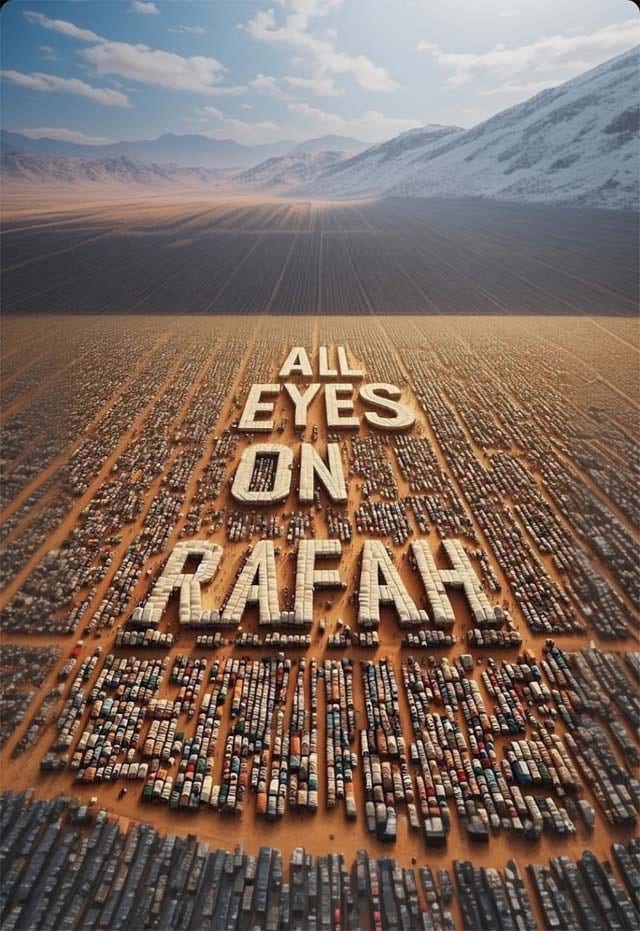
The viral image features rows of white tents spelling out "All Eyes on Rafah" against a backdrop of snow-capped mountains.
The phrase reportedly came from a comment by Richard Peeperkorn, the World Health Organization's representative in the West Bank and Gaza. He used the phrase back in February to highlight the dire humanitarian situation in Rafah, emphasizing the catastrophic impact of an Israeli military incursion.
Artificial Intelligence and Virality
The "All Eyes on Rafah" image was first used in an Instagram story template by a user named "shahv4012," though it cannot be confirmed whether it's the same user who created it. The post quickly went viral both on Instagram and X (formerly Twitter), amassing millions of shares within days.
Several signs show that the image was generated through artificial intelligence. This includes unusual shadows and unnatural symmetry of the tent camp, clues that show that the image "definitely looks" AI-generated, Marc Owen Jones, an associate professor who specializes in misinformation and Middle East studies at Hamad Bin Khalifa University in Qatar, told NBC.
Likewise, Felix M. Simon, a communication researcher at the Oxford Internet Institute, cited in a Washington Post's interview the characteristic blurriness as a way of telling that the image is AI-generated.
Social media consultant Matt Navarra said that the sanitized nature of the AI image may be driving its massive reach. It doesn't depict real-world violence, making it easier for users to share without the discomfort of graphic content. This has enabled the image to gain significant traction, even among celebrities who have not previously engaged with the Gaza issue. Navarra suggested that sharing the image helps people feel they are part of a larger movement, even at the lowest level of engagement. This sense of participation can drive awareness and potentially influence change.
Meta, the parent company of Instagram, announced earlier this year that it would begin labeling AI-generated content to provide transparency. However, Instagram has yet to label the "All Eyes on Rafah" image as AI-generated.
The actual scene in Rafah is starkly different. Grief and suffering filled the air, especially after at least 45 civilians died after the airstrike. Without hospitals and lack of medical aid, people lay around, severely injured. Make-shift coverings are torn, sandbags are burnt, and what remains of the refugees' shelters have been razed to the ground. The real Rafah is a focal point in the ongoing Israeli occupation of Palestine, with about one million Palestinians displaced and nowhere to go.
Israel's military rule of Palestine began in June 1967. That's over five decades of land confiscation, illegal settlement and dispossession, and rampant discrimination that have deprived Palestinians of their basic rights in their own country. Palestinians' entire lives are held hostage by Israel. The latest Israel-led genocide started as an armed conflict between Israel and Hamas-led Palestinian militant groups that started taking place in the Gaza Strip on October 7, 2023.
With the ground invasion of Gaza, Palestinian civilians were forced to move further south to Rafah, but the Israeli government started bombings on Rafah in February.
On May 6, Hamas announced that they had accepted the terms of a ceasefire brokered by Egypt and Qatar, but Israel rejected the deal. And instead, air strikes continued, including on the displacement camps in Rafah, previously designated by Israel as a safe zone.
Meta's Censorship of Pro-Palestinian Content
Meta's policies and practices have come under intense scrutiny for silencing voices in support of Palestine on Instagram and Facebook amid the ongoing hostilities between Israeli forces and Palestinian armed groups. This wave of censorship is not an isolated incident but part of a broader pattern documented extensively by Human Rights Watch (HRW).
Since the outbreak of violence in October 2023, which resulted in the deaths of approximately 1,200 people in Israel and over 18,000 Palestinians, HRW has recorded over 1,050 instances of content removal and account restrictions on Meta's platforms. These cases predominantly involved peaceful expressions of support for Palestine and were documented from over 60 countries, primarily in English. The censorship ranged from the removal of posts, stories, and comments to the suspension or permanent disabling of accounts. Users also reported restrictions on their ability to engage with content, such as liking, commenting, sharing, and the use of certain features like Instagram/Facebook Live.
NBC News has also confirmed that two out of three of their Instagram posts showing burned and grievously injured bodies were removed, and one was filtered for "graphic or violent content." An Instagram spokesperson stated that the content was removed due to its violent nature, which violated the platform's policies.
So how has "All Eyes on Rafah" become viral despite this kind of censorship?
This is likely due to the sanitized imagery of the post and the fact that it's being shared conveniently on IGS through a click of a button. While this shareability also points to its performativity, it also allows the post to go viral.
Other activists emphasize that real photographs and videos from the ground are crucial for raising global awareness and sparking outrage. But then again, these kinds of posts can easily be censored.
The phrase "All Eyes on Rafah" has resonated widely, partly because it simplifies a complex situation into an easily understandable slogan. In a world where people often feel powerless, sharing such a post can provide a sense of agency.
