
DOH Confirms New Mpox Case in the Philippines

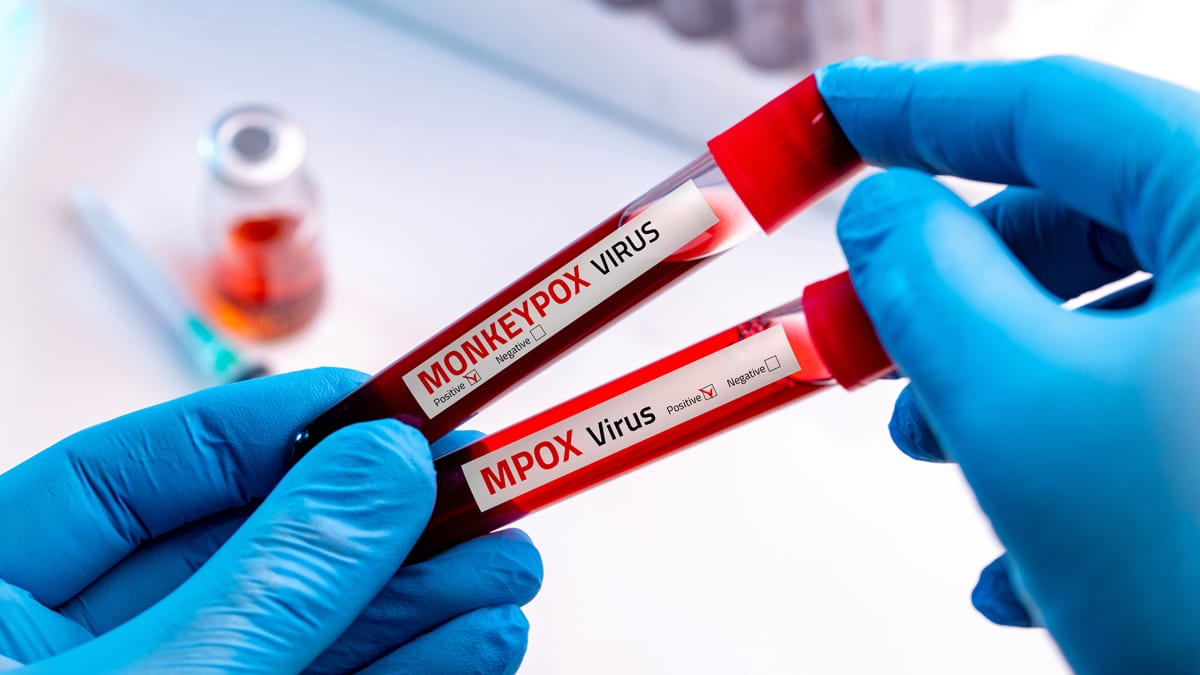
The Department of Health announced on Monday afternoon, August 19, a new case of mpox (formerly monkeypox) in the Philippines. It was reported to the health agency on August 18. This is the 10th laboratory-confirmed Mpox case in the Philippines, with the last one detected in December 2023.
"The case is a 33-year-old male Filipino national with no travel history outside the Philippines, but with close, intimate contact three weeks before symptom onset. Symptoms started more than a week ago with fever, which was followed four days later by findings of a distinct rash on the face, back, nape, trunk, groin, as well as palms and soles. The case was seen in a government hospital, where specimens were collected from the skin lesions and tested via real-time polymerase chain reaction (PCR) test. PCR test results are positive for Monkeypox viral DNA," a statement from the DOH said.
What is Mpox?
Mpox is a viral infection caused by an orthopoxvirus, a genus of viruses in the family Poxviridae and subfamily Chordopoxvirinae. Some of the common diseases associated with this genus are smallpox, cowpox, horsepox, camelpox, and mpox.
Mpox, formerly known as monkeypox, is caused by Orthopoxvirus monkeypox. It was first detected in humans in 1970 in the Democratic Republic of the Congo, and named monkeypox because the virus was discovered in captive monkeys in 1958. This was before the World Health Organization (WHO) published its best practices in naming diseases (2015).
WHO announced that it would use the preferred term "mpox" in November 2022, while the term "monkeypox" could still be used simultaneously for only one year (until November 2023) as it was being phased out.
"When the outbreak of monkeypox expanded earlier this year, racist and stigmatizing language online, in other settings and in some communities was observed and reported to WHO. In several meetings, public and private, a number of individuals and countries raised concerns and asked WHO to propose a way forward to change the name," WHO said in a statement in 2022.
The name monkeypox was also criticized for being misleading since monkeys are not the main host or natural reservoir of the virus.
Mpox is considered endemic to countries in central and west Africa, where several species of mammals act as natural reservoirs for the virus. The monkeypox virus subtypes were renamed in August 2022: the Congo Basin (Central African) clade was renamed Clade I, and the West African clade was renamed Clade II.
Mpox as a Public Health Emergency of International Concern
The multi-county outbreak of Mpox was declared a Public Health Emergency of International Concern (PHEIC) by WHO in July 2022. It spread rapidly via sexual contact in countries where the virus had not been previously present.
On May 10, 2023, the U.S. has reported a total of 30,395 cases, with a peak of approximately 460 cases per day in August 2022. Approximately 1.2 million JYNNEOS vaccine doses have been administered in the U.S. since the outbreak began, but only 23% of the estimated at-risk population is fully vaccinated. The risk of a resurgent outbreak is significant, especially in jurisdictions with low vaccination coverage.
Mpox' status as a PHEIC was confirmed to be over by WHO in May 2023.
However, on August 14, 2024, WHO Director-General Dr Tedros Adhanom Ghebreyesus once again announced that the upsurge of mpox is a PHEIC. There is an increase in cases in the DRC and more countries in Africa. There is a potential for the virus to spread across the continent and possibly outside.
In declaring the PHEIC, Tedros said, "The emergence of a new clade of Mpox, its rapid spread in eastern DRC, and the reporting of cases in several neighboring countries are very worrying. On top of outbreaks of other Mpox clades in DRC and other countries in Africa, it’s clear that a coordinated international response is needed to stop these outbreaks and save lives."
Mpox Symptoms
Common symptoms include a rash that lasts from two to four weeks. It looks like blisters or sores and can appear in the face, palms of the hands, soles of the feet, groin, genital and/or anal regions. The rash may start with or be followed by fever, headache, muscle aches, back pain, low energy, and swollen glands (lymph nodes). Lesions may also be found in the mouth, throat, anus, rectum, vagina, or on the eyes. Others may develop inflammation inside the rectum or of the genitals, which may cause severe pain.
Symptoms may disappear within a few weeks with medication for pain or fever.
Complications, according to WHO, include bacterial infection from skin lesions; the virus affecting organs like brain (encephalitis), heart (myocarditis) or lungs (pneumonia); and eye problems. People with severe Mpox may require hospitalization. Between 0.1% and 10% of people with Mpox have died, but WHO emphasized that "death rates in different settings may differ due to several factors."
Transmission and Prevention of Mpox
Mpox spreads primarily from person to person through close contact. This includes skin-to-skin interactions such as touching or sexual contact, as well as mouth-to-mouth or mouth-to-skin contact like kissing. Face-to-face interactions, where respiratory particles can be exchanged, also pose a risk.
Individuals infected with Mpox are considered contagious until all their lesions have crusted over, the scabs have fallen off, and a new layer of skin has formed underneath. This process usually takes between two to four weeks. The virus can also persist on clothing, bedding, towels, and surfaces that an infected person has touched. Therefore, it is crucial to clean and disinfect surfaces and objects and wash hands after touching potentially contaminated items to prevent transmission.
Mpox can also be transmitted from animals to humans. Physical contact with an animal carrying the virus, such as certain species of monkeys or rodents, can lead to infection. This can happen through bites, scratches, or activities like hunting and preparing meat. Consuming contaminated meat that is not thoroughly cooked also poses a risk. To reduce the risk of infection, it is advisable to avoid unprotected contact with wild animals, especially those that are sick or dead, and to ensure that any meat is cooked thoroughly before consumption.
The virus can also spread from humans to animals, although this is less common. There have been reports of the virus being identified in pet dogs, but it is unclear whether these were true infections or due to surface contamination. People with confirmed or suspected Mpox should avoid close physical contact with animals, including pets, livestock, and wildlife, to prevent potential spillback of the virus.
Vaccination can be administered as post-exposure prophylaxis (PEP) for those with known or presumed exposure to the Mpox virus. The JYNNEOS vaccine involves two doses given 28 days apart, with peak immunity expected 14 days after the second dose.
