
Looking Back at the History of the PCGG as Lawmakers Question Its Relevance

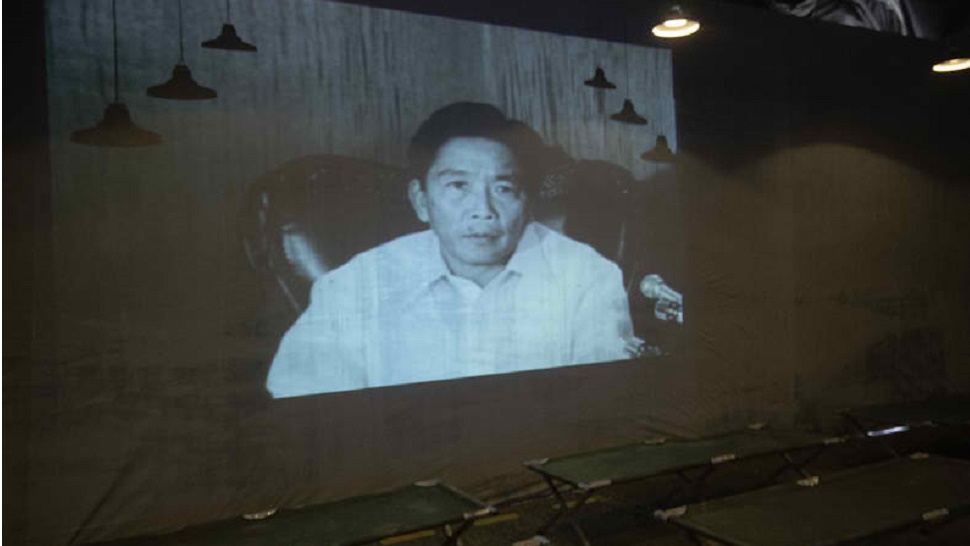
As renewed calls for the abolishment of the Presidential Commission on Good Government (PCGG) come to light, Chair John Agbayani explains the gains it has had in a House briefing on Wednesday, August 24. The agency, which was established 36 years ago to pursue former President Ferdinand Marcos Sr.'s ill-gotten wealth and associates, has dealt with these kinds of talks before. But now, it faces its most pivotal juncture as Marcos Jr. takes the helm.
The PCGG chair told lawmakers in the justice committee that it has obtained roughly P600 million a year. As of 2019, the PCGG has recovered more than P171 billion. In 2022, it has remitted P850 million to the treasury so far. The agency has also been a consistent revenue contributor, having preserved roughly P50 billion in recovered assets. A total of P125 billion is still under litigation.
But Cagayan de Oro Rep. Rufus Rodriguez pointed out that it might be time to "rightsize" the bureaucracy, telling officials to “take a second look on how to wind up its affairs.” Rodriguez claimed that other agencies, like the Office of the Ombudsman, Office of the Solicitor General (OSG), and the Department of Justice (DOJ) already have the mandate to investigate and file graft and corruption cases. This includes some civil and criminal cases against the Marcoses.
Rodriguez also said that, by now, the PCGG should have already accomplished its primary mandate. “If in 36 years it has not yet finished, it has failed. How can it be continuing 36 years down the line?”
Cavite Rep. Elpidio Barzaga Jr. also shared the same sentiments. “Sorry to say, but as I see it, you have outlived your usefulness after 36 years. The management of government property can be handled by other agencies… PCGG has existed too long.”
ALSO READ:
The UP Vargas Museum Is Exhibiting the PCGG Art Collection
Bongbong Marcos Wants to Strengthen PCGG if He Wins, But Lacson Reminds Him of Its Primary Mandate
Agbyani admitted that he thinks that any new cases against the Marcoses won't be filed anytime soon for lack of evidence. Obtaining documents, especially overseas, has proven to be difficult.
“In the last 15 to 20 years we have not obtained [new] evidence… against the Marcoses and their cronies. As of this time, there is no evidence available in order to prosecute or new persons to be prosecuted involved in ill-gotten cases related to the Marcoses,” he added.
Past threats of abolition
According to a report by the Philippine Daily Inquirer, Rodriguez confirmed to reporters that a new bill that seeks to put an end to the PCGG is in the works. This isn't the first time this or any talks of "rightsizing" has happened.
The PCGG was created by virtue of Executive Order No. 1 by former President Corazon Aquino after the EDSA uprising back in 1986. And as early as 1998, then-President Joseph "Erap" Estrada has floated the idea of its abolishment. A bill was filed by former Senator Aquilino “Nene” Pimentel Jr., but had not moved pass the committee level.
In 2007, Pimentel would file Senate Bill 202, which would have dissolved the PCGG, as well. Talks of moving the PCGG under the DOJ had also persisted through the years, but also did not push through. In 2013, the House had explored the possibility of streamlining or expanding the PCGG's mandate, too.
In 2016, Former President Rodrigo Duterte in 2016 said that the PCGG should also look into other "corrupt officials."
The following year, Budget Chief Benjamin Diokno advocated for "rightsizing," as well. He hoped to combine the powers of PCGG, OSG, and Office of the Government Corporate Counsel to create one entity to address corruption. Senator Aquilino “Koko” Pimentel III was also open to reviewing PCGG's mandate once more that same year.
A bill was again filed in the House to abolish the PCGG, as part of bolstering the OSG. The Senate would later remove the said provision.
