
'Modernization, Not Phaseout': A Jeepney Driver's Daughter Takes Us Into the Transport Strike

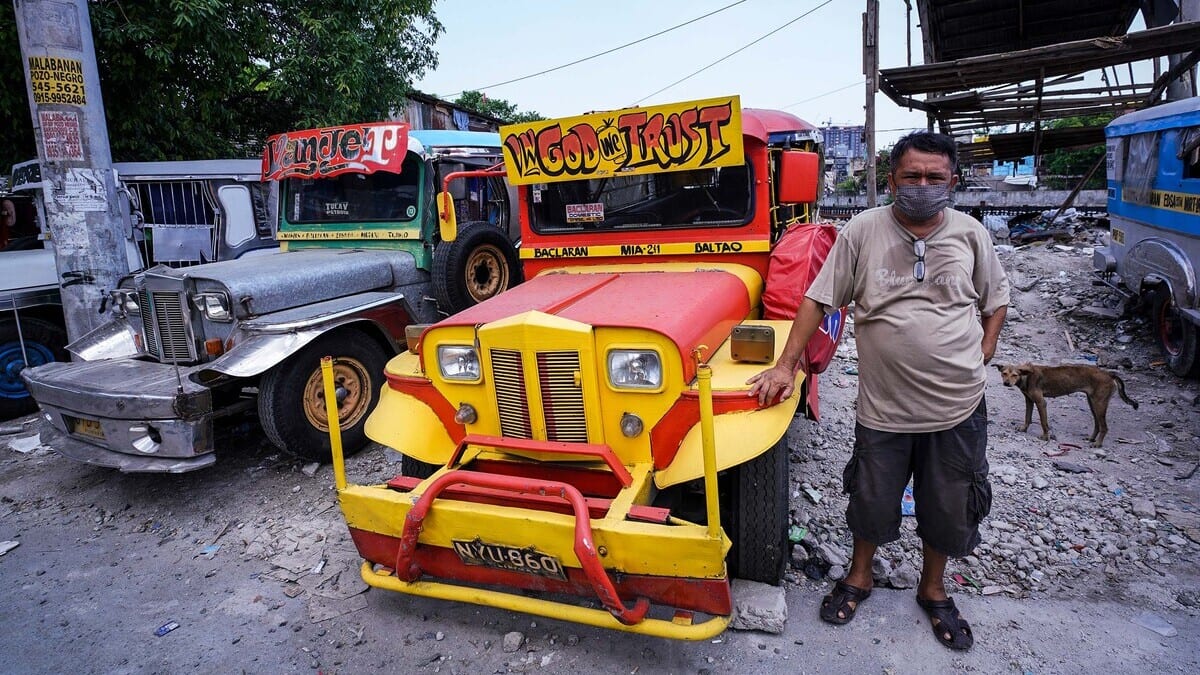
The transport strike has brought back into the limelight the long-winded and still-ongoing saga of jeepney modernization in the Philippines.
Officially launched in 2017, the Duterte administration’s “Public Utility Vehicle Modernization Program” wants the public transport system to go green with efficiency in mind by phasing out jeepneys, buses, and other public utility vehicles (PUVs) that are at least 15 years old. The replacement will be modern PUVs powered by either Euro 4 compliant diesel engines or electric motors. Of course, there is basis behind this. Each diesel-fueled jeepney generates 40 kilograms of carbon dioxide every day, which contributes to 94% of the soot particle mass in Metro Manila.
It sounds simple enough—just replace old jeepneys with newer, more energy efficient ones. Which brings us to the question: Why are transport workers against the current PUV Modernization Program, so much so that we are currently in a week-long transport strike?
Daughter of a jeepney driver and Move As One Coalition organizer Hya Bendaña answers this in a seven-minute video. In it, she listed the points the movement wants to make and reasons as to why the issue with its implementation goes beyond a shallow (mis)interpretation of the transportation sector’s resistance to change.
“Madalas... pinaglalaban ang interes ng komyuter at drayber when iisa lang naman ang adhikain nila: disenteng makapaghanap-buhay at may mailapag sa lamesa ng kanya-kanyang pamilya," Bendaña told Spot.ph.
Her main call? A "just transition" that treats jeepney drivers fairly.
“Modernization po, not phaseout,” Bendaña said in the video. “Nananawagan po kami ng makatarungang plano na hindi kami maiiwan.”
Hya Bendaña calls for the following solutions amid the jeepney phaseout:
Step-by-step support from the government
First and foremost, Bendaña urges for the government to remove the many barriers that give the transportation sector a hard time to make the switch.
According to the Land Transportation Franchising and Regulatory Board, new franchises will only be issued to consolidated entities, which requires at least 15 individual jeepney drivers to form one cooperative.
To join a cooperative in the PUV Modernization program, a transport worker will have to pay P300,000 on cooperative fees and P20,000 for each jeepney unit that will be registered in the cooperative. With 15 jeepney drivers with one unit registered in one cooperative, this will amount to a total of P600,000 at the minimum—and this doesn't even include the actual purchase of the modern jeepney unit yet.
“That is money many of our transport workers do not have,” Bendaña said, stressing that this is only the first requirement of the PUV Modernization Program.
Meanwhile, Bendaña argued that other requirements are almost impossible to accomplish, with most of the transport workers’ Local Public Transport Route Plan stuck at the local government units’ backlog for the past five years. Even if jeepney drivers are more than willing to transition, some of them aren’t able to move past the initial steps.
Shoulder half of the acquisition cost
Only a maximum of P360,000 equity subsidy is granted to each jeepney driver who is expected to shell out P1.5 to P2 million for a modern jeepney unit, compared to the P200,000 to P600,000 for a traditional jeepney.
Bendaña’s ask? The government should subsidize P500,000 or at least 50% of the acquisition cost of a modern jeepney.
“Tandaan po natin: this entire modernization…ideya po ‘to ng gobyerno,” Bendaña said.
Following the backlash, the Land Transportation Franchising and Regulatory Board (LTFRB) has since committed to assisting jeepney operators in setting up cooperatives and corporations, but no word on help elsewhere so far.
Provide social security for older transport workers
Transitioning to the PUV Modernization Program is already difficult enough for the regular transport worker, but what about the older cohort? Being in informal labor means no social security benefits to claim for future use, which makes new expenses in the millions a big problem as they prepare for retirement.
“Magreretiro ka na lang, magkakautang ka pa nang milyon-milyon,” Bendaña said. “Abolishing their units is basically robbing them of their pension. Fix that, provide social security, and you will have least resistance for the program.”
Have jeepney drivers sit in the decision-making table
Ultimately, Bendaña is rallying for the most impacted population to have most say on the PUV Modernization Program.
The concrete solutions outlined in her video is simply an echo of the transport sector’s long-time pleas to the government since 2017, starting with a transition plan co-designed with the transportation sector.
Many lawmakers have since proposed alternatives for the implementation of the PUV Modernzation Program, like offering a trade-in scheme or lowering the financial bar to ownership. However constructive, Bendaña is still firm in her stance that it is the transport sector who the government should be turning to for suggestions.
"All of these alternatives need better work and deeper consultation with the sectors involved. Karamihan, isang anggulo lang ang tinitingnan when magkakarugtong ang iba't ibang anggulo," Bendaña told Spot.ph. "Ako po at ang Move As One Coalition ay handang tumulong at makipag-usap sa iba't ibang stakeholders para maupuan kung ano nga ba ang makatarungang transition para sa parehas na transport workers at komyuters. Ito ang porma ng transition plan na sana pondohan ng gobyerno."
Watch Bendaña’s full explanation below:
From: Spot
