
Marcos Has a Plan to Address Water Shortage Issues in the Country

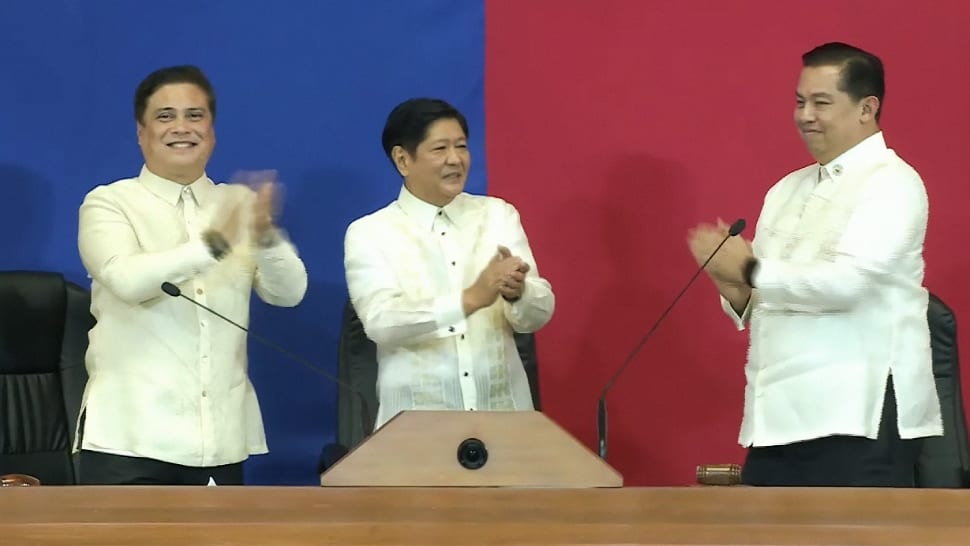
President Ferdinand “Bongbong” Marcos Jr. touched on a wide variety of issues and made sure to mention his administration’s achievements during his second state of the nation address on Monday, July 24. From agriculture and fisheries to tourism, health, and national security, Marcos’ speech was generally straightforward and laden with figures and statistics.
One thing that caught our attention was Marcos’ plans for water security in the country. In addition to creating the Water Resources Management Office, which is in charge of handling policy related to the precious resource, the President announced that he is in discussions with members of Congress for the eventual creation of a Department of Water Resource Management.
ALSO READ
Cebu City Is on the Brink of a Water Crisis. Here's What's Being Done
Half of Metro Manila Could Soon Be Drinking Treated and Purified Used Water
“Ang tubig ay kasing-halaga rin ng pagkain,” Marcos said. “Kailangan nating tiyakin na may sapat at malinis na tubig para sa lahat at sa mga susunod na salinlahi. Kasama na rito ang tubig na ginagamit natin para sa mga sakahan.
“This year, we have allocated P14.6 billion for water supply projects, which will benefit communities all over the country,” he added. “Recently, the water supply of NCR and Rizal received a significant boost from the first phase of the Wawa Bulk Water Supply Project. The water supply will increase as the Project enters the second phase.
Marcos also said about 6,000 rainwater collection systems have been installed across the country, in preparation for the looming dry spell brought about by El Niño.
Whichever side of the political spectrum you lean toward, this is welcome news as it signifies clear and decisive policy and direction toward addressing the critical but often overlooked issue of water resources management in the country. Many of us might not exactly feel it now especially over the last few days when it’s been raining non-stop, but access to clean water is a serious issue for many in the country. The United Nations even characterizes “the right to safe and clean drinking water and sanitation as a human right that is essential for the full enjoyment of life and all human rights.”
But the reality in the Philippines is far from ideal.
Earlier this year, the National Water Resources Board (NWRB) said that as many as 11 million Filipino families still source their water from deep wells, rivers, lakes, and rainwater, which are not only unsanitary but also unreliable. The number is about half of the total number of Filipino families, which stood at about half or 26.39 million as of the latest government data.
The international non-profit Water.org has similar numbers: about 52 percent of the population, or about 57 million of the estimated 110 million total population in the country, lack access “to a reliable, safely managed source of water, and 43 million people (39 percent) lack access to safely managed household sanitation facilities.”
Meanwhile, a study conducted by the Social Weather Stations (SWS) late last year revealed that only about seven in every 10 households in the country have access to running water. That’s about 17 million out of the total 25 million households in the country.
In Cebu City, the biggest metropolitan area in the country outside of Metro Manila, the water supply shortage is nearing crisis levels. Other parts of the country are also grappling with problems related to gaining access to clean water for the long-term.
Marcos’ focus on water issues, and the fact that he allotted space in his speech for it, give us hope that the country will at least have plans in place to ensure that all Filipinos will have access to clean water today and well into the future.
[ArticleReco:{"articles":["26287"]}] [ArticleReco:{"articles":["25071"]}]