
NAIA Boasts Improved On-Time Performance Under SMC Management

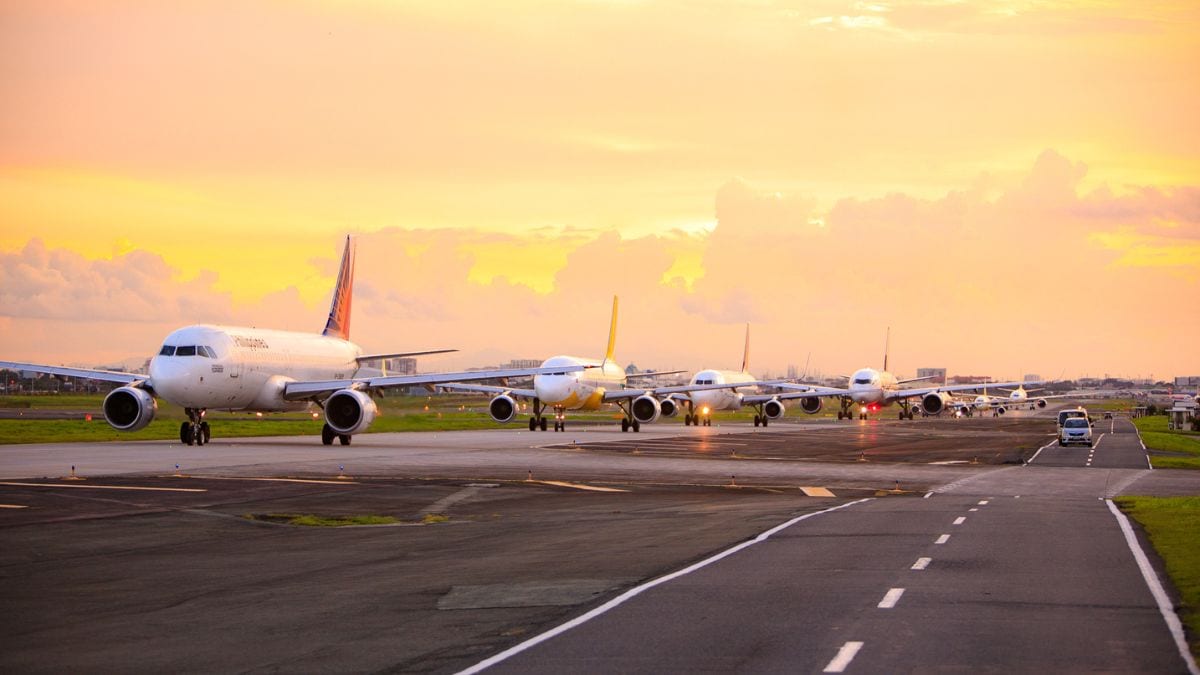
In the two months since the New NAIA Infra Corporation (NNIC) took over operations at the Ninoy Aquino International Airport (NAIA), the San Miguel-led consortium has reported significant developments, including an increased system-wide on-time performance rate (OTP) for flights that have arrived and departed in the country’s premier gateway.
According to a recent report released by the NNIC, NAIA’s OTP performance (15 minutes or less of delay) experienced a marked improvement of 78.9 percent from September 14 to November 19, 2024, up from 71.09 percent in the earlier months of January to September 13. They also shared that from November 1 to 14, they achieved a system-wide OTP of 81.65 percent—87.76 percent for arrival OTP and 75.53 percent for departure OTP—a major accomplishment experienced during the peak undas period.
What Causes Flight Delays?
Flight delays at NAIA are attributed to several factors. According to the NNIC, 70 percent of flight delays are caused by airlines or ground handlers. Of this percentage, 45 percent is due to consequential delay, where delays early in the day set off a chain reaction, affecting subsequent flights. Other factors include aircraft changes (13 percent) and aircraft rotations (12 percent).
Government-related delays, including those caused by the Civil Aviation Authority of the Philippines (CAAP) and the Air Traffic Control (ATC), account for 20 percent of delays. Airport-related issues—including ramp congestion, delays in pushback clearance, gate availability, or unfavorable weather at the origin or destination station—make up 10 percent of the overall delay.
Using this knowledge, the NNIC said they have been introducing several upgrades and enhancements to address these issues and improve passenger experience. After a technical glitch at the Terminal 3 baggage handling system left more than 400 passengers without their luggage last month, the private consortium ordered a new baggage handling system as 80 percent of the current facilities are reportedly inoperable. They hope to have the new system in place by July 2025. They have also spoken to airlines and ground handlers and ensured staffing levels are sufficient to handle the increasing workload, especially with the upcoming Christmas rush.
At a recent press briefing, NNIC chairman Ramon Ang declared that “this Christmas season 2024, there will be at least 50 percent improvement from last year.”
He added that they have already tasked the different airlines to avoid scheduling departures at the same time. They have also asked the airlines to observe on-time departures to make the riding public happier this December.
ALSO READ
How Will Ramon Ang Handle Corrupt Government Officials in NAIA?
NAIA’s Internet Is One of the Worst in Southeast Asia, a Report Says
Further Improvements Ahead
The NNIC and Incheon International Airport Corporation have committed to spending P170 billion for rehabilitating and modernizing NAIA and transforming it into a world-class airport.
In another report, the NNIC shared that immediate improvements will be executed in three to six months, like functional escalators and toilets, reliable power and water, improved air conditioning, faster passenger processing, more seating, and faster WiFi connection.
In three years’ time, passengers can look forward to runway improvements, increased terminal capacity, improved commercial spaces, better traffic management, and a direct link from the NAIA Terminal 3 to the Skyway system.
The new management is also aiming to decongest Terminal 3, with a long-term goal of building a new terminal building to accommodate an additional 35 million passengers annually. They have also begun the renovation of Terminal 4, the oldest passenger terminal.
In the meantime, the NNIC will implement a reassignment for the existing terminals starting March 2025. Cebu Pacific’s domestic flights will be moved to Terminal 2 from Terminal 3, while Air Asia Philippines, previously operating at Terminal 2, will move to Terminal 4. Terminal 1 will be used exclusively by international flights from Philippine Airlines.
Cebu Pacific’s international flights as well as foreign airlines will operate at Terminal 3. Terminal 2 will cater to all domestic flights.
“NAIA has long been operating way beyond its intended capacity of 35 million passengers per year. It has been serving around 45 million per year, and this year, we are anticipating reaching more than 50 million. Over the years, this has taken a huge toll on the already aging facilities and equipment at NAIA, leading to inevitable breakdowns and inconvenience for passengers,” Ang shared at the press briefing.
“That’s why right now our emphasis is on ensuring that all facilities and equipment work reliably. At the same time, we’re working to address congestion and improve operational efficiencies, while laying the groundwork for major construction works,” he added.
Though they have a lot of work ahead, the NICC is confident that with the renovations and repairs being rushed in time for the holidays, they can meet passenger demand and offer an improved experience at the terminals, including achieving another record-breaking OTP.
