

Growth Rate Slows, But World Population Reaches 8 Billion

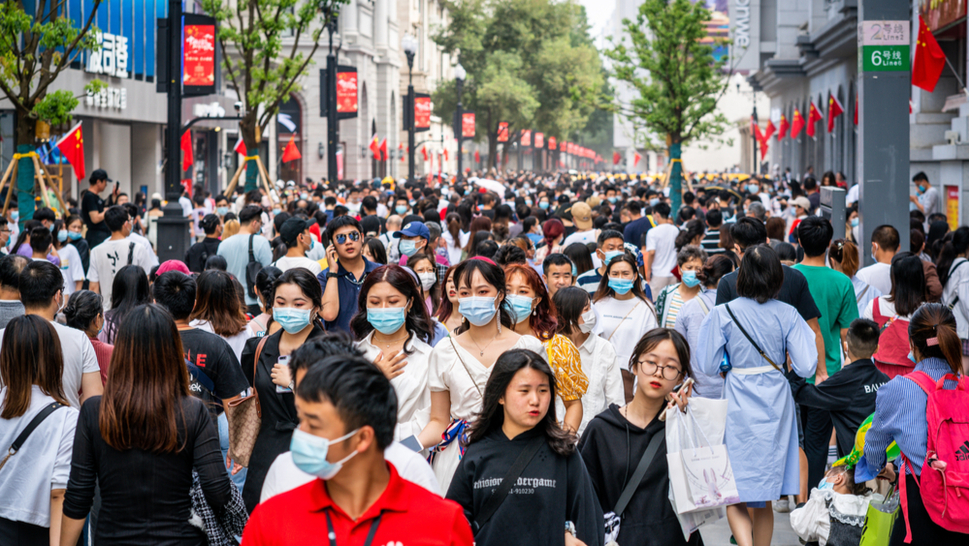
While the global population is growing at its slowest rate since the '50s, it is still projected to eclipse the eight billion mark by tomorrow, November 15, according to World Population Prospects 2022.
“This year’s World Population Day falls during a milestone year, when we anticipate the birth of the Earth’s eight billionth inhabitant. This is an occasion to celebrate our diversity, recognize our common humanity, and marvel at advancements in health that have extended lifespans and dramatically reduced maternal and child mortality rates,” said UN Secretary-General António Guterres.
He added: “At the same time, it is a reminder of our shared responsibility to care for our planet and a moment to reflect on where we still fall short of our commitments to one another."
In 2020, the world saw its population rate fall under one percent. But even with this, the United Nations (UN) reports that the global population could still reach roughly 8.5 billion by 2030. We might see it peak with 10.4 billion people in the 2080s.
The increase in the population up to 2050 will be attributed to countries such as the Democratic Republic of the Congo, Egypt, Ethiopia, India, Nigeria, Pakistan, the Philippines, and the United Republic of Tanzania. Meanwhile, India should surpass China as the world's most populous country by next year.
ALSO READ:
The Philippines Has the 12th Largest Population in the World
This City Has the Biggest Population of Single People in Metro Manila, According to Report
Fertility rates have also seen a sharp decline for decades now. Nearly two-thirds of the population where lifetime fertility is below 2.1 births per individual. The population in about 61 countries or areas is also expected to decrease by one percent or more between 2022 and 2050.
It is worth mentioning that the global population at ages 65 and above is likely going to rise from 10 percent in 2022 to 16 percent in 2050. Global life expectancy at birth reached 72.8 as of 2019, which is a nine-year improvement from data first recorded in the '90s. Unfortunately for less developed countries, however, the life expectancy average was around seven years behind the global mark. In 2050, the average global longevity looks to be at about 77.2 years.
“The relationship between population growth and sustainable development is complex and multidimensional," explained UN Under-Secretary-General for Economic and Social Affairs Liu Zhenmin. “Rapid population growth makes eradicating poverty, combatting hunger and malnutrition, and increasing the coverage of health and education systems more difficult."
