
What Trump's Re-Election Means for Filipinos
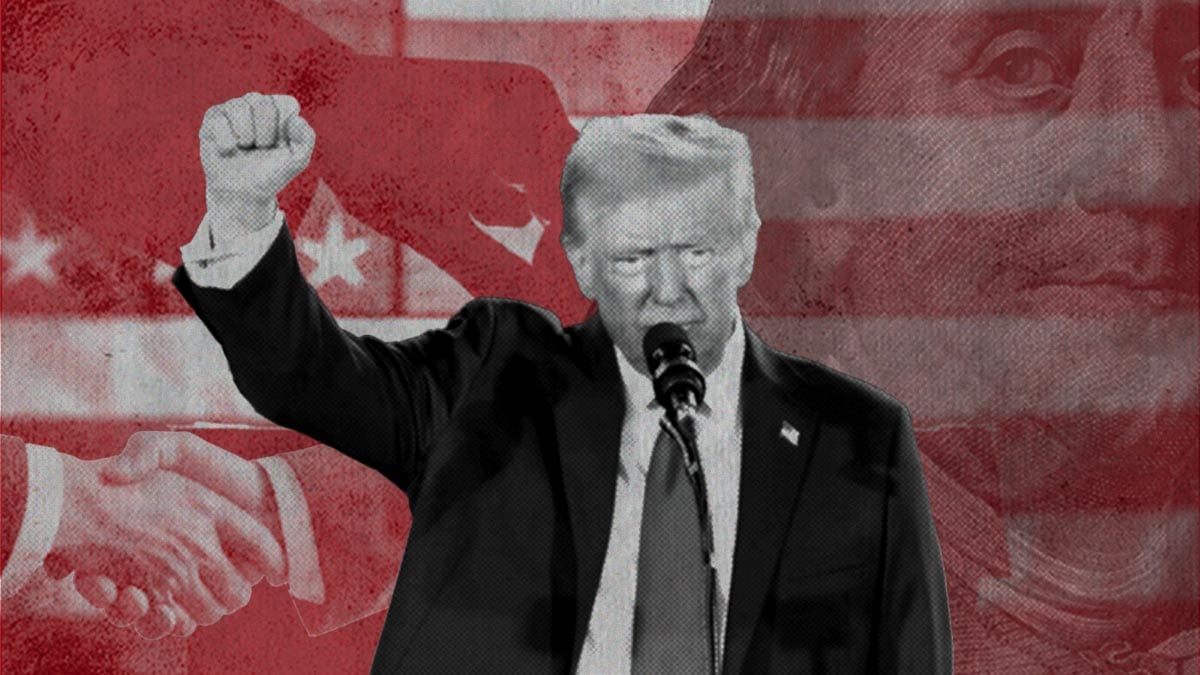
For Filipino fans of Kamala Harris and the Democrats, the just-concluded U.S. election was a tough pill to swallow. Donald Trump, a convicted felon with a record of hateful racist rhetoric, won a sweeping landslide and has been re-elected president and even won the popular vote.
For those Filipinos watching events unfold half a world away, America—the great superpower, land of opportunity—seems to be turning away from the values that made it “the greatest nation on God’s green earth.” Moving forward, the land of the free may likely kick out immigrants of color, impose restrictions on the entry of foreigners, ban abortion and restrict women’s rights, and politicize its cherished institutions to serve the political and financial interests of the party in power.
What I think shocked many Filipinos and other observers from outside the U.S. was the number of ordinary Americans who freely, and with full knowledge, chose Donald Trump to be their leader. But to me, what happened there is eerily similar to our own situation.
Hear me out.
All the polls and surveys conducted in the U.S. in recent years indicated that Democrats and Republicans alike felt strongly that their country was headed in the wrong direction and almost as many were unhappy with their personal economic conditions. The reasons why and who to blame were different depending on their party affiliations but the conclusions were the same across the board.
Both the Harris and Trump campaigns knew this and both anchored their messages on the need for change. But there was a crucial and essential difference about how the campaigns wanted to achieve those changes. The Harris campaign talked about working with Republicans (or at least trying to) and winning majorities in Congress and passing laws. The Trump campaign talked about more radical change and famously said he would “be a dictator from day 1.”
ALSO READ
What Happens to America If Kamala Harris Loses?
What Is It Like to Be Filipino and Foreign in Trump's America?
Taking them at their word, Harris was promising to work within the current system to make those changes, while Trump, on the other hand, spoke about rapid, sweeping, and unprecedented change. In short, the American voter was being given a choice between incremental institutional change and a dramatic revolutionary remaking of the system itself!
If you were a highly educated middle class person with a steady job and were going through a bit of a rough patch economically, chances are you didn’t feel the need for radical change, just a tweaking of this or that policy and the passage of a few bills.
On the other hand, if you were one of the millions of poor Americans who lost your job because your company transferred its factory to a country with lower wages; are having to pay more for your daily diet of highly processed food that caused you to be diabetic; and can barely afford your insulin or blood pressure medication; and are in danger of being evicted from your increasingly unaffordable home, I can imagine that you feel strongly that you can’t afford to wait for Kamala Harris’ incremental improvements.
And now here’s where 2024 is different. For most of the 100 or so years that America has been the world’s shining beacon of democracy and capitalism, the critical mass of voters were part of the middle class that could count on access to affordable quality education, some degree of job security as long as you were delivering for your employer, medical assistance when you were ill, and politicians who would actually advocate for you in Washington. In other words, there was an implicit trust that the system of governance could fairly allocate a nation’s resources if you worked within the accepted rules of engagement and that any adjustments could be managed within those rules.
But beginning in the 1980s, all of those things they could count on the system to provide for, slowly but steadily disappeared. Thanks in large part to the Republican Party, corporate America worked the system to chip away at those protections in order to pay for tax cuts for large corporations and relax the regulations that held them back from making more money. Then they changed election rules so that rich donors could provide unlimited funds to candidates for public office. And it wasn’t just the Republicans. President Bill Clinton, a Democrat, signed a law in the 1990s that allowed banks and other financial institutions to take reckless risks with depositors' money, leading to the global financial crisis of the early 21st century. And when the banks lost all that money, it wasn’t just George W. Bush—even Barack Obama used taxpayers’ money to bail them out while ordinary people were left holding the bag. In short, the elites, or what they call “The Establishment” was working only for itself.
The end result of all of this is the old Leftist cliché that rich were getting richer and in the process, the middle class were becoming poor. In 1983, Forbes magazine published its first list of the 400 richest Americans, and it included just 13 billionaires. In 2024, the Forbes list of the world's billionaires in counted a record 2,781 billionaires globally. Meanwhile, the number of Americans considered poor in grew from 25 million in 1979 to 37 million in 2023.
This growing divide between the haves and have-nots, exacerbated by changing social and demographic trends, created a profound sense of unease among many American voters. So for the first time in recent memory, there were more voters in America willing to choose THE PROMISE of radical sweeping change over incremental reforms that had been the hallmark of American democracy.
There are, of course, other reasons why voters went for Trump, but in my humble opinion it’s all underpinned by the transformation of the U.S. from a system where the creative and innovative energies of capitalism were constrained by social and economic guardrails to a winner-take-all system where the losers can go to hell while the winners can buy regulation, accumulate huge profits, and build multimillion dollar bunkers in New Zealand to protect themselves for the coming apocalypse.
It can be argued that Trump and the Republicans are not going to be the change agent that Americans are looking for. There’s plenty of evidence to support that. But the fact that a campaign that was full of anger, grievance, and vulgarity succeeded suggests to me that people are so hungry for change they will set aside their notions of what is decent for the slightest chance that it can happen.
A country where a majority of voters are screaming for change. A population that no longer believes that the system will do anything for them. A willingness—particularly by people of faith—to set aside norms of “decent” behavior and reject empirical fact. A growing attraction for a strongman to lead the country and a desire for a leader who is not part of the political elites. Sounds familiar doesn’t it?
What’s happening to America today has been happening here for decades. The simmering resentment toward the elites is not always obvious but it’s there. This is why I believe people will continue to yearn for politicians who they believe are outside the political and economic elites, who they see as unambiguously self-serving. That’s why they voted for people they saw as outsiders like Joseph Estrada, Fernando Poe Jr, and Rodrigo Duterte and why they may end up voting for a Raffy Tulfo or a Robin Padilla in 2028. Because they too are tired of the promise of incremental change.
The difference is that Filipinos are probably more patient and fatalistic than their American counterparts. Or maybe they just have fewer avenues to articulate their anger. If you think about it our people don’t expect as much from their leaders as Americans do. In my opinion, they don’t necessarily want a revolution. They just need more help when disasters strike, more financial support when they get sick, and employers who treat them with dignity and leaders who give them a sense that someone up there is looking out for them.
Like Filipinos who voted for Duterte, I think many Americans who voted for Trump have legitimate grievances. What concerns me is that the anger created by those grievances is being misdirected toward people who are not responsible for their problems. It has been too easy lately for some groups of people to dehumanize people who don’t look or act or pray or love like they do.
In a recent exchange on one of my chat groups, a friend who is a Democrat living in a Red state confided that the number of racist encounters she experienced in her predominantly white community had risen noticeably this year. She’s a tough lady and she can handle it but she was increasingly worried about how her half-Filipino kids were being treated in school.
"Time for you to come home,” said someone in the chat. “You’re better off here.”
For some people, it’s come to that.
