
Bow Ties vs Neckties: Which One Suits You Best?
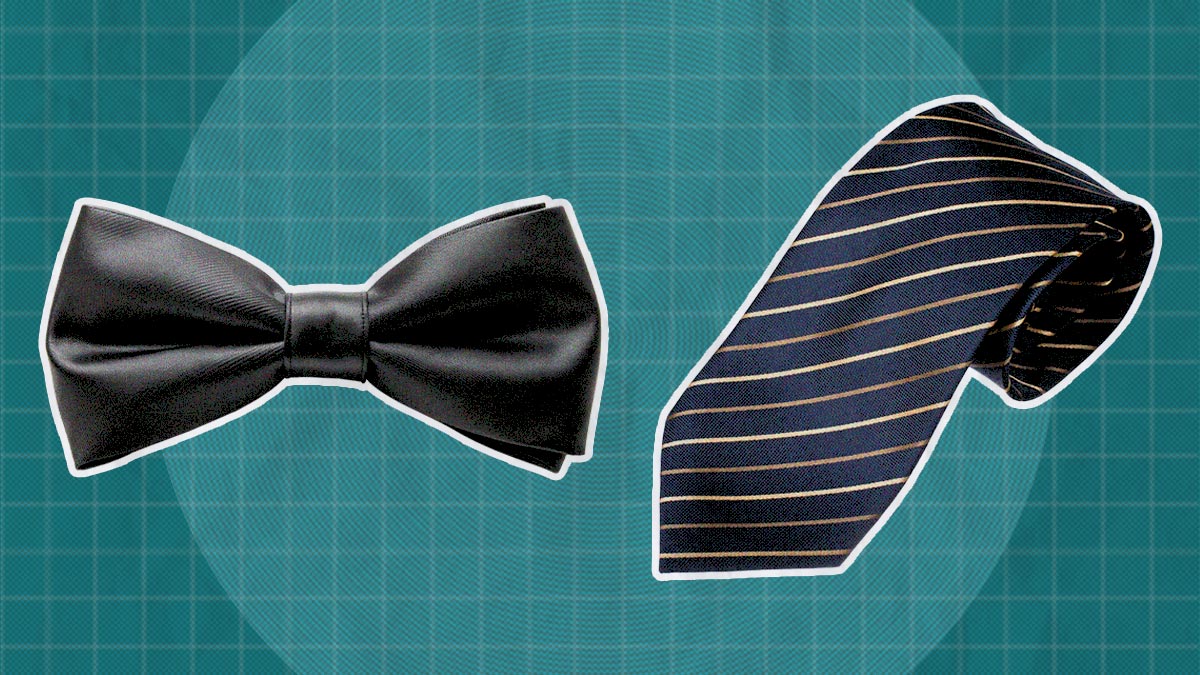
The bow tie’s history dates back to the 17th century when Croatian mercenaries fighting in the Thirty Years’ War tied cravats—long strips of fabric—around their necks to keep their collars closed. This simple yet stylish solution caught the attention of French nobility, who refined the look into a fashion statement.
By the 18th and 19th centuries, the cravat evolved into more structured, shorter styles, eventually giving birth to the bow tie. It quickly became a favorite among aristocrats, scholars, and cultural icons. Think Winston Churchill, Albert Einstein, and Thomas Edison, all of whom incorporated the bow tie into their signature looks.
During the Golden Age of Hollywood (1920s-1950s), bow ties became synonymous with classic elegance, often worn by leading men like Fred Astaire, Humphrey Bogart, and Frank Sinatra. Today, bow ties remain a hallmark of formalwear and academia and are associated with those who like to make a fashion statement.
While bow ties became a symbol of sophistication, neckties took a different evolutionary path. Like bow ties, they originated from the cravat, but 19th-century tailors in Britain and France adapted the style into longer, slimmer designs.
The modern necktie as we know it was revolutionized in 1926 by American tie maker Jesse Langsdorf, who developed the bias-cut technique, allowing ties to maintain their shape while offering more flexibility. This innovation led to the various tie knots we know today—Windsor, Half-Windsor, Four-in-Hand, and more.
Throughout the 20th century, neckties symbolized professionalism and corporate culture. From the power ties of Wall Street in the 1980s to the sleek, slim ties of modern fashion, the necktie remains one of the most versatile and widely accepted accessories in men’s fashion.
ALSO READ:
How to Tie a Necktie, and Other Skills Men Should Know Before Turning 30
How to Properly Wear a Tie: A Quick and Easy Guide
Bow Ties vs. Neckties: What’s the Difference?
While both accessories serve the same basic function, they create very different impressions.
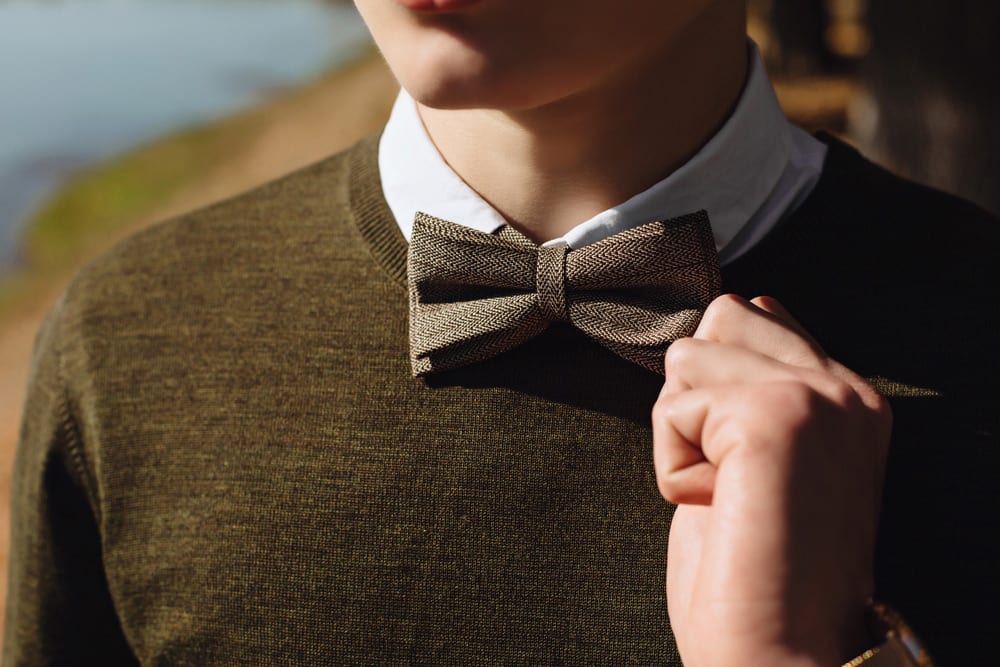
Bow Ties
Bow ties are short and symmetrical and sit neatly around the collar, projecting a polished and confident look. Neckties are long and drape down the torso, offering more versatility in business and casual settings.
In general, bow ties make a bold fashion statement. They are commonly worn at formal events, and by intellectuals and those in creative professions; while neckties are the default choice for business, corporate settings, and everyday wear. Another difference? Bow ties won’t dip into your soup at dinner.
In Western fashion, bow ties are often associated with academia, high society, and the arts. In the United States, they have become a signature accessory for professors, scientists, and TV personalities—think Bill Nye and Colonel Sanders. In Southern U.S. culture, bow ties are a preppy staple, often paired with seersucker suits at events like the Kentucky Derby.
In recent years, bow ties have seen a resurgence in subcultures that embrace vintage aesthetics and intellectualism. From hipsters in Brooklyn to professors in Oxford, bow ties symbolize nonconformity and sophistication.
In the United Kingdom, bow ties remain a traditional choice for black-tie events, cementing their place as a formalwear essential. Meanwhile, French and Italian designers continue reinventing the bow tie in high-fashion collections, proving that this classic piece can be traditional and avant-garde.
Across Africa and South Asia, bow ties are increasingly popular in modern formalwear, often paired with bold, colorful fabrics. In Nigeria and Ghana, designers incorporate Ankara fabric into bow ties, blending traditional patterns with contemporary style. In India, bow ties have become a trend at high-end weddings, worn with tuxedos and sherwanis.
Types of Bow Ties
Self-Tie Bow Tie
Considered the gold standard, this original bow tie style requires manual tying. Popular among those who appreciate craftsmanship, self-tie bow ties offer a personalized, slightly imperfect charm that speaks to the wearer’s attention to detail.
Pre-Tied Bow Tie
Designed for convenience, this version maintains a perfectly symmetrical shape. While some traditionalists frown upon it, the pre-tied bow tie has gained popularity among wedding parties and young professionals looking for an easy yet stylish option.
Clip-On Bow Tie
Primarily worn by children or individuals needing a quick formal look, the clip-on bow tie ensures perfect symmetry without the hassle of tying. Though less common in high fashion, it remains a practical choice for uniformed professionals like restaurant staff and musicians.

Neckties
Neckties have become the default accessory for professional attire around the world.
In Japan, business culture demands conservative silk neckties, often in solid colors or subtle patterns. Ties weren’t historically part of Chinese fashion, but globalization has made them a staple in corporate settings in China. Neckties are widely worn in Latin America, though regional variations like the bolo tie remain popular in Mexico and the southwestern U.S.
Neckties have also gained new life in streetwear and women’s fashion, thanks to Gen Z influencers and designers pushing the boundaries of traditional menswear.
Types of Neckties
Standard Necktie
The standard necktie is the most widely worn tie, typically three to 3.5 inches wide. This style has dominated men’s fashion since the 1920s, but the width and patterns have shifted with different eras. Power ties of the 1980s favored bold, wide designs, while the 1990s and early 2000s saw a preference for slimmer styles.
Skinny Tie
Rising to popularity in the 1950s and 1960s, the skinny tie became synonymous with rock and roll culture, thanks to bands like The Beatles and The Rolling Stones. It remains a favorite in modern, minimalist fashion and is often worn with narrow-lapel suits.
Knitted Tie
Unlike traditional silk ties, knitted ties feature a textured, woven appearance. Originating in early 20th-century Europe, they gained popularity in casual and smart-casual outfits, often paired with tweed blazers and cardigans.
Seven-Fold Tie
Considered the luxury standard of neckties, this style is made from a single piece of silk, folded seven times without additional lining. This method, originating from Italian and French tailoring traditions, creates a thicker, more structured tie that exudes sophistication.
Final Verdict: Should You Wear a Bow Tie or a Necktie?
Which one is right for you? It all depends on personality, occasion, and style preference.
Choose a bow tie if you want to stand out and make a bold statement, have a vintage, intellectual, or quirky style, or attend a formal event like a gala or black-tie dinner.
Choose a necktie if you prefer versatility and a more universally accepted look, need a professional, business-friendly accessory, or want something that works for both formal and casual settings.
Both bow ties and neckties have rich histories, cultural significance, and stylistic variations, making them timeless accessories. Choosing between the two ultimately depends on your style, the occasion, and your confidence in pulling off the look.
