
Handkerchiefs Versus Pocket Squares: What's the Difference?


To the uninitiated, the pocket square versus handkerchief debate might seem trivial. But in the realm of men’s fashion, these small square fabrics carry considerable weight in determining one’s style quotient. After all, very few accessories have stood the test of time in the ever-evolving world of fashion.
While both exude class, have historical significance, and can add a touch of flair to an otherwise simple ensemble, they serve very different purposes. As a modern gentleman navigating social events, casual gatherings, and business happenings, you must understand these nuances to set them apart, not just to refine your wardrobe. Let’s be honest: would you rather be caught dabbing your brow with something meant to be decorative?
But if you’re worried this is too much ado about nothing: "Who would care this much about a handkerchief?" Well, fret not, because you’re not alone in fussing about it. Former United States President-then Congressman Lyndon B. Johnson was said to have spent a good part of an evening perfecting his pocket handkerchief when he was invited to meet President Truman at the White House—"cursing when it didn’t come out right," his aide spilled.
Similarly, advice on pocket squares has been passed down from gentleman to gentleman. In an interview with the Los Angeles Times, legendary crooner Tony Bennett recalls a fashion tip from Dean Martin: "Dean told me to always have a red handkerchief in my [breast] pocket."
These small pieces of fabric have evolved throughout centuries from a merely practical item to a powerful style statement that can make or break an ensemble. As designer Alan Flusser stresses, "A breast pocket without [a handkerchief] looks naked." So, what exactly is the difference, and when should you use each? Let’s break it down.
ALSO READ:
Oops! A Handkerchief Stained With Jose Rizal's Blood Was Washed by Kasambahay
The 10 Style Rules That Must Always, Always Be Obeyed
Getting to Know Your Handkerchief and Pocket Square
Both handkerchiefs and pocket squares are small squares of fabric, often made of cotton, linen, silk, or a blend of materials. However, they serve different purposes and have distinct historical and cultural significance.
The handkerchief’s journey begins in ancient times, with the Cowper & Newton Museum documenting evidence dating back to 1000 BC China, where small pieces of cloth were used to shield heads from the sun. Later, Romans adapted similar squares of fabric for public events, even using them to start races, while knights in the Middle Ages tied a lady’s scarf to their helmets for good luck.
"Handkerchief," as a term, emerged in the 14th century when courtiers of King Richard III needed to distinguish between cloths used for the head and those used for wiping one’s nose. By the Renaissance era, these practical squares—embroidered with lace edges—had become so valuable, they were often included in dowries and wills. Their importance had grown to such a point that in 1785, King Louis XVI of France made a declaration that no one should have a handkerchief that is larger than his.
On the other hand, the pocket square, while sharing its ancestral DNA with the handkerchief, emerged as a distinct accessory during the 20th century. A 1924 New York Times article reveals that the Duke of Windsor Edward VIII—who was a sartorial icon—played a pivotal role in popularizing the pocket square as a purely decorative element: "The haberdashers have learned from long experience that follow the Prince in his fashions is money in the pockets."
The 20s, in fact, saw a "sharp rise in handkerchiefs with decorative effects, seen mainly in the breast pocket. As worn by more stylish dressers, they harmonized with the wearer’s tie but did not match it in fabric or color," Esquire’s Encyclopedia of 20th-Century Men’s Fashions said.
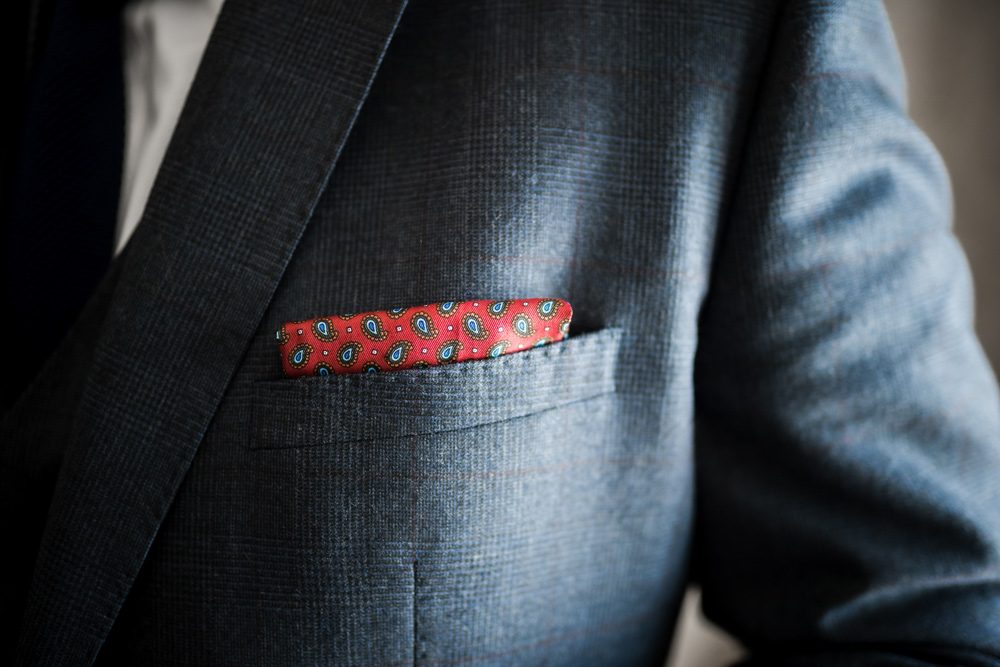
Handkerchief versus Pocket Square: What’s the Difference?
While both accessories might appear identical at first glance, their distinctions lie in their materials, construction, and purpose. They each hold fascinating stories of evolution, however, as handkerchiefs became darker in color during the 18th century to accommodate snuff-taking habits among European aristocracy, while pocket squares evolved to be crafted from delicate materials and feature intricate patterns and colors.
Simply put, though, handkerchiefs have a more practical purpose, while a pocket square is purely for stylish flair. The former is typically carried in a trouser pocket or bag, while the latter are intricately folded and displayed in the breast pocket of a suit jacket. Given their function, handkerchiefs are made of absorbent materials like cotton or linen, but pocket squares are often crafted from silk, satin, or fine linen.
As we often use handkerchiefs for hygienic purposes, it is also essential to maintain them through frequent washing, something primarily decorative-pocket squares do not need to undergo as regularly. Stylish pocket squares are also mostly smaller and thinner so as to fit neatly into the pocket without adding unnecessary bulk.
Notably, menswear historian G. Bruce Boyer describes pocket squares that have hand-rolled edges as "the mark of true luxury." These edges are meticulously crafted to create a subtle roll that adds dimension when the square is folded.
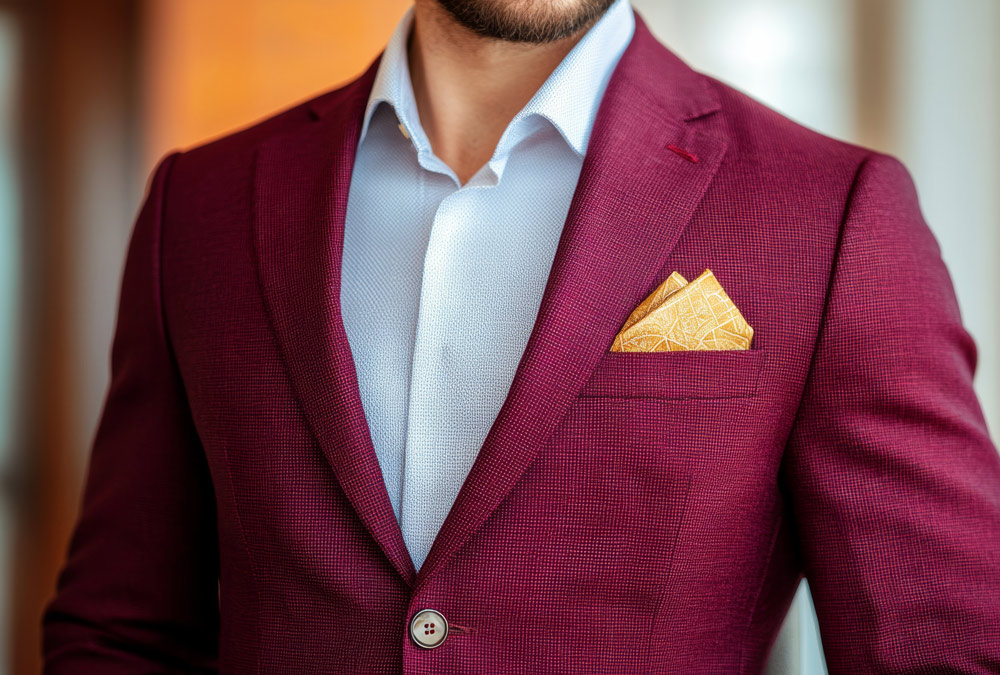
When and Where: Guide to Square Etiquette
Given their purpose, handkerchiefs are essential for everyday life—wiping sweat (especially when you live in a tropical country like the Philippines), cleaning glasses, blowing one’s nose, you get the picture. They are also important for emotional events such as funerals, weddings, and goodbyes, where you may need to dab away tears, whether your own or a loved one's. Handkerchiefs, then, are an essential item to always have around, and fortunately, they often don’t cost a fortune and come in sets.
Pocket squares, on the other hand, elevate a suit ensemble and are commonly worn during formal and semi-formal occasions. They add an elegant touch to tuxedos, complete an otherwise simple suit, and convey professionalism and sophistication—nuances that can help you land a business deal. In other words, it’s a stylish power statement that can take your look from put-together to refined.
Whether you’re reaching for a pocket square to upgrade your outfit or a handkerchief to dab away sweat, remember that the right square at the right time makes all the difference. Choose wisely, gents, because true style is in the details.
