Would the U.N. Special Envoy for Road Safety Dare to Drive on Philippine Roads?

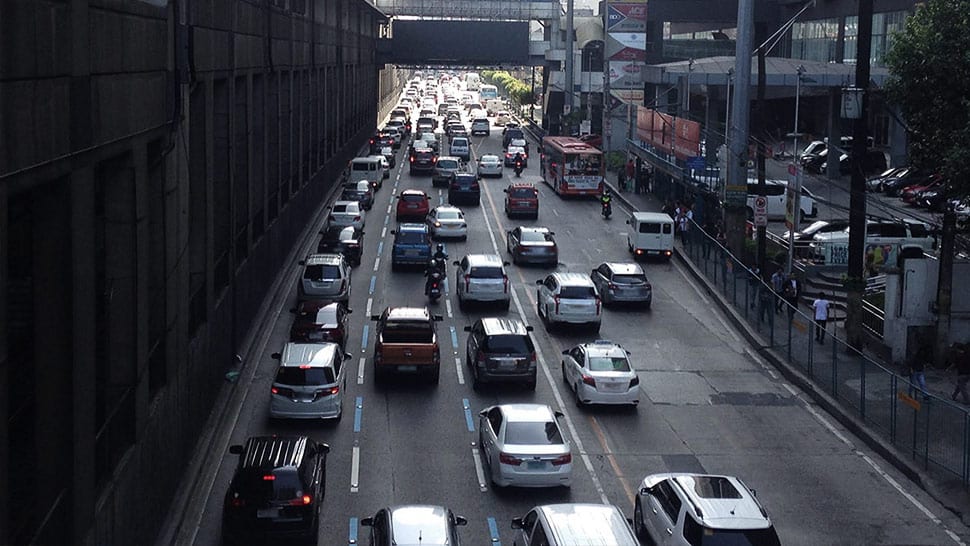
The United Nations Secretary General’s Special Envoy for Road Safety was in Manila this week for a brief visit in support of the campaign to reduce victims of road accidents worldwide. During a briefing with members of the press on Thursday (April 13), Todt and Department of Transportation Secretary Jaime Bautista presented sobering figures that underscored the seriousness of road safety.
According to Bautista, who cited data from the National Statistics Office, over 11,000 fatalities directly related to traffic crashes and other incidents were recorded in the Philippines in 2022, an increase from the roughly 10,000 deaths pre-pandemic. (The number dipped during the pandemic years of 2020 and 2021 when there were fewer travelers and vehicles on the road).
ALSO READ
A New Five-Year Plan to Solve Traffic in Metro Manila Is in the Works
This Interactive Map Shows Metro Manila’s Most Dangerous Roads
The 2018 Global Status Report on Road Safety by the World Health organization also showed an increasing trend in road traffic deaths in the Philippines, with a fatality rate of 12.3 per 100,000 people. About 65 percent of road crash victims in the country involve motorcycle riders, according to a report by the Department of Health.
This year from January to April 11, the Philippines recorded a total of 49,291 road accidents, with 1,499 deaths, according to the Philippine National Police.
Meanwhile, about 58 percent of worldwide fatalities occurring on the road happened in Asia Pacific, according to a UN report. With 20.7 deaths per 100,000 people, Southeast Asia is the region with the second-highest road traffic fatality rate. Only Africa ranks higher with 26.6 fatalities per 100,000 people.
“One person is killed on the road somewhere in the world every 24 seconds,” said Mr. Gustavo Guterres, the UN resident coordinator, who joined Todt and Bautista in the panel.
Todt, who is a racing executive and former rally driver, believes human behavior is most to blame for accidents on the road. Driver education and strict enforcement of road rules, he said, is the key to reduce the number of traffic fatalities.
Department of Transportation Secretary Jaime Bautista, United Nations Secretary General’s Special Envoy for Road Safety Jean Todt, and UN resident coordinator Gustavo Guterres
.jpg)
Bautista agreed. Based on data, things like drunk driving, over-speeding, and driving while texting were directly to blame for roadside accidents. The secretary said many countries in the world have committed to reducing traffic fatalities by 50 percent over the next few years. While it’s a good target as well for the Philippines, Bautista said a more “realistic target” is 20 percent.
“Twenty percent is a medium-term goal, but I think 50 percent siguro should be the long-term target,” Bautista said.
During an earlier meeting with the PNP, Todt noted the importance of increased collaboration among stakeholders—traffic officials, enforcers, drivers, and pedestrians—to cut road fatalities.
Just before he left, Esquire Philippines asked Todt, given what he knows about the road situation here in the country, whether he would be open to getting behind the wheel and driving on Philippine roads.
“Of course, of course,” he answered. “But I will be very respectful of the rules. The rules do exist. You have to respect them. Otherwise, there is no point to the rule.”
[ArticleReco:{"articles":["10100"]}] [ArticleReco:{"articles":["26035"]}]