
Road Safety in Review and What We Could Do About It

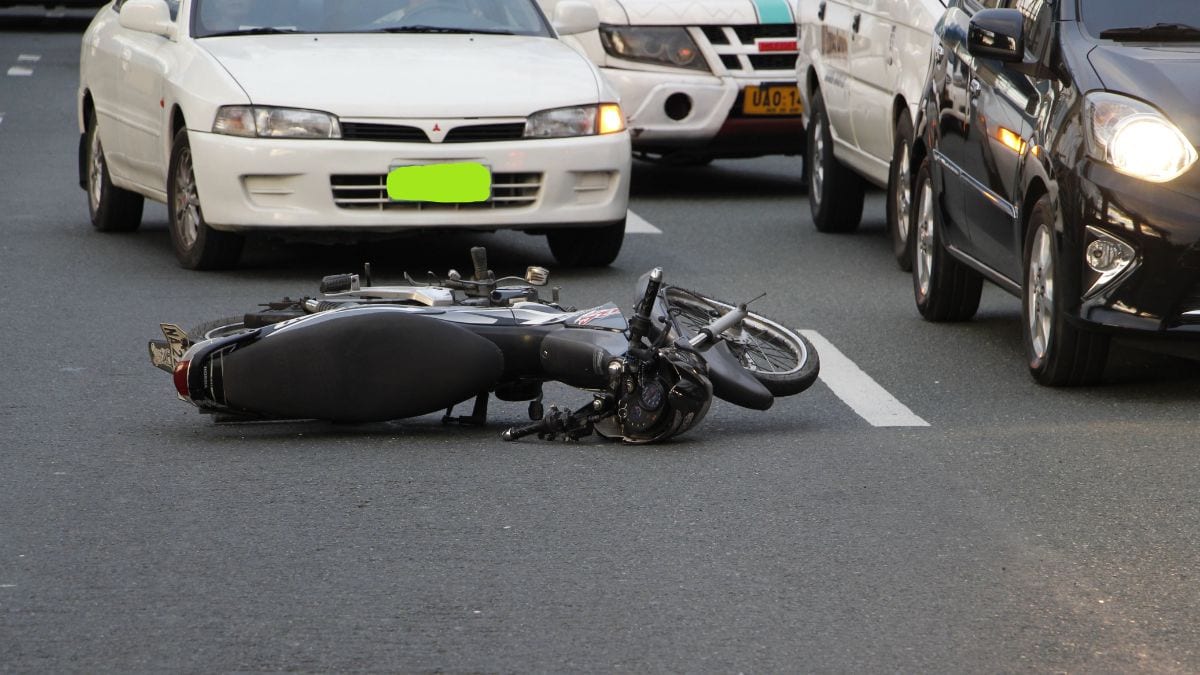
As we do yearend reviews, one of the important issues we ought to look at and address, as it directly impacts us all, is road safety.
The WHO Global Status Report on Road Safety 2023 reveals that there were an estimated 1.19 million road traffic deaths globally in 2021—that’s 5% lower than the 1.25 million deaths in 2010.
What this indicates, says the report, is that initiatives to enhance road safety are making progress but still fall short of the required level to achieve the United Nations Decade of Action for Road Safety 2021–2030 target of reducing deaths by half by 2030. Road traffic deaths and injuries continue to pose a significant global health and development challenge.
Even more concerning is that road traffic crashes are the leading killer of children and youth aged 5 to 29 years; the 12th leading cause of death when all ages are considered. Two-thirds of deaths occur among people of working age (18–59 years).
“Globally, four-wheel vehicle occupants represent 30% of fatalities; followed by pedestrians who make up 23% of fatalities; and powered two- and three-wheeler users who make up 21% of fatalities,” the report adds.
In the Philippines, there has been a rising trend in road traffic deaths over the past decade. According to the Philippine Statistics Authority (PSA) Report, road traffic deaths increased by 39%, from 7,938 deaths in 2011 to 11,096 deaths in 2021.
The report says males constitute at least 84% of road traffic deaths, and road traffic injuries are a significant cause of mortality among children. Motorcyclists, pedestrians, and bicyclists are among those considered vulnerable road users.
Department of Transportation (DOTR) Secretary Jaime Bautista says they have developed the Philippine Road Safety Action Plan 2023-2028 to address road safety. “This plan, together with the WHO Global Report on Road Safety, will guide us in implementing and monitoring efforts to reduce road traffic deaths and serious injuries in the Philippines,” he says.
DOTR’s action plan is anchored mainly on five pillars. 1. Road safety management - strengthening DOTR as a lead agency on road safety 2. Safer road - enhancing safety in infrastructure design, construction, operation, and maintenance, with a focus on vulnerable road users. 3. Safer vehicles - improving vehicle registration and inspection systems, complying with harmonized standards, and regulating the safe use of electric vehicles. 4. Safer road users - increasing public awareness, utilizing media and communications, and enforcing road safety laws more strictly. 5. Post-crash response - improving access to pre-hospital care, trauma care, and rehabilitation for road crash victims to ensure appropriate and immediate medical attention.
In an interview with Esquire, Primo Morillo, convenor of The Passenger Forum, a transport advocacy network of Filipino public commuters, said the No-Contact Apprehension Policy (NCAP)—which utilizes traffic enforcement cameras and other technology to capture traffic violations without the direct presence of traffic enforcers—actually addresses the problem on road traffic crashes. The implementation of NCAP is suspended across the country, following a Supreme Court temporary restraining order (TRO) issued in August 2022.
“We were one of the groups that opposed the suspension of NCAP because as we see it, the main issue with road safety in the Philippines is on certainty of apprehension. The violators are not apprehended for their offenses,” he said. “Second, those who know how to get away [from their violations] can do so based on position, connections, or wealth.”
Morillo noted earlier reports raising the benefits of the NCAP. “The traffic violation in Manila went down by 90 percent and road accidents by 62 percent after implementing the NCAP in Manila. Quezon City Mayor Joy Belmonte also said that the NCAP program significantly reduced the traffic violations in certain affected by 93%.”
Another advantage of NCAP, he says, is that road user behavior is monitored and documented—use of seatbelts, use of helmets, distracted driving, among others.
There were occasions when offenders resist apprehension simply because they’ve gotten used to committing those violations in the past. “Yung mga enforcers naman, may mindset na, ah maliit na violation lang yan. Pagbigyan na natin yan,” he observed. “Pero iba pag may camera. Pag sinabi ng camera na nakaharang ka, meron kang kaso.”
One of the mitigating measures mentioned in the WHO report is the improved walkability of cities. “Sa Pilipinas, may malaking problema tayo sa sidewalk natin. Minsan nonexistent, minsan literal na sidewalk, as in patagilid ka maglakad,” he says, mentioning the sidewalks in SM Megamall, Robinsons Galleria, and GMA-Kamuning Station as examples.
Even our public infrastructures are not commuter-friendly, he says. “Ang totoong sini-serve ng footbridge ay mga sasakyan, hindi tao. It encourages speeding. It reinforces the mindset [among motorists] na kami ang may karapatan sa kalsada,” he said. “Kung titingnan natin sa ibang bansa gaya ng Japan malaki ang mga crossing, pero obligadong huminto ang mga sasakyan.”
The road safety report is an eye-opener for Filipinos to be ready for more stringent, efficient policy in mitigating the problem on road safety. Otherwise, we risk an even more alarming increase in road traffic deaths and injuries in the years to come.
