
Today I Learned: Jose Rizal’s Brilliance and Frailties

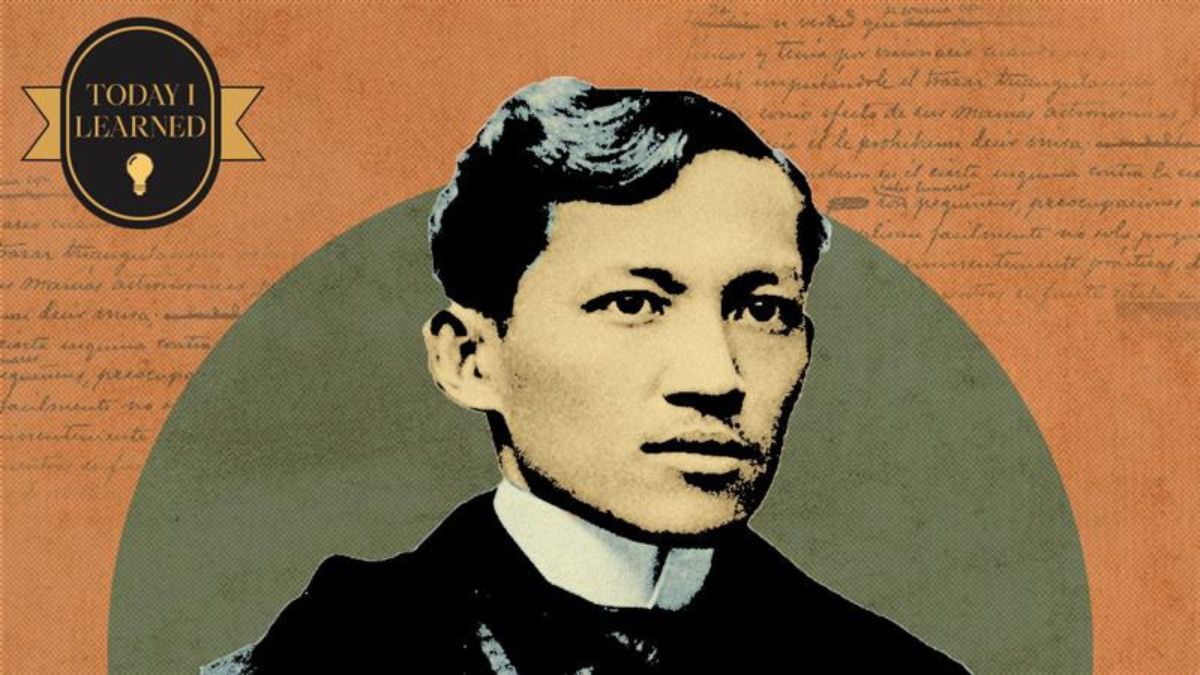
More than a century since his passing in 1896, new materials tied to Jose Rizal’s life and family have resurfaced, offering fresh glimpses into the national hero’s brilliance—and his frailties. From the descendants of his sister Narcisa come two rare items: a charcoal-on-paper portrait of a European gentleman and Rizal’s 1876 Ateneo Municipal report card, both preserved in the family’s care for over a century.
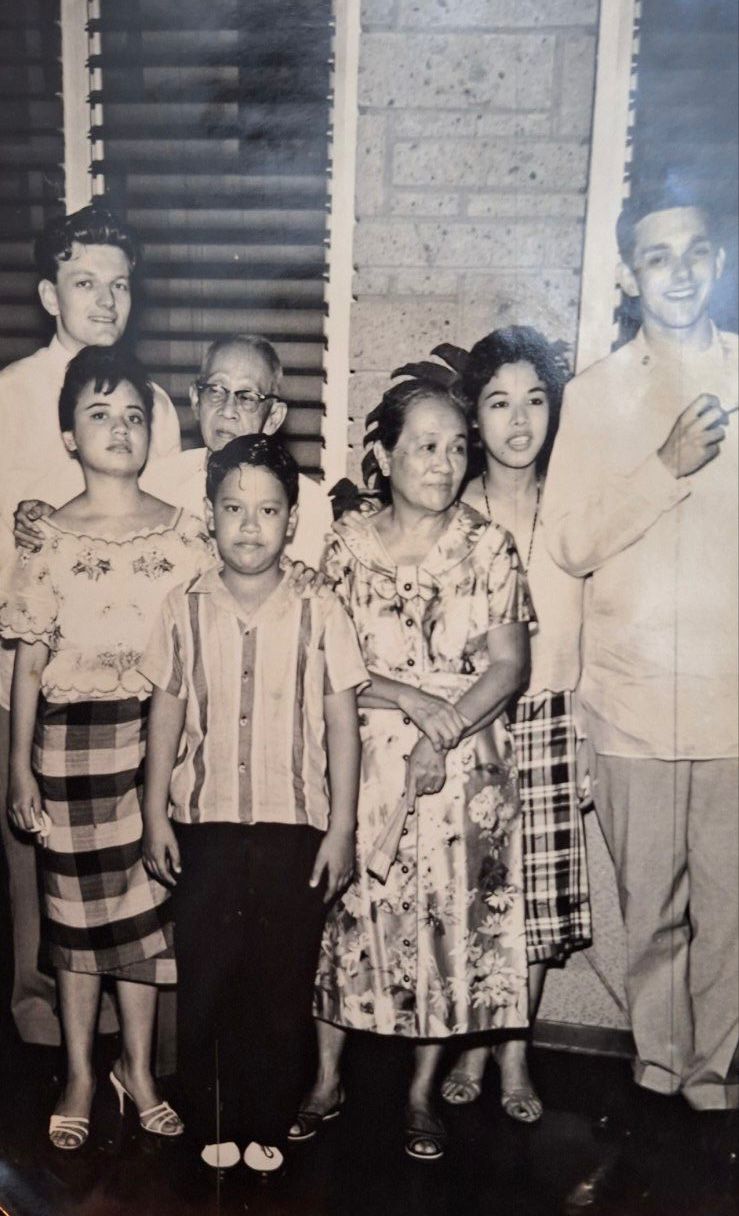
“As far as I can remember, my grandfather, Lolo Leoncio (Dr. Leoncio Lopez-Rizal, son of Narcisa), lived a few steps away from our house,” Antonio “Noni” Bantug Jr. recalls. “My grandfather had a small museum at the back of his house, where he kept his Rizaliana and Filipiniana items.”
Dr. Leoncio Lopez-Rizal and his wife, Natividad (center) with relatives and friends.
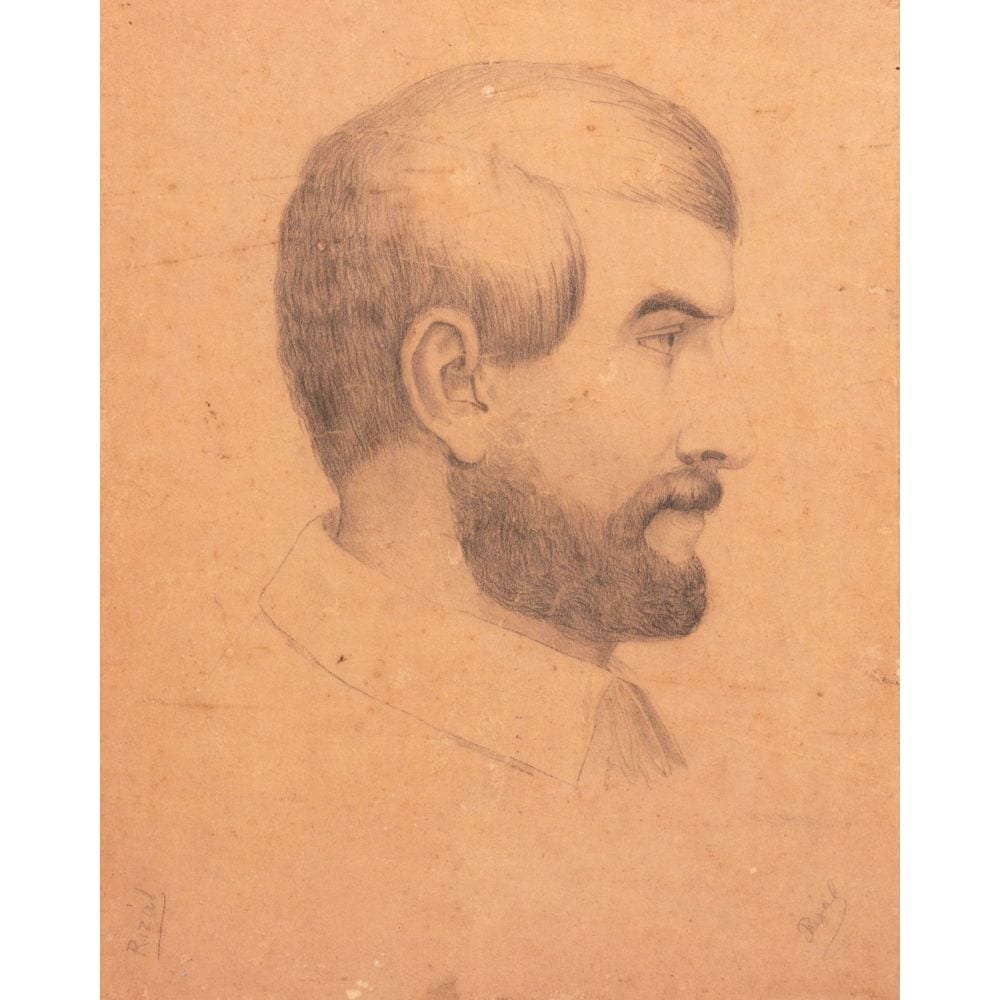
“I think I was the one who was often with my grandfather in the afternoons. After school, I would usually visit him because I was curious about whatever he was doing in the museum. In turn, he would give me something to read or show me something. There are a few pieces I remember—one of which is that drawing,” says Noni.
Rizal’s signed and undated charcoal portrait of a European gentleman, created during his stay in Europe. Image courtesy of Salcedo Auctions
His grandfather was a man of few words, so Noni has few recollections of anecdotes passed down from Lolo Leoncio to his mother, Asuncion Lopez-Bantug. He does remember his mother saying that Narcisa was Rizal’s favorite sister.
“I think it’s because she took the time to try and understand the person that Rizal got to love in the end,” Noni says. “The other sisters, for whatever reason, did not immediately take a liking to Josephine. But Narcisa did.”
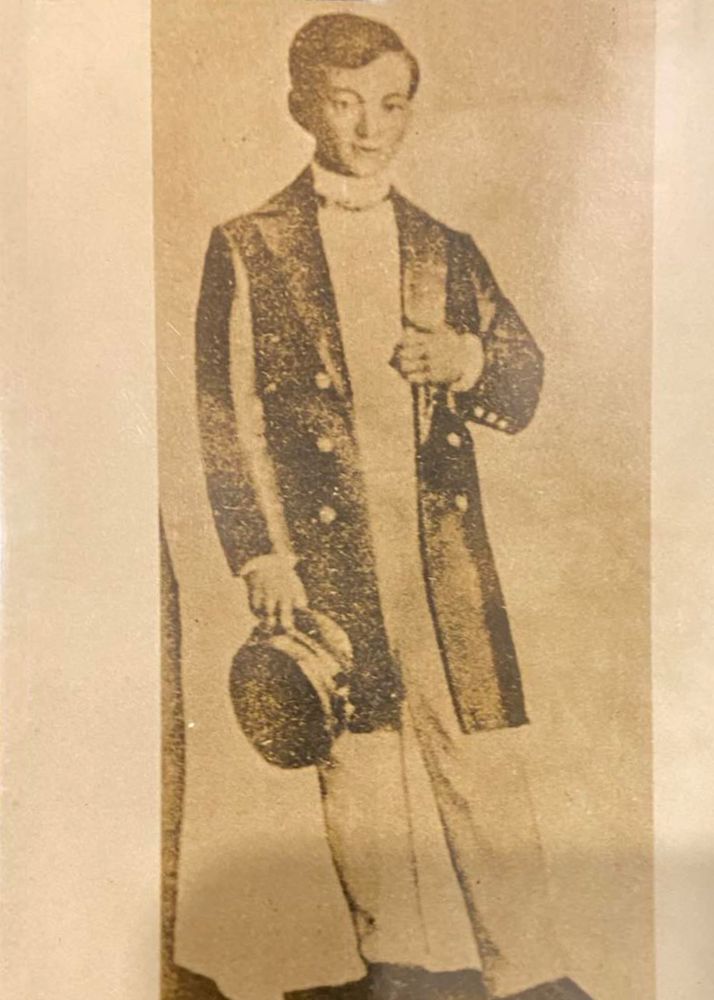
Rizal in his Ateneo Municipal de Manila uniform
Beyond the Report Card
By coincidence, Rizal’s Ateneo Municipal de Manila report card in Historia Natural (or biology) was issued in the month of September, 1876. The card shows that Rizal received a grade of “Approvehamiento, segunda clase” (good, second class/honors), which, in the late Spanish era grading system, was a few rungs lower than “Sobrasaliente” (excellent, outstanding). It is proof that even if Rizal’s academics had vastly improved, he was still getting average grades. Rizal himself admitted that he found the subject as “algo antipatica” (somewhat distasteful).
The report card disputes two claims: That Rizal achieved a grade of “Sobrasaliente” in all his subjects, as was written by W.E. Retana in his book Vida y Escritos de Jose Rizal; and that Rizal did not receive a grade for Historia Natural, as indicated in S.J. Bonoan’s paper, Rizal’s Record at the Ateneo (Philippine Studies, Vol. 27, No. 1, 1979).
Rizal’s Historia Natural report card from Ateneo Municipal de Manila, offered at auction for the first time by the descendants of his sister, Narcisa Rizal-Lopez, and estimated at P350,000-400,000.
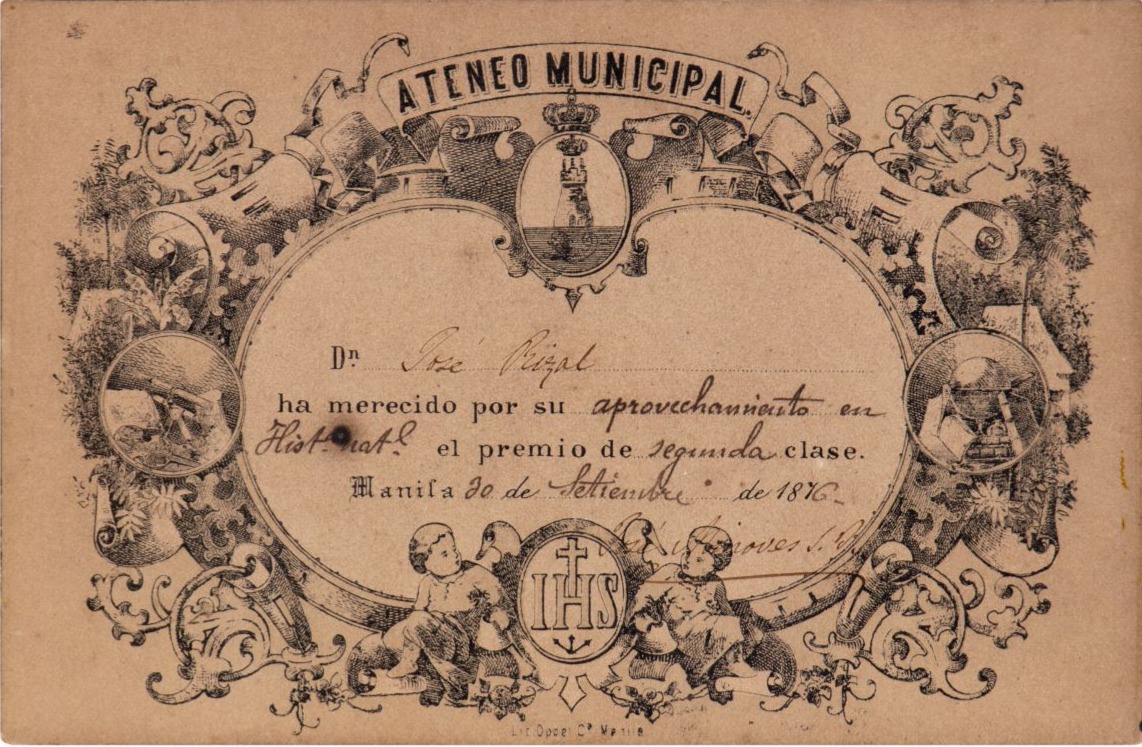
Despite his middling grade, Rizal went on to excel in various disciplines, which brings us to his overlooked accomplishments, as pointed out by Resil B. Mojares in his essay Jose Rizal and the Birth of the Social Sciences in the Philippines.
“I do not think that we have appreciated enough Rizal’s importance as a scholar, and his contributions and those of his contemporaries to the birth of modern Filipino scholarship,” Mojares wrote. He mentions how those not formally trained but delving in various disciplines—linguistics, anthropology, psychiatry, etc.—are derogatorily classified as ‘promiscuous amateurs.’
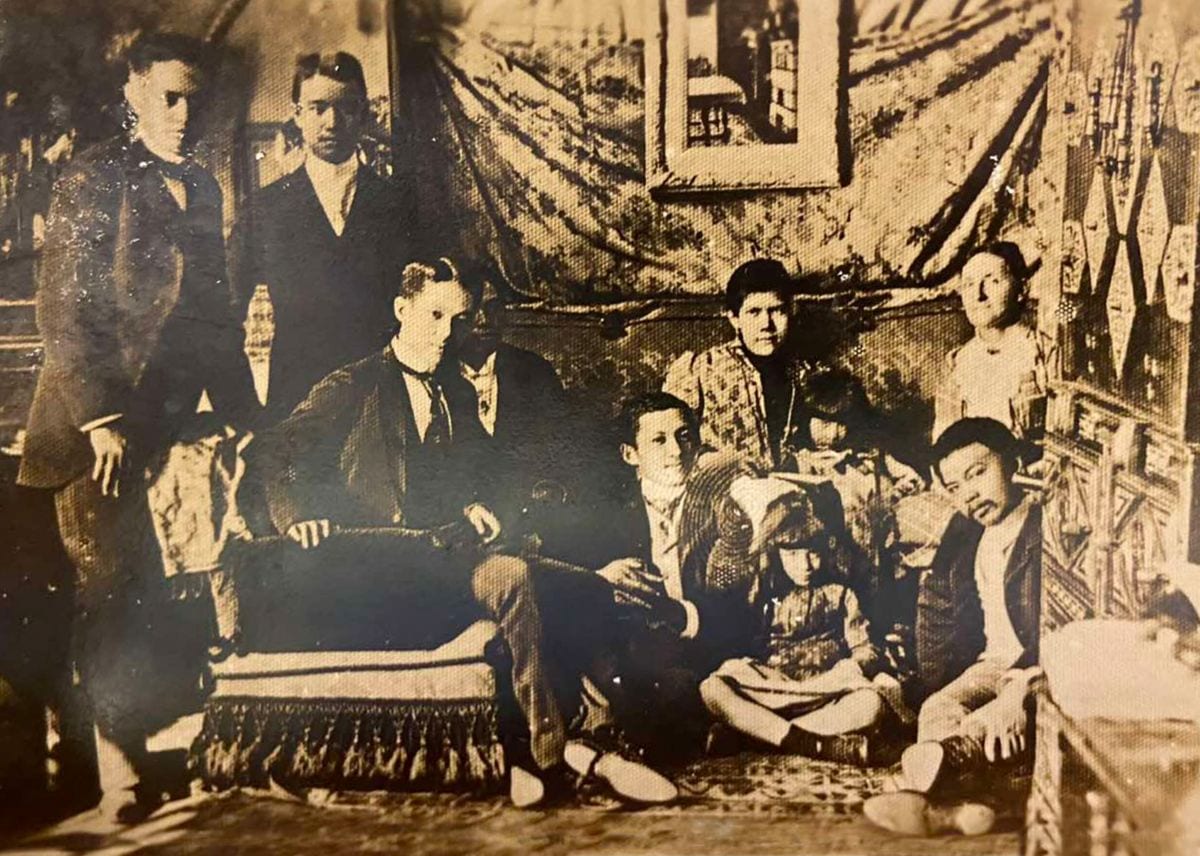
Jose Rizal (center) with Juan Luna (far right) and his wife, Paz Pardo de Tavera, in Luna’s Paris studio. Image courtesy of Antonio Bantug Jr.
“Such promiscuity may be the reason why Rizal is not mentioned, for instance, in the history of anthropology in the Philippines, despite his great interest in the subject and the wealth of ethnological knowledge displayed in his writings,” Mojares explains. “Though he was not formally trained in the discipline, we must remember that neither were the founders of German anthropology, Virchow and Adolf Bastian, who were physicians like Rizal.”
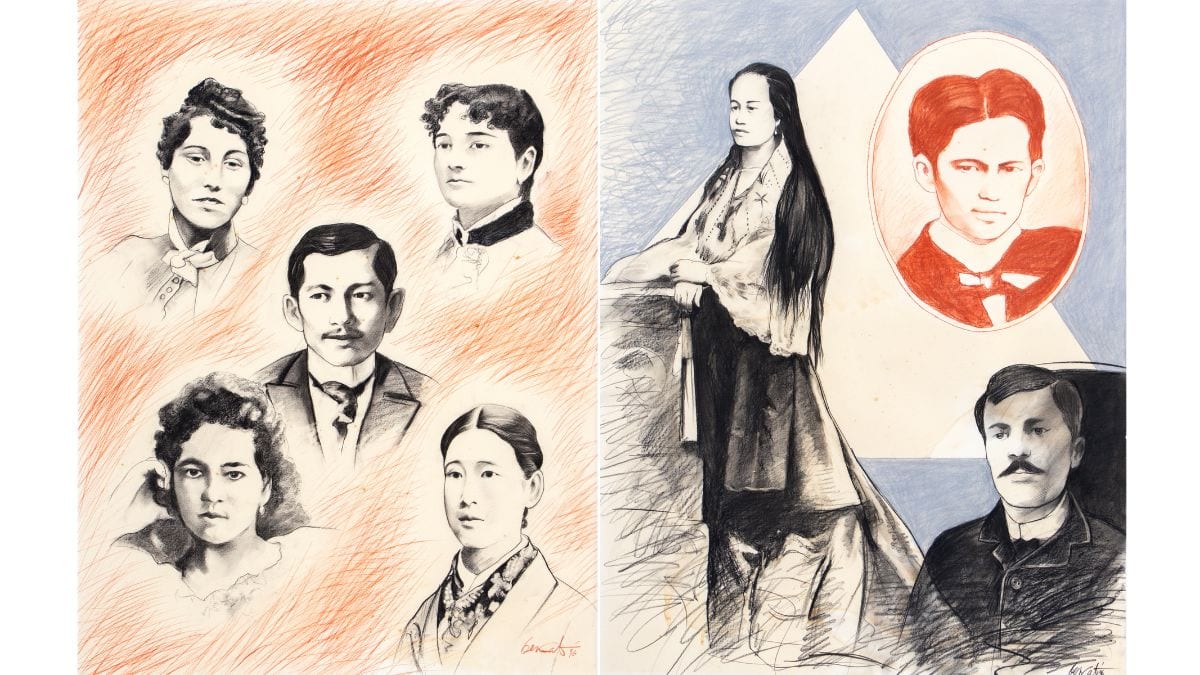
BenCab’s Rizal’s Foreign Loves (left), and Segundina, Rizal’s First Love, mixed media on paper, 1996, estimated at P900,000-1,200,000 and P1,300,000-1,500,000 respectively.
Rizal’s Loves and Longings
Two paintings by National Artist BenCab, created in 1996 to mark the centenary of Rizal’s martyrdom, have also come to light this month of September. Rizal’s Foreign Loves shows the national hero surrounded by Josephine Bracken, his common-law wife who stood by him to the very end; Nellie Boustead, the heiress courted during his European sojourns; Gertrude Beckett, the Englishwoman he met while studying in London; and O Sei San, the cultured Japanese companion who shared his intellectual curiosity.
ALSO READ
How Wealthy Was the Rizal Family?
Jose Rizal Myths: These are the Most Absurd Rumors About Rizal
Segundina, Rizal’s First Love, on the other hand, presents an intriguing composition. It shows a full-length image of the demure Segundina Katigbak, her back turned against a young, smiling Rizal in an oval portrait, and beneath him, possibly Manuel Luz, to whom Katigbak was betrothed. The triangle mirrors the love triangle that Rizal walked away from, brokenhearted.
Rizal’s report card, his rare drawing, and BenCab’s evocative tributes reveal a more intimate portrait behind the lionized persona—not only the perfect martyr cast in bronze, but a man who was curious, flawed, brilliant, and deeply human. These works will be featured in "The Well-Appointed Life" at Salcedo Auctions on Saturday, 27 September 2025, with sessions at 10 a.m. (online) and 2 p.m. (live) at NEX Tower, Ayala Avenue, Makati City.
