

National Artist Atang de la Rama Was the Queen of Kundiman and Sarsuela

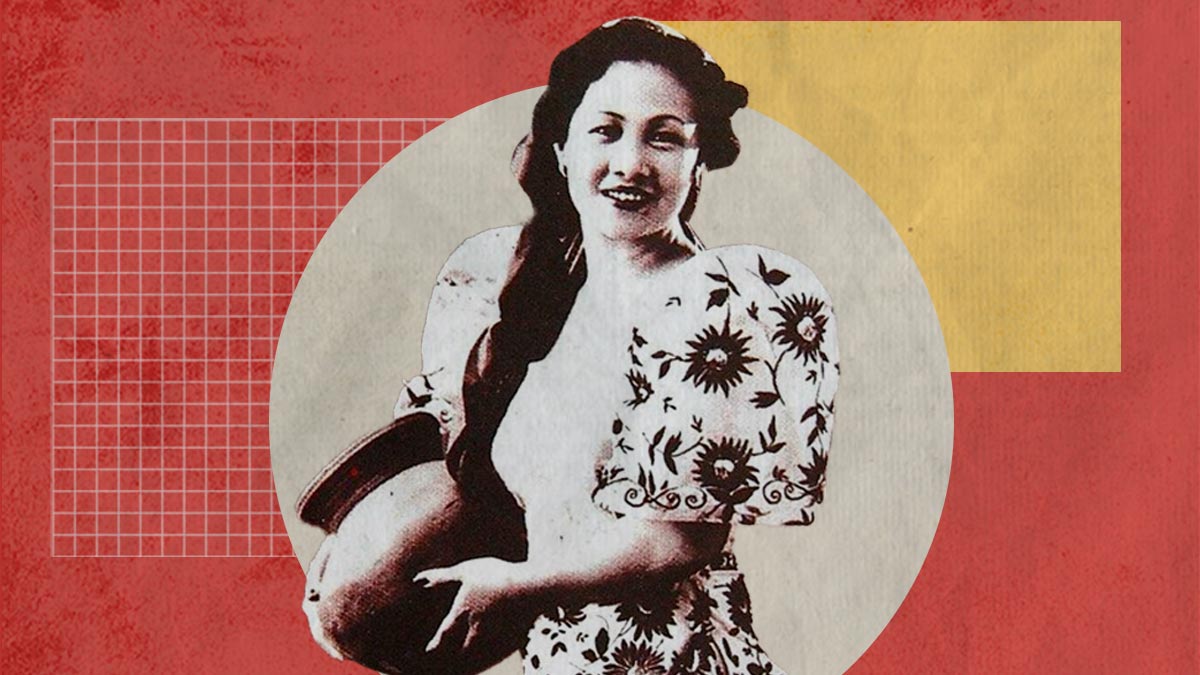
Before the so-called “Golden Age of Philippine Cinema” in the 1950s and 1960s and the rise of movie stars like Nida Blanca, Amalia Fuentes, Susan Roces, Lolita Rodriguez, and Gloria Romero, there was Honorata “Atang” de la Rama, considered the brightest luminary of her time. Art patron and Tribung Pilipino Cultural Foundation founder and president Danny Dolor calls de la Rama “the superstar of all time.”
Who was Atang de la Rama
Born on January 11, 1902, in Pandacan, Manila, de la Rama was the youngest among four siblings. Tragedy struck early when her parents died, leaving her and her siblings orphaned. Just as destiny seemed to have dealt her a harsh hand, it offered a twist of hope. Pastora Matias and her composer-husband, Leon Ignacio took the young girl under their wing, setting the course for a future filled with the magic of music and performance.
De la Rama’s singing and acting career started at the age of seven when she graced the center stage in Spanish zarzuelas such as Mascota, Sueño de un Vals, and Marina. At the age of 15, she rose to fame with her performance of the song “Nabasag na Banga" in Hermogenes Ilagan’s zarzuela Dalagang Bukid.
ALSO READ:
National Artist for Music Ryan Cayabyab Swaps His Baton for a Paint Brush
Bien Lumbera, National Artist and Source of Light
De la Rama went on to star in over 50 sarsuelas, spanning Spanish, Tagalog, Pampango, and Ilokano languages. Some notable productions include Alamat ng Nayon, Ararong Ginto, Ang Mestiza, Paglipas ng Dilim, Sundalong Mantika, Anak ng Dagat, Mga Kamag-anak, and Sa Bunganga ng Pating. She considers her portrayal of the role of an orphan in Pangarap ni Rosa as her most rewarding and satisfying role, swhich moved audiences to tears.
But none of them can compare to the success achieved by Ang Kiri, which was performed over 700 times, and Dalagang Bukid, which is said to have the highest number of performances in the history of Filipino theater.
Her success in sarsuela paved the way for a lead role the film adaptation of Dalagang Bukid, the first Filipino silent movie, produced by Jose Nepomuceno. Her portrayal in Ang Kiri was likewise immortalized in the movie Mahiwagang Binibini.
The actress also graced the screen in other films like Dugong Silangan, Ay Kalisud, Batong Buhay, and Ang Buhay at Pag-ibig ni Dr. Jose Rizal.
De la Rama's contributions
De la Rama’s contribution to Philippine culture is immense. Aside from her performances in sarsuelas and movies, she also actively championed the promotion of kundiman, popularizing songs like “Bituing Marikit,” “Madaling Araw,” “Mutya ng Pasig” and “Anak Dalita” "Pakiusap," "Ay, Ay Kalisud," "Kung Iibig Ka," and "Madaling Araw."
In a 1979 interview, de la Rama spoke of spending all her life singing and propagating the kundiman, “one of our most beautiful art forms.”
"The kundiman," she said, “has an inherent lilting quality, just like the ones created by Abelardo, Ignacio, Abdon and Hernandez. When you listen to it, you can hear the zephyrs whispering, see the waters rippling, and feel the mountain breezes blowing. That is the kundiman.”
She was a firm believer in making art accessible to all. Not only did she perform in major Manila theaters, but she also took her performances to cockpits and open plazas across Luzon, the Visayas, and Mindanao.
De la Rama introduced the kundiman and sarsuela to indigenous communities, including the Igorots, Aetas, and Mangyans and showcased kundimans and other Filipino songs in concerts across the world. She wrote great lyrics, skits, short stories, operettas, and sarsuelas.
She has received numerous recognitions throughout her career, including the Presidential medal of merit (1966), Sagisag ng Lungsod ng Maynila (1964), Diwa ng Lahi (1974),Reyna ng Kundiman at Mutya ng Dulang Tagalog (1963), Walang Kupas Award (1982), and The Ateneo de Manila University Tanglaw ng Lahi.
On May 8, 1987, President Corazon C. Aquino declared Atang de la Rama a National Artist of the Philippines for Theater and Music. This recognition was bestowed upon her “for her sincere devotion to original Filipino theater and music, her outstanding artistry as singer, and as sarsuela actress-playwright-producer, her tireless efforts to bring her art to all sectors of Filipino society and to the world.”
De la Rama passed away on July 11, 1991. She was married to the National Artist for Literature, Amado V. Hernandez.
