
Theater Review: Kisapmata Demands (and Deserves) Your Full Attention

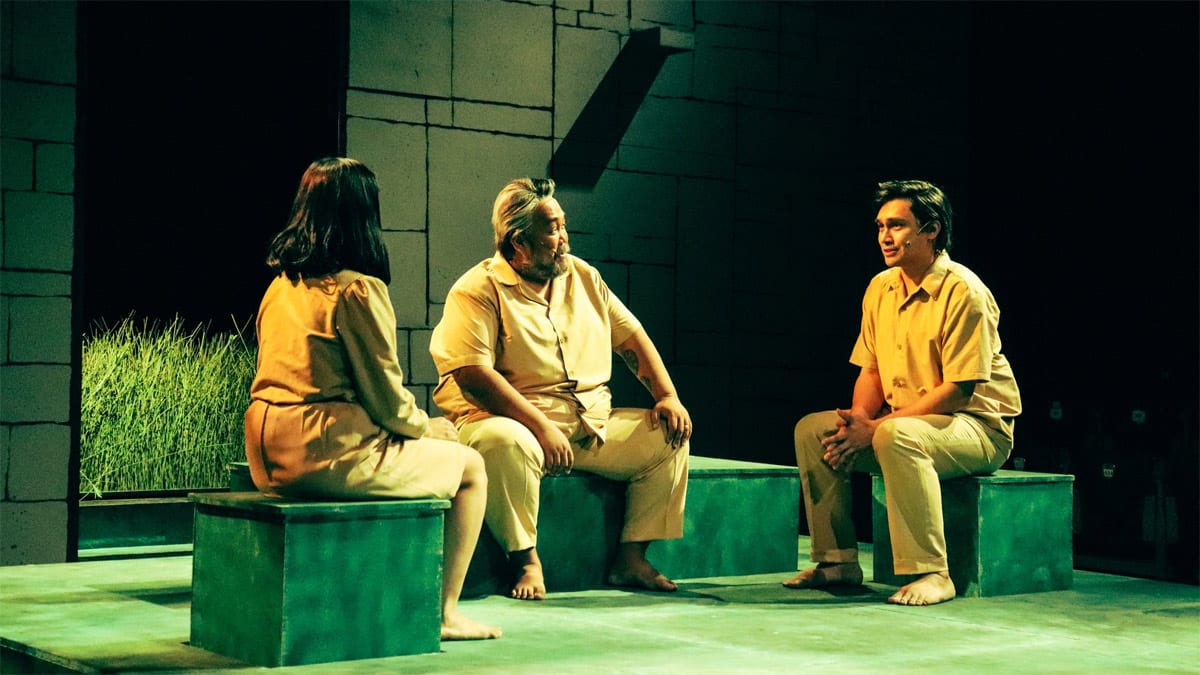
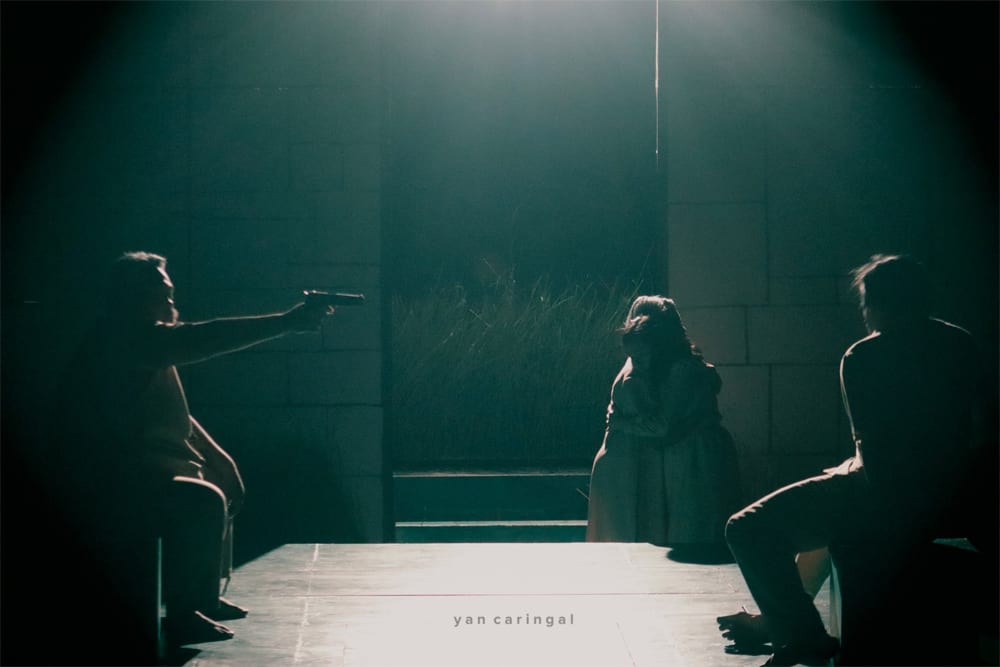
In Tanghalang Pilipino's Kisapmata, the first thing you notice upon entering the CCP Black Box Theater is a bare stage—save for a doorway on a back wall that leads to more grass-stricken nothingness. This is a bold choice for a play that's based on two related works that emphasize the four walls of a house for its setting: The House on Zapote Street (1961), a non-fiction crime report by Quijano de Manila (Nick Joaquin) and Kisapmata (1981), a psychological horror film directed by Mike de Leon and co-written by Clodualdo del Mundo Jr. and Raquel Villavicencio.
The House on Zapote Street chronicles a highly publicized familicide committed by retired police detective Pablo Cabading, who killed his daughter Lydia, son-in-law Dr. Leonardo Quitangon, and himself inside their home on January 18, 1961, on 1074 Zapote Street.
Joaquin describes: "The house of Zapote Street is in the current architectural cliché: the hoity-toity Philippine split-level suburban style—a half-story perched above the living area, to which it is bound by the slope of the roof and which it overlooks from a balcony, so that a person standing in the sala can see the doors of the bedrooms and bathroom just above his head."
Allotting a whole poetic paragraph for the house that was witness to the unspeakable crime was essential in conveying the suffocating experience of the Cabadings under the authoritarian roof of the family patriarch. This kind of literariness and attention to detail, which was unconventional in reportage at the time, made Joaquin a pioneer in what later became known as New Journalism or literary journalism. The House on Zapote Street was first published in the Philippine Free Press on January 28, 1961, and was later included in the collection Reportage on Crime: Thirteen Horror Happenings that Hit the Headlines (1977).
Jay Ilagan as Noel Manalansan in 'Kisapmata' (1981, dir. Mike de Leon)
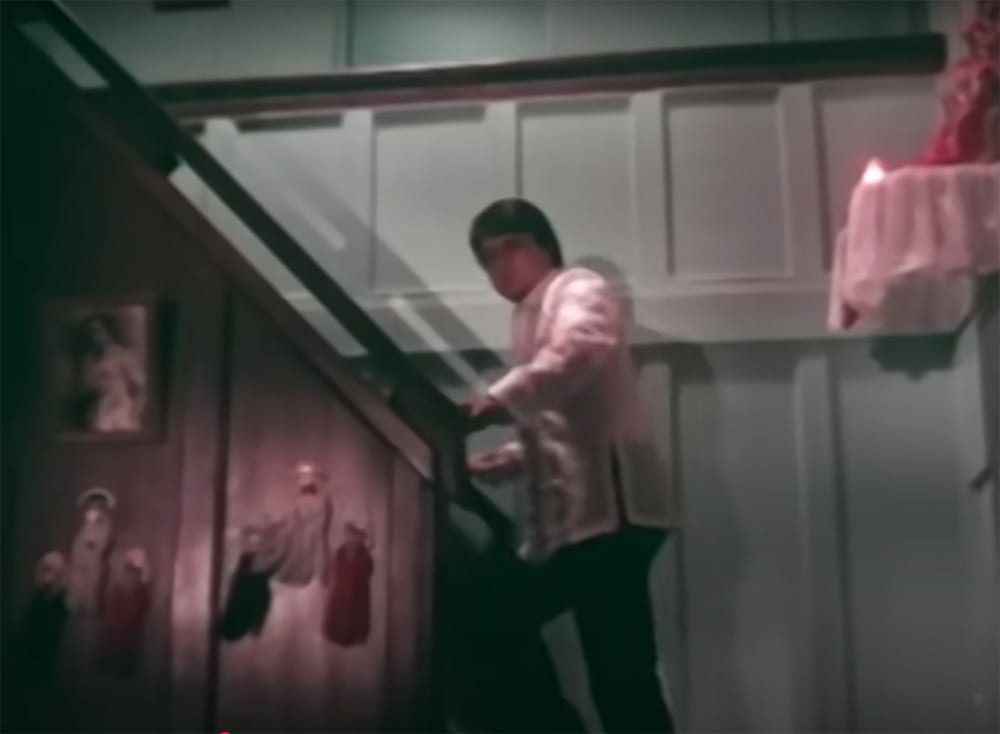
Likewise, in De Leon's opus, a two-floor house was the central image of the narrative. Its looming presence is a claustrophobic prison that reflects the father’s suffocating control. The film location, which turned out to be a house on 143 D. Tuazon Street corner Calamba in Santa Mesa Heights, Quezon City, echoed what Joaquin initially described—including that expansive sala where one can see the staircase and the two bedrooms on the second floor, highlighting the patriarch's dominion over his household.
With names, professions, and timeline tweaked vis-a-vis the Cabading murder case, the movie Kisapmata follows the events that led to the crime of retired policeman Tatang Dadong Carandang (Vic Silayan), who shoots his wife Dely (Charito Solis), pregnant daughter Mila (Charo Santos), and son-in-law Noel Manalansan (Jay Ilagan) before pointing the gun to his head.
Jonathan Tadioan as Dadong in 'Kisapmata' (2025, dir. Guelan Varela-Luarca)
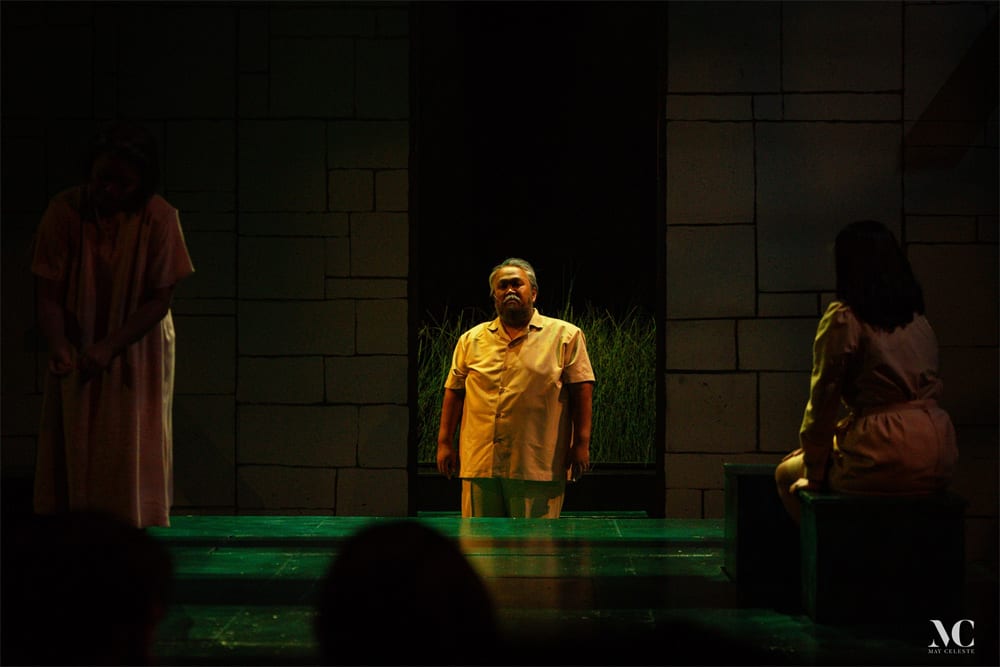
And then, there's Kisapmata onstage. It doesn't have Joaquin's "hoity-toity Philippine split-level suburban style" nor De Leon's imposing staircase, no kitsch household items nor Catholic statues, and not even that massive door and barbed wire-laden gate. Instead, it relies on the personal-is-the-political undertones of Guelan Varela-Luarca's text, as well as his masterful direction that combines all theatrical elements to "build" this particular house without walls. As the play unfolds, it becomes clear that Kisapmata does not need physical boundaries to contain its terror—because the real prison exists within the mind.
ALSO READ:
Understanding the Many Moods of Mike de Leon Through His Films
EdJop: The Voice That Challenged a Dictatorship
Kisapmata and the House That Tanghalang Pilipino Built
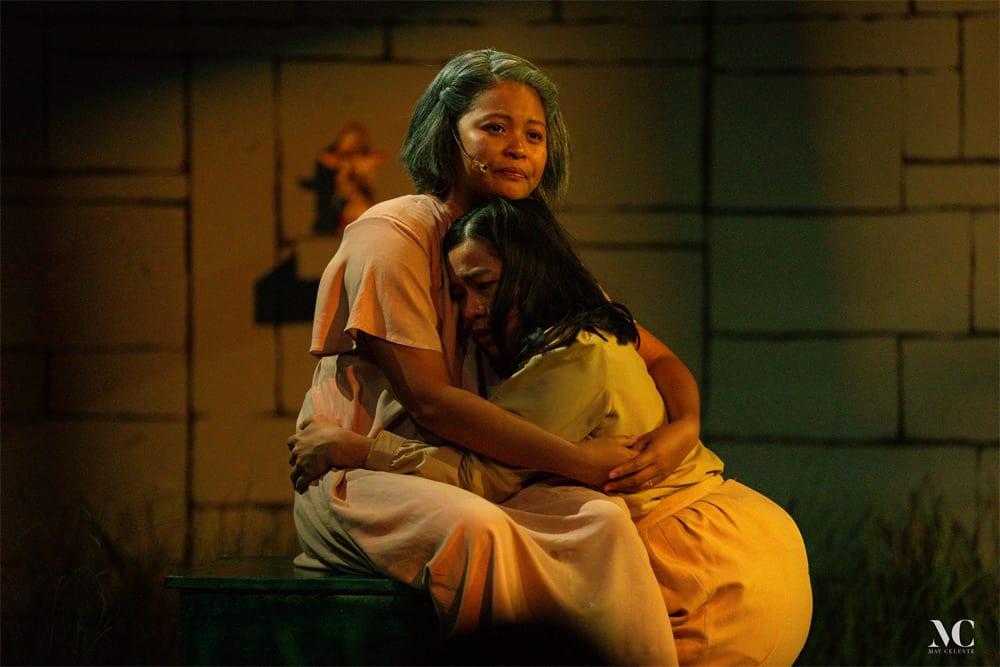
"Ang batas ay pagmamahal, ang pagmamahal ay batas," delivered by Dely (Lhorvie Nuevo-Tadioan), immediately sets the tone. She does so in a whisper, as if saying a prayer she clings to for dear life; in a hushed breath, as if reminding—or perhaps convincing—herself, her daughter, and even the audience of her husband's love, suffocating in its dominance. The house that Tanghalang Pilipino built doesn't need walls and doors, as these lines are more than enough to keep her, her daughter, and her son-in-law inside. It is also this lack of border that immerses—nay, traps—us, the viewers, in a claustrophobic space while under the trance of the father's command.
Dadong (Jonathan Tadioan) doesn't even need to raise his voice to wield such authority. Wheezing under his breath, he flawlessly plays the part of a loving father (or, at least, that's what it seems) who wants nothing else but the best things for his daughter, Mila (Toni Go-Yadao), or so we thought.
Lhorvie Nuevo-Tadioan as Dely and Toni Go-Yadao as Mila
Strengthening Kisapmata's play on the human voice (i.e. the haunting whisper of Dely and the hoarse voice of Dadong) is Arvy Dimaculangan's on-cue sound design. We hear the hinges of the door, the locking of the gate, and even the rustling of the grass, all serving as auditory signifiers of the prison-like house. This ASMR is employed in De Leon's Kisapmata, but in Luarca's adaptation, such technique is heightened, especially as all the other visual elements are out of the way. Music also plays a crucial role in reinforcing the play’s psychological thriller atmosphere—while the theater space remains wide open, the ominous sound keeps the audience on edge, heightening the tension with every beat.
The sense of entrapment intensifies as time stretches on, visually reinforced by overhead projections. Displayed on the walls above the audience, the entire timeline unfolds—from Noel’s conversation with Mila's father to their wedding and then to the inevitable tragedy. Yet, the passage of time feels disorienting; dates blur, days collapse into one another, mirroring the family's long, inescapable suffering.
Still prompting more attention to the sound and voice, Bonsai Cielo's decision to use plain beige-colored costumes almost harks on the monotony of inmates' uniforms, further reinforcing confinement. Interestingly, Dadong—who, in the narrative, is the villain—has the same muted attire, suggesting that he is not so different, after all, being imprisoned as well in his own society-shaped beliefs of patriarchy and authoritarianism.
An Allegory of Dictatorship
What is perhaps Varela-Luarca’s most striking contribution to the legacy of The House on Zapote Street and Kisapmata is his unflinching clarity in drawing the parallel between the Carandang family’s so-called perfect image and Philippine society itself. Dadong is an authoritarian who justifies his strictness as love—just as the late President Ferdinand Marcos rationalized militarization under the guise of Bagong Lipunan. Dely has been conditioned to believe “Ang batas ay pagmamahal, ang pagmamahal ay batas”—never questioning her father, never daring to leave the house. Under Martial Law, the Filipino people were similarly taught that the rules were for their own good, while the violence happening outside was disguised as security and protection.
This parallelism is underscored by archival footage from the Marcos regime projected on the overhead screens—just in case the audience hasn’t connected the dots. However, as these same screens blur and stretch time, they remind us that the cycle of oppression does not belong to the past. The culture of impunity merely shifts from one administration to the next, as long as the one in power—whether an Apo or a Tatay—continues to uphold patriarchy as the ultimate authority.
Kisapmata runs until March 20, 2025, at Tanghalang Ignacio Gimenez (CCP Black Box Theater), Cultural Center of the Philippines Complex, Pasay City.
