
Today I Learned: In Bacolod, There's a Pre-War Cemetery in the Middle of the Road

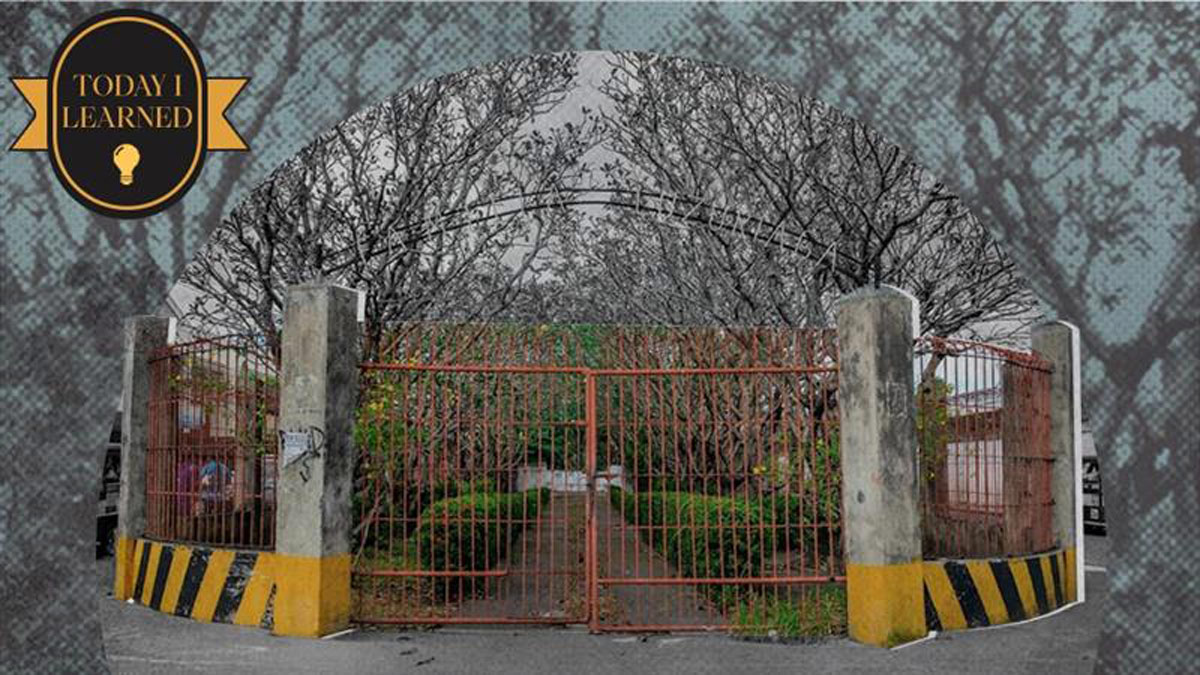
Surrounded by vast sugarcane plantations, Bacolod City in Negros Occidental is known for its well-preserved ancestral houses as well as museums and restaurants that were once mansions of the hacienderos. At the junction of Lopez Jaena Street and Burgos Avenue in Barangay Villamonte is a unique cemetery that stands in the middle of the road. It is actually a privately owned mausoleum belonging to the prominent Ruiz de Luzuriaga family.
ALSO READ
These Cemeteries and Burial Sites Tell Intriguing Stories
This Ancient Dog Burial Site in Manila Proves Filipinos Loved Canines
About the Ruiz de Luzuriaga Family
The family's origins can be traced back to Don Eusebio Ruiz de Luzuriaga, a Spanish colonel in the Traditionalist-Carlist faction in Spain. After the First Carlist War in 1840 and defeat against the Liberal-Republican, Luzuriaga left his hometown in the Pyrenees and settled down in Bacolod City. He married Juliana Guiquin.
Their son, Jose Ruiz de Luzuriaga, became a trader and manager of the family's sugar plantations. He eventually dabbled into politics and became a member of the Visayas reform council in 1898. He played a significant role in the Negros Revolution, acting as an intermediary for the surrender of the Spaniards to revolutionary forces in Bacolod on November 6, 1898. He was also elected President of the Chamber of Deputies (July 22, 1899 - November 6, 1899) of the short-lived Republic of Negros, which became a protectorate of the United States. It was dissolved in 1910, and Negros Occidental and Negros Oriental were annexed back to the Philippines, which meant that they were also under the Insular Government of the United States of America.
Jose then became governor of Negros Occidental from May 1 to August 15, 1901. On September 1, 1901, he became part of the Philippine Commission (Taft Commission) as appointed by President William McKinley. Along with Benito Legarda and Trinidad Pardo de Tavera, they were the first Filipinos admitted to the legislative body that provided civil governance under the U.S. colonial government.
Jose moved to Spain at the end of his life. He died in Barcelona in 1921.
History of Familia Luzuriaga Cemetery
The pre-war, 500-square meter mausoleum that lies on an island between Lopez Jaena Street and Burgos Avenue was established in honor of former governor Jose Ruiz de Luzuriaga. Other mausoleums surround it, though not in the middle of the road, such as the Jayme-Gamboa Mausoleum at the corner and the Lopez Mausoleum on the other. Both Antonio Jayme (1854-1937) and Manuel Lopez (1875-1947) were also former governors of Negros Occidental. The Burgos Public Cemetery is on the other side of the road.
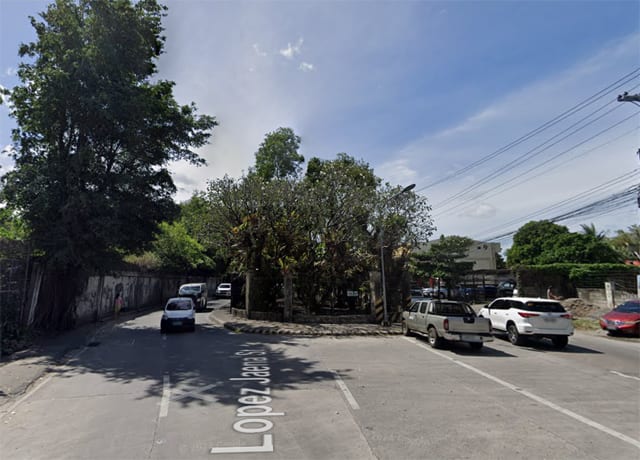
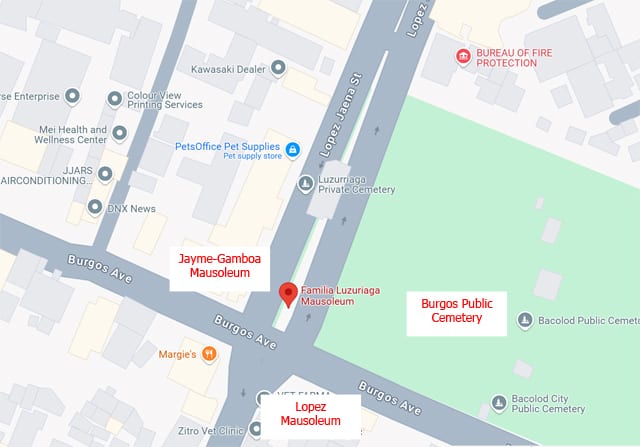
In an article by local media outlet SunStar, Raymond Alunan from the provincial tourism explained that this rather unique layout was the result of a road widening project by the local government unit of Bacolod in the 1950s.
While the Jayme-Gamboa Mausoleum and Lopez Mausoleum remain untouched in their corners, the road widening would require displacing almost half of the Ruiz de Luzuriaga Mausoleum. Instead, the local government carved out some space from the Burgos Public Cemetery for another one-way road parallel to the existing one. Tombs affected were transferred inside the public cemetery.
Jayme-Gamboa Mausoleum on the left, Familia Luzuriaga Cemetery at the center, and Burgos Public Cemetery on the right as seen from the intersection of Burgos Avenue and Lopez Jaena Street
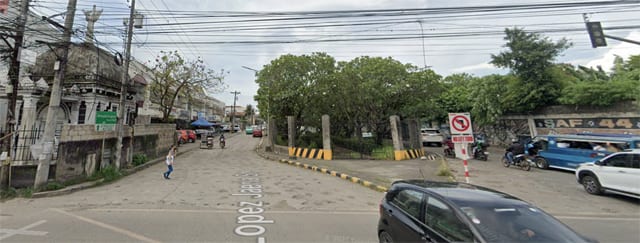
"The City Government opted not to touch the Luzuriaga Mausoleum in exchange for the old city hall donated by the former governor," Alunan told SunStar. The property was once the site of the Luzuriaga residence.
The cemetery's gate is padlocked for most of the year, except on All Saints' Day and All Souls' Day. Inside are rows of kalachuchi trees.
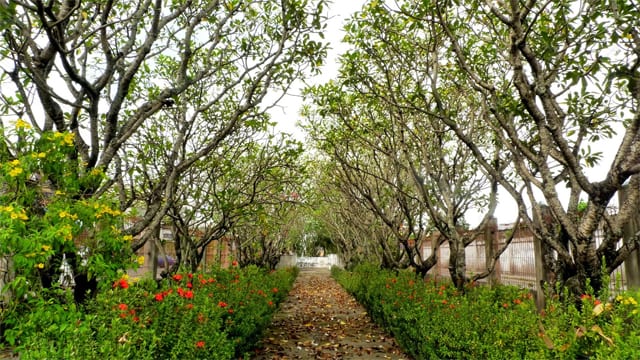
In 2022, the Bacolod City Council approved a proposed ordinance to declare the Familia Luzuriaga Cemetery a heritage site and tourist destination. This ordinance aims to allocate funds for the cemetery's preservation and beautification, ensuring that it remains a well-maintained landmark.
