
A Beetle Species Reemerges in Northern Luzon After 100 Years

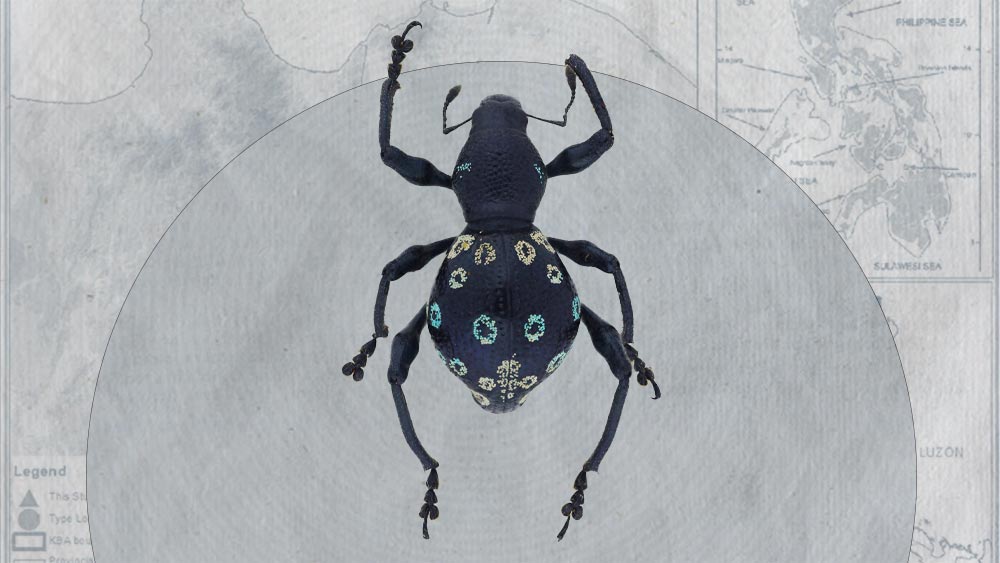
The beetle Pseudapocyrtus Schadenbergi Heller was first documented in 1912 by Dr. Alexander Schadenberg, a German botanist and zoologist who explored some parts of the Philippines. The “Heller” part of the beetle’s name comes from German taxonomist K.M. Heller, who wrote the description of the beetle in a journal article that same year, albeit in German language. Before the fateful rediscovery, no other sighting of the beetle had been reported.
ALSO READ
The Philippine Squirrel Was Recently Spotted in Ormoc
The Mystery of the Green-faced Parrotfinches
Members of the Philippine Eagle Foundation made the rediscovery in a forested area of Calanasa, Apayao in June 2023 during a beetle expedition. The area is now known as a nesting ground of the famed Philippine Eagle, previously known as the Monkey-Eating Eagle, following the discovery of a nest in 2015.
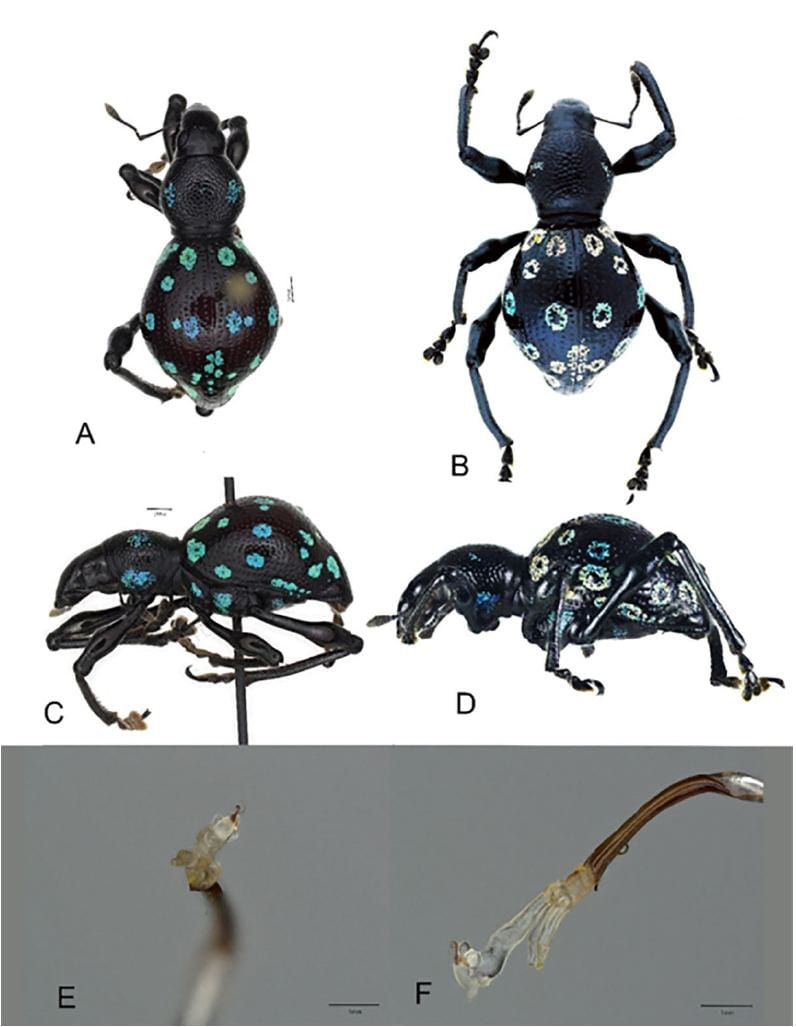
The beetle is described as mostly black with shiny bluish spots on its backside. Like many other members of its tribe, Pachyrhynchini, Pseudapocyrtus Schadenbergi is a flightless insect. Two of its relatives, Metapocyrtus Heller and Pachyrhynchus Germar, are known pests in agroforestry areas.
Pseudapocyrtus schadenbergi from Calanasan, Apayao
The researchers also mentioned that “unabated loss of forests poses a great threat to the survival of these groups,” referring to the beetle species. Timber poaching and conversion of forests into farmland are two occurrences mentioned as part of the threat.
In its Facebook post about the rediscovery, the Philippine Eagle Foundation also highlighted hopes that the forest areas of Apayao be declared a Biosphere Reserve by UNESCO (United Nations Educational, Scientific and Cultural Organization) as part of overall conservation efforts.
Kampalili Tarsomys, also called the Tarsomys Orientalis.
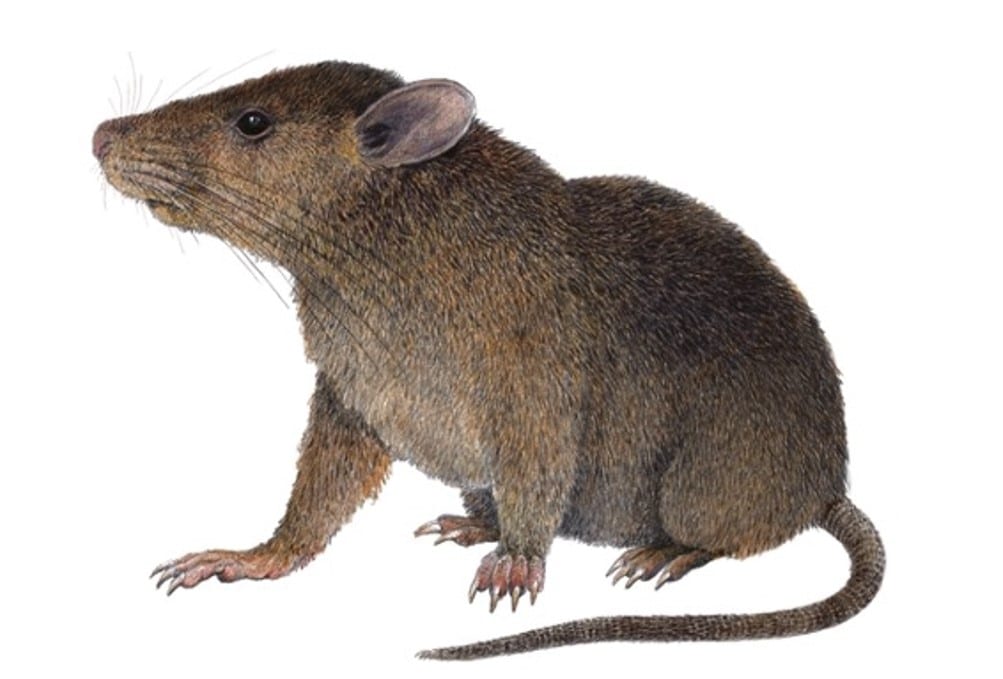
Meanwhile, in another Facebook post, the foundation announced the discovery of three new species of forest mouse in the Mount Kampalili area in Eastern Mindanao. The first is the five-inch long Kampalili Tarsomys (also called Tarsomys Orientalis), the smallest of the Tarsomys genus that is so far found only in Mindanao. The others are the Kampalili shrew mouse (Baletemys kampalili) and the Eastern Mindanao gymnure (Podogymnura intermedia). These mouse species share their space with the Philippine Eagle as well as the Mandaya and Mansaka tribal communities.
The discovery of these species raises hopes for preservation of Philippine forests and the survival of endangered animal species.
