
A Survey of Art Basel Hong Kong 2025: Big Sales, Editor’s Picks, and More

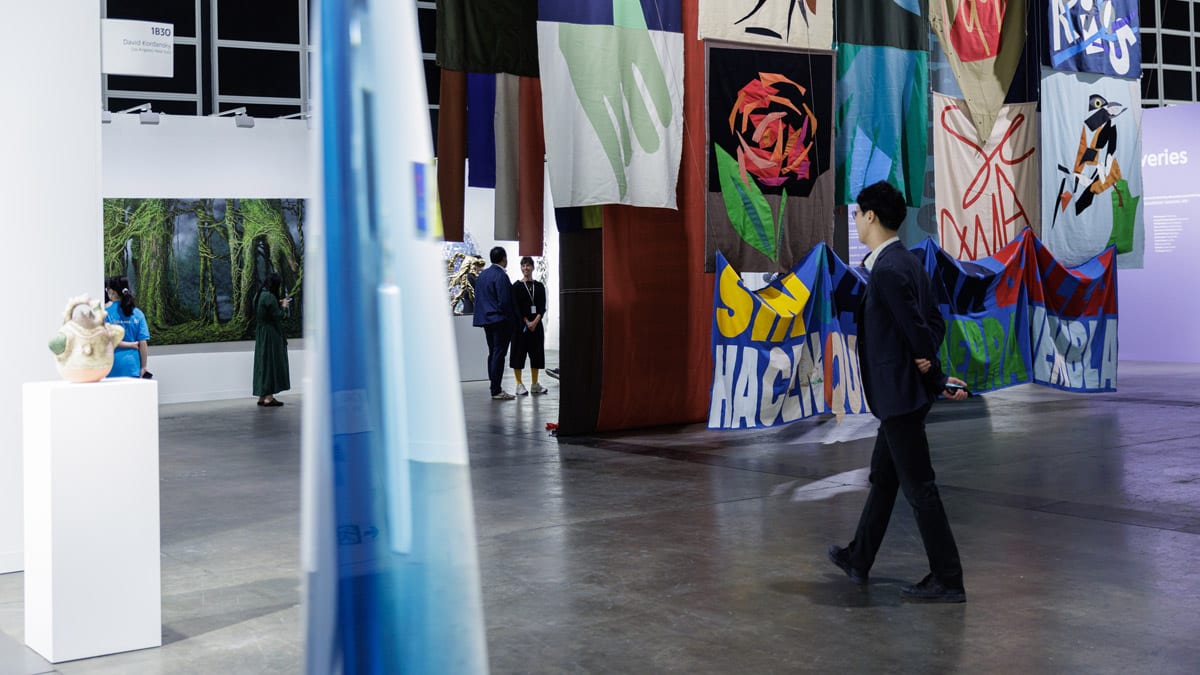
HONG KONG — A mélange of hushed negotiations, exuberant reunions, and brilliant displays of artistic prowess engulf the Hong Kong Convention and Exhibition Centre. After a quieter Art Basel in 2024, this year's fair feels a little more, let’s say, “vibrant.” Another way to say “younger” perhaps.
Art Basel Hong Kong 2025 officially opened to the public on Friday, March 28, 2025, at the Convention and Exhibition Centre. It featured the premier galleries from Asia and beyond, encompassing 240 galleries (23 new ones) across 42 countries. This time, the programming comes with fun things like RSVP-required cool parties, engagement offshoots all around, and much more interesting curatorial direction.
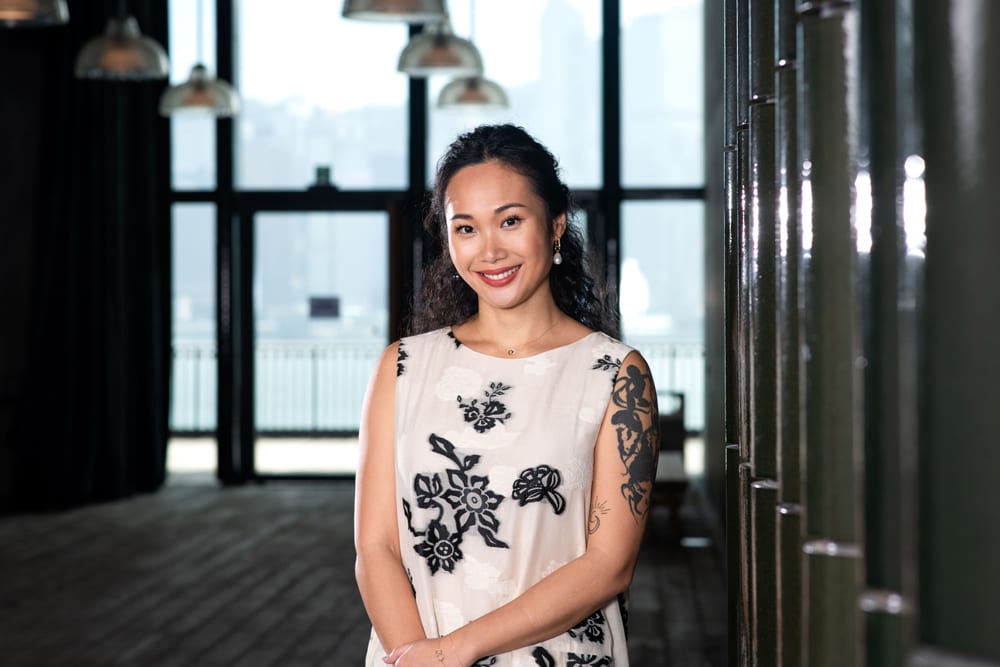
"Art Basel Hong Kong is the connector, the intersection of our world of art. To date, over half of our exhibiting galleries have spaces in Asia. That's evidence of how much we've grown with the region," says Angelle Siyang-Le, Director of Art Basel Hong Kong. "If 2024 was about reconnecting East and West, naturally, the theme this year is to transcend ourselves beyond a buy and selling platform. What's important to us is welcoming new voices and perspectives.”
Angelle Siyang-Le, Director of Art Basel Hong Kong
In this wonderfully chaotic “intersection of creative opportunity,” we look at some of the weekend’s most delicious highlights.
A Snapshot of the Eastern Market
While the United States still leads the global market at 42 percent of sales, China is catching up. It would surpass the United Kingdom in 2023, as it accounted for 19 percent.
Mainland China, the director says, still has the strongest attendance in terms of buyers, despite the declining auction results and the larger economic uncertainty around the country over the past year. Observed, too, is a spike in patrons from Southeast Asia, particularly from the Philippines and Singapore.
Findings from UBS' latest art report also suggest that there has also been an increased interest among younger buyers. Gen X remains the biggest bracket in terms of general purchasing power and actual sales. However, it should be noted that sales made by Gen Z collectors have doubled recently. The director also claims that Art Basel Hong Kong has received more requests for tickers from this generation. "This is the place to be seen and to be connected."
Several galleries already reported quite the first-day sales. One of which was a US$3.5-million Yayoi Kusama purchase done through David Zwirner. Among Zwirner's other reported sales include works by Michael Borremans, Elizabeth Peyton, and Feliz Gonzalez-Torres, which had been sold for US$1.6 million, US$900,000, and US$900,000, respectively.
Hauser & Wirth, on the other hand, reported a Louise Bourgeois purchase for US$2 million. A Christina Quarles sale was also made for US$1.35 million. Another notable gallery to report a sale during the VIP night was Thaddeus Ropac, which sold a series of paintings by Georg Baselitz (US$1.29 million), Daniel Richter (US$453,380), Lee Bul (US$190,000), and Tom Sachs ($160,000).
A work by Filipino artist Pacita Abad was bought during the first evening, as well. Tina Kim Gallery wound up selling the said piece around the range of US$250,000 to US$500,000. Abad's works have increasingly been gaining traction over the past couple of years, thanks in part to traveling retrospectives across North America and strong representation by Silverlens Galleries.
Our Favorite Booths
Art Basel Hong Kong 2025 edition kicks off with an explosion of creative energy and refined artistry. It serves up a wild mix, really. One moment, you’re staring at installations that push every limit; the next, you catch a nod to reworked old masters; these, all while market force blends curatorial boldness in ways you wouldn’t expect.
In most cases, you sense the spark of innovation, whether it’s a sharp political remark, a mesmerizing twist in materials, or simply an honest, raw beauty that won’t let you look away. And that’s pretty much where the conversation just gets rolling, igniting ideas and dialogue all around.
Bangkok CityCity
Booth 1C46 (Discoveries)
Participating artist: Tanat Teeradakorn
Developed during a Gasworks residency, “The Rise and Decline of an Absolutism” reimagines Thai folk dance as a tool of media and state propaganda. Unraveling through a single-channel video set in a souvenir kiosk, it bends traditional Ram-vong dance with revolutionary music.
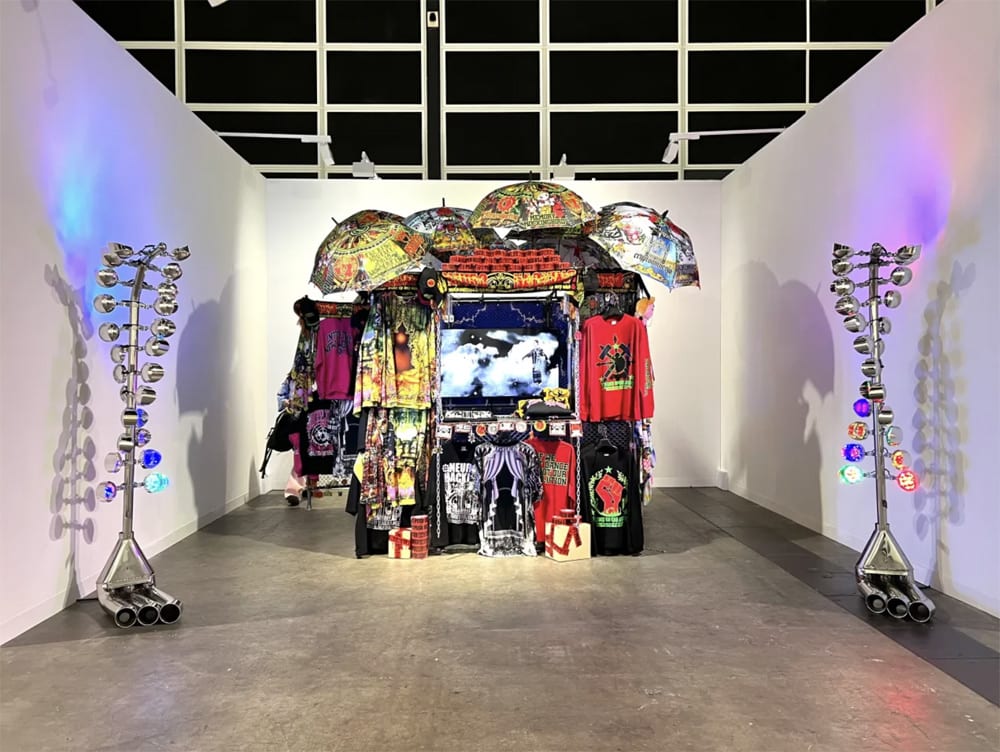
The work critiques cultural memory and power, which are said to be direct references to Prime Minister Phibunsongkhram’s nationalist policies. Structured as a "TV-PSYOP" program, audiences go through five fictional chapters: from nostalgic “Reminiscence” (1940) to defiant “For the Masses” (1973); these juxtapose dance, protest, and even K-pop, exploring resistance.
Silverlens Galleries
Booth 1B12
Participating artists: Catalina Africa, Nicole Coson, Patricia Perez Eustaquio, Poklong Anading, Keka Enriquez, Gregory Halili, James Clar, Wawi Navarroza, Citra Sasmita, and Yee I-Lann
In the Kabinett section of Silverlens’ booth, James Clar's "Cloud Seed (Autumn)" is a knockout. The evocative video installation is meant to stimulate rain and fog, lulling viewers into an ethereal haze of sorts. This is accompanied by one of Clar's newest works in the Parol series. Here, the Filipino lantern becomes a symbol of joy and remembering.
'Where the Horizon Breaks Into Color (Wayfinding Home) (Parol-#6)' by James Clar
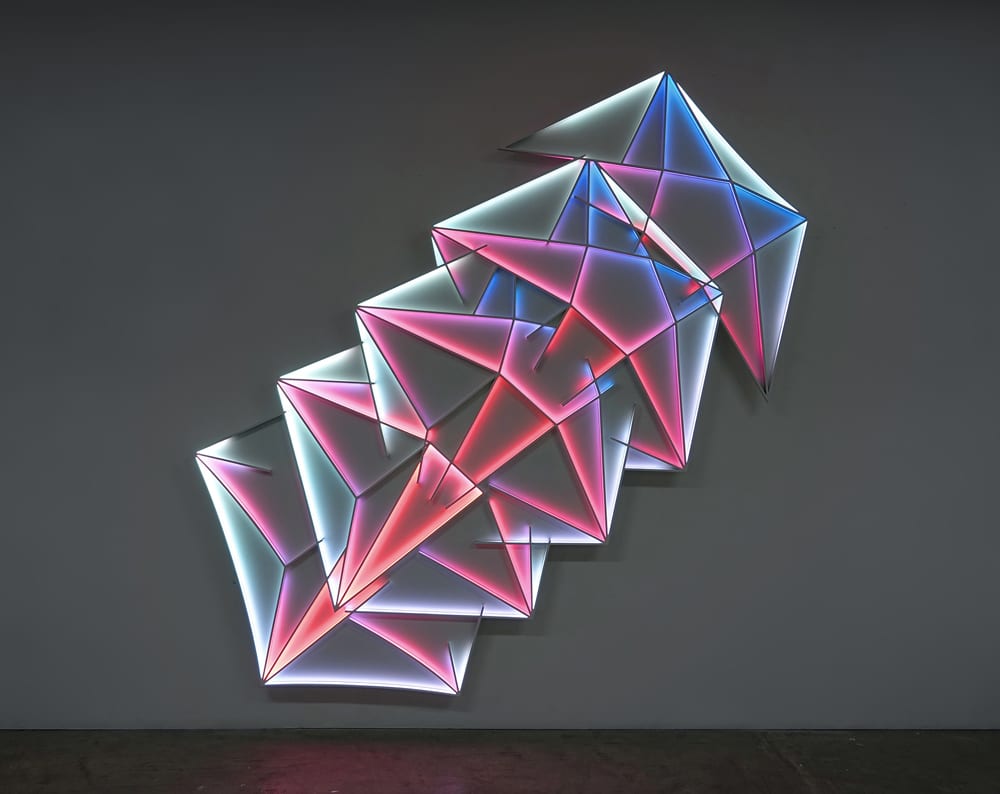
The booth highlights the Manila- and New York-based gallery's position in the region as a catalyst for transnational conversations, which includes works by multi-disciplinary artist Catalina Africa (a recent Thirteen Artists Awardee), London-based artist Nicole Coson, Patricia Perez Eustaquio, Wari Navarroza, and Keka Enriquez.
P21
Booth 1C38 (Discoveries)
Participating artist: Shin Min - Winner of the 2025 MGM Discoveries Art Prize
Shin Min's practice critically examines the harsh realities of female workers trapped in low-wage, high-pressure service industries. Drawing from her personal experiences, she laments contemporary ideas of labor and survival, bleeding into a poignant sculptural representation of service workers.
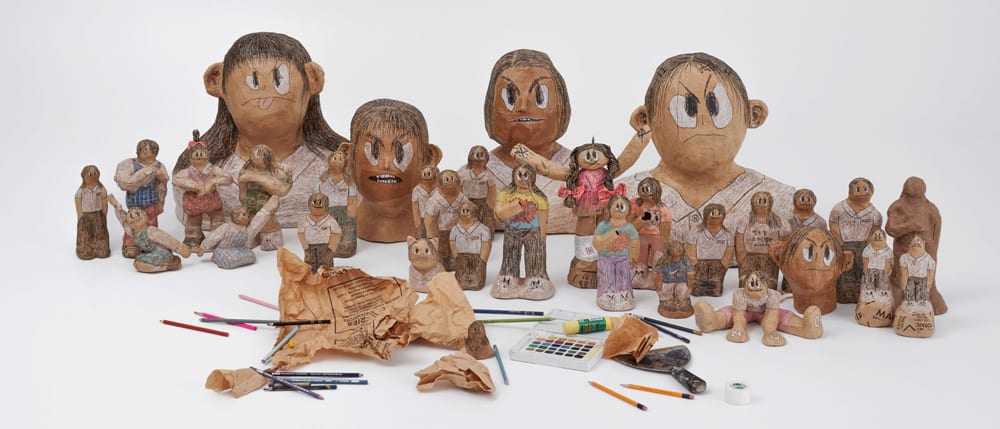
Here, she makes use of discarded potato fry packaging as her primary medium. Min meticulously crafts figures of uniformed women in various sizes, complete with those tragically familiar black ribbon hairnets. The fragility on display serves as a material witness to the invisible struggles of precarious workers. It ultimately critiques the disposable nature of both service workers and consumer culture under global capitalism.
P·P·O·W
Booth 1B17
Participating artists: Martin Wong, Katharine Kuharic, Daniel Correa Mejía, Joe Houston, Owen Fu, Grace Carney, Harry Gould Harvey IV, Srijon Chowdhury, Elizabeth Glaessner, and Robin F. Williams
Elizabeth Glaessner’s “New Face” (2025) throws you into a realm that feels fluid and a bit unpredictable, with figures slowly merging into lush, almost trippy landscapes that seem to shift with every glance. Meanwhile, Correa Mejía’s “Perdonar” (2024) takes a similarly intriguing path by wedded human touches with raw natural vibes; it bubbles with a kind of dual-energy and a sacred charge that, generally speaking, quietly upends our usual sense of art.
With “Correspondence Radiator / Correspondence Resonator (Asteraceae)” (2025), Harry Gould Harvey IV’s mystical representations, encased in handcrafted wood frames from salvaged materials, channel forgotten histories and subconscious visions.
Martin Wong sculptures from the '60s and '70s
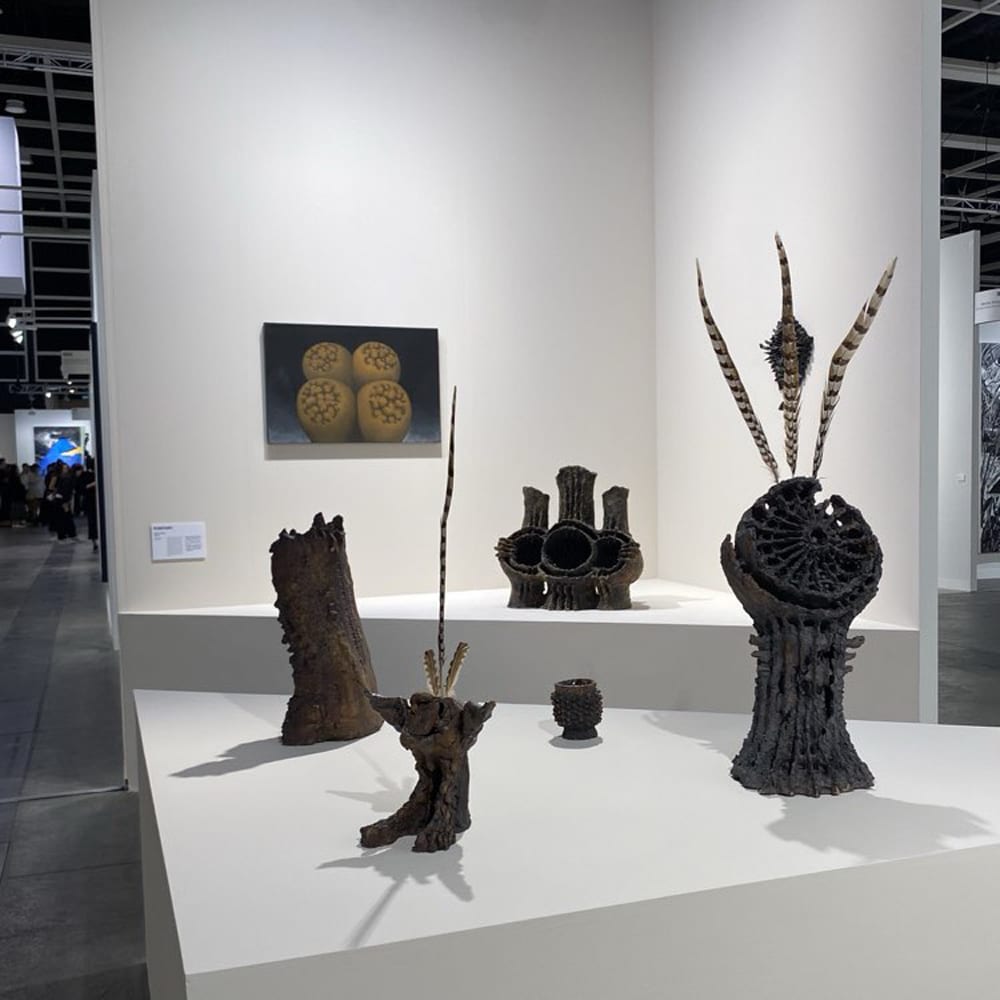
Of course, the Kabinett section especially shines with a concise retrospective of Martin Wong, featuring his early, gothic-inspired ceramics, which can be described as hauntingly austere yet deeply expressive. The varied roster creates a fun dialogue between transformation, myth, and materiality.
The Drawing Room Manila
Booth 3C35 (Insights)
Participating artists: Soler Santos and Luis Antonio Santos
Soler Santos and his son, Luis Antonio, stun viewers with layered textures that merge into intricate works. They explore nature, urban buzz, and those fuzzy borders in ways that feel uniquely their own. While one approach seems spontaneous and raw, another takes a more deliberate path. Each style offers its own take on life's continual balancing act.
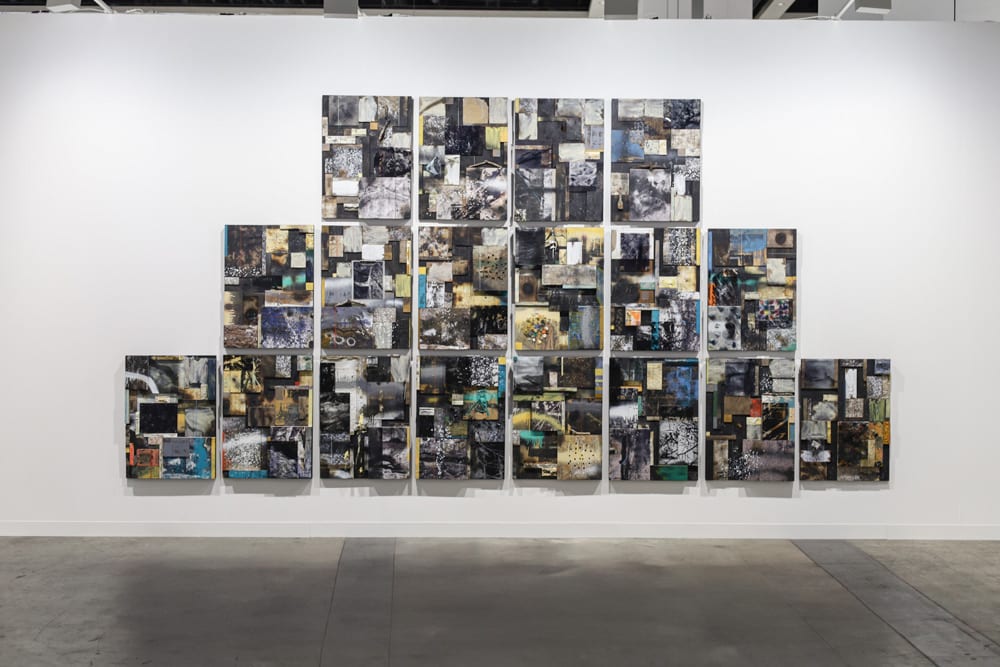
Soler finds his muse right in his daily surroundings. He blends bits of nature with leftover fragments of city life, often merging painting with a dash of photography. Over roughly a decade, he’s put together a sort of living archive of organic finds, a collection that keeps pointing back to nature’s endless shift and change.
On the other hand, Luis Antonio works with tough, galvanized sheets that hint at both physical limits and inner struggles. He twists and alters them into sculptures, canvases, and prints. In his Fragmentation series, scattered, broken fences get overlaid with wild patches of greenery, almost as if he’s nudging us to reconsider the boundaries we see, and those we only imagine.
The Beauty of Encounters
Art Basel Hong Kong’s Encounters, led by Alexie Glass-Kantor, authors an unexpected playground of vast opportunity where offbeat sculptures, daring installations, and lively performances seem to casually challenge the everyday. Rather than following a neat blueprint, the show spills out over four loosely defined yet thematically charged aisles.
It lets audiences wander through art that feels less like rigid objects and more like gentle markers of our collective moments of change. There's a kind of subtle harmony in its ideas that makes Encounters not just another shared display, but a fluid invitation to see everyday turning points from a new angle. Guests get to navigate four aisles here: “Passage,” “Alteration,” “Charge,” and “The Return.”
Passage
A corridor of cultural memory opens unexpectedly—a space where Pacita Abad’s bright trapunto textiles seem to chat casually with the politically charged assemblages of Pio Abad.
'The Sky is the Limit' (1996-2000) by Pacita Abad and Pio Abad, presented by Silverlens and Tina Kim
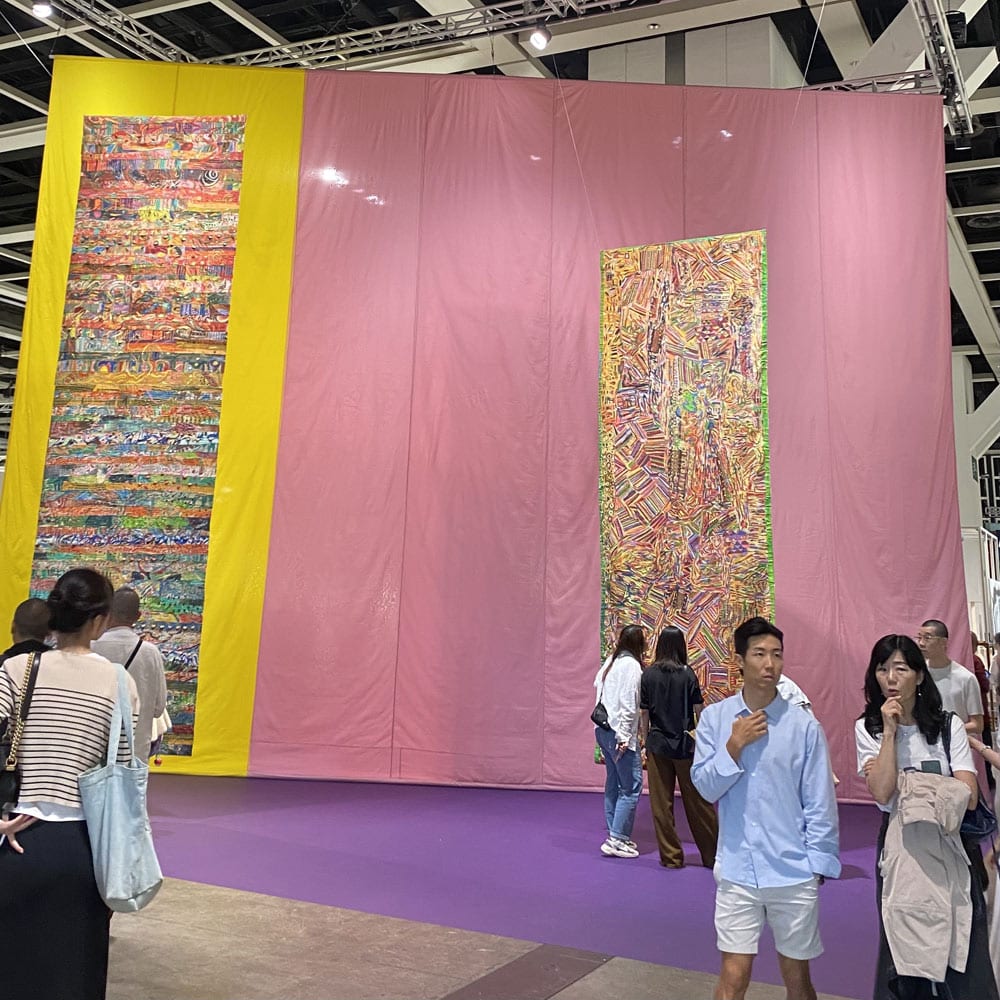
In one spot, Nadia Hernández’s burst-of-color installations sketch out diasporic identities, while Betty Muffler’s paintings, in their own way, evoke a sense of Aboriginal resilience. Personal and historical stories blend here in a loosely woven tapestry that speaks in whispers and bold strokes alike.
Alteration
Industrial materials hardly stay the same either. In “Alteration,” these materials get a radical new spin.
'Perpetual Discussion Platforms' (2025) by Liam Gillick, presented by Baton
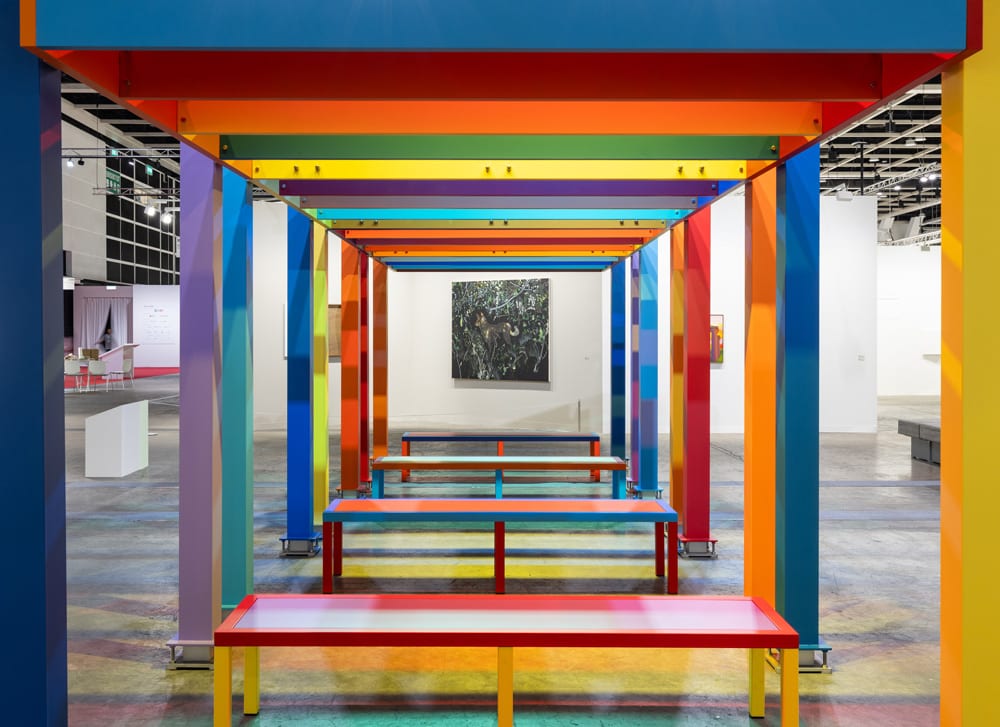
Liam Gillick’s sleek architectural tweaks almost banter with Hayal Pozanti’s sculptures, which draw on algorithmic ideas. Their geometric shapes, for lack of a better word, become vessels for modern anxieties. Meanwhile, Christopher K. Ho offers a subversive look at modernism, and Naotaka Hiro constructs what might be called psychological architectures, each questioning inherited forms in a refreshingly unpredictable way.
Charge
Digital and physical worlds crash into each other in “Charge.” Lu Yang’s techno-buddhist avatars, for instance, seem to twirl alongside the mythologies of the internet as envisioned by Jon Rafman.
'Prosthetic Memory' (2025) by Alison Nguyen, presented by gdm
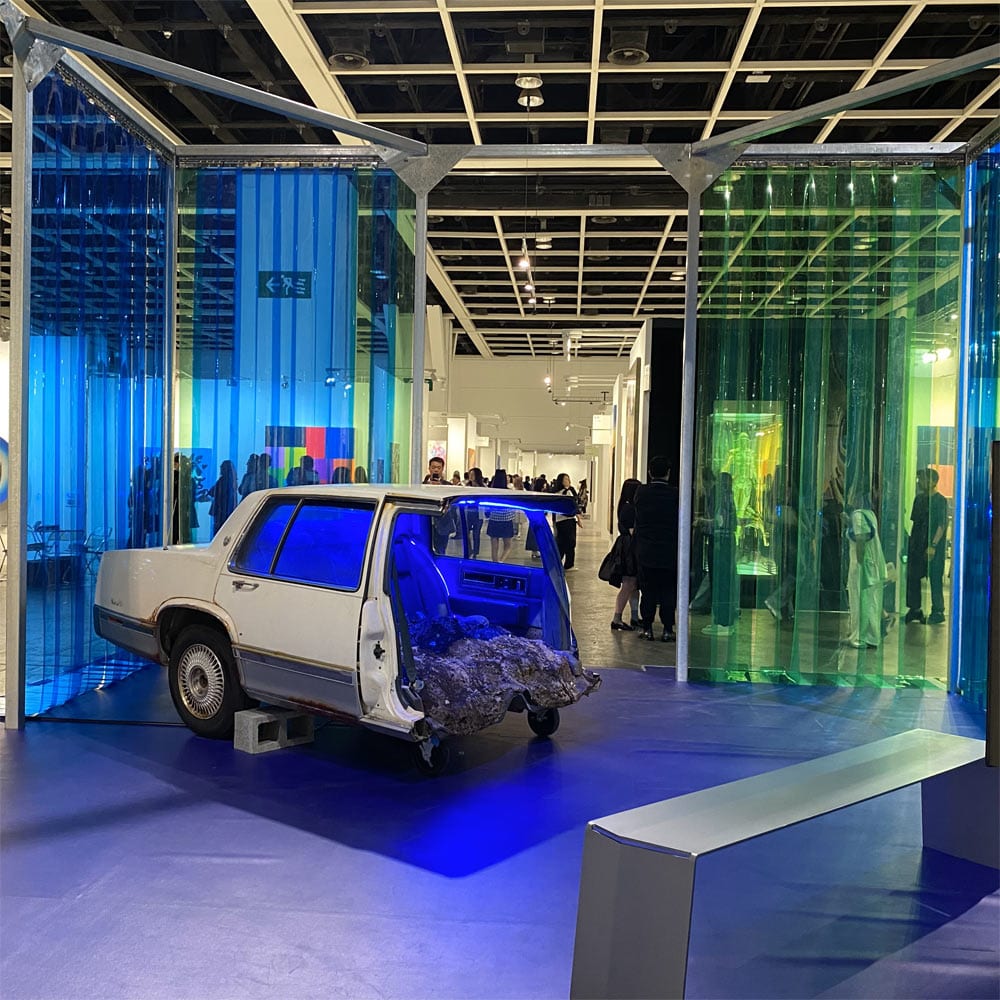
Alison Nguyen’s video works jab at virtual intimacy (almost like a secret dissection), while Frank Wang Yefeng’s glitching sculptures capture that uneasy combination of being online and offline at once; together, these pieces sketch a sometimes unnerving portrait of 21st-century awareness.
The Return
The cycle comes full circle in “The Return,” where old wisdom is given a new twist. Pedro Wonaeamirri’s Tiwi ceremonial poles stand guard like watchful sentinels next to Vajiko Chachkhiani’s haunting installations, and Movana Chen’s knitted archives, together with Jiieh G Hur’s nearly ritualistic films, hint at fresh ways to blend tradition with today’s practices. In most cases, this reimagining feels like a gentle, if imperfect, dialogue between what was and what might be.
'kurrujupuni, arrikininga, yarringa, tunuwuni kapi katukuni' (2020) by Pedro Wonaeamirri, presented by Station, in collaboration with Jilamara Arts and Crafts Association
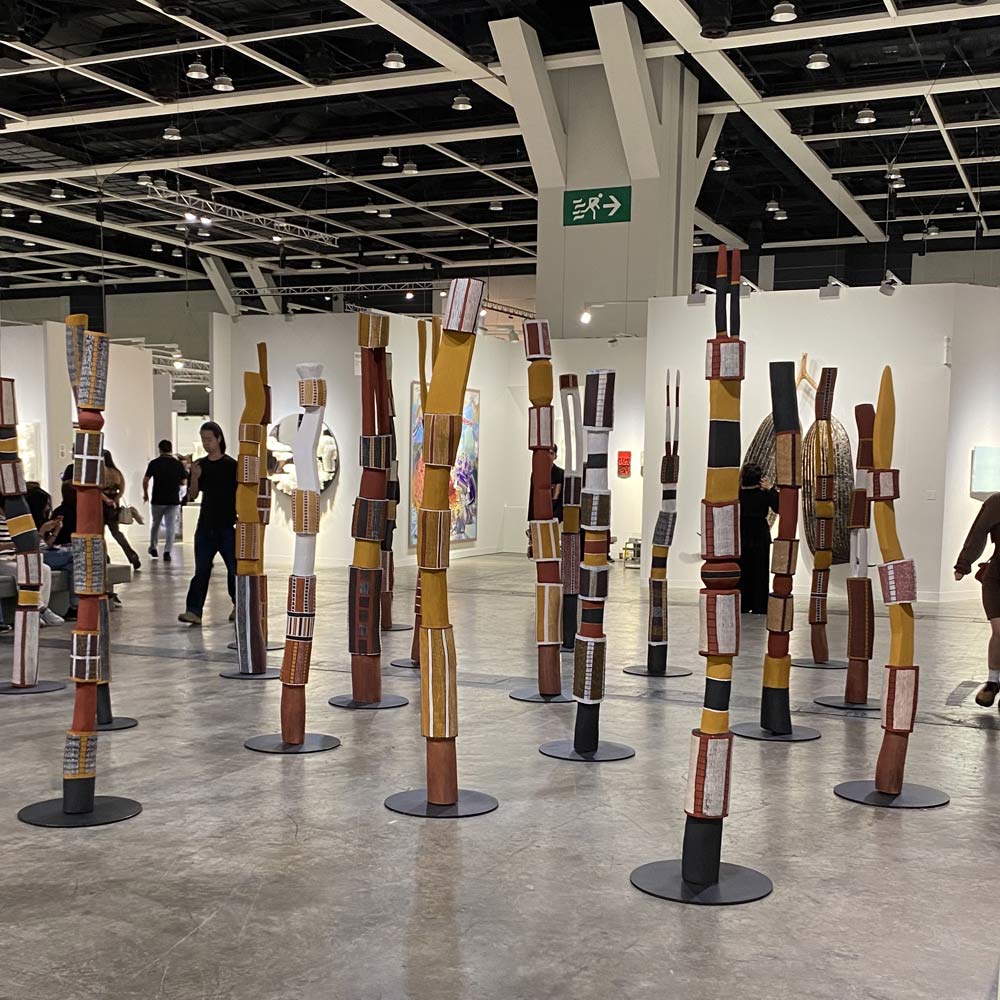
Art Basel Hong Kong ran from March 28 to 30, 2025, at the Convention & Exhibition Centre.
