
'Our Binondo Stories': Rediscovering Manila’s Historic Chinatown

For most of us, Binondo is considered Tsinoy territory—a place where you go to buy gold, electronic equipment, hardware products, and just about anything you're looking to purchase. In recent times, a stop here has become de rigueur for local and foreign tourists who are eager to sample authentic Filipino-Chinese cuisine.
But maybe there’s more to know?
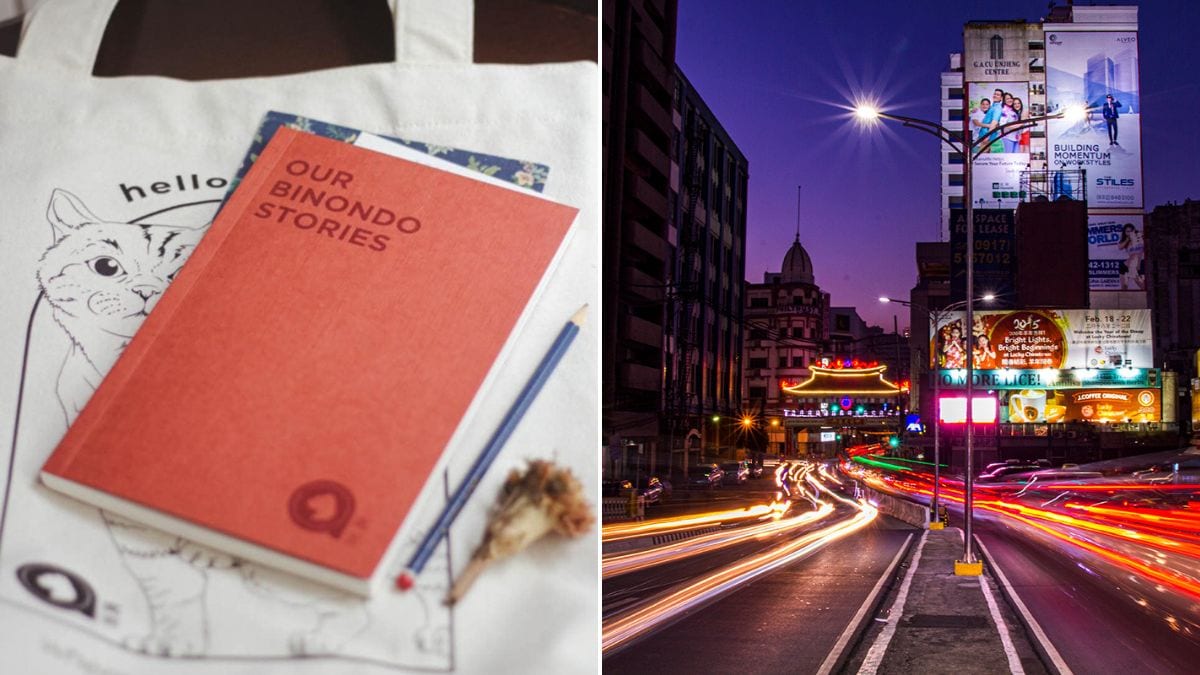
A recent independent publication highlights just that: Binondo, then and now and things you might be missing in between. It is a humble literary project that makes the case for the need for constant cultural rediscoveries. “Our Binondo Stories” is a journal plus storybook co-produced by Apologue Coffee & Pastry and cultural advocates, as well as locals of Chinatown. Recently released to celebrate and welcome the Lunar New Year, this mini-anthology is an accessible collection of texts and images that provide digestible bits of information and cultural reflection. The producers aim to showcase the various and colorful facets of Binondo life and culture.
Binondo showcases Manila's diverse character.
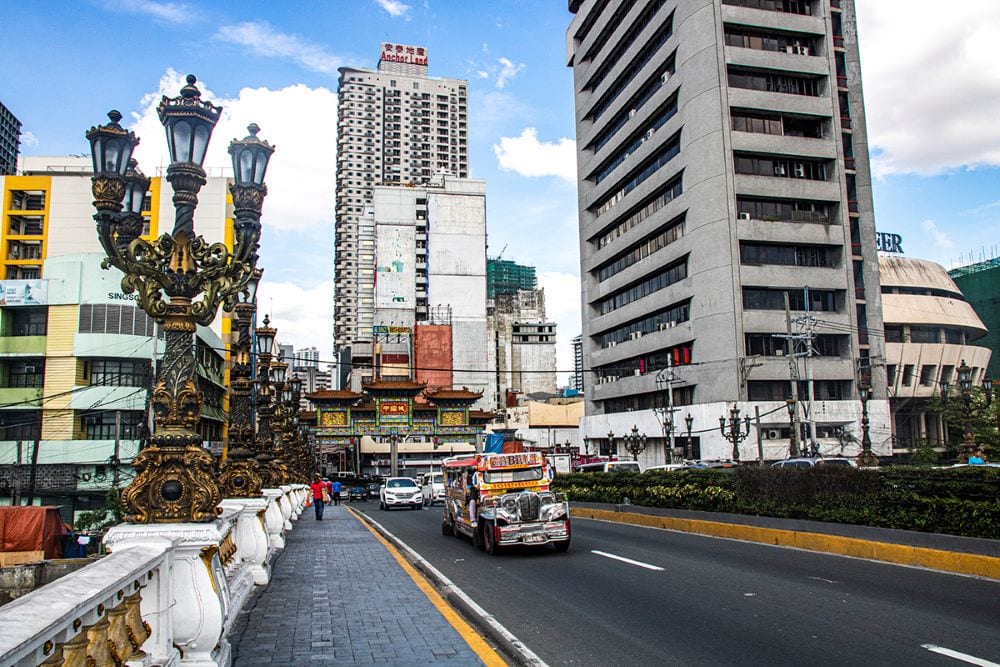
Anson Yu, a writer and tour guide, begins the book with the interesting and complex history of the district, linked to the civic re-orientation and religious assimilation of the early Tsinoys. In his essay "Pagoda Tsina," he chronicles the intersections of politics and religion, the evolution of the community’s religious landscape during the Spanish colonial era, and the vestiges of that time that still shape and define Binondo today. In fact, if you look closely, you will notice some of these palpable mixes and overlaps of religious and cultural syncretism, both in traditions and physical remains, resulting from the Catholic conversion of our Tsinoy forefathers. His essay serves as a prism and a lens through which we can glimpse the broader narrative: how the treatment of Tsinoys varied across different periods in history.
The book continues with one of its most personal entries: Seb de Jesus' "Tela, Siopao, Hopia," which sincerely recounts his childhood and family history through intimate moments in his home and familiar places in Binondo. It’s a diaristic retelling of his personal and familial experiences, interwoven with vignettes of the economic and enterprising culture of the Tsinoy community.
Stephen Pamorada, one of the book's authors
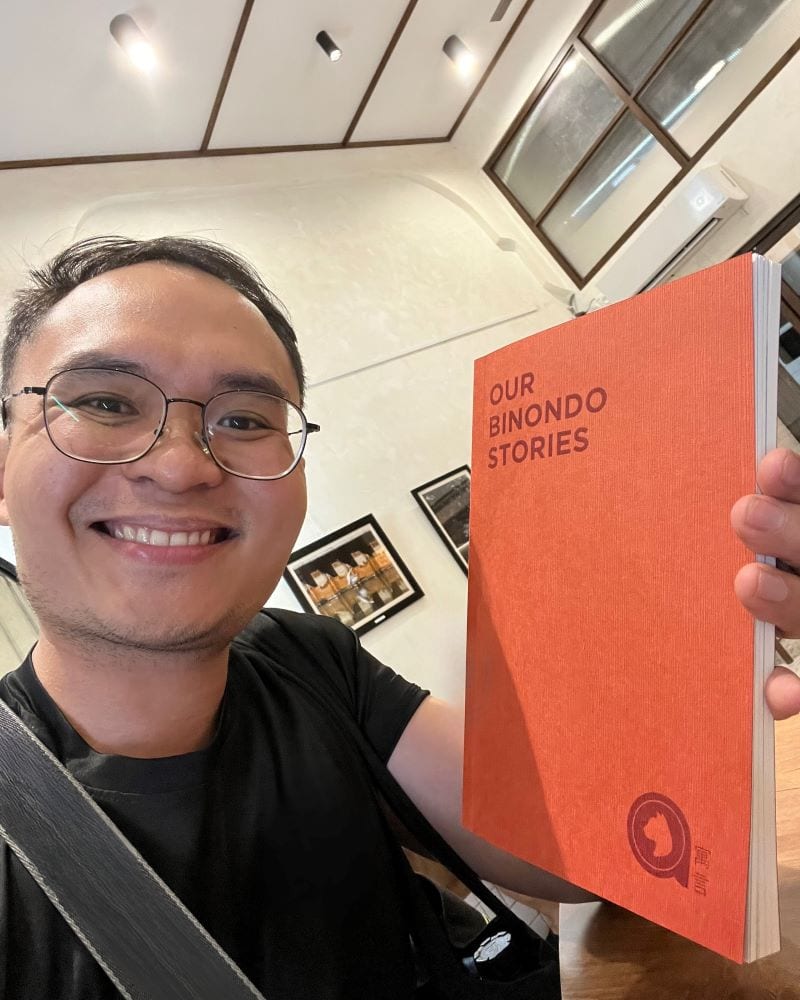
To locate the beat of a city's specific neighborhood and to feel its buzz and hum, one must visit and get to know its people, taste the food they serve, and observe and learn, one step at a time. In "Trails of Binondo," Stephen Pamorada—another proud Tsinoy, staunch cultural advocate, tour guide, and force behind the Heritage Collective—maps out the cultural fabric of Binondo through its architecture, religious sites, and gastronomic heritage, highlighting attractions and curiosities that collectively define Manila’s Chinatown, and condenses them into a sort of listicle and travel guide. All these sites he mentions in his list can be discovered by wandering Binondo’s welcoming and meandering streets in a pedestrian adventure.
ALSO READ
25 Photos of Binondo Through the Years
How Binondo Became the World’s Oldest Chinatown
Meanwhile, Jan Sy's photo essay distills in visual form the palpable fragments and subtleties of Binondo through its architecture and the curious urban specificity of the district as darkness envelops the skies. While we know the familiar beat and lively buzz of Binondo during the day through its dense and perpetually busy streets, the night offers a different feel and sense of place. In the context of urbanscape photography, Sy effectively frames the atmosphere and qualities of this district, highlighting what makes it distinct and memorable.
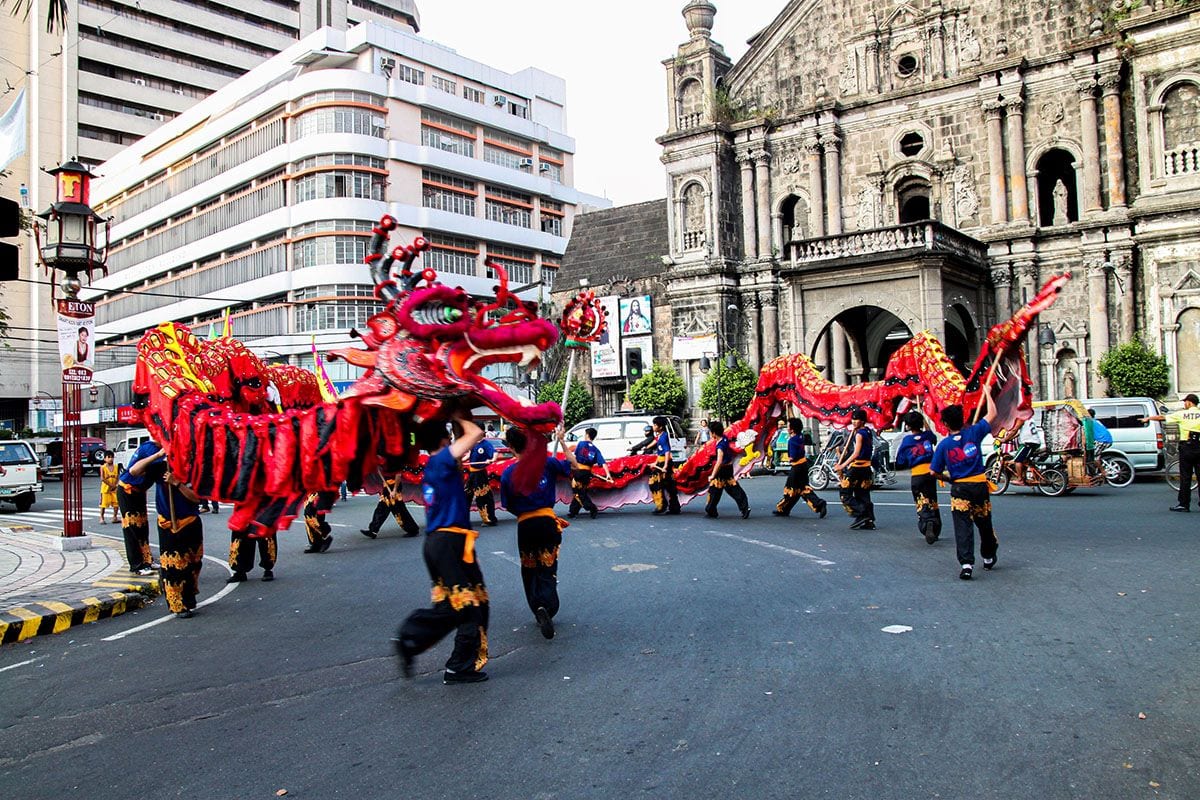
The Binondo Church, with its distinctive bell tower, is a reminder of the district's rich past.
For her part, Kenny Tai shares humorous and engaging illustrations that poke fun at stereotypes, cultural caricatures, and popular associations—idiosyncrasies often linked with the Filipino-Chinese community. Tai runs AKIM / Manila Girls, an online page where she produces digital art content akin to Pol Medina's "Pugad Baboy," but with a Powerpuff Girls flair. Here, she personifies different districts in Manila through her characters, offering her mild commentaries and views.
But this book is not just a one-way literary engagement; generous blank pages are tucked between the features, inviting readers to create their own personal memories. It's also a volume that you can easily slip into your bag for a quick read on the go.
As a district, Binondo will always be acknowledged for its distinct history, milieu, and collective sensibilities. Though it is steeped in traditions, there is also a constant feeling of renewal—a vibrant depth and a beat like no other. It's always good to rediscover and renegotiate what we already know. Beyond the immediate practical aim of informing readers about Binondo and the Tsinoy community, it's important to note that this enclave is an essential part of the broader narrative we know as the Filipino story. On your next Binondo adventure, it’s good to have this book as a guide.
Those interested to get a copy of the book may order via this link.
