
Han Kang Is the First South Korean Writer to Win the Nobel Prize


ILLUSTRATION: Igi Talao
South Korean writer Han Kang was just awarded the Nobel Prize in Literature "for her intense poetic prose that confronts historical traumas and exposes the fragility of human life." This was announced on October 10 by the Svenska Akademien in Stockholm, Sweden.
Han Kang is the first South Korean author to win the Nobel and the 18th woman out of the 121 individuals awarded since 1901.
ALSO READ
How Bob Dylan Makes Sense of His Nobel Prize in Literature
Rappler Founder Maria Ressa Wins Nobel Peace Prize
Who is Han Kang?
Han Kang was born in Gwangju, South Korea, in 1970, and her family moved to Seoul when she was nine.
Her journey into the world of words began at a young age, influenced by a household filled with books, thanks to her novelist father. Her literary path was paved with early successes, debuting as a poet in 1993 with the publication of her poems in the literary magazine Literature and Society.
Han quickly transitioned to prose with her short story collection, Love of Yeosu, in 1995. This marked the beginning of a prolific career that would see her delve deep into the human psyche and the complexities of existence, including the novel Your Cold Hands (2002), which also shows the author's interest in visual arts.
Han's literary prowess is perhaps best exemplified by her novel The Vegetarian, which earned her the prestigious International Man Booker Prize in 2016. The novel, which is written in three parts, is a profound exploration of isolation, societal norms, and personal rebellion. At the center of it is protagonist Yeong-hye, who decides not to eat meat. This refusal is rejected by both her husband and father, while her brother-in-law becomes obsessed with her. When Yeong-hye is committed to a psychiatric clinic, her sister intervenes and attempts to make her submit to the "norms." It paints a vivid picture of the protagonist's journey into self-imposed isolation, challenging the reader to contemplate the cost of non-conformity. This work was her first to be translated into English, introducing her unique voice to a wider audience and catapulting her into the global literary spotlight.
'The Vegetarian' (Hogarth, 2023) by Han Kang
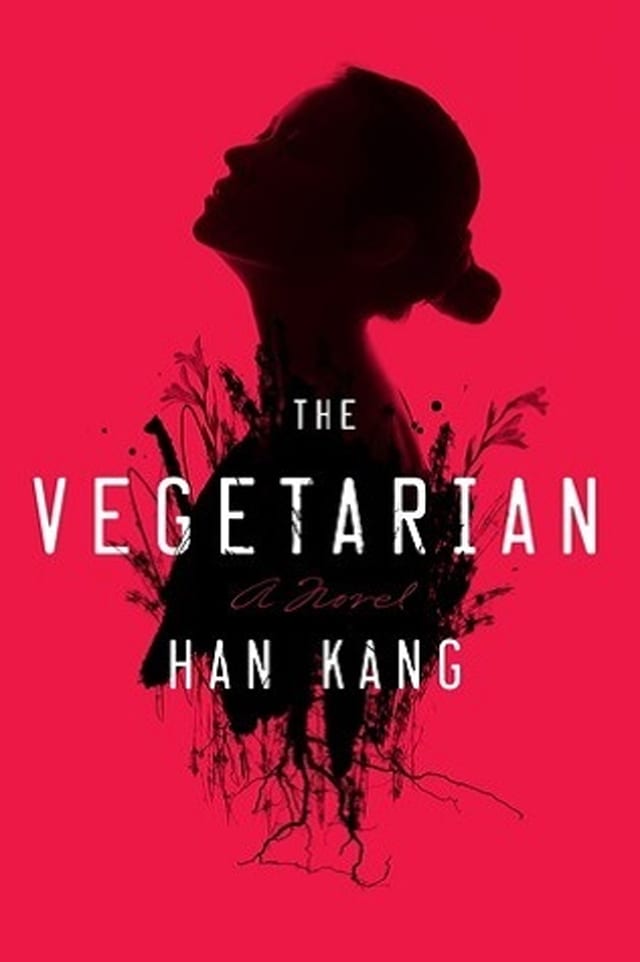
In a telephone interview with Jenny Rydén of the Nobel Prize, Han Kang described the process of writing The Vegetarian as particularly challenging as it spanned three years. During this time, she wrestled with shaping the protagonist and the characters surrounding her, all while vividly capturing the imagery of trees, sunlight, and the world she inhabited. These difficult years seemed to heighten the intensity of the novel’s atmosphere, with every detail coming alive in the author’s imagination as she worked to bring the story to life.
Her subsequent works continue to explore themes of loss, grief, and the human condition. The Wind Blows, Go (2010) is a novel about friendship and artistry that also delves into longing for transformation. Human Acts (2016), a poignant narrative set against the backdrop of the 1980 Gwangju Uprising, shifts Han's focus from personal to historical trauma, illustrating her versatility as a writer.
Meanwhile, The White Book (2017) offers a deeply personal meditation on loss by using the form of an elegy dedicated to the narrator's elder sister, who died shortly after birth. We Do Not Part (2021) is closely connected to The White Book, in which it takes a look at the mourning process of the narrator and her friend Inseon, both living with the generational trauma of a massacre that took place a long time ago on Jeju Island. Through these narratives, Han Kang demonstrates an uncanny ability to weave personal and collective histories into her storytelling.
In her latest novel, Greek Lessons (2023), Han explores the metaphorical and literal loss of voice and sight. A woman grappling with personal tragedies turns to the study of ancient Greek, seeking solace in a language that is both dead and alive. This novel is a testament to Han's literary dexterity, as she uses language as both a tool of expression and a source of anguish.
Han Kang's writing is imbued with poetic sensibility, a testament to her roots as a poet. Her works often blur the lines between prose and poetry, creating a lyrical quality that enhances the emotional depth of her narratives.
Her contribution to literature extends beyond her own writing. She has played a pivotal role in the global recognition of South Korean literature, contributing to a cultural renaissance that encompasses both literature and film. Her works, translated into numerous languages, have resonated with readers worldwide, bridging cultural divides and fostering a deeper understanding of the human experience.
Winning the Nobel Prize in Literature
"Someone called me and he talked to me about this news, so of course I was surprised. And I just finished dinner with my son and in Korea, it’s just eight o’clock in the evening. So yeah, it’s a very peaceful evening. I was really surprised," she told Rydén.
When asked about being the first literature laureate from South Korea, Han Kang expressed a deep connection to Korean literature. Having grown up surrounded by books in both Korean and translated works, she mentioned that literature has always been an integral part of her life. She emphasized the collective influence of writers, particularly those who have spent their lives searching for meaning. Whether lost or determined in their efforts, these writers' strengths and struggles have deeply inspired her throughout her life.
She hoped that this achievement would be a source of pride for Korean literature readers, fellow writers, and friends.
How the Nobel Laureate in Literature Is Selected
According to Ellen Mattson, a member of the Swedish Academy and of the Nobel Committee, the Nobel Prize in Literature entails a system of nomination. Scholars, critics, spokespersons for literary organizations, and other academics from all over the world are entitled to nominate. The Nobel Committee then selects from these names, starting with a very long list of more than 200 names until they narrow it down to five writers.
"These five candidates – that’s where the real work starts for us in the committee and for the whole academy. The committee read everything by these five writers – reading, thinking about what you’re reading, evaluating, and explaining very clearly how you think about them.
Then, the job starts, and we have to work ourselves towards one candidate. And this will happen through discussions but also by voting," Mattson said in a piece published on The Nobel Prize website.
