
Pagtitipon-tipon: A Gathering of Regional Art Spaces and Initiatives

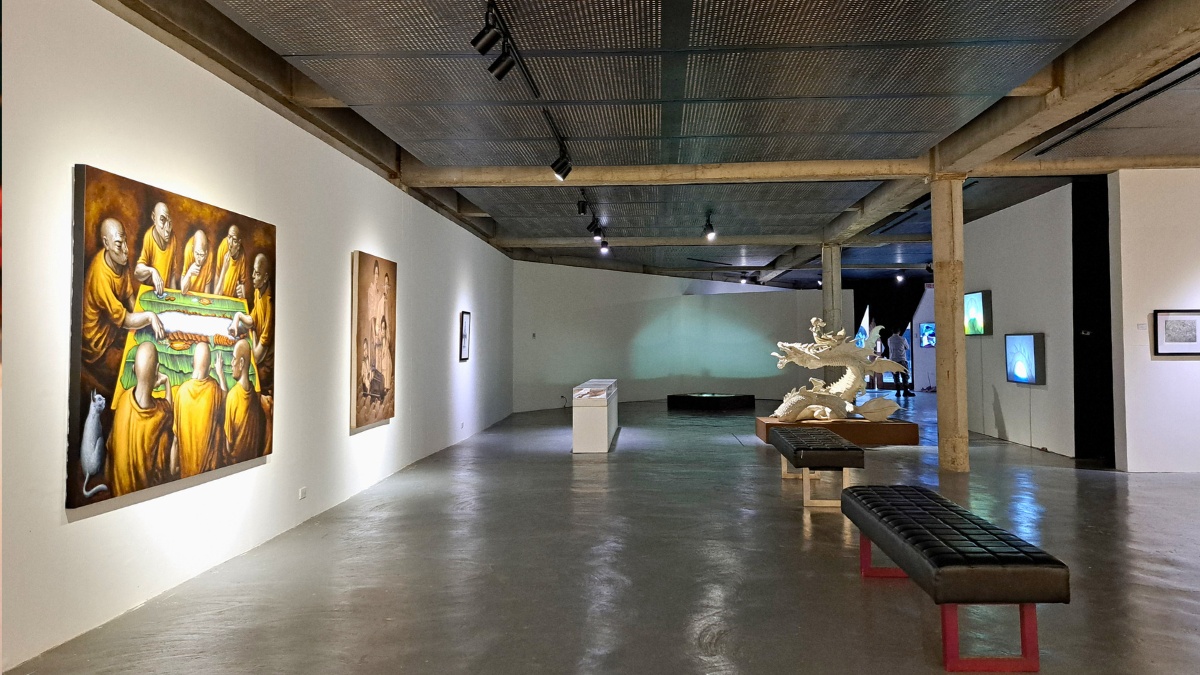
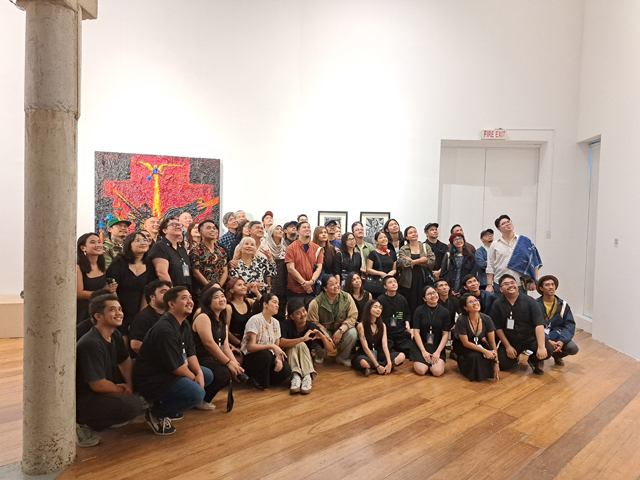
Orange Project hosted and partnered with Project Space Pilipinas, Agos Studio, Eskinita Art Farm, Linangan Art Residency, Pasilyo Press, and Tungtung Alon Art Foundation for the exhibition Pagtitipon-tipon, which runs from September 19 to November 8. The gathering is a significant one for contemporary art as regional sites and practitioners state strength, solidifying their collaboration and stance in an attempt to stimulate the growth of contemporary art practice in the country.
ALSO READ
Ironies of Colonialism and Diaspora in Contemporary Art
Quiet Identities in the Printmaking Practice of Imelda Cajipe Endaya
Contemporary in the Regions
Regional contemporary art practice is continually developing, particularly with the perspective of decentralizing powers and institutions in the arts. One of the earliest regional spaces dedicated to contemporary art practice is Orange Project in Bacolod City, Negros Occidental, founded in 2005. Shortly after this is Project Space Pilipinas, created in 2007–initially located in Mandaluyong City in Metro Manila–but moving to Lucban, Quezon, in 2012, where most of its significant developments happened.
Several artist-run initiatives and spaces would follow, including the collaborators in the exhibitions. Each with their own background and struggles in the art world, they approached their spaces based on the needs they experienced as practicing artists themselves. Such an approach opened up the regions to contemporary art practice–where traditionally, the expectation was to find traditional, indigenous, or handicraft souvenirs in regional sites. Expanding on what can be created, sold, talked about, historicized, and theorized are some of the key dynamics of the different initiatives, nuanced by each of their different contexts.
Curatorial Approaches
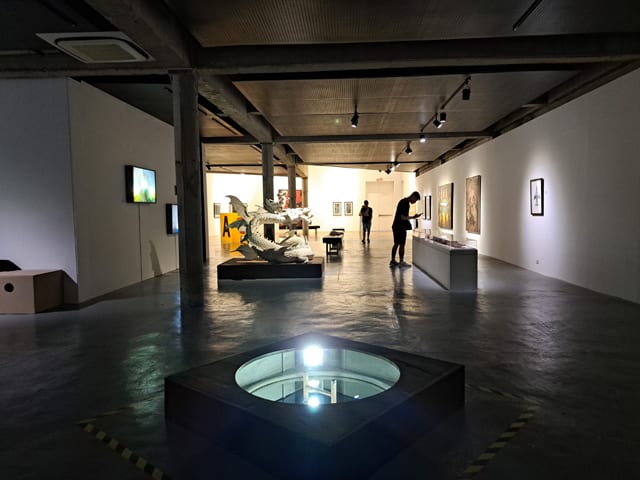
Visually, Pagtitipon-tipon, as curated by Leslie de Chavez, founder of Project Space Pilipinas (PSP), is a beautiful show. The first floor of Orange Project includes the works of the founders of the initiatives–most of whom have a background in social realist practices, grounding them in the community they grew up in and created. The sheer strength in individual pieces demonstrated decades of experience, control of the chosen medium, deep immersion in sociopolitical narratives, and confidence in the practice. The scale of the works matched Orange Project’s massive space, taking the viewer on a visual and experiential journey through the artworks.
The second floor features younger artists who are members of the different initiatives. With more participants and diversity in mediums and approaches, the challenge of cohesiveness can be felt in the space. Yet, the approach gives an idea of young artists' current and diverging practices across regions–from wall-bound works, prints, video, installation, sculpture, and participative assemblage. The theme itself, pagtitipon-tipon (roughly translates to gathering), lends itself well to loosely putting together perspective. The initial engagement and dialogue are present, where the goal is to put them together and invite interaction rather than featuring individual works themselves.
Moments of Reflection
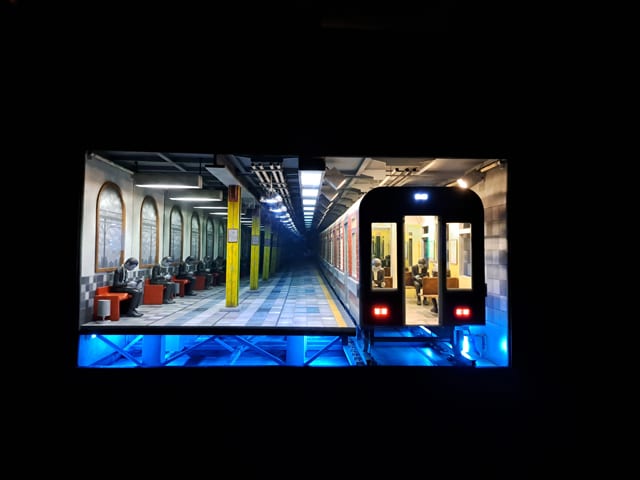
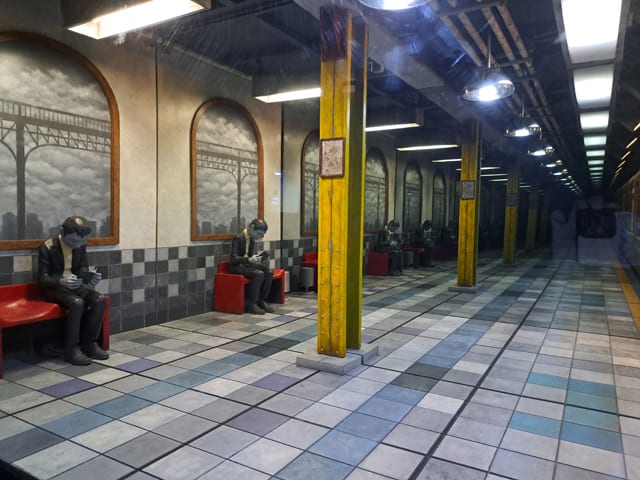
The exhibition successfully creates moments of contemplation in the exhibition space. Mark Justiniani’s earlier works from 2014–"Hole and Transit" are still mesmerizing, even a decade later. "Hole," on the first level, is one of the first works to demand attention, as if inviting the viewer to go down, looking into the mechanics and metal bars of working underground. Enclosed in a room is "Transit," evoking a depressive state of aloneness and disengagement as one goes around the city using the train system. In tangent with Justiniani’s body of works–the ideas of struggle and isolation in labor are key elements in the melancholy of his projects.
'Transit' (2014) by Mark Justiniani
'Doctrina Bakunawa' (2014) by Joy Mallari
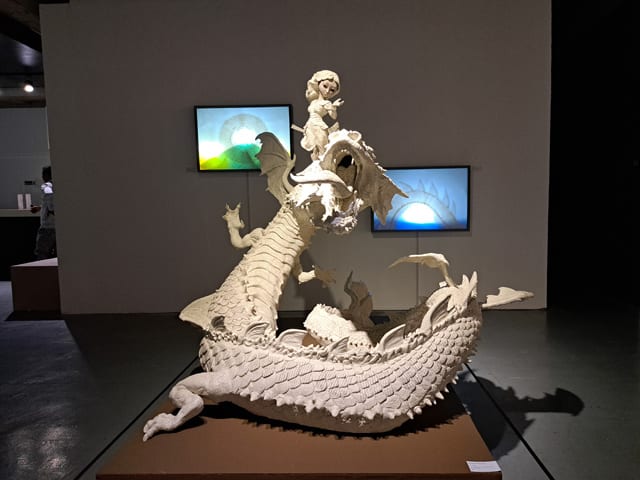
Another captivating piece on the first floor is Joy Mallari’s large-scale sculpture "Doctrina Bakunawa," also from 2014. The play on colonial roots as it interacts with local histories and myths is provocative. The powerful imagery invites a reflection on the intersections of remnants of coloniality and folklore that keep pre-colonial beliefs and stories alive. The feminine, often depicted as meek and submissive since colonial times, was presented as powerful, riding the serpentine-dragon-like creature and confronting the viewers. Justiniani and Mallari founded the youngest initiative in the group, the Tungtung Alon Art Foundation.
Elmer Borlongan’s 2024 work, "Salu-Salo," gives a more direct link to the narratives of Pagtitipon-tipon–gathering together over a meal. Borlongan founded Pasilyo Press, currently based in San Antonio, Zambales. It is meant to be a center for printmaking practices, but it also anchors artists and printmakers together in the community. Borlongan’s engagement with printmaking is notable, tying together his social commentaries with the portability and fragility of paper-based works. Yet his oil painting grabs attention, attuned to the gathering of the regional groups–through meals, art making, and conversations–and disrupting the status quo of the art world.
'Salu-Salo' (2024) by Elmer Borlongan
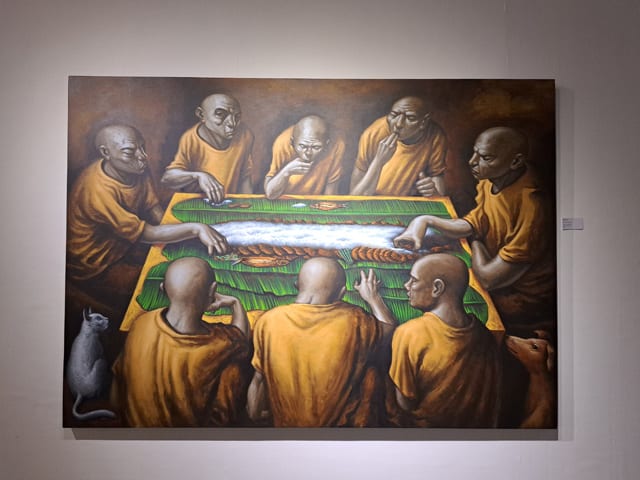
Mentorship and Collaborations
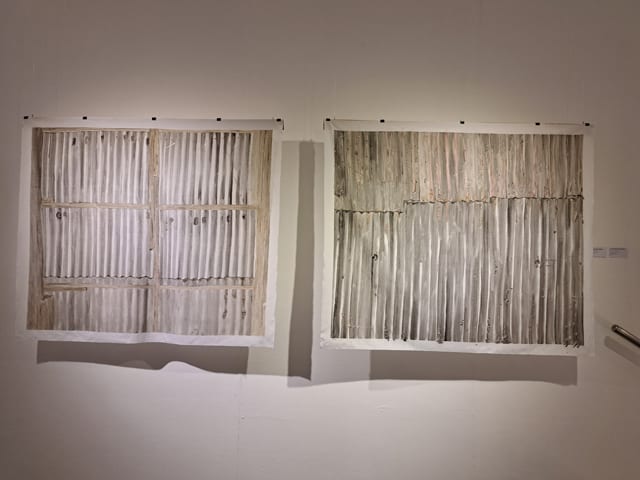
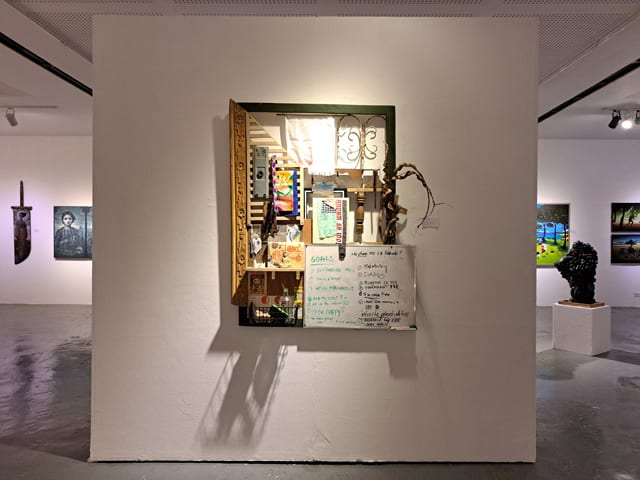
The second floor, featuring the younger artists of the art groups, is more loosely tied together–but gives the impression of energy and potential. Immediately catching attention are the more experimental works of female artists. Beatriz Rogas’ "Corazon "(2024) features intricate beadwork, more commonly used for decorative pieces and fashion design–yet traversing the limitations and presenting a commentary on womanhood and motherhood. Alynnah Macla Tadeo’s monotype on fabric "Ang Aking Tabing (ilalim)" and "Ang Aking Tabing (ibabaw)" (2024) invites a rethinking of situatedness, the impressions of yero–usually galvanized sheet, common roofing and sometimes wall materials for light homes in informal settlements. Margaux Blas’ "Beware of Dog" (2024) is one of the few interactive pieces in the exhibition–inviting the audience to think, reflect, and play.
'Corazon' (2024) by Beatriz Rogas
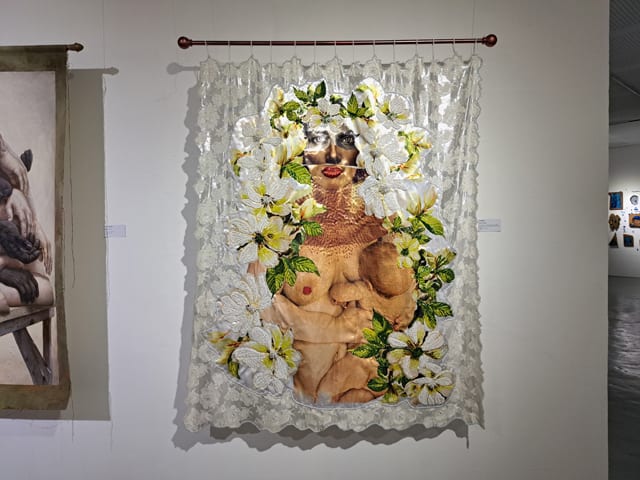
'Ang Aking Tabing (ilalim)' and 'Ang Aking Tabing (ibabaw)' (2024) by Alynnah Macla Tadeo
'Beware of Dog' (2024) by Margaux Blas
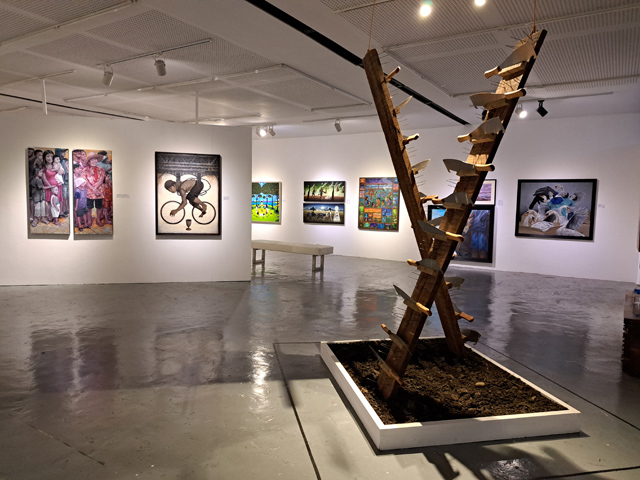
Renz Baluyot’s "Pureza" (2024), first seen in the Art Fair Philippines Residency Exhibition earlier in the year, is another highlight. Having more space than its earlier iteration, the materials for sugar harvest create a statement on the historical labor struggles and, at the same time, the ongoing labor disputes and difficulties. Sugar was historically contentious and continues to be so, as labor remains a complicated issue in the country. The Pagtitipon-tipon artists visited Victorias City, Negros Occidental–the site of St. Joseph the Worker Chapel and Alfonso Ossorio’s Angry Christ mural. The sugar plantation and milling company remains operational, and access to the chapel is restricted. Baluyot’s "Pureza" is a reminder of where they are and the scars underneath the site’s grandeur.
'Pureza' (2024) by Renz Baluyot
Path Forward
Embedded in Pagtitipon-tipon is the idea of gathering together to create art, produce new knowledge, start explorations, and collaborate as artists and communities. Beyond the exhibition walls and artworks is a sincere effort of the community leaders and the younger artists they work with. The plans to continue exhibiting and producing smaller-scale collaborations are interesting. Engagement means looking into shared growth and struggles–from the simplicity of sharing resources such as a particular type of paint or getting information on where affordable supplies are to the extent of lending a helping hand in the most challenging circumstances.
Aside from the tour in Victorias City, the founders of the initiative delivered lectures on art practice, art history, and community works; initiated production workshops, including printmaking and ceramics; visited residencies in the area; and opened several dialogues reflecting their positionalities art artists, artists in the regions, contemporary artists, and the complex dialogue of local artistic practices. As notable as the exhibition is, the engagement, collaborations, and difficult conversations are key focal points that anchor the program.
There are challenges to face–including the ideas of deconstructing Philippine art history to look into regional practices and networks, expanding art education with a consciousness for inclusivity at all levels, enriching visual and cultural literacy, encouraging critique and art writing, providing spaces and resources so artists can continue their practice, and all the practicalities of running spaces and collectives. The project and ideas are promising, and small disruptions to the grand arch of artistic practice are welcome changes. Collaborating among the regions is something to observe, learn from, and experience.
Pagtitipon-tipon runs until November 8 at Orange Project, Art District, Lopue's Annex Building, Lacson Street, Bacolod, Negros Occidental.
