
The Making of an Artist: The Whys and Hows in Silke Lapina's Bakit Pa

The pop ballad song "Bakit Pa," composed by Filipino songwriter Vehnee Saturno, has solidified actress-singer Jessa Zaragoza as one of the prominent household divas from the 1990s to early 2000s. Zaragoza's style was inspired by the American singer Tony Braxton, according to an interview with Saturno. Her deep, sultry, thick tone— a resounding outcry of heartbreak and pain—stood out at a time when powerful voices that can belt dominated radio airtime. Zaragoza’s popularity soared to the point where even a noontime TV show held an impersonation contest in her honor, cementing her status as a pop culture figure and even a gay icon. It was a moment in Philippine entertainment.
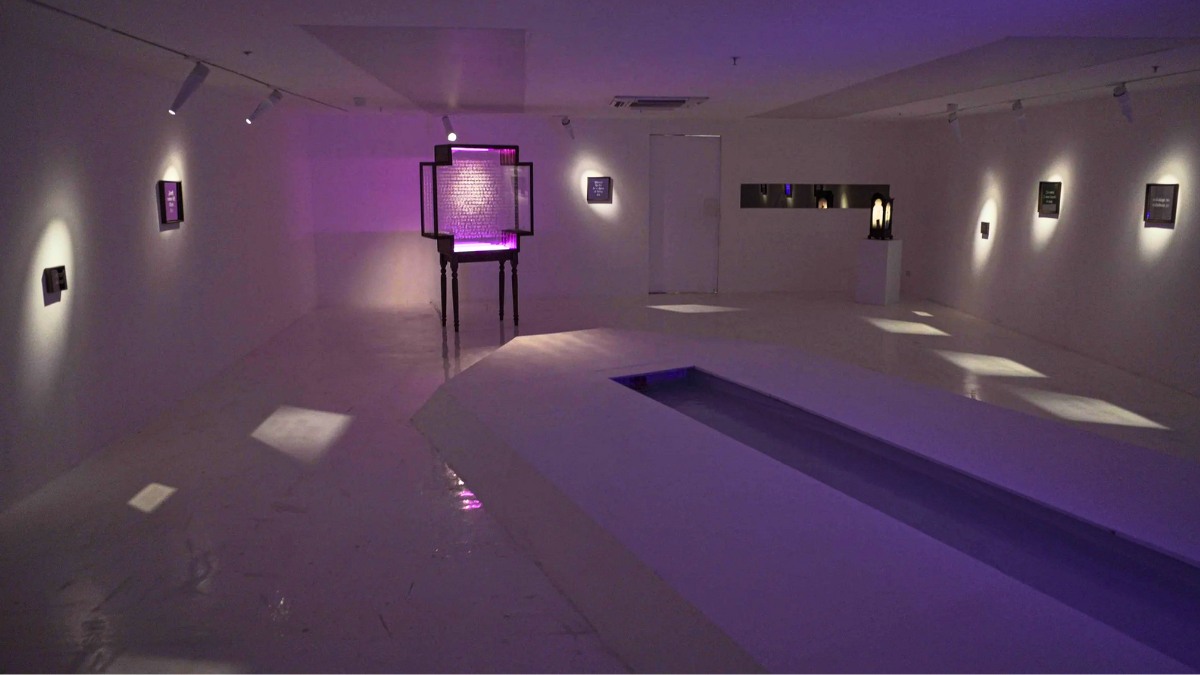
Bakit Pa by Silke Lapina (Edoweird Gallery, 2025)
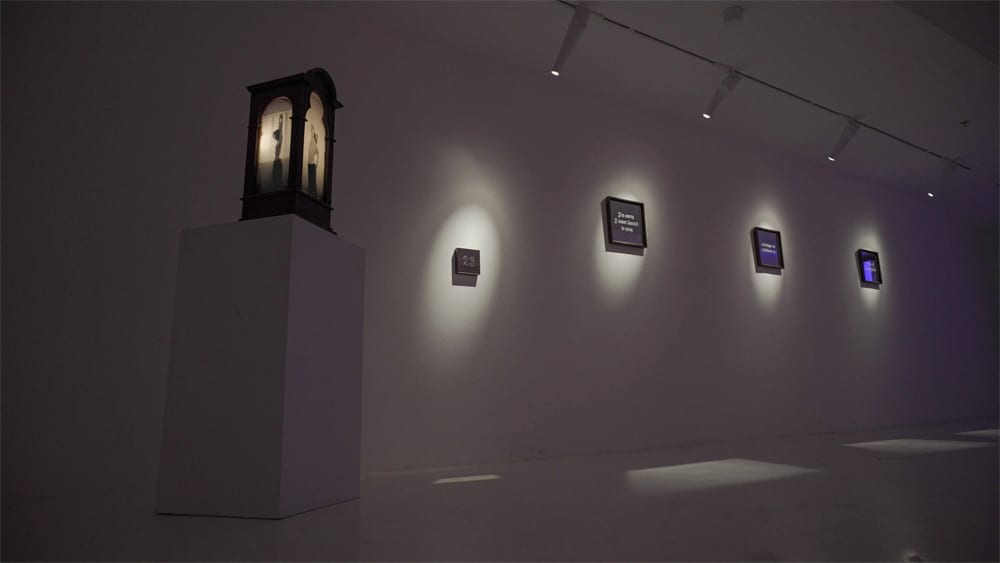
Bakit Pa is also Silke Lapina's second solo exhibit in the Philippines, held from March 1 to 28, 2025, at Edoweird Gallery in Quezon City. It was curated by Erwin Romulo. Her debut exhibition in the country was JESUS, which ran from February 21 to March 21 in the same year at Gravity Art Space. Bakit Pa earned the German-Filipino artist a slot in the shortlist of the 2025 Ateneo Art Awards - Fernando Zóbel Prizes for Visual Art.
ALSO READ:
Ateneo Art Awards 2025 Announces Shortlist of Artists and Writers
Vien Valencia's Perimeter Stays Within Bounds
Interpreting the song within a religious framing—as opposed to understanding it as an anthem of misery and desperation in love, and outside its popular contexts—comes across as a playful yet seemingly forced attempt by Lapina to reconnect with her roots. Making a direct reference to Zaragosa's "Bakit Pa," she falls into the same trap and danger of romanticization.
The self becomes the central subject of the exhibit as she touches on identity, religion, and queerness to the point that it borders on a fetishized view—revealing how certain perspectives continue to operate within white fetishistic tendencies to demystify something that resists or seeks no demystification—when both religion and queerness are deeply embedded in the Filipino consciousness as lived experiences. In fact, in this contemporary time, it is noticeable that many queer artists unburden themselves from solely embodying queerness in their works and artistic practice. There is no pressure to self-profess and perform queerness on their part, nor to be baptized in public and proclaim being queer.
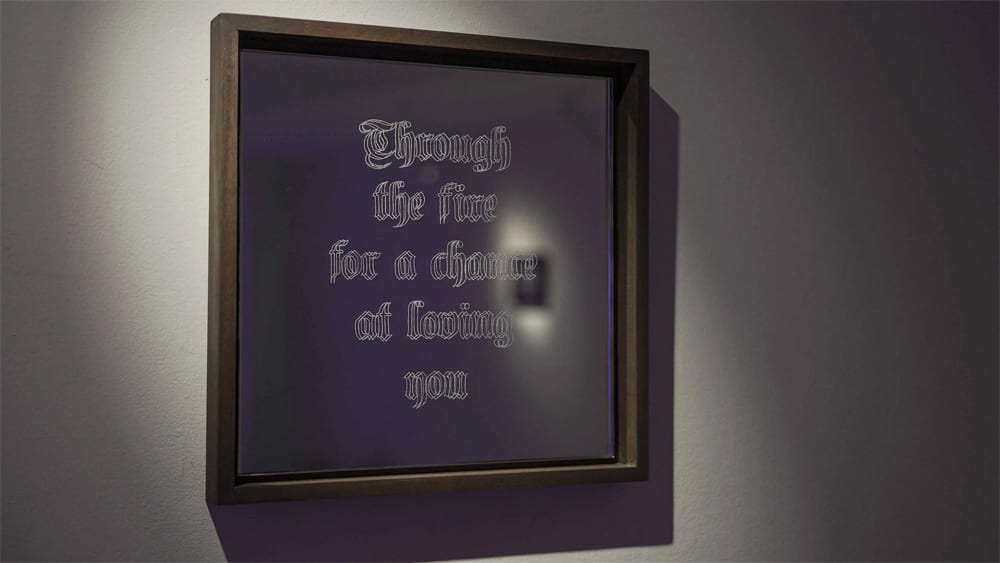
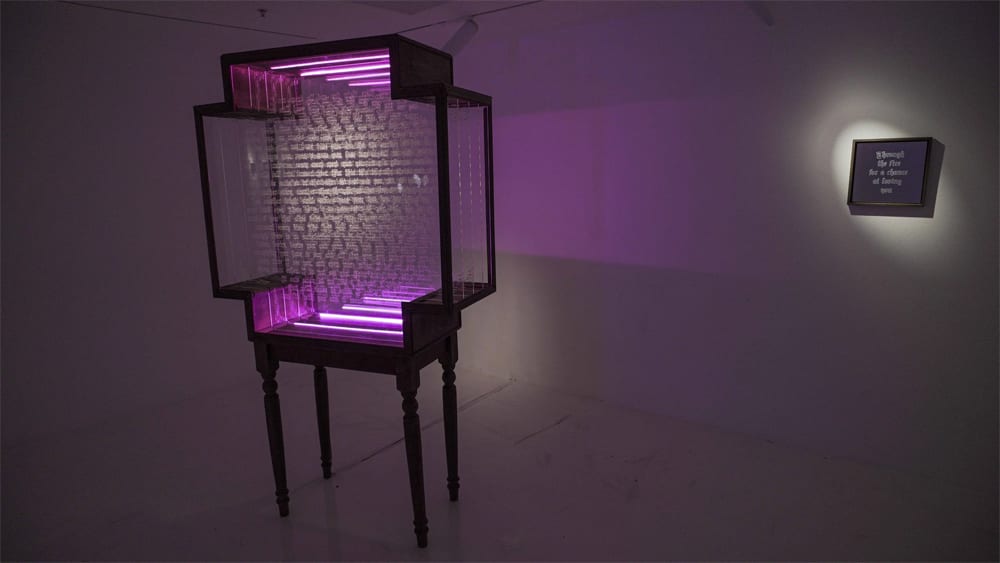
The use of language in the exhibition as a point of departure is not solely enough, as it proves lacking given the breadth of ideas the show attempts to address. On one hand, it could have been about language when words as concepts already bear a multitude of meanings to be unpacked. Consisting of works such as the inscription of folkloric and religious texts on mirrors, an urna with her self-portraits, and a moving image of a priest transitioning back and forth between male and female forms—this body of work, her process, and choice of materials reflect the early stages of her practice, and of trying her hand at art-making. More so, Lapina appears to struggle with instilling confidence in her works, resorting to the spectacular installation of a water pool where she underwent a baptismal rite.
Lapina's Bakit Pa—marked by the acquisition of her works into a private collection—puts her claim about inclusion and spirituality, and as an artist in the diaspora, into question: Why now? And more so, to quote Zaragoza, bakit pa?
Months after the acquisition of the works comes the nomination of Lapina at this year’s Fernando Zobel Prizes for Visual Arts by the Ateneo Art Awards. This serves as a major feat for a relatively new artist in the Philippines, but at the same time, raises questions about the merit of Lapina’s solo exhibition. What does this nomination mean for artists who have long been practicing and exhibiting significantly across the regions in the Philippines? Is this indicative of how the art market and award systems increasingly play a central role in shaping artistic legitimacy and visibility?
The works in the exhibition, ironically, tend to be didactic, overtly intellectualizing rather than intently posing questions and prompts for contemplation. Throughout the run of the exhibit, Lapina invited the University of the Philippines Singing Ambassadors Choir to perform and take on their own rendition of "Bakit Pa." Perhaps, what Lapina misses is the beauty of singing one’s heart out to the song—nasally impersonating Zaragoza’s distinct voice at a karaoke session. Only a Filipino queer or gay person would know.
Some of the works from Silke Lapina’s Bakit Pa are on exhibit at the Ateneo Art Gallery until December 7. Winners of the Ateneo Art Awards will be announced at the awarding ceremony on October 5.
James Luigi T. Tana is an independent curator and writer focusing on contemporary art. In 2024, he was awarded a competitive travel grant by CiMAM, an international association of museum experts, where he is an active member. He was selected by the Liverpool Biennial and British Council to attend a curator’s networking and development week at the 13th edition of the Liverpool Biennial, the UK’s largest festival of contemporary visual art. He co-curated Moments of Delay (2025) and Adaptation: A Reconnected Earth (2023), and was the project manager for various exhibitions from 2019 to 2024 at the Museum of Contemporary Art and Design (MCAD) in Manila.
