

About the Patience of Ordinary Things Explores the Transformative in the Mundane

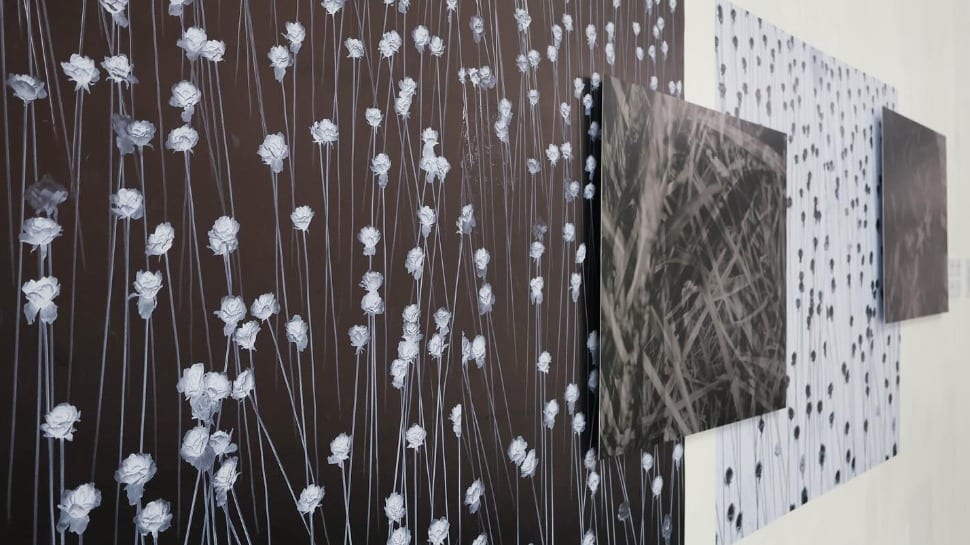
Predictability isn't a popular movement. In a world that's gotten itself in such a big hurry, the predictable order of things is perhaps thought of more as a boring anti-virtue, as the American novelist John Updike once stressed. More often than not, people opt for the loud and brazen, hoping to be astonished or bewildered or shocked or, on a base level, be stimulated.
Being still has become foreign in the age of hyperconsumption, hyperproductivity, and hyperawareness. The average man finds it hard to sit with himself even for a minute, which is no accident. Under our current conditions, peace, more often than not, whether in the personal or the material, is penalized. Calmness has become a form of escapism from this induced catatonia present in our lives today.
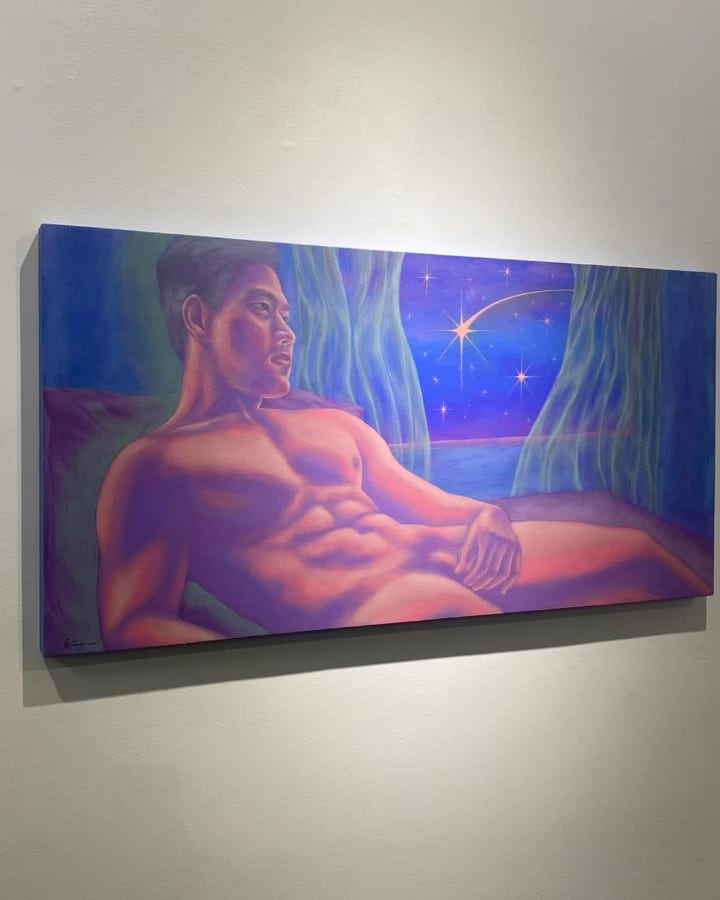
"Until the waiting ends" (2024) by Gelo Zarsuelo, Acrylic on Canvas.
It's a kind of care that codes how we ought to live through and appreciate the passage of time. In the case of About the patience of ordinary things, the exhibition explores the gestures and materialities that shape different ideas of caring.
Its title, of course, is borrowed from the seminal poem "The Patience of Ordinary Things" by Pat Schneider. As curators Alain Zedrick Camiling and Gian Carlo Delgado note, it's a poem of exquisite simplicity that acknowledges "the nature of an individual object as itself together with its relation with other materials." Much like the poem, the exhibit celebrates the ordinariness of concepts and objects—and the correlation between recognition, connection, and this sacred, ever-elusive quiet.
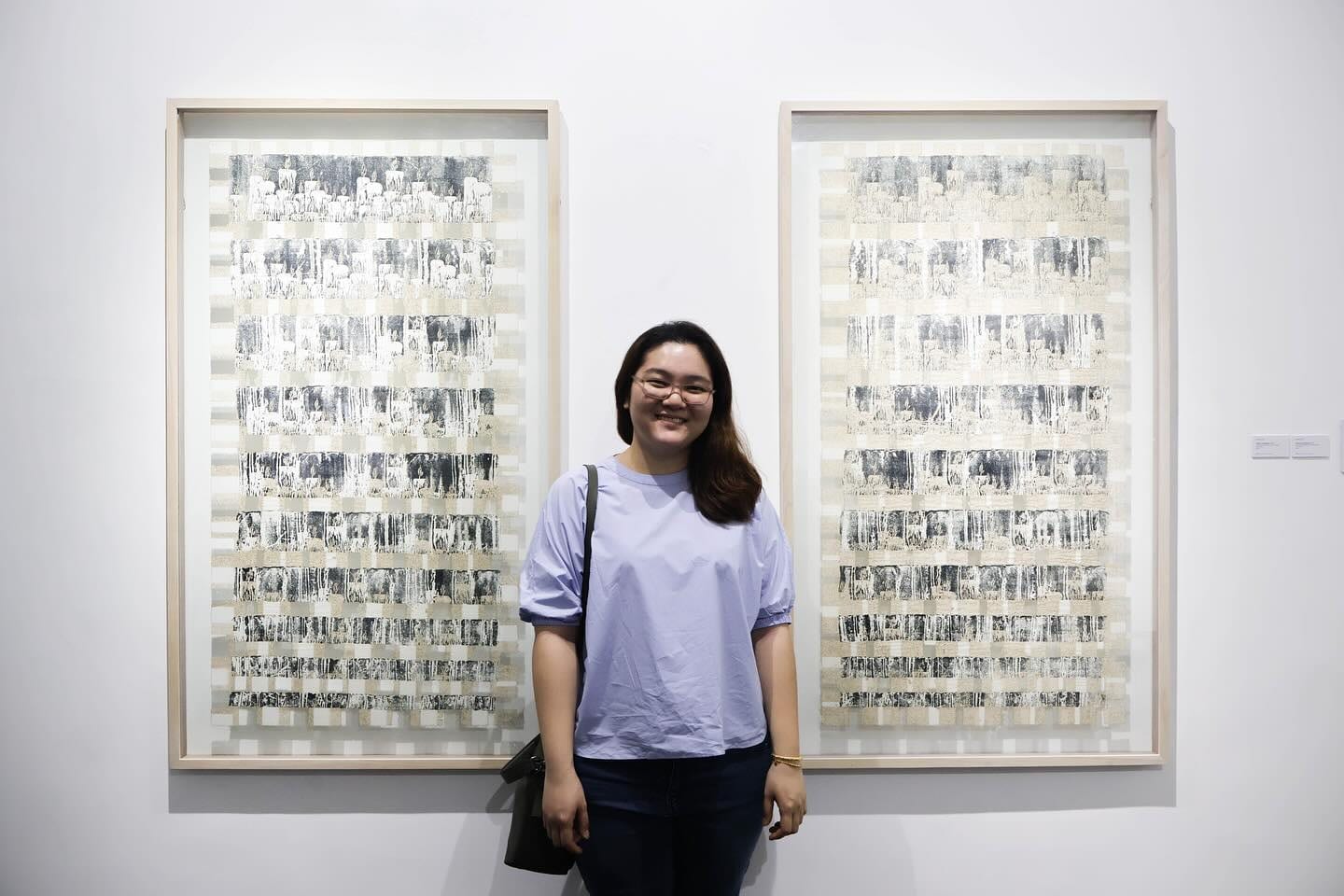
Artist Julienne Ng posing with "Traces of evidence."
Kat Grow, Jezzel Wee, Veejay Villafranca, Gelo Zarsuelo, Hershey Malinis, and Julieanne Ng, among other selected artists here, offer viewers delicate expressions and creative practices. Camiling and Delgado opted for a selection whose works typified such meditative, ritualistic, metaphorical, visual, material, physical, and spatial articulations of caring.
ALSO READ:
This Artist Is Helping Preserve the Dying Art of Repoussé in the Philippines
The Power of Presence and Interconnectedness in Jana Benitez's 'Wild Silence'
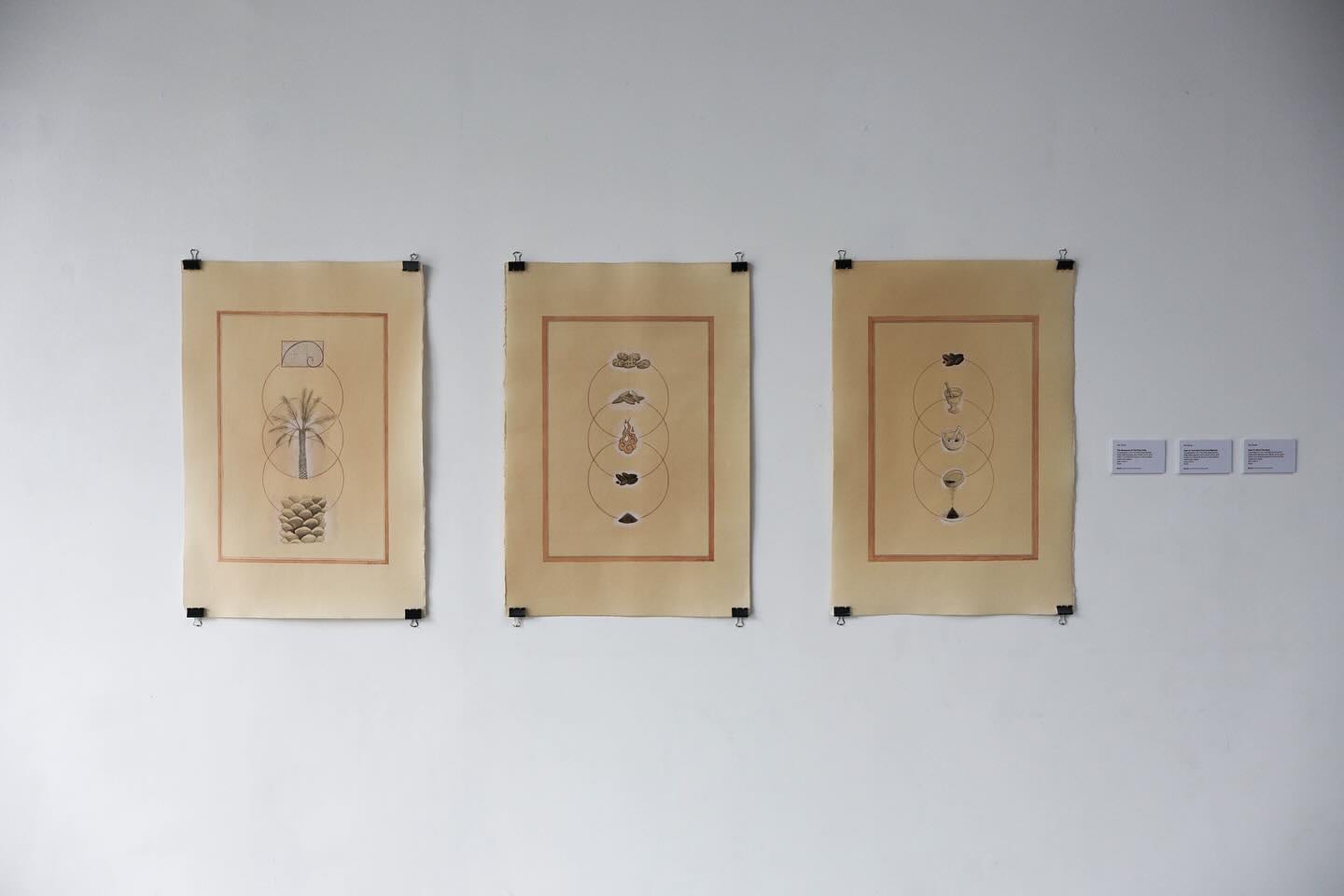
So what's with the dates? We might wonder when first laying eyes on the bowls of dates. The process-based visual artist Kat Grow responds to the exhibit's inquiries into care with some good, old date fruits. The artist has long had a practice inclined toward pigment as allegories. And her works here are no different.
Her "The Sequence of The Date Palm," "How To Turn Date Fruit Into Pigment," and "How to Grind The Seed," are emblematic of the sustenance that comes from ritual and tradition, presented in varied stages. She examines the cyclical nature of the fruit's becoming, dissecting the ways it becomes what it ought to be as art, food, or simply as a product produced by the phenomenon of the natural world.
Grow, for the better part of her career, has devoted herself to learning about pigments and dyes, understanding the methods of production from both a traditional and spiritual perspective. For this exhibition, she looks at dates, which, of course, have pigments like anthocyanins and carotenoids. And it is with these distillations that Grow creates and allows this enriching placidity.
"The Sequence of The Date Palm"; "How To Turn Date Fruit Into Pigment;" and "How to Grind The Seed," Date seed pigment, zinc white, ochre, gum arabic, and graphite pencil on tea-stained watercolor paper, 2024.
Ceramic artist Jezzel Wee, on the other hand, engages in the discussion by way of Masshiro porcelain and cotton yarn. In three separate parts of "Counting Threads and Hammers," Wee authors a collection that tackles the degrees of reflexivity in the process of making the said works. The Rotation of the wheel. The hammered surface of the clay. The stitches of the yarn. Found within these pieces are the contrasting and at-times complementary tactilities of this practice.
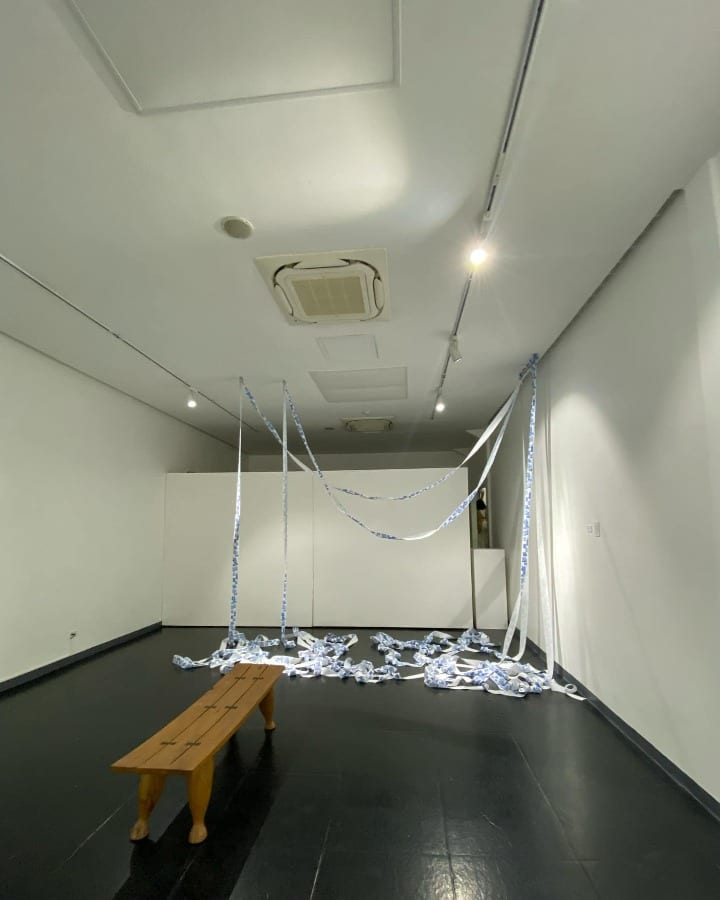
Likewise, Hershey Malinis offers an ardent and rewarding take on the tangible by investigating a common Filipino proverb in the "Saan Aabot" series, reminding us of the quiet power found in the most overlooked and forgotten objects. Making use of rubber-cut print on receipt rolls, the print installation interrogates what it means to endure through societal, human, and economic constraints.
Questions such as "How much is required to support a family of five in a lower middle-income country?" or "What does it take for a person to live in a metropolis under the minimum wage?" prompted the installation. The receipts look into the realities of the daily wage earner and sachet culture, where they are forced to opt for "tingi" as a matter of both nourishment and survival.
Seen in Malinis' installation are receipts for the usual grocery items, like instant noodles, rice, condiments, etc.
For Julienne Ng, critiquing capitalism means dissecting our culture of excess and the entrenchment of our spaces. "Traces of evidence" navigate the dimensional qualities of materials, looking at their intrinsic values and potential. In this set of Xuan paperwork, in which she used incense to create a sort of textural archiving of perception, Ng reinterprets the function and evolving context of our neglected objects, their relationship to our being, and the structures that birth them.
In "Until the waiting ends" Gelo Zarsuelo speaks of the introspection that comes with care (the same kind of reflection evident in the composition of Schneider's poem). Bathed in the glow and quietude of dawn, the male subject's gaze is symbolic of a certain muted awakening we all experience every now and then, a glimpse of the sublime in the simple maybe. As the voyeur, he finds solace in appreciating and nurturing this contemplative moment of stillness, and the environment that cradles it. After all, what is more generous than a window?
About the patience of ordinary things is on view until August 3, 2024, at the Altro Mondo Creative Space. Gallery hours are from Tuesdays to Saturdays, from 10:00 a.m. to 5:00 p.m.
