
The Secret Ingredients to Chef Nobu's Success

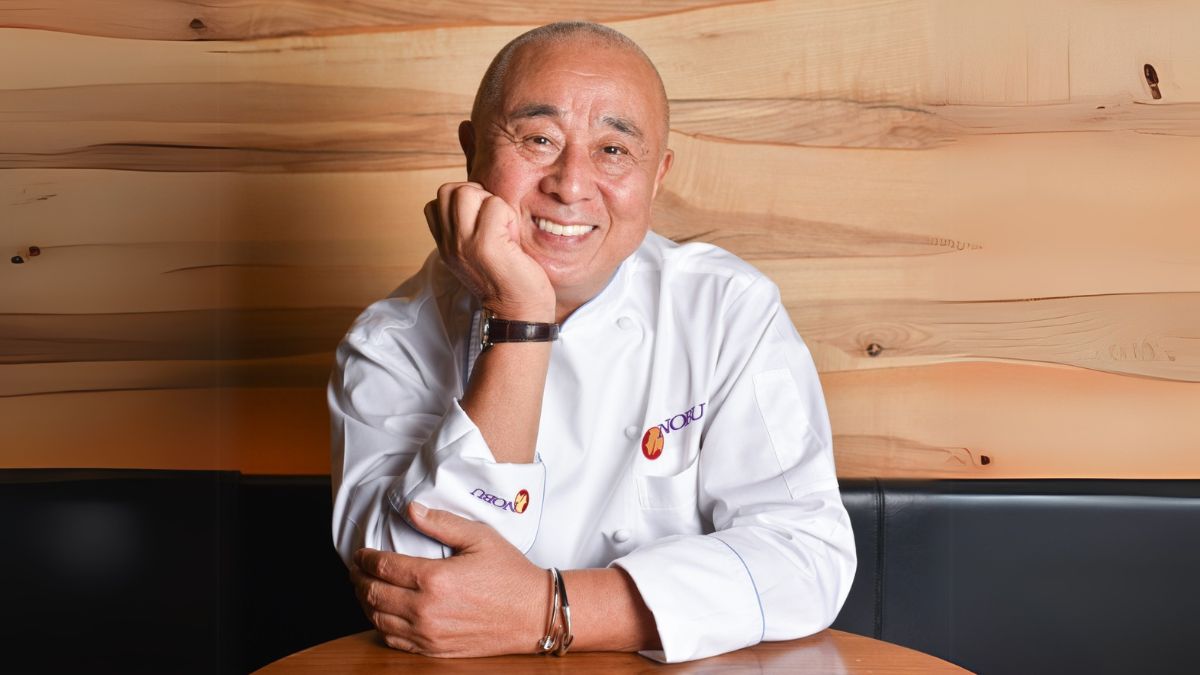
There’s a story that Chef Nobuyuki Matsuhisa—popularly known as Nobu —always recounts about his start in the culinary world. In 1966, Nobu was 17 years old and working at Matsuei-sushi in Tokyo doing jobs such as dishwashing and food delivery. One of the chefs, probably seeing how eager to learn Nobu was, gave him a broken knife and told him he could keep it if he could fix it.
Young Nobu fixed the knife and upon showing it to the chef, the chef took it back forgetting their agreement. Early on, Nobu learned that life wasn’t always fair even if you worked hard. Nobu possessed grit and a genuine longing to make people happy. He was an empath and these qualities helped him build the empire that is the Nobu Hospitality Group today.
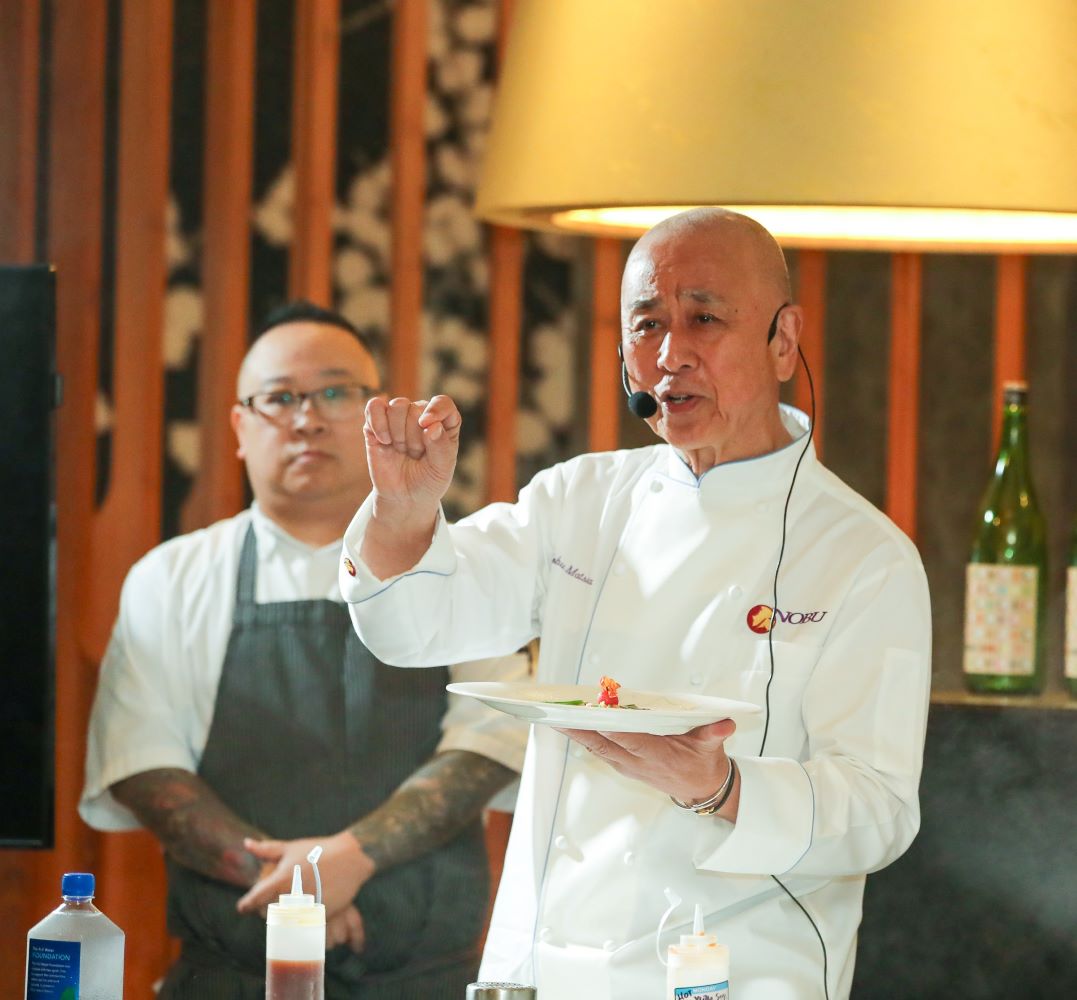
Chef Nobu Matsuhisa's sushi-making demo at Nobu Manila
Currently, with an impressive 50 Nobu Restaurants, 11 Matsuhisa Restaurants, and 38 Nobu Hotels around the world, Nobu continues to grow with accolades and awards, Michelin star no less. When asked what it takes to garner a Michelin star, he zeroes in on the question and answers, “If we get a Michelin star, I’d be happy to take it. Michelin star is prestigious for the restaurant. But for me, my Michelin star is when a customer comes in, we serve them food, and the customer starts smiling. That is my Michelin star.”
The Best Omakase According to Chef Nobu
The Nobu Hotel in Manila, located at City of Dreams, just celebrated its 10th anniversary. To mark this special occasion, Chef Nobu hosted a special two-night intimate dinner, his first visit to Manila since 2019. He served his iconic dishes, including Shima Aji sashimi—raw white trevally with a surprising (and controversial) hit of jalapeño and cilantro—topped with a bright yuzu soy sauce. He also presented his most imitated dish, Black Cod Miso, fish marinated in sake and miso and then broiled until flaky.
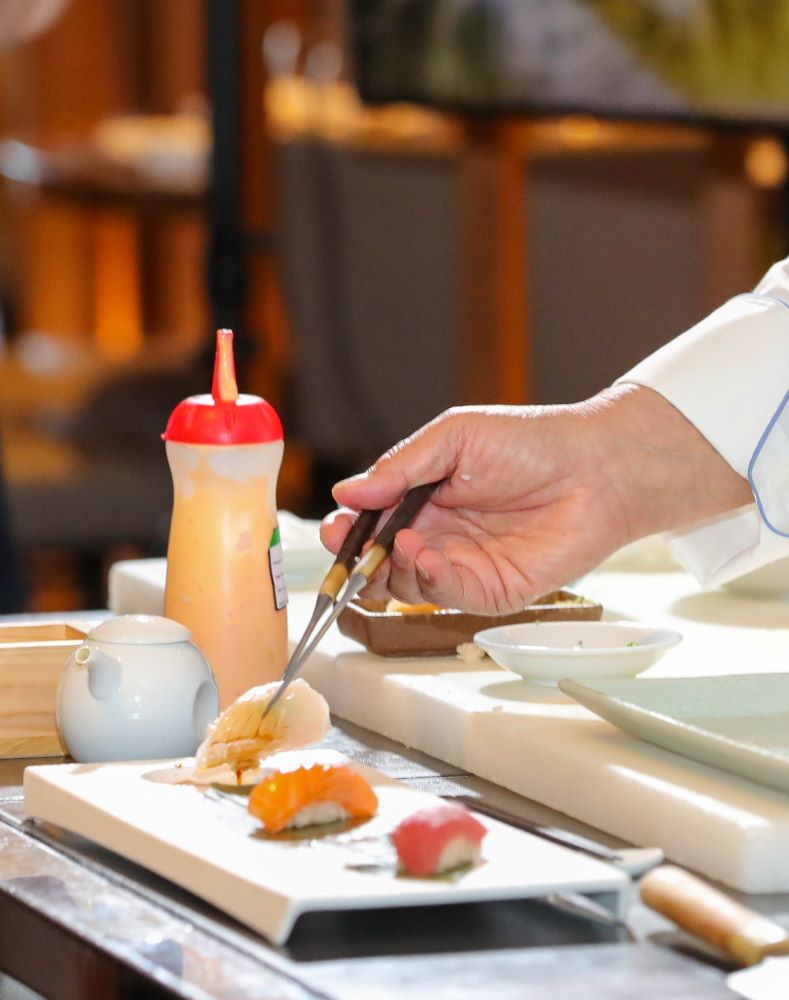
A selection of nigiri prepared by Chef Nobu during the sushi-making demo
His flavor combinations, he calls his own and hates being labeled as fusion. With an obvious Japanese sensibility touched with Peruvian ingredients (having spent approximately three years in Lima, Peru, in his early years), Chef Nobu is continuously in search of new flavors. “I’m always traveling to so many different countries and I experience different cultures and food. Sometimes I get ideas from reading books. Many times, I stay at the restaurant and have conversations with my guests. I ask them what they look for in the food and they tell me. I get ideas from these conversations,” he reveals.
ALSO READ
Gordon Ramsay on Sinigang, TikTok, and Learning to Become the Most Unselfish Chef on the Planet
To Win a Michelin Star, Chefs Need to Find ‘Beautiful Flavors,’ Says Chef with Seven Stars
To anyone who has experienced Nobu’s omakase, you will know that it is truly an art form with each course building up to a crescendo. “Omakase is usually six, seven or eight courses. From beginning to end, I always look for music or harmony. I like to start light and quiet—maybe raw fish. Then one by one, it gets heavier. Everything, including the dessert, should be in harmony. That is the best omakase,” he believes.
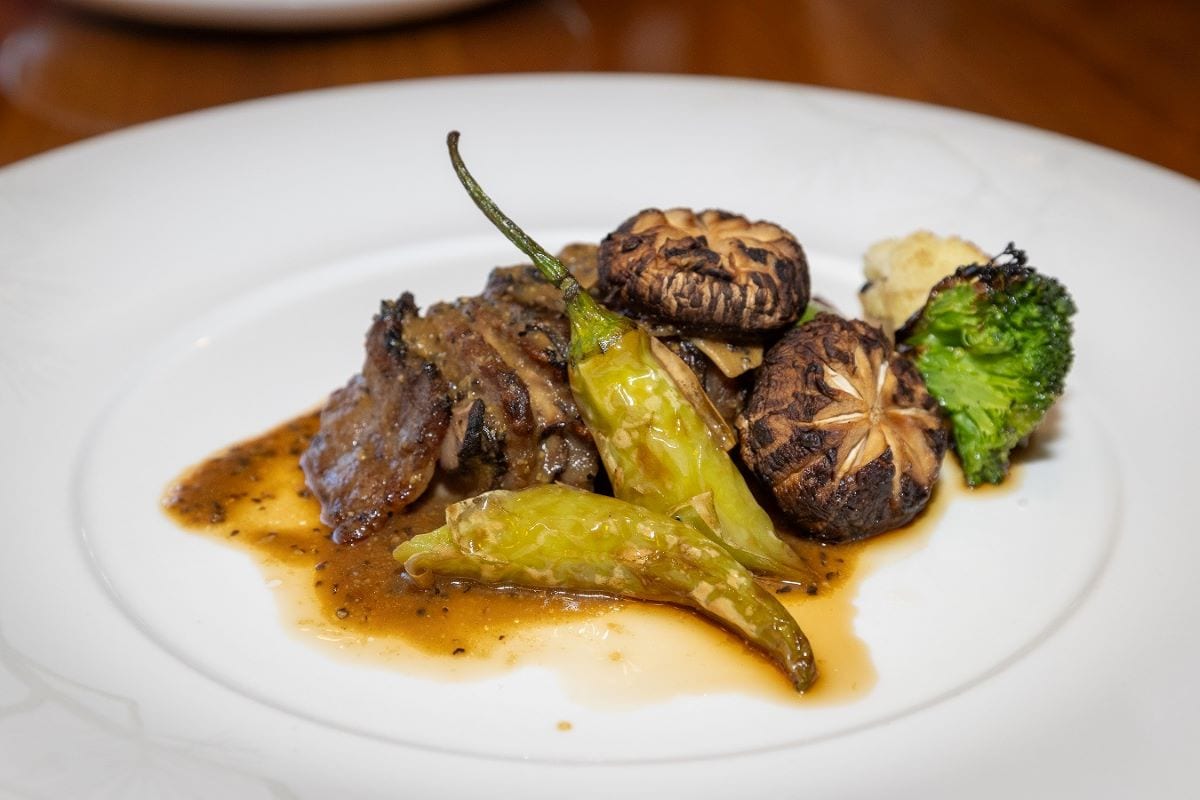
Fifth course in "Art of Omakase" by Chef Nobu: Wagyu Beef, Shiitake Millefeuille, Seasonal Vegetables, Wasabi Pepper Sauce
Japanese Hospitality
Lasting for 30 years is no small feat, not to mention being able to maintain the high standards his restaurants are known for. “Maybe I’m a lucky person because Nobu keeps growing,” he says humbly. “I say I’m a lucky person because I have a great team. My team is like family. Some have been working with me for a long time, so they know the quality of food, the quality of service and my philosophy. My philosophy is to always make the customer happy.”
Sixth course in "Art of Omakase" by Chef Nobu: Matcha Coconut (Coconut Dacquoise, Matcha Ice Cream, and Coconut Mascarpone)
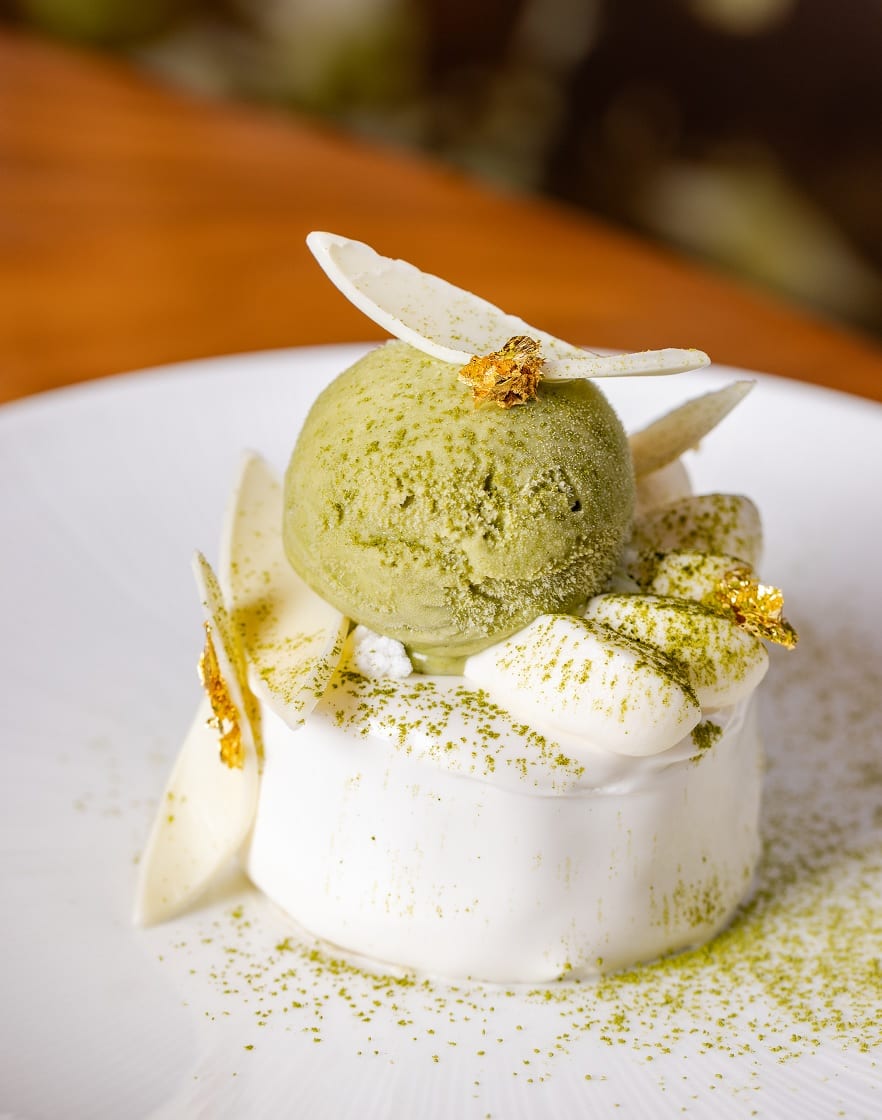
One way he keeps people coming back to his restaurants and hotels is his commitment to the Japanese concept of omotenashi. Roughly translated as wholehearted and mindful hospitality, the kanji of the word goes deeper. It is composed of the words omote (meaning public face) and nashi (meaning nothing or without), suggesting hospitality with no hidden motives. Japanese tea ceremonies done in front of the guests are rooted in this philosophy.
“Omotenashi is a very traditional way of Japanese hospitality. I know how it is to be a customer when I go to another restaurant. So when I started my own business, I always think of the customer’s side. Omotenashi means to make the guest as happy as possible. With every dish, I always like to do more detail. Hot food must be served hot and cold food must be served cold. This is a very small detail, but on the customer’s side, it will make them happy,” Nobu explains.
“If we get a Michelin star, I’d be happy to take it. Michelin star is prestigious for the restaurant. But for me, my Michelin star is when a customer comes in, we serve them food, and the customer starts smiling. That is my Michelin star.”
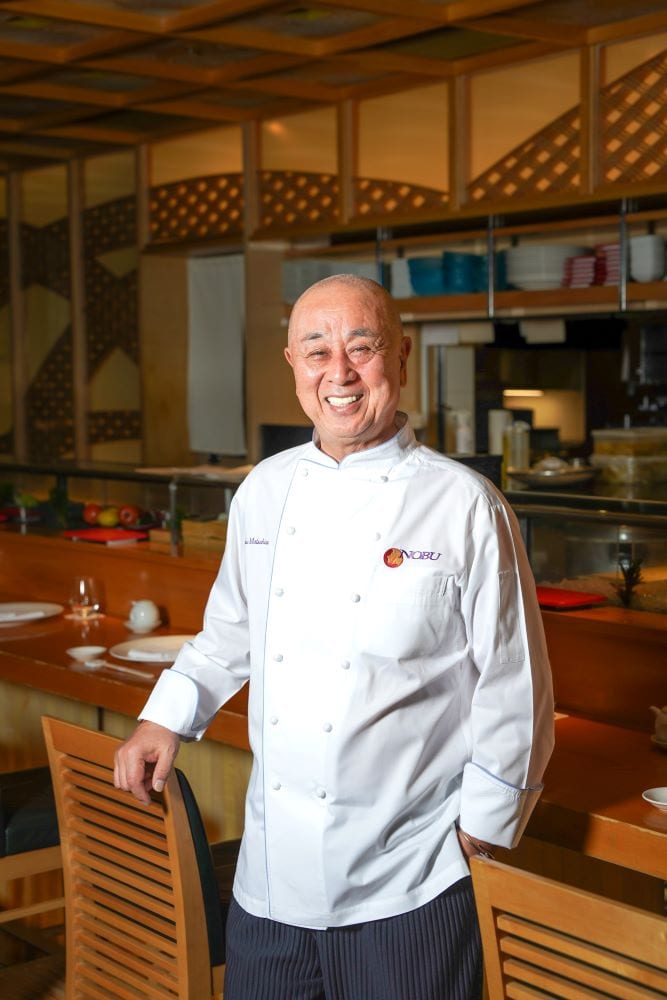
Beyond doing the right things perfectly, an important aspect of omotenashi is the intention and heart of the host. No task is too small if it will bring joy to your guests. Nobu’s “New Style Sashimi” was invented because he wanted to please one guest who didn’t want to eat raw fish. The sashimi was sent back to the kitchen and Nobu had to think quickly to modify the dish to make the customer happy. He grabbed hot oil from the stove and poured it on the sashimi, lightly searing it. The customer loved it and apparently so did many others, as it has stayed on the menu as one of the chef's most iconic dishes.
One thing is consistent with Nobu: he always puts himself in the guest’s perspective. His empathy runs deep allowing him to anticipate his guests’ needs even before they do. The knife he fixed when he was a mere 17-year-old could have been his, but at the time, Nobu may have thought the chef may have needed it more than he did.
