
The Night Sinigang Surprised Me

My introduction to Fatted Calf was a three-hour lunch with my girlfriends, where we laughed and cried over roasted beef and cinnamon rolls. So it felt like a reunion of sorts when I recently met up with Chefs Rhea and Jayjay Sycip at the new location of their restaurant for the Fatted Calf × Restaurant Fiz Collaborative Dinner at the Tagaytay Food Festival 2025. This time, they joined forces with Chef Hafizzul Hashim, the mind behind Restaurant Fiz, Singapore’s Michelin-starred, Green Star gem. The match couldn’t have been more intriguing. I was excited to see how the couple's homestyle farm-to-table approach worked with Chef Hashim’s fascination for Southeast Asian dining traditions.
A celebration of local ingredients and regional traditions
The selection of starters set the tone for the evening: local ingredients elevated by beloved cooking techniques and traditions. The adventure began with catfish skin fried to a crisp and topped with smoked milkfish mousse, pickled red onion, and a delicate torch ginger gelée.
Next was a bite of luxurious brioche—the sweetness of Century Egg Kaya playing off the sophistication of Caviar Oscietra. Kinilaw na Papaya graced a tartlet of dry aged local sea bream spiced with kaffir lime oil. The last of the starters, a fried siopao chicken asado packed quite a punch, with the taste of the black garlic sambal rising to the surface. There was a distinct progression in the aggressiveness of flavors, as if one starter prepared the guest for the next. It was fun!
First course: Rellenong Alimasag
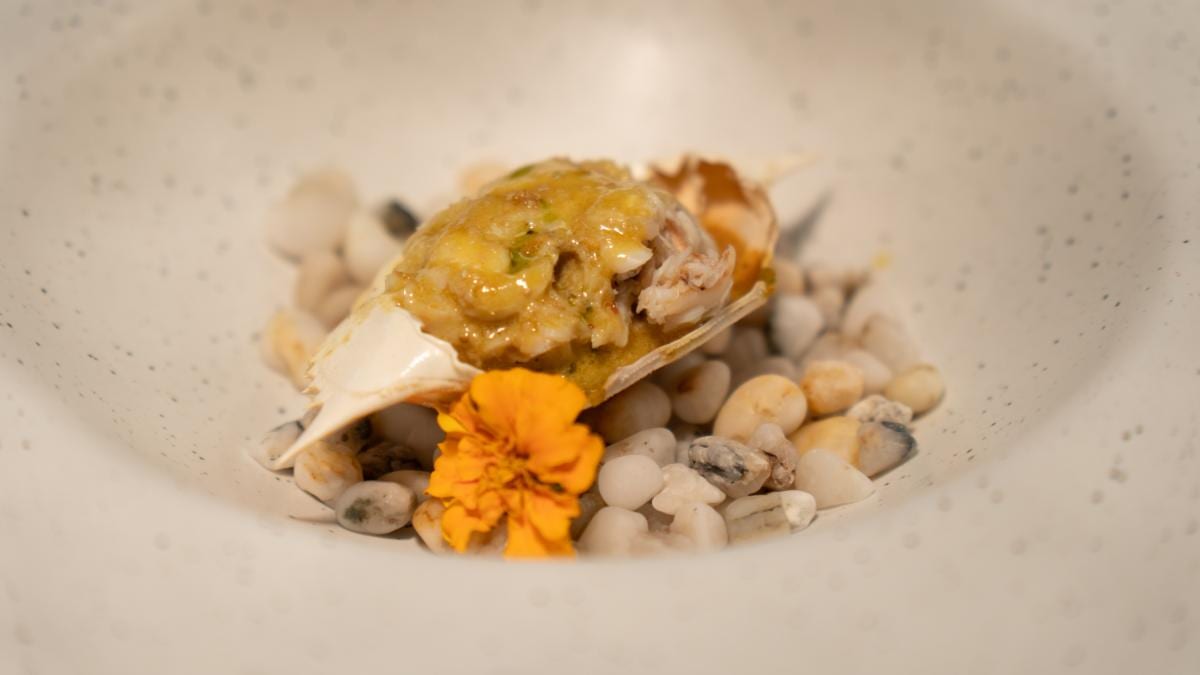
The first course of Rellenong Alimasag looked deceptively familiar. Mixing the crab meat with the aligue sauce, however, unearthed a turmeric custard hugging the shell. A spoonful of everything together released a burst of umami flavors. I would encounter such surprises in the next two courses.
Second course: Nasi Lemak
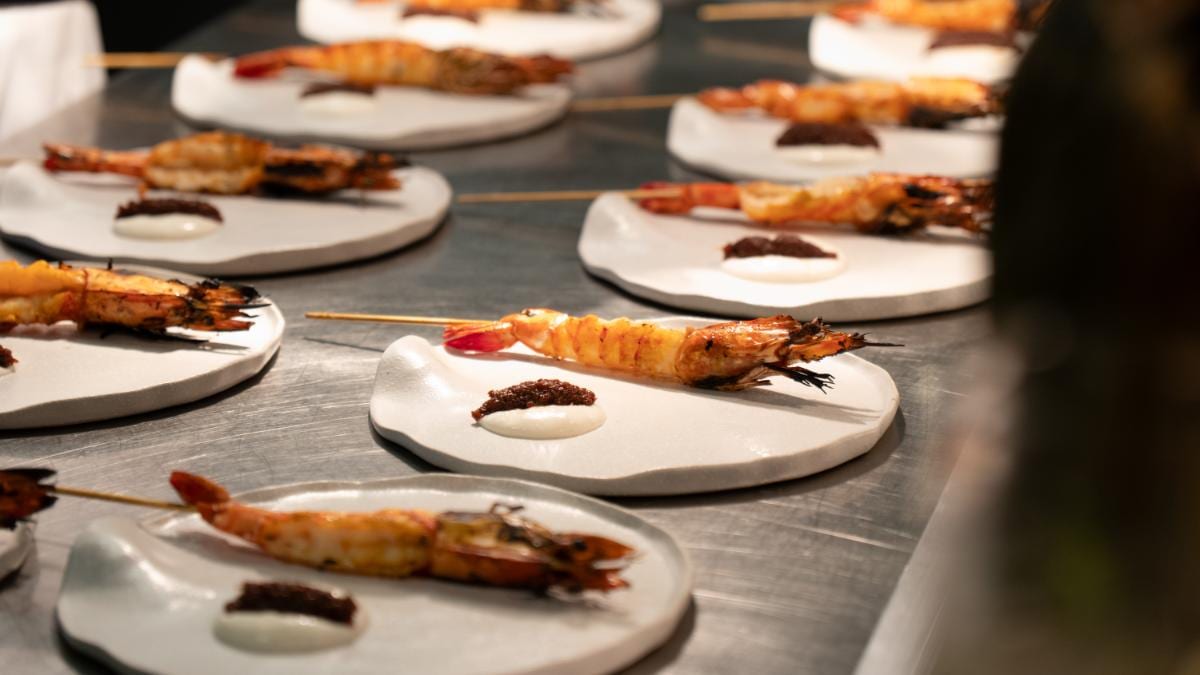
The second course had me peeling the skin off a grilled prawn with my hands, as suggested by Chef Hashim. Dipping the meat onto the nasi lemak and sambal tumis was deliciously primeval, and the tasting did not disappoint. The nasi lemak, cooked in coconut, ginger, and pandan, was subtly spicy in its creaminess, but the sambal—oh the sambal—had a deep, invigorating spiciness. Chef Hashim told us that it was cooked for six hours in a charcoal stove, and it was worth every minute.
Third Course: Padas Sinigang
ALSO READ
A Culinary Tour of Zamboanga, Basilan, and Tawi-Tawi at Hapag
Amado Forés Announces Major Updates for AF Hospitality and Cibo
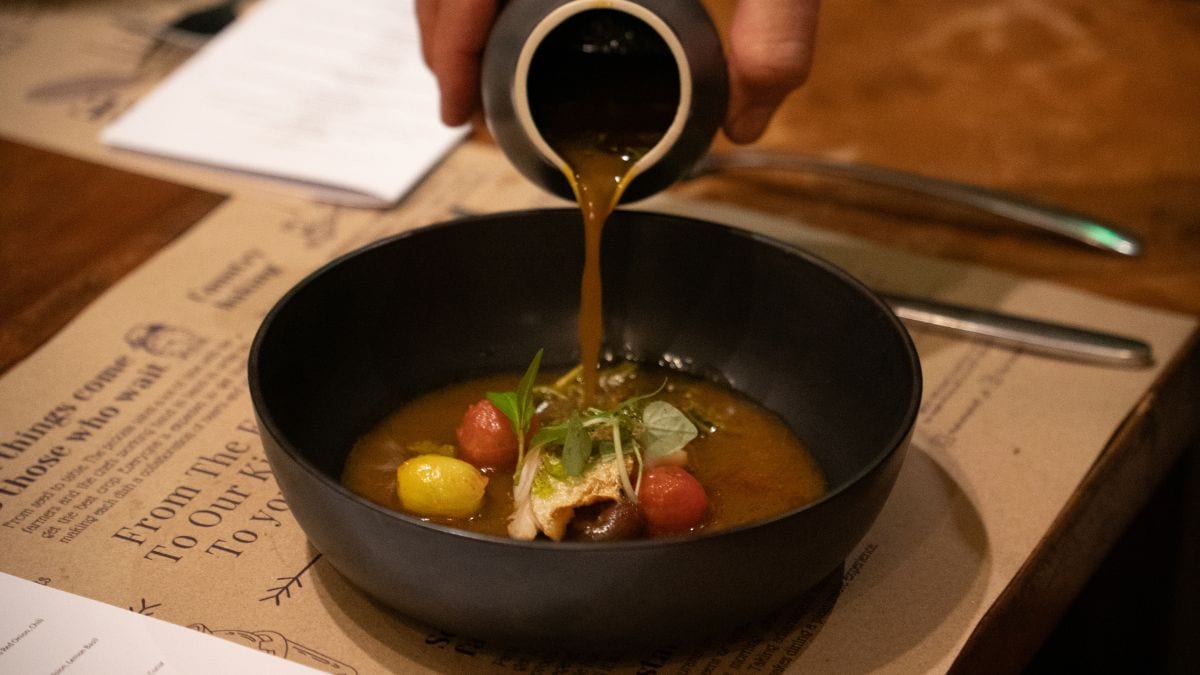
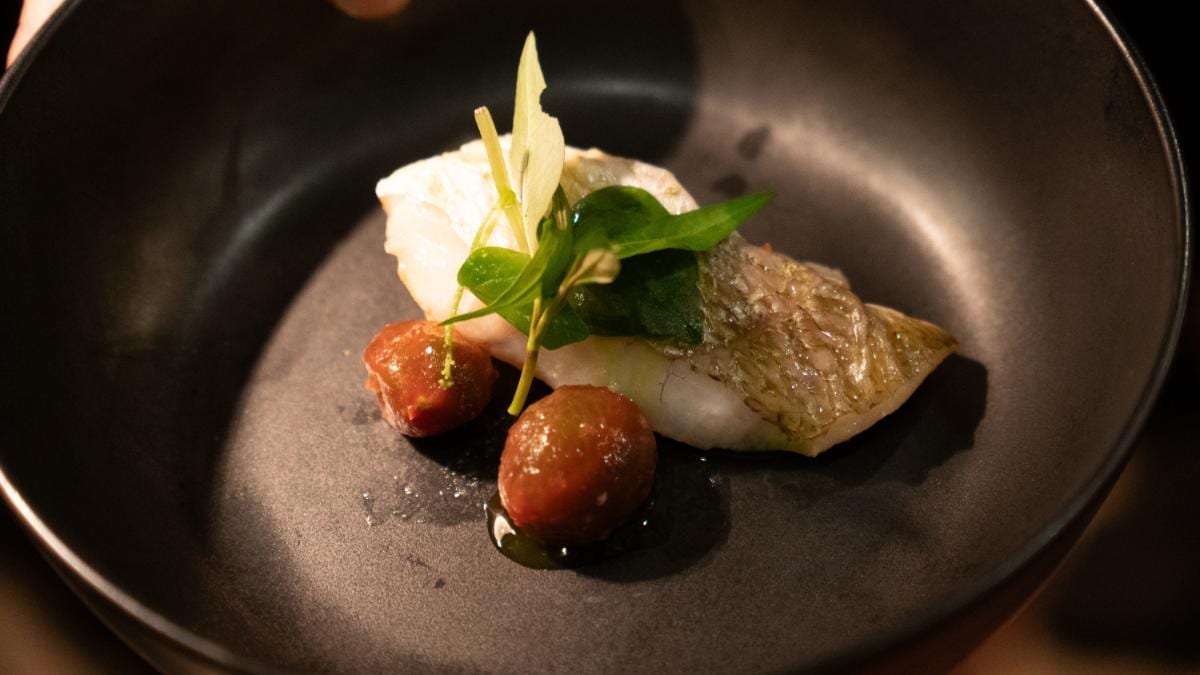
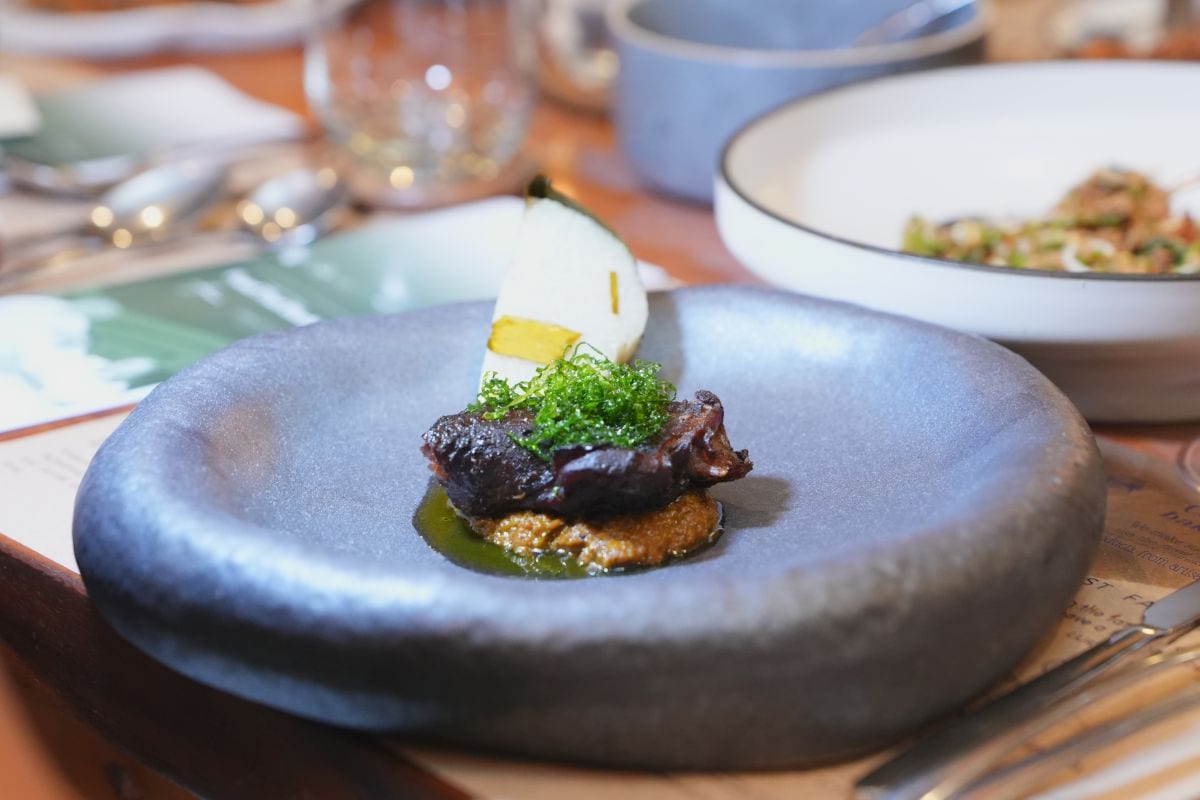
It was difficult to pick a favorite until I tasted the third course of dry-aged sea bream sinigang. It was unlike any other serving of sinigang I have ever tasted. I admit that I am biased as sinigang is my comfort food. But I was impressed by how tastefully restrained the sourness was. Combining balimbing, alibangbang, calamansi, and Benguet tomatoes together was genius, if you asked me. And the sourness, it stays, at the seat of your throat, on your mouth, on your lips.
Fourth Course: Duck Rendang
A collaboration of heart and mind
It was fortuitous that we were seated right beside the open kitchen. Chefs Rhea and Jayjay had only met Chef Hashim a few months before, and they only started working together days prior but the action in the kitchen was seamless. No heated exchanges. No wasted movements. The chefs had drawn up a plan, and they were executing it beautifully, or shall I say deliciously?
Halfway through the dinner, the chefs dropped a friendly mano-a-mano with Chef Hashim dishing out a Duck Rendang and Chef Jayjay serving the Cavite Tres Marias. The contrast was delectably striking.
Tres Marias Adobo Seca
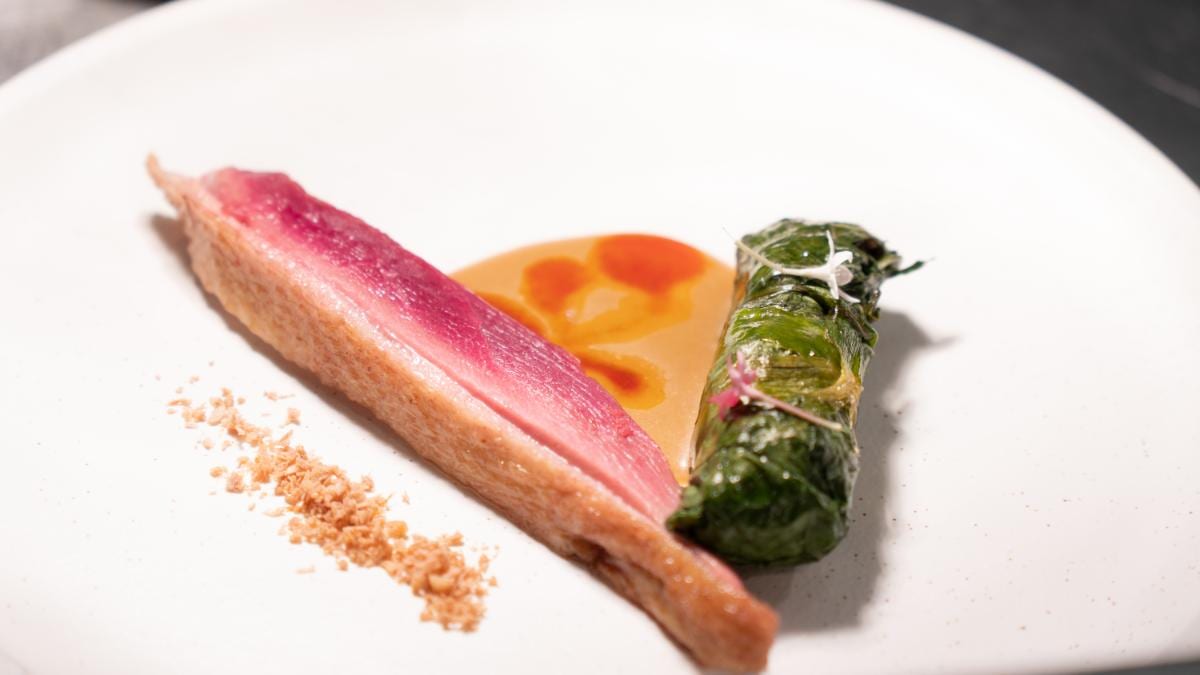
Chef Hashim pulled out all the stops. He served his slow-cooked duck rendang with a variety of shared sides: a creamy gudeg of jackfruit braised with green Sichuan pepper and pistachio miso, cassava leaves in coconut sauce, and a salad of fiddlehead ferns, winged beans, and toasted coconut. There is a green chili sambal, of course, and glutinous rice cooked with coconut milk in bamboo. It was glorious. There was layer upon layer of flavors and textures. I’d pair the duck with salad and sambal in one spoonful, and then duck and gudeg the next. Experimenting with the flavor pairings was inspiring.
Tres Marias Kare-Kare
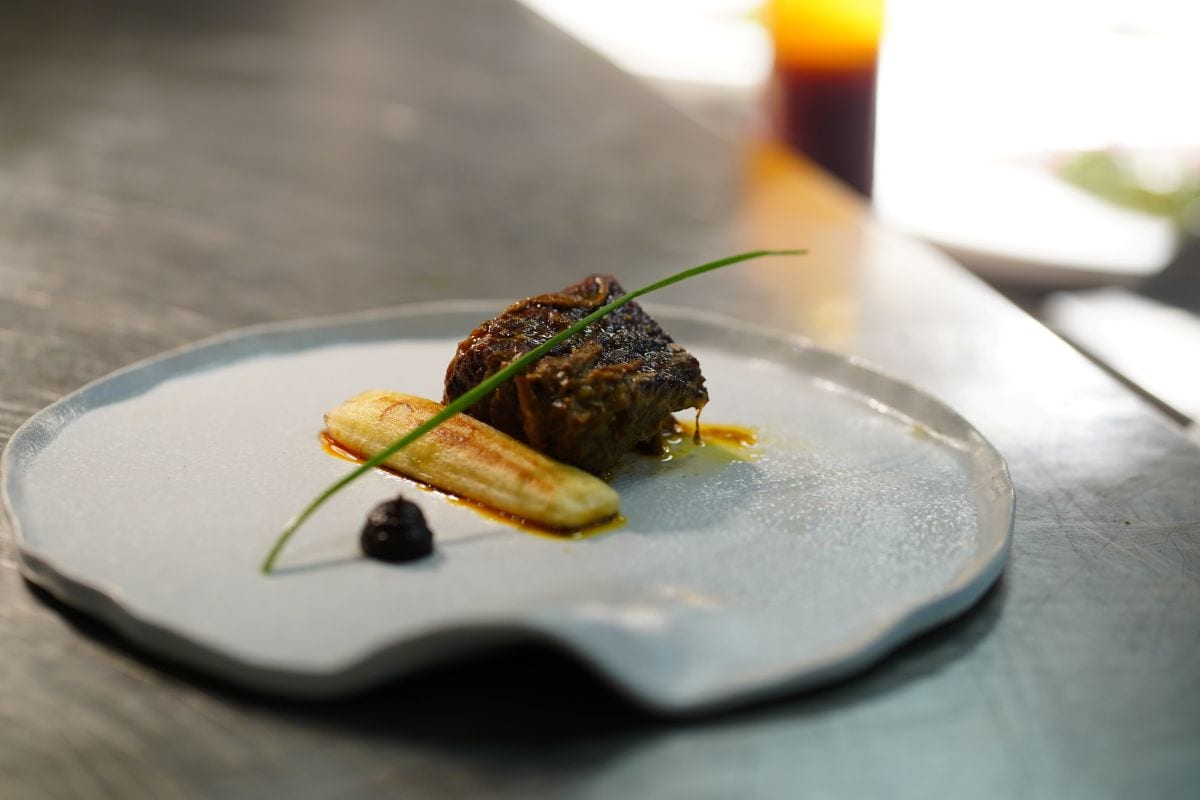
By contrast, Chef Jayjay’s plates showed mindful restraint for his trio of Kare-Kare, Adobo Seca, and Kilawing Papaya. The Shio Koji dry aged duck for the Kare-Kare was cooked perfectly, succulent and tender. The roasted pili nut sauce and alamang powder were too subtle for my taste, however. But pairing the Kare-Kare with the kilawin of papaya, mashed pancreas, and kaong vinegar did the trick. I did the same for the Beef Brisket Adobo stewed in pili vinegar for flavorful bites.
Kelapa, Bingka, Itlog Maalat
By this time, we were in a state of seemingly inebriated fullness: laughing merrily, talking loudly. One or two or three of us would find ourselves walking around the restaurant, peering over the kitchen, admiring the décor, hoping to make room for dessert. Chef Rhea’s desserts are legendary, and to not taste her creations for this particular dinner would be a travesty!
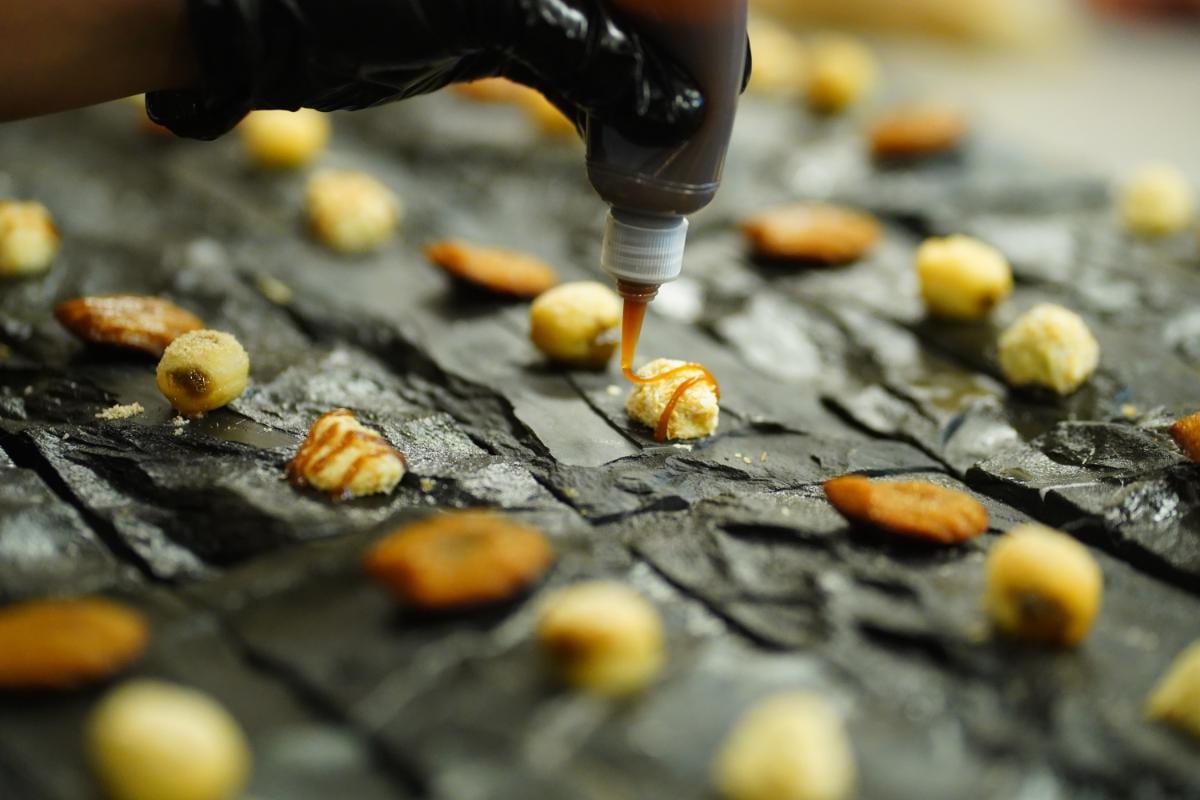
Petits Four
She did not disappoint.
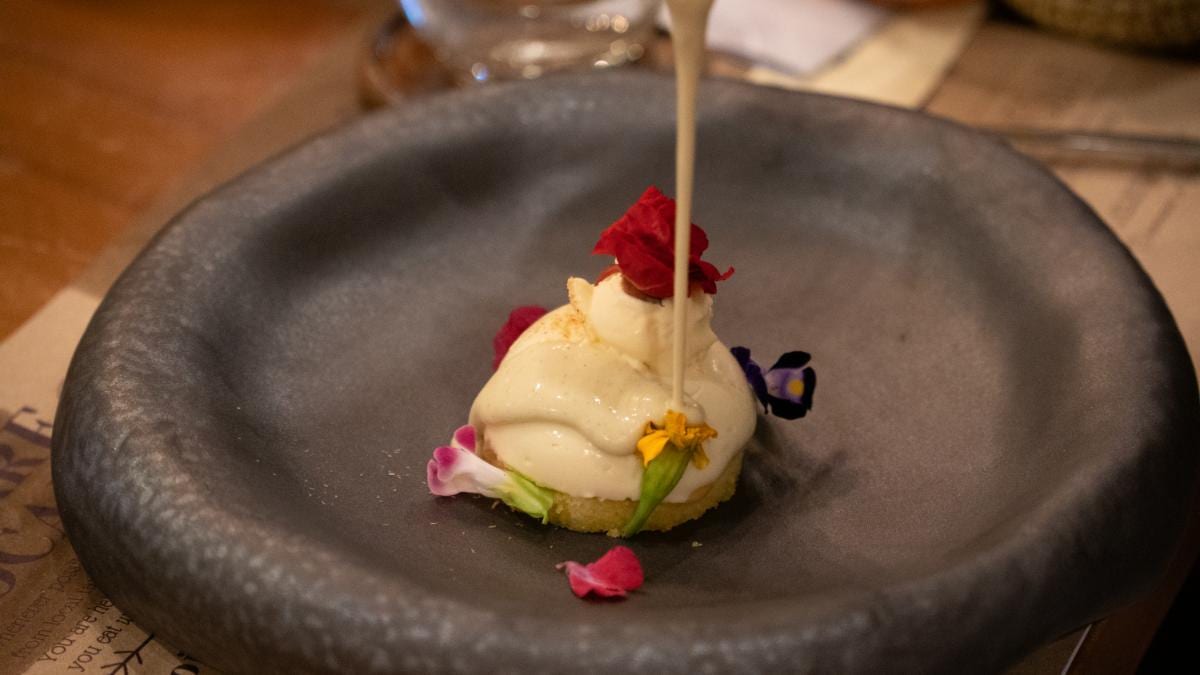
Weaving the culinary traditions we shared with our Southeast Asian neighbors, Chef Rhea whipped up a bibingka cake with a burnt banana leaf custard. Topping the cake with a creamy coconut mousse and asin tultul made it even deadlier. She wasn’t done, however, and presented a trio of petits four playing off the flavors of salted coconut and nutmeg, chocolate and calamansi, and hazelnut and latik.
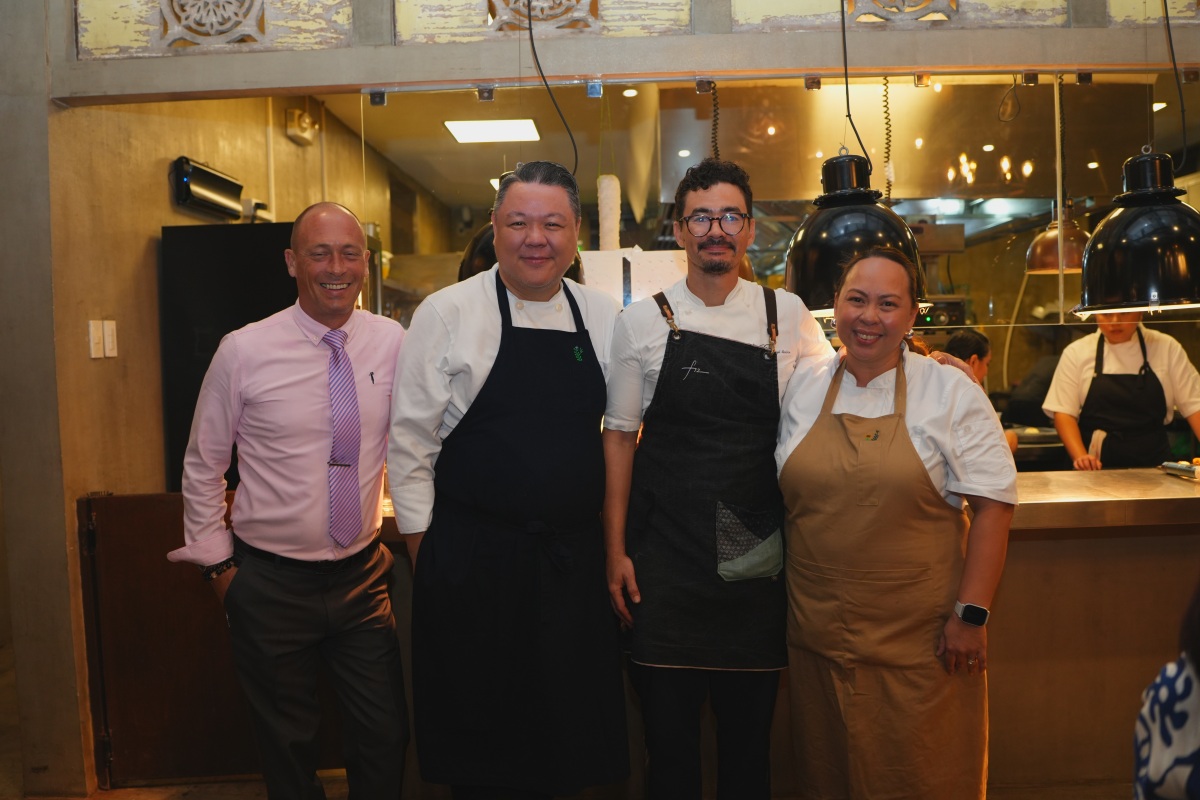
From left: Sommelier Sebastien Dupont, Chef Jayjay Sycip, Chef Hafizzul Hashim, Chef Rhea Sycip
By this time, I had asked for a cup of tea. We have been eating and talking and laughing all throughout the evening, and but now, a spot of silence seemed appropriate: How privileged were we to have witnessed such a collaboration of craft and culture; how comforting it is to realize that however different we maybe, food would always bring us together to a state we call home.
