
Kare-Kare and Kaldereta Rank Among the Top Stew Dishes in the World

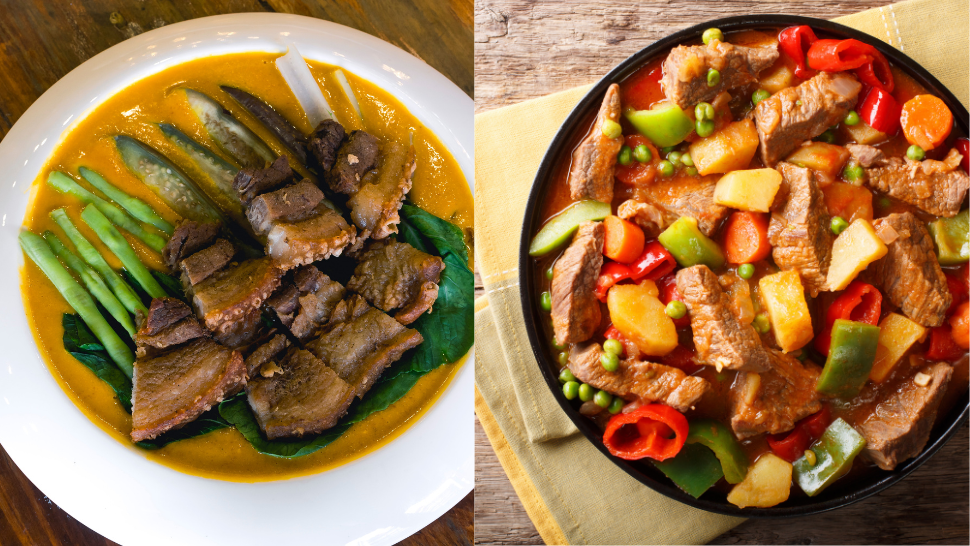
The storied kare-kare, or ox tail stewed in peanut sauce (but who calls it that anyway?), and kaldereta apparently cracked Taste Atlas' 100 best-rated stews. Of course, they don't need to tell us how good they are. They're part of the fiesta menu (and sauce commercials) for a reason.
But plus pride points for us back home, we guess. Taste Atlas ranked kare-kare 52nd best while kaldereta placed 37th on the list. The two dishes received ratings of 4.3 and 4.4 out of 5 stars, respectively.
Kare-kare usually consists of meat like tripe, pork leg, ox tail, goat or even chicken, and some veggies plus a peanut-y, achiote-tinted gravy sauce with annatto seeds. We can't forget about the shrimp paste (bagoong) on the side, as well.
Interestingly, kare-kare has quite the origin story. The dish, which has been around for hundreds of years, is said to have originated from Pampanga. Others posit that kare-kare must have been derived from the Indian word curry. If you ask elder Kapampangans about it, they'd say that their mothers used to cook something that was called "kari" for them as children.
ALSO READ:
The Convoluted Histories of Mechado, Afritada, Menudo, and Kaldereta
The Fascinating History of Kare-kare
Meanwhile, kaldereta has a much more complicated history, as food historian Roberto Villar once claimed.
Mechado, afritada, menudo, and kaldereta seem to be cousins, or half-brothers or something. Kaldereta's defining characteristic, however, is its liver mash. The dish includes ingredients like mashed liver, tomato sauce, and, of course, some pepper, salt, garlic, and onions (the lifeblood of Filipino cooking, right?). We garnish it with some tomatoes, onions, and potatoes.
Traditionally, the goat stew relied on goat liver for this, but it has evolved over time to feature beef, as well. Kaldereta is said to be a localization of caldereta, originating in Spain. Castilian caldereta, on the other hand, makes use of lamb. Because lamb wasn't really available in the Philippines back then, our ancestors relied on goat instead.
All we can say is that the Taste Atlas audience definitely has, well, taste. The top three on the list are Kare from Japan, Keema from India, and Phanaeng Curry from Thailand.
