
Origami Is the Inspiration for the Second Menu of this Modern Japanese Restaurant in Cubao

.jpg)
Chef Jorge Mendez once again turns to his past as inspiration for his much-awaited follow-up menu at Modan. Whereas the maiden repertoire paid tribute to the people who have had influence in his still-blossoming career, a particular high school memory became the source of imagination for his current lineup.
“I wanted to share a nostalgic memory,” recalls Mendez. “There was a time when my mom was based in Japan, working, and whenever she sent home gifts, she would put an origami along with the package.”
ALSO READ
This Neo-Japanese Private Dining Concept in Cubao Serves the Chef's Best 'Food Memories'
The Best New Seafood Restaurant in Boracay Is Worth the Five-Year Wait
He could have opted to do many other pieces, but in the end, he relied on an orizuru or crane, which is the most classic and emblematic of traditional origami, to do the job. “It has been a constant in my life,” he adds. “It became one of our bonding experiences as a family. My son and I would bond over making pieces. It got us through the pandemic.”
The origami crane served as inspiration for the new menu

To come up with the menu, he divided the crane into several parts and used each as a focal point to the dishes. The beak became the basis for the first course: a soup complemented with a fried appetizer, similar in form to his Ode menu. The sipping cup was rimmed with a mushroom caramel then dusted with furikake, then a kinoko dashi broth is poured on the corn foam tableside. It came with a piece of beet-battered fish lip tempura, glazed with a miso caramel sauce then crowned liberally with grated cured egg yolk.
Even the imaginary insides of the crane have been turned into delicious bites. Take, for example, the second course, which features the liver. It came as a one-bite mille feuille sandwich composed of maple and schichimi-drizzled crispy nori lodged with thin sheets of foie gras and fruit gel. Or the yakitori where fork tender beef tongue slices are skewered, glazed with a sweet and sour cherry glaze, and cloaked with two kinds of fish roe.
Aged buri with iyokan tosa sauce

Head of the crane imagined as a cold somen dish with ebi carpaccio

If you’re among the fortunate few to have tried Mendez’s primary tasting menu, you know that the chef doesn’t hold back when it comes to flavors. The succeeding plates reinforce that style and intention.
A trio of “flesh” are matched with potent sauces—aged buri is served with a lime wedge and an iyokan tosa, chutoro with a cold shiso dressing, and a warm sushi of nori and shari is topped with a torched scallop that’s been coated with a miso katsuboshi XO and a dot of brown butter wasabi.
Beef tongue yakitori

A medley of seafood on miso rice

A cold somen dish served on ice represents the head of the crane. An ebi chawanmushi hides underneath a pool of prawn head cream broth, and on the side is a carpaccio of botan ebi dressed with finger lime and head cream caramel.
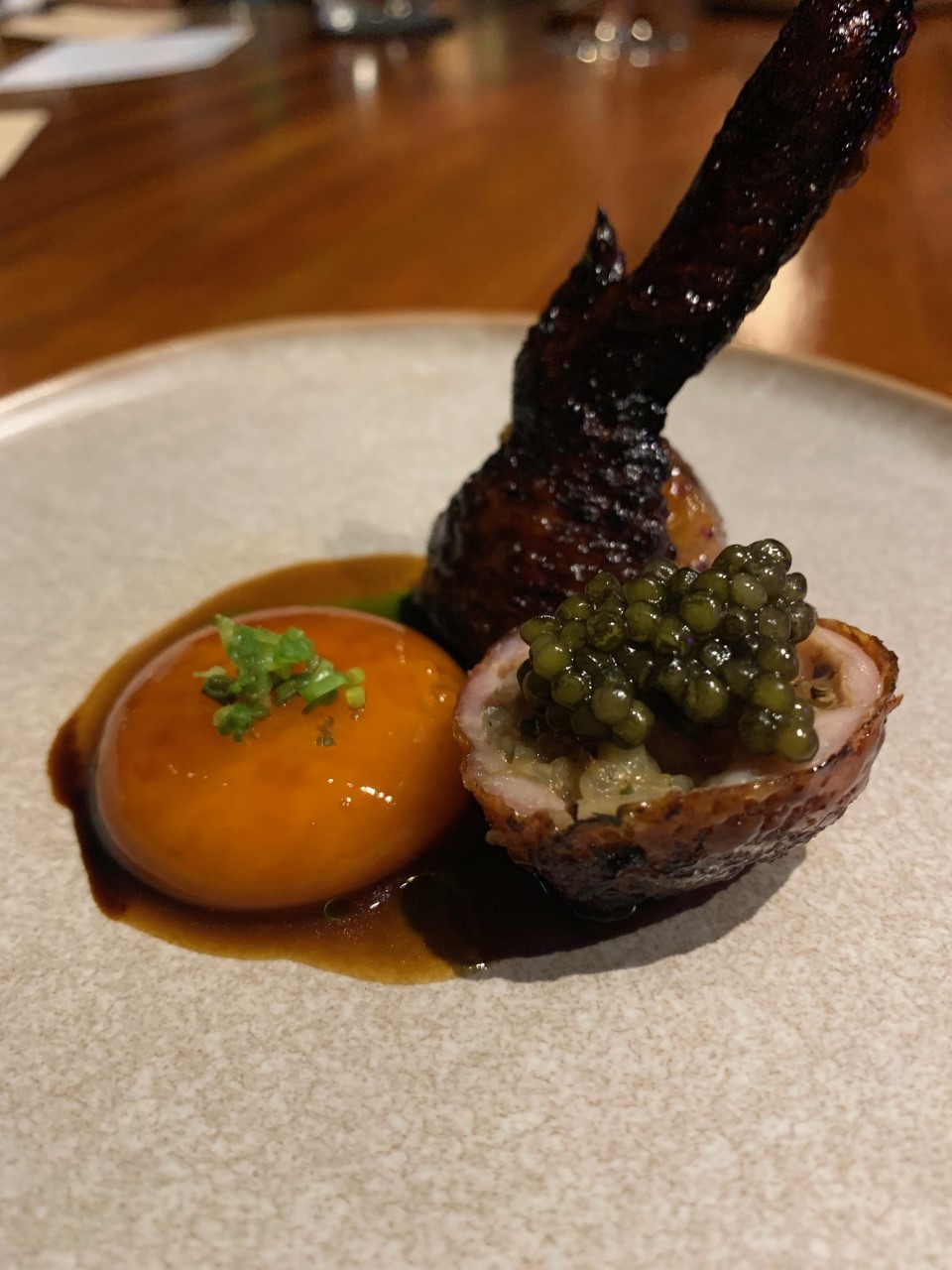
Two of the previous menu’s hits make a comeback. The beloved tebasaki, which makes for the crane’s chicken wing, still comes with a shoyuzuke egg yolk. But it is now made more decadent with the addition of chicken feet jus, nira oil, and a generous dollop of Nomad caviar.
Tebasaki
The nabe, on the other hand, immortalizes the crane via a medley of seafood. Scallops, king crab meat, uni, unagi, ikura and special hotatu-ika act as carpet to miso rice.
To cap off the meal, Hokkaido milk ice cream, whipped fromage, and raspberry jam are covered by an edible dome, which the guests are asked to smash with the back of a spoon. It represents the paper used to make the origami.
Chutoro with a cold shiso dressing

Foie gras and fruit jam mille feuille

Much like his opening salvo, Mendez proves that creativity is something he immortalizes in good taste.
