
Sabai at Shangri-La The Fort Is Not Your Usual Thai Restaurant

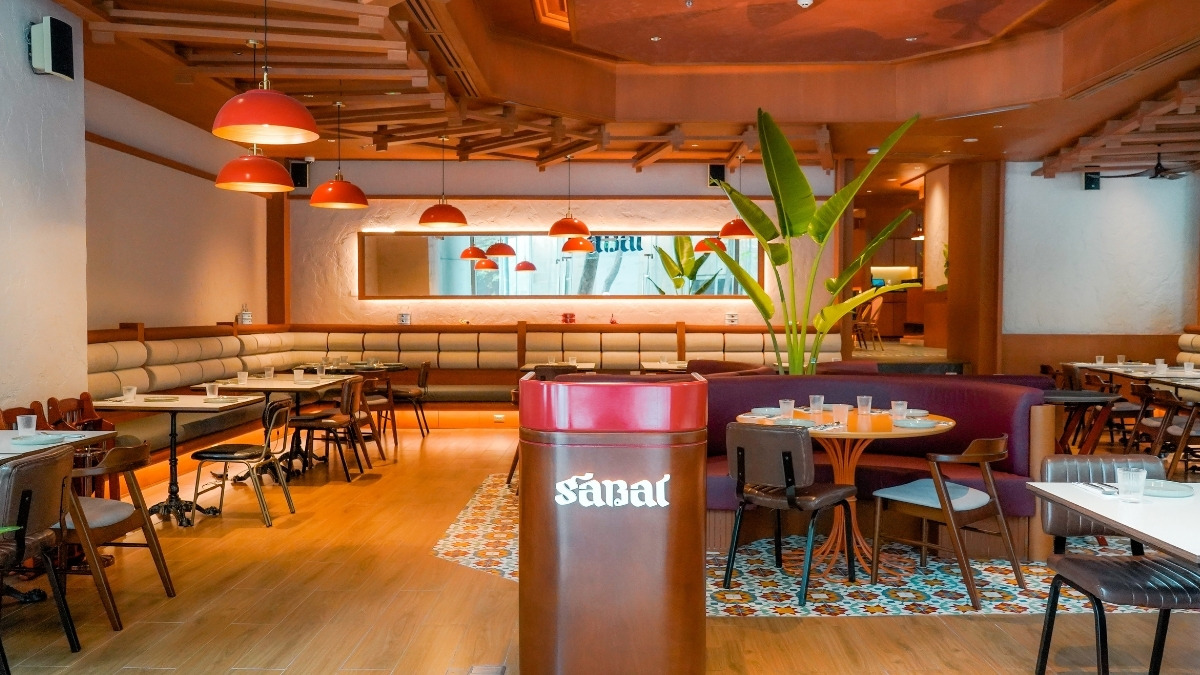
When you think of Thai food in Manila, three dishes come to mind: Pad Thai, Green Curry, and Tom Yum. But much like the Philippine archipelago and its diverse cultures, Thailand in the Indochinese Peninsula also boasts culinary variations with four distinct regional flavors. And new Thai restaurant Sabai at Shangri-La The Fort, Manila, is bringing one of those—the coconut-rich, seafood-based, and bold cuisine of Southern Thailand—right to our tables. The restaurant has been in its soft opening since July.
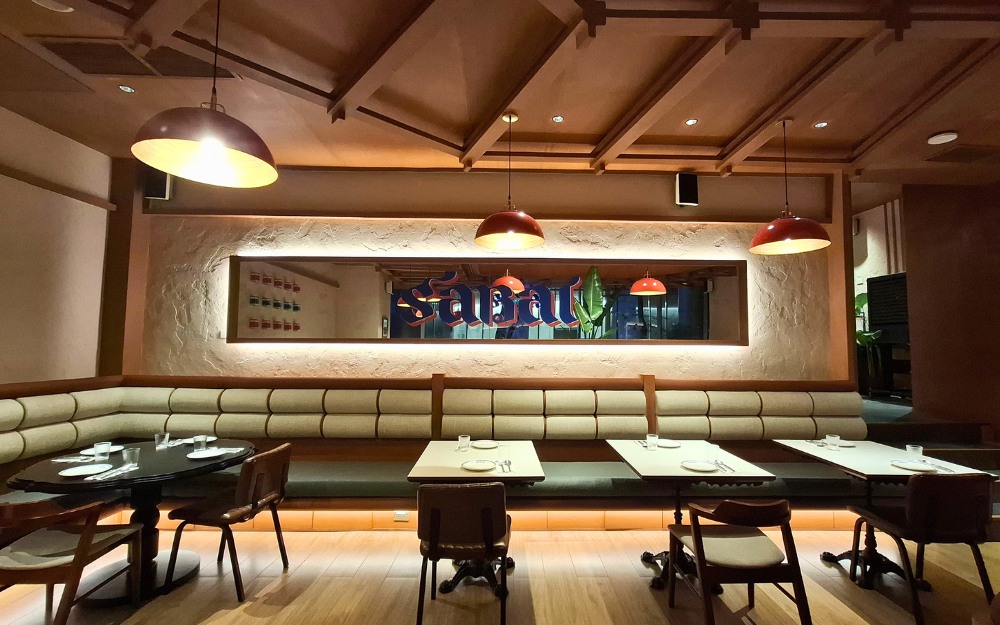
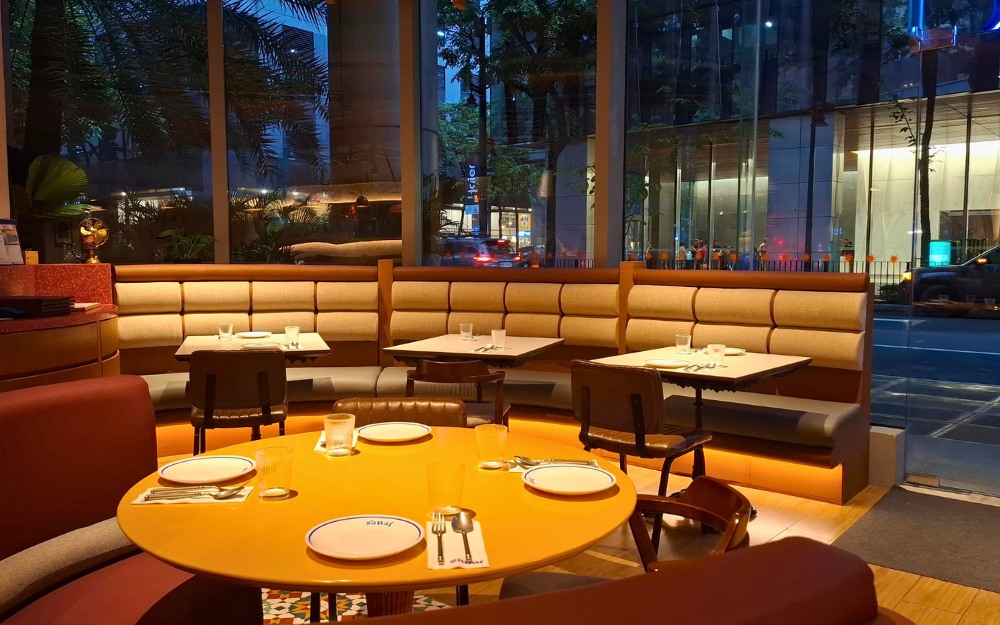
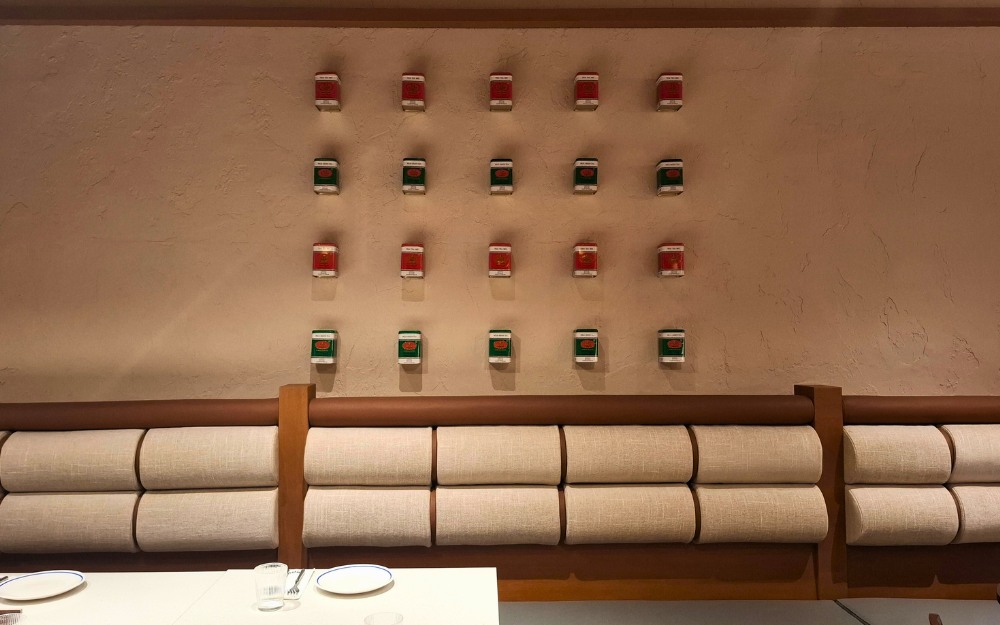
Sabai is Thai for "relaxed" or "comfortable," and these word associations are immediately felt in the interiors designed by Hong Kong-based LC Studio. Plush couches and soft surfaces line the walls, while intimate booths are placed at the center. This sense of comfort with a company is subtly mirrored by sabai's relative Tagalog word "sabay," meaning "together." The concept of togetherness is manifested in the three private dining rooms (two with karaoke) connected to the second main dining area. These spaces can privately host from six to 20 guests within the 124-seater restaurant.
"Following the success of Uma Nota Manila, Sabai represents our passion for creating original, world-class dining experiences here in Manila," said partners Alex Offe and Michael J. Needham in a press statement. "We are incredibly proud to partner with Chef Puwadol, whose exceptional talent will showcase authentic Thai cuisine like never before. Sabai, meaning both 'comfort' in Thai and 'together' in Tagalog, perfectly captures our vision for a relaxed yet elevated space where guests can connect over extraordinary food and genuine hospitality, setting a new standard for Manila's dining scene."
ALSO READ:
How to Experience Thailand Like a True Local
Thailand's Greyhound Café Arrives in the Philippines
Serving Authentic Southern Thai Cuisine
At the helm of Sabai is Chef Assavadathkamjorn Puwadol, who has previously refined his world-class skills at Michelin-starred restaurants such as Pru (as Demi Chef de Partie) and Le Normandie by Alain Roux (as Chef de Partie). He was Commis de Cuisine at Sühring in Bangkok, when the Thai restaurant earned its two Michelin stars and secured No.4 in Asia's Best 50 Restaurants (2019) and No. 45 in World's Best 50 Restaurants in the same year. He also honed his skills as Chef de Cuisine at Loyrom under Chef Cuan Greene (formerly of Noma and Geranium). A native of Southern Thailand, he fuses avant-garde techniques with the traditional elements of his home cuisine.
"I’m excited to bring the bold, soulful flavors of my home — especially those from the south — to Manila," he said in a press release. "At Sabai, we honour tradition and present it in an elevated way, using techniques I’ve learned in fine dining, but never losing the food’s heart or honesty."
Sabai's interiors are done by Hong Kong-based LC Studio.
Southern Thai cuisine is arguably Thailand's most aggressive and assertive regional flavor, characterized by its heat-forward spiciness. However, the revelation at Sabai is that the execution ensures the spice is a layered complexity, not just brutal heat. The ingredients are dominated by fresh seafood as the region—mostly the narrow Kra Isthmus—is bordered by the sea. Its rich flavors come from turmeric and fermented ingredients, and these are balanced out by generous servings of creamy coconut milk.
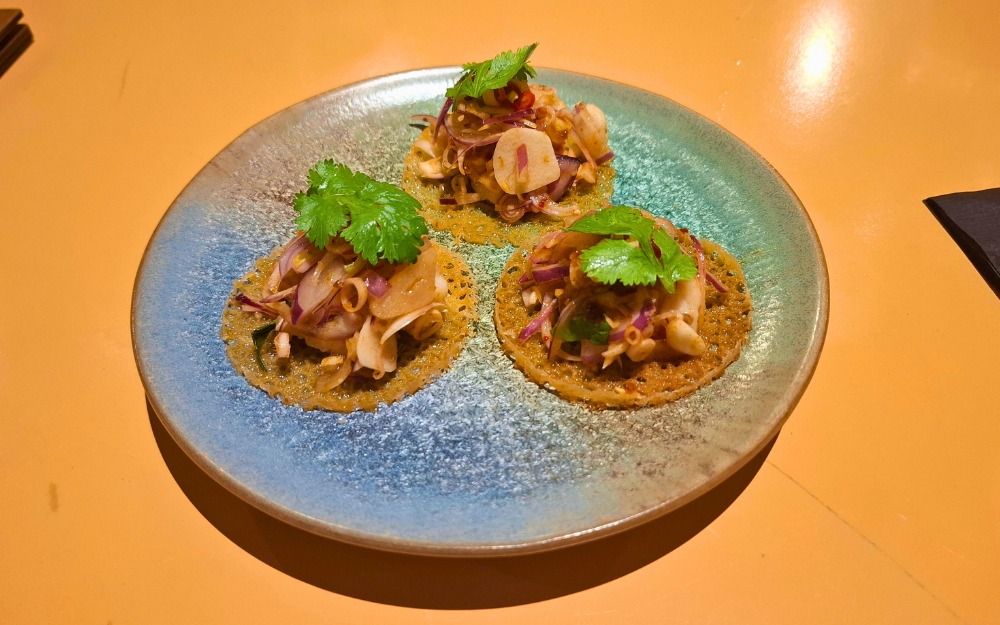
This complexity is evident right from Sabai’s starters. The Pla Kung Pae, described as prawn with Thai herbs and grilled chili paste on the menu, is presented with a crunchy base. Taste is fresh and zingy with a kick.
Pla Kung Pae (P350)
Kanom Krok Na Hoi Shell (P550)
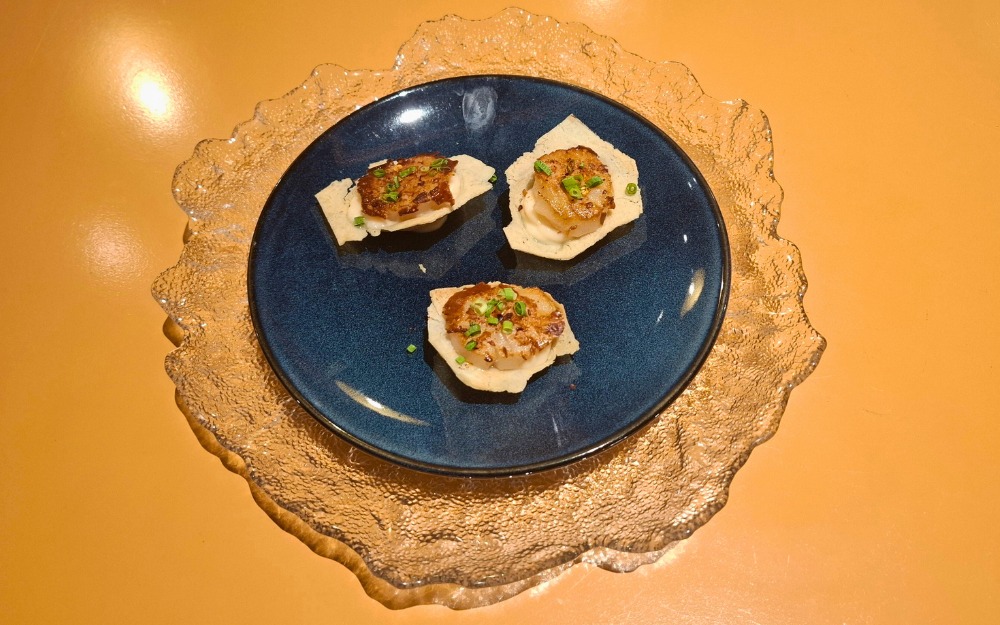
Another excellent option at the top of the menu is the Kanom Krok Na Hoi Shell, which features seared scallops nestled in warm Thai coconut pudding. The initial creaminess immediately rests on the tongue and is balanced by the natural saltiness of the seafood.
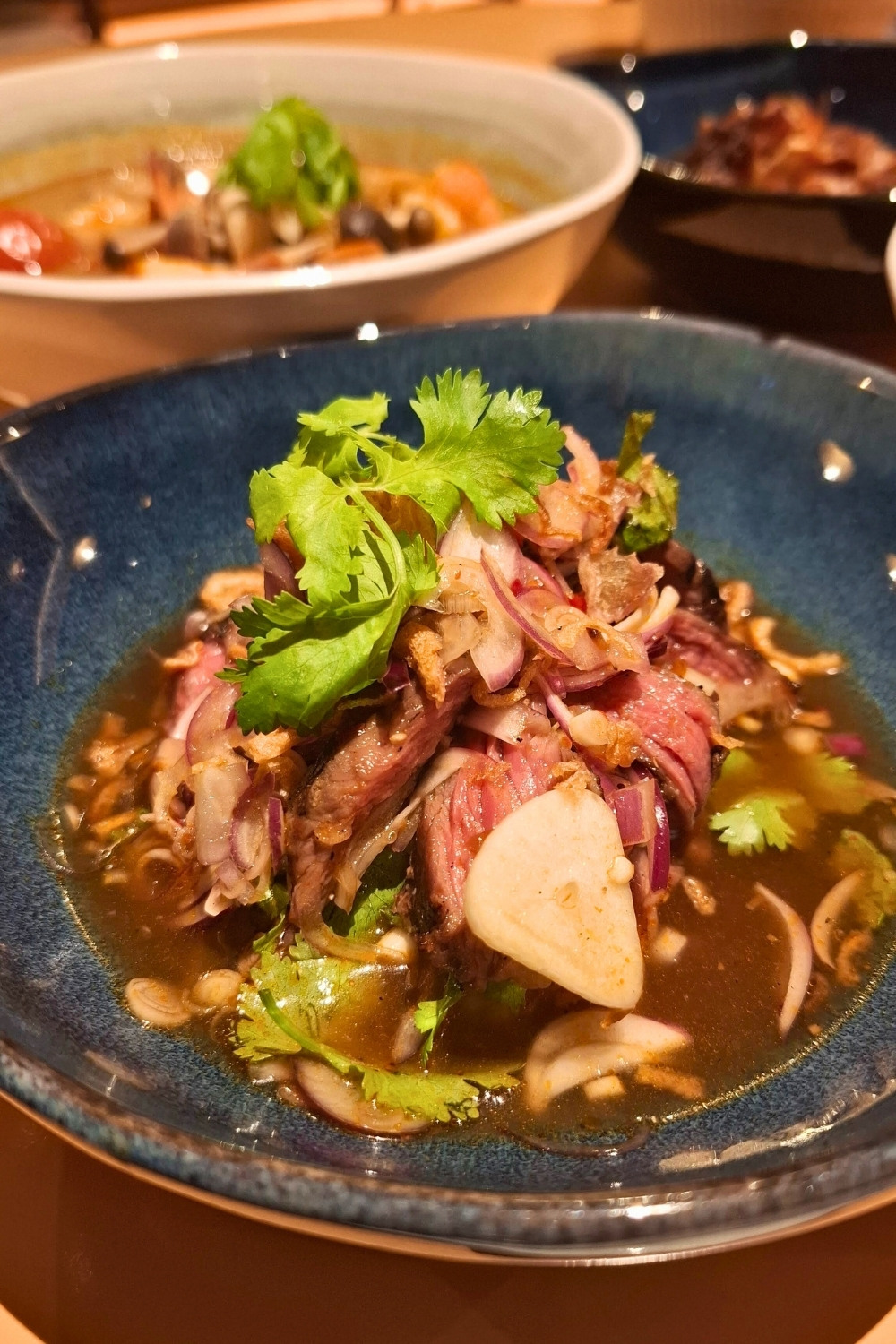
The progression to the mains offers a slight, thoughtful increase in spice, allowing the diner to settle into the regional flavors. Pla Nuea Yang is a pleasant surprise, featuring wagyu properly bathed in a mix of herbs and chili; while Nhaem Sam Chun Tod is addictive, as the taste of fermented pork leaves a lasting, savory impression.
Pla Nuea Yang (P890)
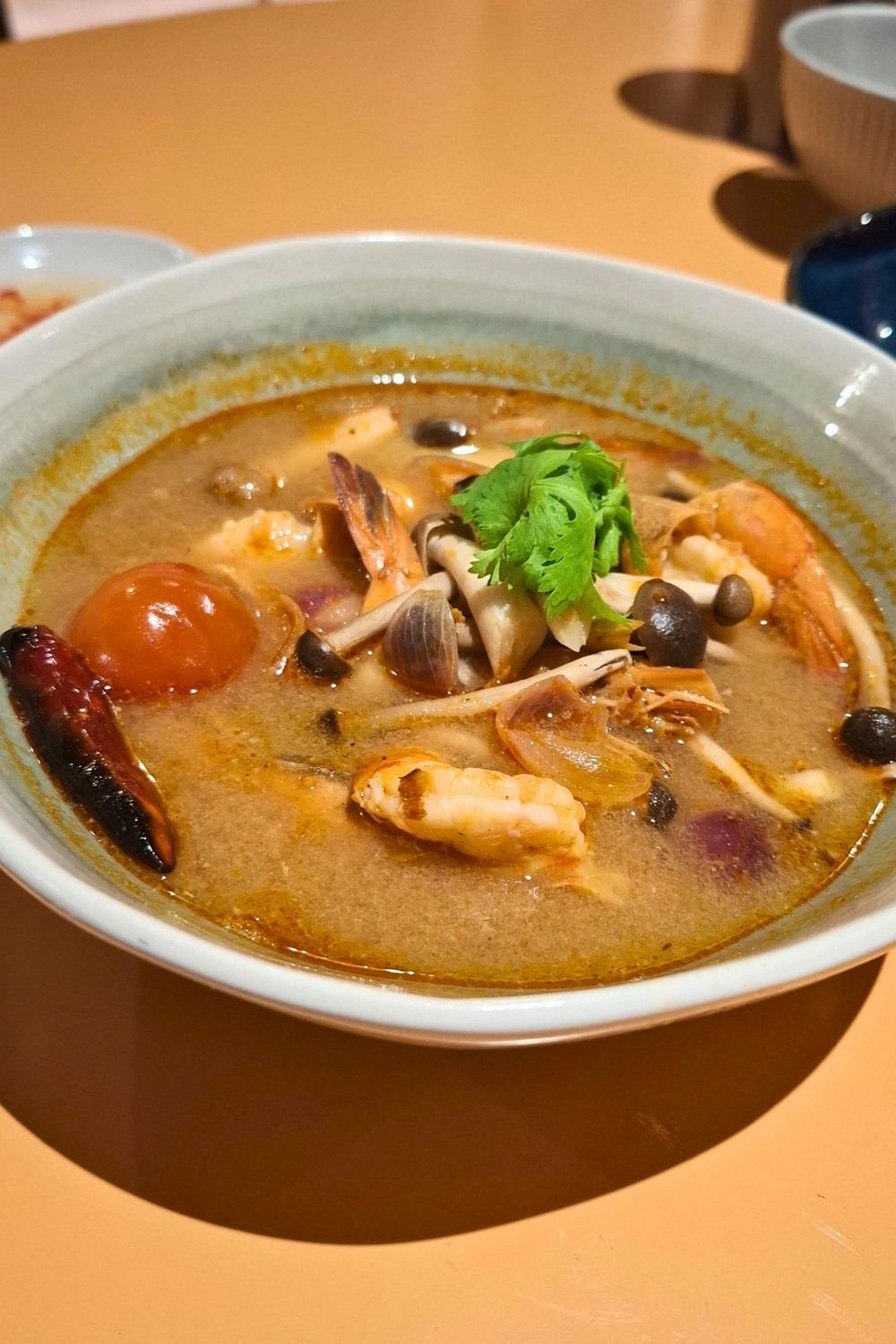
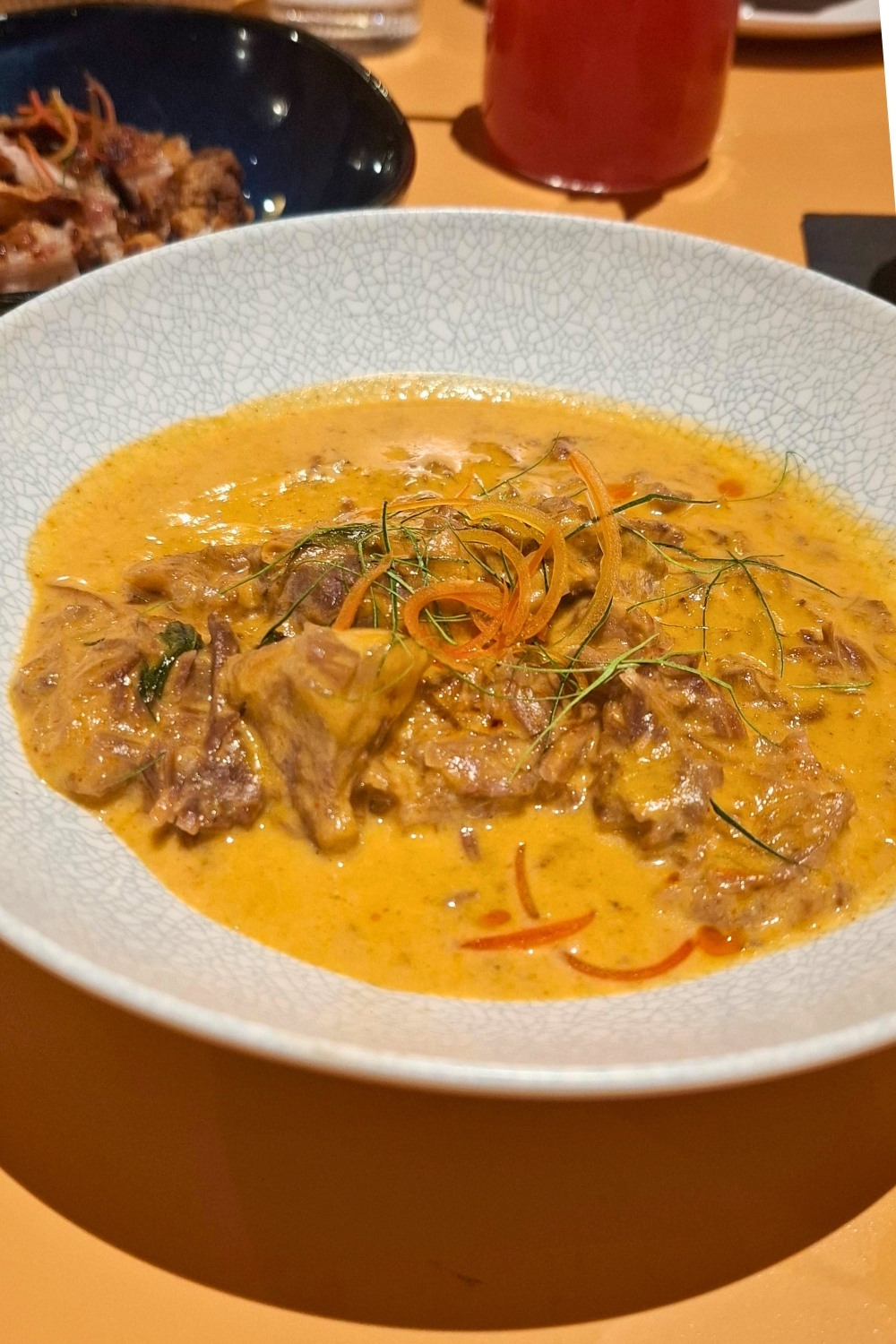
Their Tom Yum Kung leans toward a bright, sour broth, rather than the thicker, creamier aromatic soup that we love. The Pad Kaprao Khai is a hefty serving of ground chicken in holy basil, which should be eaten with the chili vinegar unless you want a one-note taste. For curry lovers, the Kang Panang Nuea Nong Lai's beef silver shank almost melts in your mouth, enhanced by the deep spice of the panang curry.
Tom Yum Kung (P850)
Kang Panang Nuea Nong Lai
Of course, no Thai meal is complete without Khao Niao Mamuang (mango sticky rice). Sabai serves theirs with mango sorbet resting atop the sticky rice and mango slices on the side, immediately cleaning and refreshing your palate after all the bold flavors.
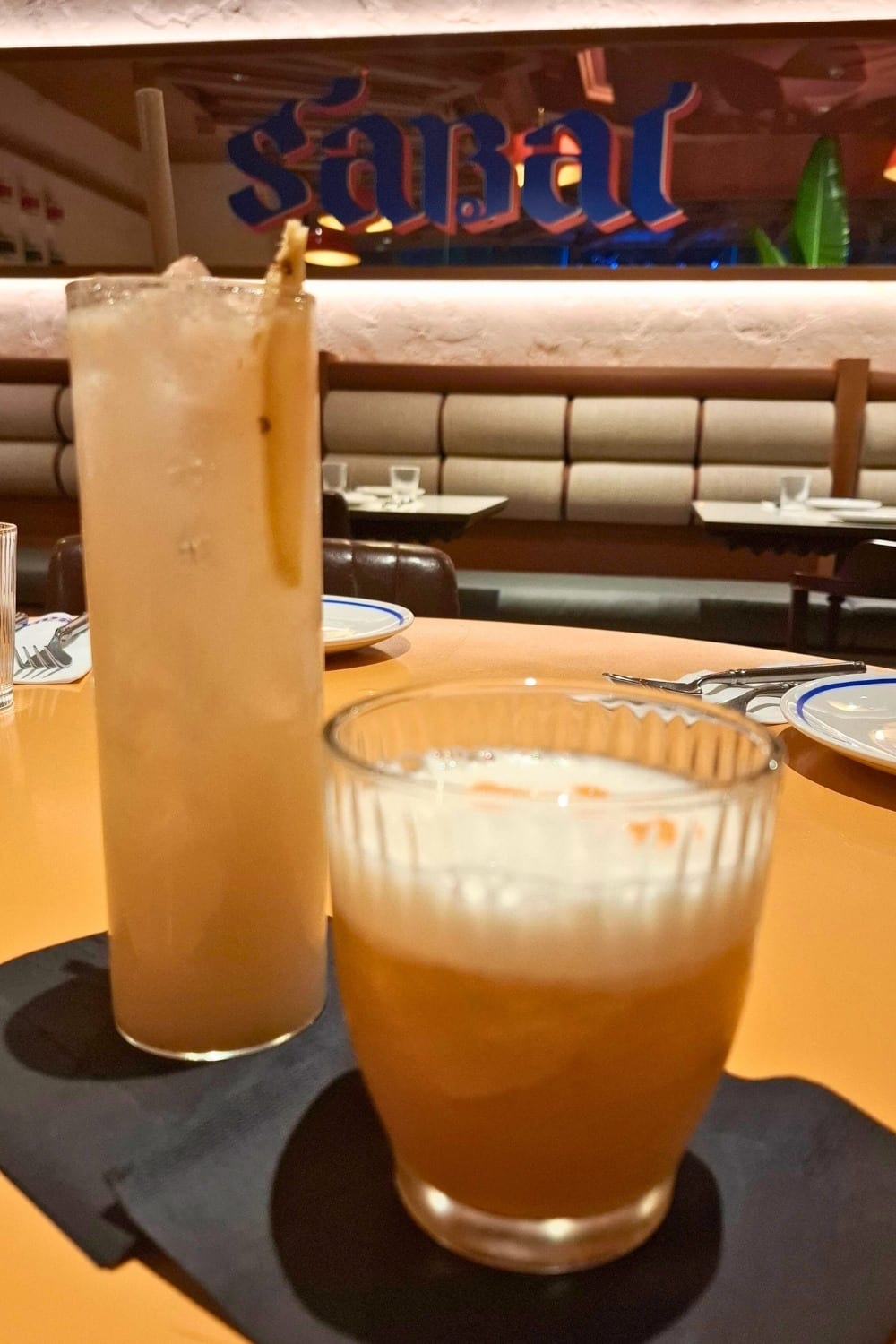
Lychee Zing Zing (P400) and Amaretto Sour (P450)
Honeyed Kiss (P450)
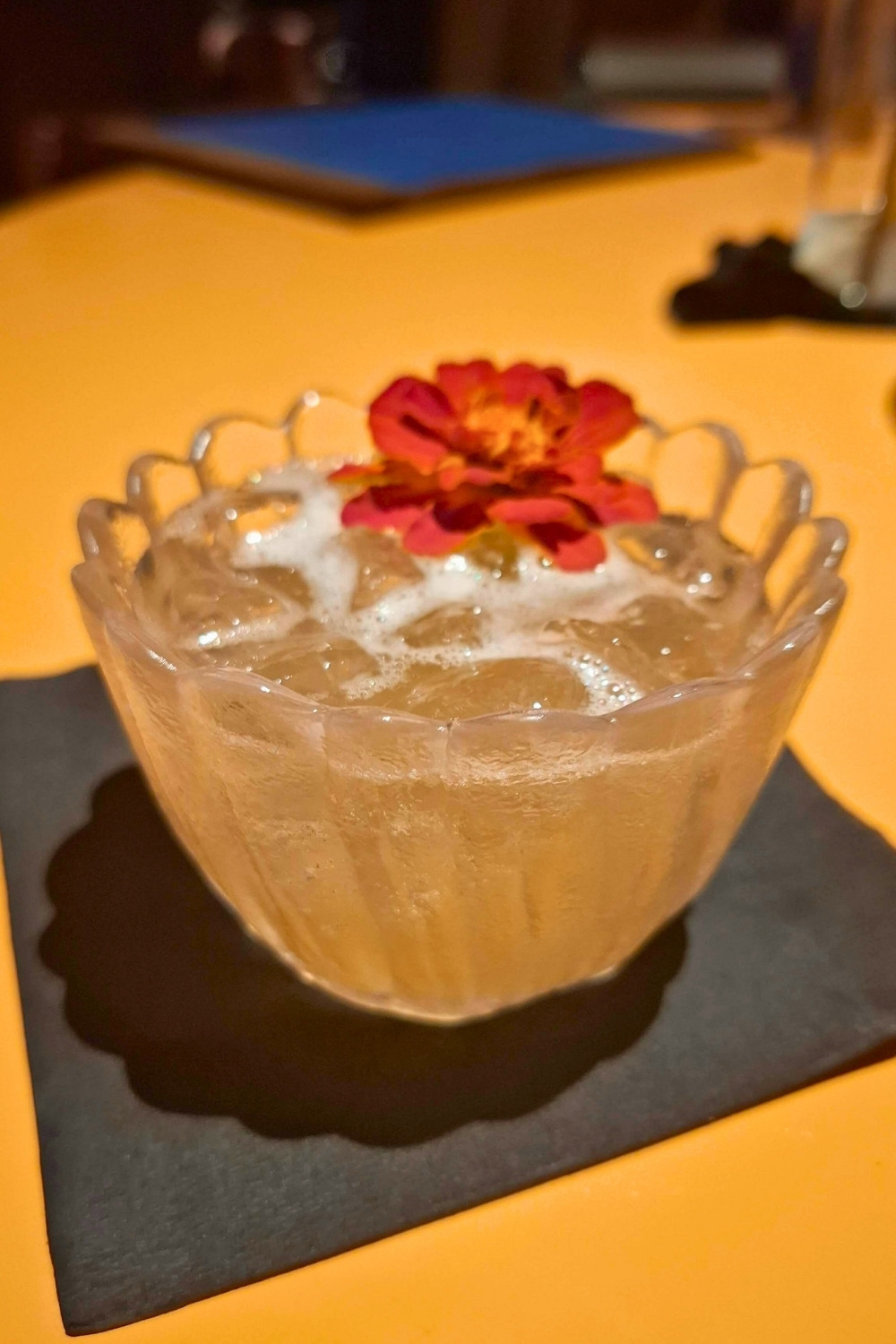
Sabai also has a sizable list of signature cocktails. We tried the Lychee Zing Zing, a white rum-based drink with lychee driven by a kick of fresh ginger, and the Honeyed Kiss, also white rum-based. The latter is smooth and relaxed, a good ending to complement the feeling of comfort and ease that Sabai stands for.
Sabai is beside Uma Nota, at Shangri-La The Fort, 30th Street corner 5th Avenue, Bonifacio Global City. It is open from Sunday to Thursday, from 11 a.m. to 12 a.m.; and from Friday to Saturday, from 11 a.m. to 3 a.m.
Sabai recently launched their 'Feed Me Menu', a chef-curated lineup of Thai favorites at P1,890 per person. It includes Miang Kham Pla Yang (DIY-style bites with smoky grilled fish, wild betel leaf, and Thai condiments), Som Tum Thai (salad with papaya, peanuts, lime, and chili), Pla Nuea Yang (grilled Wagyu beef in a spicy Thai herb salad), Tom Yum Kung (spicy-sour prawn soup), Kai Ob Fang (Chicken, marinated then hay-smoked), Khao Pad Pu (crab fried rice), and Khao Niao Mamuang (mango sticky rice).
