
Today I Learned: Expert Tips for Superior Sushi, Straight from a Sushi Master

ILLUSTRATION: Art by Igi Talao
The Japanese restaurant sector in the Philippines has seen significant growth over the past couple of years, if we are to base it on their digital presence. According to Smartscrapers, an AI-powered web scraping solution, there are now 2,469 Japanese restaurants in the country as of January 23, 2025, a notable 7.31 percent increase from 2023.
This widespread appreciation for Japanese cuisine among Filipinos made the Philippines a fitting location for the Japan External Trade Organization's (JETRO) World Sushi Skills Seminar 2025. The three-day seminar held at Enderun College in February aimed to equip participants with advanced techniques and cultural insights to elevate sushi-making standards in the Philippines. It also sought to cultivate a global appreciation for the art of Japanese cuisine.
Esquire Philippines was one of the select media who had the opportunity to meet globally celebrated sushi master and Director General of the World Sushi Skills Institute Chef Hirotoshi Ogawa. Since starting his career in Tokyo in 1994, Chef Ogawa has become a pioneering figure in the sushi world, recognized for his expertise in preparation, food safety, and presentation.
Chef Hirotoshi Ogawa at the World Sushi Skills Seminar 2025, held at Enderun College.
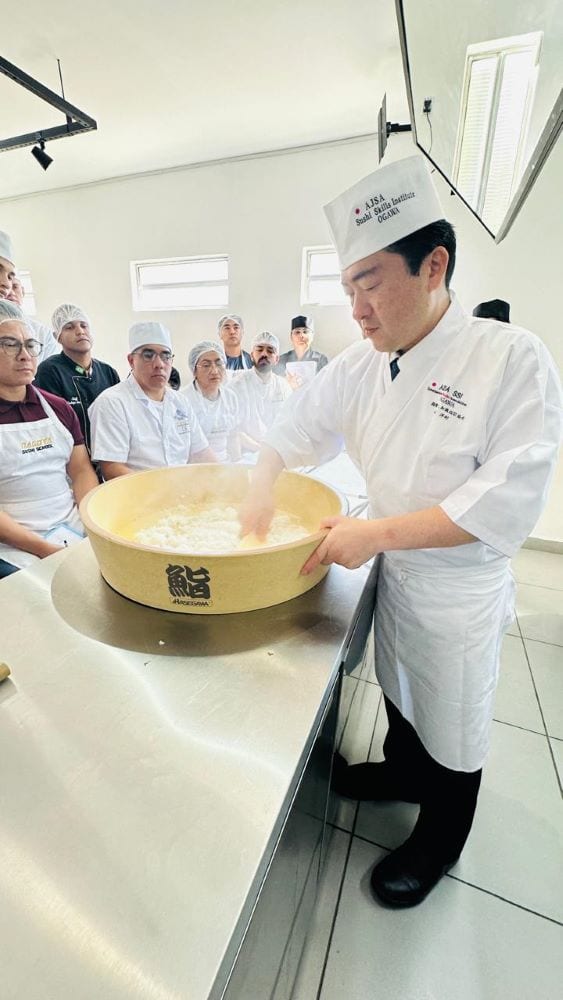
As the founder of Ogawa Sushi, he has gained international acclaim for his innovative approach, earning accolades from chefs and culinary institutions globally. Serving as a culinary advisor to the Japanese government, he promotes Japanese cuisine in over 40 countries.
Chef Ogawa explained that making basic sushi is relatively easy, but crafting high-quality sushi requires extensive experience and expertise in properly handling, preparing, and serving it. Below are some expert sushi-making information and tips we could apply when making our own sushi at home:
1 | Rice is a crucial element in making an exceptional sushi.
Many people mistakenly believe that the quality of sushi relies entirely on the raw fish (also called neta, sushi and sashimi) but this is not true. High-quality rice, combined with the proper preparation technique, is essential and serves as a crucial element in making an exceptional sushi. Chef Ogawa says Japonica, a short-grain rice that turns sticky when cooked, is the most suitable for making sushi. The rice is seasoned with rice vinegar, sugar, and salt, giving it a distinctive flavor. A good ratio of rice to sushi would be 60:40.
2 | Ensuring sushi is made with fresh fish is important for both flavor and safety.
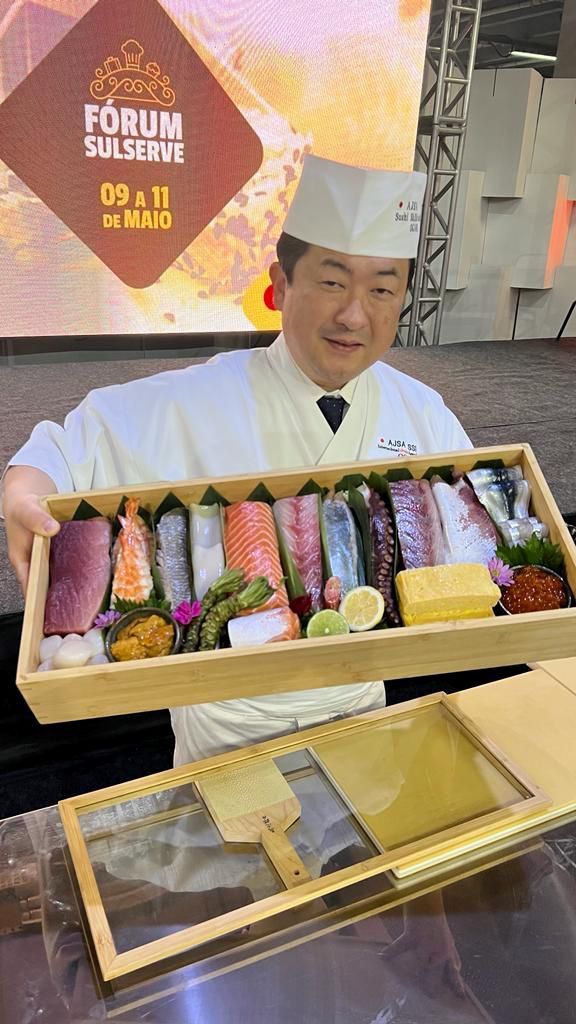
Fresh fish is characterized by clear eyes—not reddish or cloudy—and a firm texture. Its scales and fins should be clean, indicating its freshness and quality. A truly good sushi will deliver a satisfying umami experience.
Chef Ogawa highlights the importance of using fresh fish when making sushi.
3| Store the fish in correct temperature.
The ideal temperature for preserving fish outside of Japan, is 4 degrees Celsius. If the temperature rises to 10 degrees Celsius or higher, it creates an environment conducive to the growth of bacteria and germs, compromising the fish's freshness and safety.
4 | Making sushi at home is quite doable with a few practical tips.
As mentioned earlier, using fresh fish, is important for ensuring both flavor and safety. Simplifying the preparation process by wrapping your chosen ingredients with seaweed and sushi rice can make the task less daunting. Including a variety of toppings allows for customization, enabling family members to create sushi pieces they enjoy. Utilizing online resources and social media can provide helpful guidance and tutorials on sushi preparation. Considering ready-to-use sushi kits available in stores can significantly simplify the process for beginners.
ALSO READ
11 Best Japanese Whisky Bottles to Drink Right Now
200+ Restaurants Now and 100 More Coming Soon: The Bistro Group Marks 30 Years in the Philippines
5 | There is no right or wrong way to enjoy sushi.
The key is that it should bring happiness to those who eat it, with safety being a top priority. "Sushi, with its 1,300-year history originating from Shiga Prefecture, Japan, has evolved significantly over time. Even the now-common nori seaweed roll is a relatively recent development, at just 80 years old," Chef Ogawa said.
While he appreciates the innovation of incorporating local ingredients, such as lechon in sushi, Chef Ogawa also highlights the importance of maintaining traditional aspects—such as the meticulous preparation techniques and the delicate balance of flavors that characterize authentic sushi. These elements are essential to honoring the heritage and cultural significance of sushi.
