
A Catanduanes-Endemic Shrub Was Spotted for the First Time in More Than 100 Years

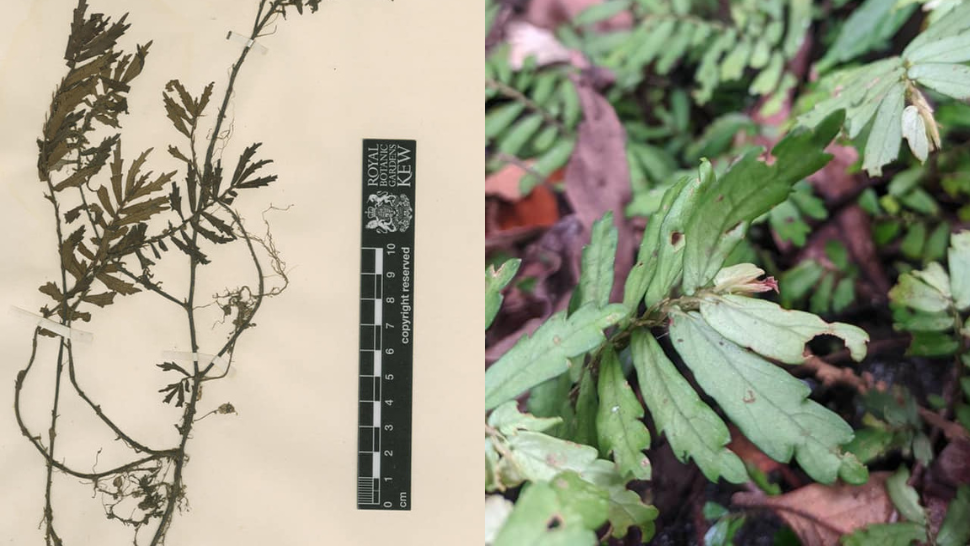
It's been a while since we've last seen the Elatostema catanduanense. Like, a real while—about 107 years, to be exact. Until now.
According to experts, it might be because of the incidents of quarrying in the area. Interestingly enough, however, the shrub has just been randomly spotted by a hiker in Virac earlier this week. That must've been quite the find.
Catanduanes Biodiversity member-hiker John Caleb Quiñones came across a peculiar flora while hiking by a dampened rock in Virac. Upon inspection, Quiñones stumbled on the Catanduanes-endemic shrub. Jayson Mansibang, who is a Bachelor of Science in Education major in Biology graduate and researcher at the Philippine Taxonomic Initiative, confirmed it: this was the elusive shrub. The discovery marks what would be the Elatostema catanduanense's first sighting in more than a century since it was first recognized.
Nestled between rocks and other shrubs.

A closer look.
.jpg)
ALSO READ:
Mottle-Winged Flying Fox Sighted in Rizal Province for the First Time
10 Whale Sharks Were Sighted in Batangas for the First Time
A Short History of the Elatostema Catanduanense
Recorded in the United States National Herbarium, Smithsonian Institution, under the Herbarium Specimens collection.
.jpg)
First sighted in 1918, Elatostema catanduanense is a perennial or subshrub and grows primarily in the wet tropical biome. This belongs to a group of species characterized by its "conspicuously serrate obliquely lanceolate leaves, its orbicular-ovate, chartaceous, fused outer bracts, and its appendiculate achenes."
The initial sighting of the Elatostema catanduanense was published together with other Philippine-specific plant species in the Philippine Journal of Science Volume XIII, with the help of world-renowned American botanist and taxonomist Elmer Drew Merill. He had spent more than two decades studying Philippine flora and had even served as the the administrator of Philippine Bureau of Science at one point.
The shrub's origins in Catanduanes are said to be at the Sto. Domingo River in Virac. This was where the first species' holotype was collected, according to a report by Catanduanes Biodiversity Science Communicator John Emmanuel Tayo.
