
10 Whale Sharks Were Sighted in Batangas for the First Time

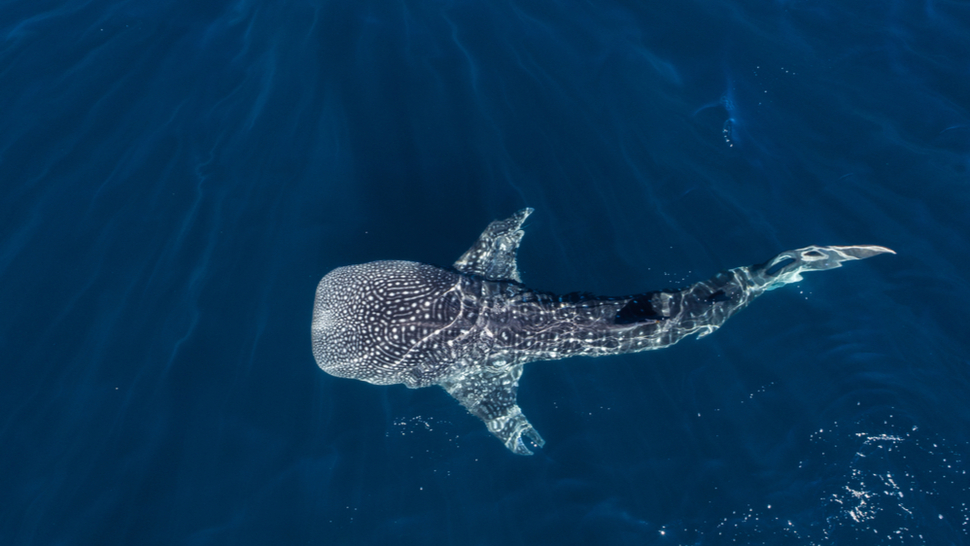
The Philippines is undoubtedly the world's "whale shark capital." The gentle giants have been sighted in several parts of the country, including in Donsol, Oslob, Quezon, and most recently, Batangas.
On November 25, just a day after a group of whale sharks were reportedly seen off the coast of Quezon Province, scuba dive instructor Penn de los Santos and his team sighted 10 whale sharks in Batangas, according to a Rappler report.
“This is the most number of whale sharks I’ve seen so far. We are trying to observe them and record what we see so we can establish their habits,” he told Rappler.
A week before that sighting, they had scouted the area and found two juvenile whale sharks feeding in the shallow waters.
"There were at least two juvenile whale sharks and two mantas in the area. We first saw them on the surface from the boat and we all got excited," De Los Santos wrote in his Facebook post.
"We quickly got our dive gear on and we went into the green water filled with plankton and dulong which explained why they were circling in the area. They were feeding!"
Dynamite Fishing Still Happening
Rappler's Tina Ganzon-Ozaeta spoke with Batangas Municipal Environment and Natural Resources Office (MENRO) chief Noelito M. Pasco, who bared that illegal fishing and dynamite fishing are still being conducted in the waters where the whale sharks were found.
“The Verde Island Passage is the center of marine biodiversity in the world with the highest concentration of marine species. It is a tuna highway and we even used to have sightings of sperm whales,” Pasco told Rappler.
One of the main challenges in protecting the whale sharks and other critically endangered species swimming in the area is the lack of a unified fisheries ordinances.
Marine conservation groups such as Tanggol Kalikasan and Oceana have been pushing for the passage of ordinances banning commercial boats, the catching of endangered species, using very fine nets, coral exploitation, and dynamite fishing in areas declared marine sanctuaries.
